Powdery mildew is one of the most recognizable diseases in the rose garden, and it moves fast once conditions line up in its favor. The fungus responsible, Sphaerotheca pannosa var.
rosae, produces a white powdery coating on leaves, stems, and buds that is hard to miss-and easy to underestimate until a whole plant is compromised.
Unlike most fungal diseases, powdery mildew doesn't need wet leaves to take hold. It germinates with little moisture, making humid air and warm days enough to trigger an outbreak.
Infections are most aggressive when daytime temperatures hover near 80°F and relative humidity climbs toward 97-100%. Spring and early fall are prime windows.
Stopping an active infection requires both immediate action and a shift in long-term management. If you're also dealing with blight recovery on vegetables, the cultural logic overlaps-sanitation and airflow are your first line of defense across the garden.
Powdery mildew on roses is caused by Sphaerotheca pannosa var. rosae and appears as a white powdery coating on leaves and buds.
It spreads via airborne spores in warm, humid conditions and can be controlled through cultural practices, targeted fungicides, and resistant cultivar selection.
Identify and Assess Severity
Catching powdery mildew early gives you the most options. The disease starts on the youngest, most vulnerable growth-new leaf tips, emerging buds, and tender stems-before spreading to older tissue if conditions stay favorable.
Remember it later
Planning to try this recipe soon? Save it for a quick find later!
The causal agent Sphaerotheca pannosa produces masses of spores that travel on air currents, so a single infected cane can seed an entire rose bed within days. Leaves may yellow, brown at the edges, or curl inward as the infection progresses.
Powdery mildew spores spread through airborne conidia, which means an infected neighboring plant can re-infect your roses even after treatment. Assess the whole planting area, not just individual canes.
Photograph infected canes before you remove them. A dated photo log helps you track whether the disease is advancing or retreating between spray applications.
Knowing your rose varieties matters here. Some older hybrid teas are highly susceptible, while many modern shrub roses carry built-in resistance.
When you're ready to choose rose varieties for a new bed, mildew resistance should rank high on your checklist.
Cultural Controls and Sanitation
Before reaching for a fungicide, adjust the environment. Many rose gardens create ideal mildew conditions without gardeners realizing it-dense planting, overhead watering, and poor air circulation all raise infection risk.
Increased air movement around plants directly reduces infection potential by lowering the localized humidity that spores need to establish. Pruning congested canes and spacing new plantings at least 3 feet apart are the two fastest changes you can make.
- Water at the base. Use drip irrigation or a soaker hose to keep foliage dry; powdery mildew spores establish more readily on stressed, moist leaves.
- Remove infected tissue promptly. Cut back affected canes to healthy wood and bag the clippings-do not compost them.
- Prune for airflow. Open up the center of each plant by removing crossing or inward-facing canes every season.
- Choose resistant cultivars. Varieties like 'Knock Out' and 'Carefree Wonder' show significantly lower mildew susceptibility in field trials.
- Clean tools between plants. Wipe pruners with 70% isopropyl alcohol to avoid transferring spores mechanically.
- Overhead watering. Wet foliage in humid weather creates perfect conditions for spore germination and spread.
- Dense planting. Crowded plants trap humid air and block light, both of which favor fungal growth.
- Leaving debris in beds. Fallen leaves and clippings from infected plants harbor spores that will reinfect next season.
- Late-evening watering. Any moisture that stays on leaves overnight raises infection risk significantly.
Sanitation is especially important at the end of the season. Rake and remove all fallen leaves from beneath roses before winter, as overwintering spores in that debris restart the cycle in spring.
In warm climates (Zones 8–10), powdery mildew pressure often extends through fall and into early winter. Continue cultural controls and scouting well past the first bloom flush—don't assume cooler nights have ended the season.
For gardeners curious about other persistent garden threats and their management, our coverage of controlling invasive plant growth follows similar principles around early intervention and removal habits.

Fungicide Options for Roses
When cultural controls aren't enough, fungicides are the practical next step. Both organic and synthetic options are effective against powdery mildew on roses, but timing and product selection matter as much as the active ingredient itself.
Fungicides work best as protectants applied before or at the very first sign of infection, though several active ingredients also have eradicant activity on early-stage colonies. According to UC IPM guidance, effective active ingredients include tebuconazole, myclobutanil, propiconazole, potassium bicarbonate, and wettable sulfur.
| Active Ingredient | Type | MOA Group | Key Notes |
|---|---|---|---|
| Tebuconazole | Synthetic (DMI) | Group 3 | Systemic; strong eradicant activity on early infections |
| Myclobutanil | Synthetic (DMI) | Group 3 | Common in home garden products; apply every 7–14 days |
| Propiconazole | Synthetic (DMI) | Group 3 | Broad-spectrum; rotate with non-Group 3 products |
| Potassium Bicarbonate | Organic | Group M | Contact eradicant; safe to rotate freely; low resistance risk |
| Wettable Sulfur | Organic/Protectant | Group M2 | Do not apply above 90°F; do not mix with oil sprays |
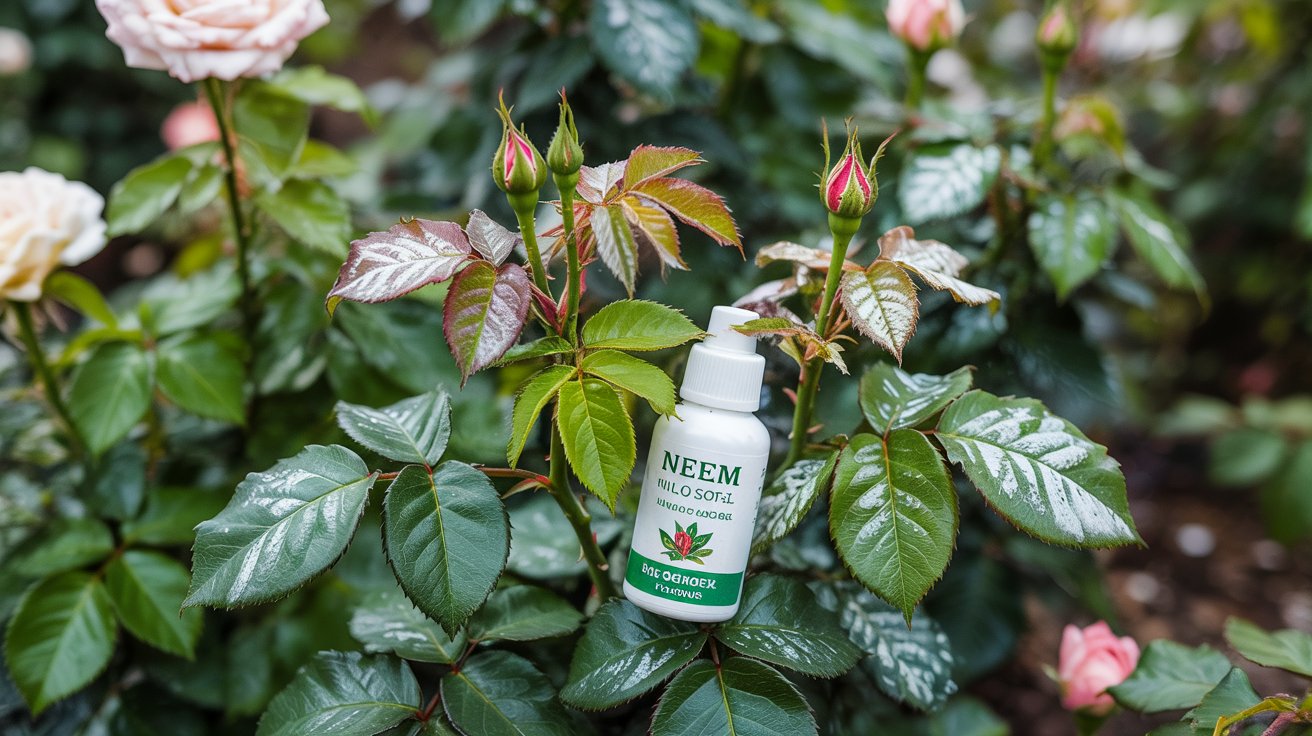
| Neem Oil | Organic | Multi-site | Best as a protectant; can cause phytotoxicity in heat |
The three DMI fungicides (tebuconazole, myclobutanil, propiconazole) share Group 3 mode of action, which means rotating among them does not reduce resistance risk-they must be rotated with products from different groups entirely.
Sulfur-based products are a reliable organic option, but they carry one firm limitation: plant damage can occur if sulfur is applied when temperatures exceed 90°F. Always check the forecast before applying.
For a side-by-side look at how organic sprays compare on other common pests, the breakdown of neem oil vs. insecticidal soap is useful context.
Apply fungicides in the morning so foliage dries before nightfall. Evening applications leave residues on damp leaves overnight, which can increase phytotoxicity risk with sulfur and oil-based products.
Always read the full label before mixing or applying. Exceeding label rates doesn't improve control-it increases plant stress and resistance pressure simultaneously.
For a broader look at rose disease and pest management, the principles here apply across many ornamental fungal problems.
Fungicide Rotation and Resistance Management
Powdery mildew fungi can develop resistance to fungicides faster than most gardeners expect, particularly when the same active ingredient is used repeatedly throughout a season. Rotating by mode of action (MOA) is the most effective structural defense against this.
The logic is straightforward: if a fungicide population develops tolerance to Group 3 DMIs through repeated exposure, switching to potassium bicarbonate (Group M) or a multi-site organic resets the selection pressure. Rotating MOA groups in sequence slows resistance across the entire season.
The oil-sulfur incompatibility is worth repeating plainly: mixing oil sprays with sulfur causes visible leaf scorch within 24-48 hours. If you've recently applied neem oil, wait a full two weeks before using sulfur.
Don't assume all "organic" products are interchangeable in a rotation. Neem oil and wettable sulfur are both organic, but they have different MOA groups—and mixing them still causes phytotoxicity. Treat them as distinct products with distinct rules.
This same resistance-aware strategy applies to eliminating powdery mildew on other ornamentals and vegetables-the rotation logic holds across species. For gardeners managing multiple pest problems at once, the approach to naturally reducing weed pressure also benefits from a sequenced, low-resistance strategy.

Prevention and Monitoring
The most effective powdery mildew program is one that rarely needs fungicide at all. Getting there means building a monitoring habit and addressing site conditions before infection pressure builds each season.
Scout roses once a week from the first flush of new growth in spring through the last bloom in fall. Early detection-catching the first whitish patches before they sporulate-means cultural controls alone may be enough to halt spread.
Remove infected material immediately and bag it; strategic sanitation directly cuts the amount of inoculum available for the next infection cycle.
Gardeners in humid southeastern states and the Pacific Coast should begin scouting in early March, not April. Warm winters mean spores may persist in plant debris from the prior season and infect new growth earlier than expected.
Long-term prevention centers on three adjustments that compound over time. Plant low-maintenance ornamental plants alongside roses to reduce overall bed density, and water at the base-never overhead-to keep foliage consistently dry.
Resistant cultivars do the heavy lifting: varieties bred with mildew resistance cut chemical need dramatically, according to Oklahoma State Extension.
At the end of each season, remove all fallen leaves and cane debris from beneath roses. Spores that overwinter in bed debris are the starting point for the following spring's outbreak.
This single habit, repeated annually, measurably reduces spring infection rates.
If you're dealing with other persistent garden pests and want a framework for monitoring beyond roses, our guide on diagnosing vine borer damage uses the same early-detection logic that works here.
Frequently Asked Questions
Yes. Shrub roses like 'Knock Out,' 'Carefree Wonder,' and 'Earth Song' consistently show low mildew susceptibility in university field trials and need far fewer fungicide applications.
Rose powdery mildew is host-specific to roses and cannot infect squash, cucumbers, or other plants. Each crop has its own powdery mildew species that doesn't cross over.
Not necessarily. Most fungicide labels recommend 7–14 day intervals only during active infection pressure. Resistant cultivars and good airflow can reduce spray frequency significantly.
Potassium bicarbonate and wettable sulfur both provide proven control. Potassium bicarbonate has eradicant action on early colonies and carries a very low resistance risk.
Seal clippings and fallen leaves in a plastic bag and place them in the trash—never the compost pile. Heat in a home compost bin is rarely sufficient to kill powdery mildew spores.
Pin it for your next how to treat powdery mildew on roses project.