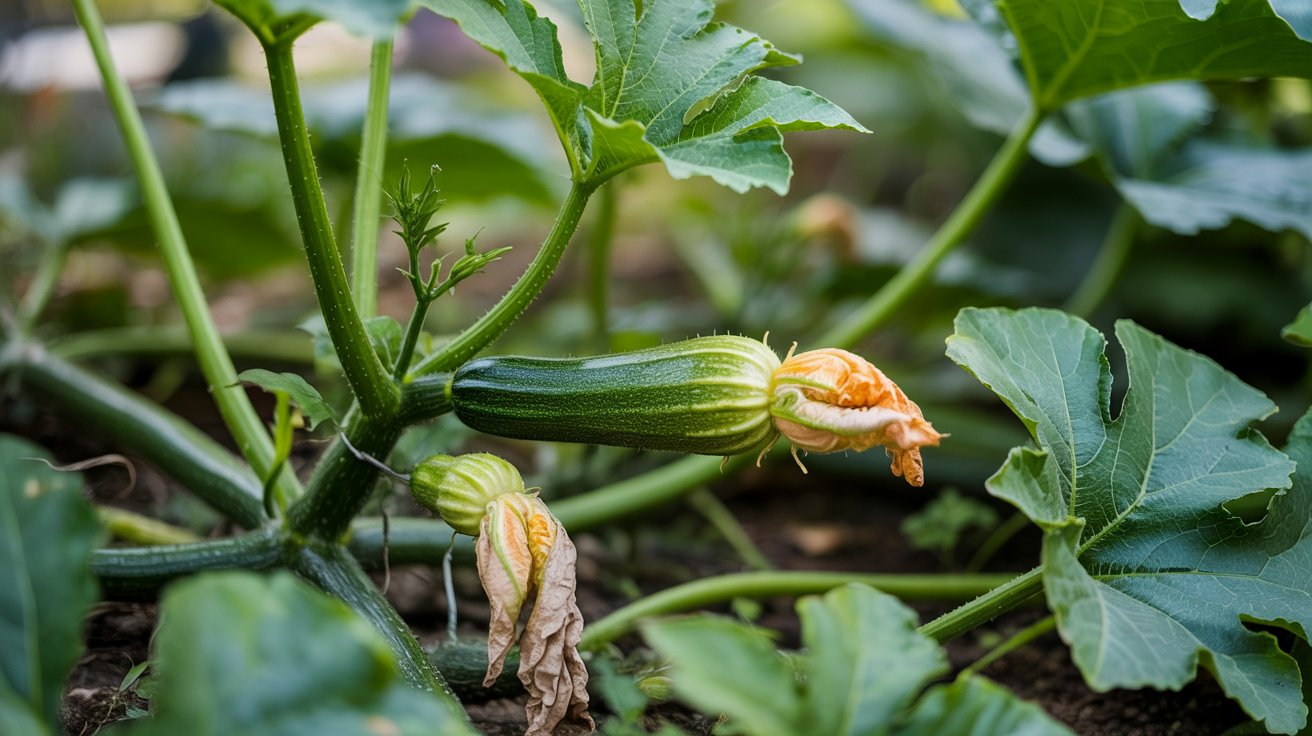
Squash vine borers can hollow out a healthy zucchini stem in under a week, and by the time you notice the wilting, the larvae are already deep inside. Melittia cucurbitae is a clearwing moth whose caterpillar stage does all the damage - feeding from the inside out, invisible until the plant collapses.
Most gardeners lose plants to SVB not because treatment failed, but because they started too late.
This guide gives you a prevention-first plan built around row covers, monitoring windows, and fast action when borers do get through.
Timing is everything with this pest. Adult moths emerge in early summer and lay eggs at the base of squash stems, so your window to act is before that first egg drops - not after the frass appears.
We've pulled together squash pest management strategies backed by university extension research so you're not guessing when the pressure is highest. Whether you're growing zucchini, butternut, or pie pumpkins, the core approach stays the same.
Squash vine borers are clearwing moth larvae that bore into squash stems, causing sudden wilting and plant death. Row covers installed at transplant are the most reliable defense.
Catch infestations early by checking stems weekly for frass and entry holes.
Quick-Start Plan to Stop Squash Vine Borers This Season
The most effective approach to squash vine borer treatment starts before you ever see a moth. University of Minnesota extension confirms that row covers installed at planting time are the single most reliable way to keep moths from reaching your plants.
Remember it later
Planning to try this recipe soon? Save it for a quick find later!
Everything else - sprays, surgery, soil drenches - is catch-up work.
Follow these steps in order. Each one builds on the last, and skipping step one makes steps four through six much harder.
Staggering your plantings by two to three weeks also helps. If you have both an early and a late planting, you reduce the chance that every plant is at peak vulnerability when moth activity peaks.
This is especially useful for longer-season cucurbits that can't be rushed to flowering.
Plant a second succession of zucchini seeds directly in the ground around July 1st. By the time this planting is up and running, the main SVB flight is usually winding down, and you'll often harvest cleanly through fall.
SVB Biology and How to Identify an Infestation
Melittia cucurbitae looks more like a wasp than a moth - its orange-and-black abdomen and clear hindwings are a convincing disguise. Adults fly during the day, lay individual flat eggs at stem bases, and die within weeks.
The larvae that hatch are the entire problem.
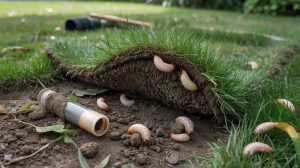
A single larva can completely girdle a squash stem's vascular tissue before you realize it's there. Cornell IPM research notes that larvae feed for four to six weeks inside the stem before pupating in the soil, spending winter just an inch or two underground.
Early identification is your best leverage point. By the time a vine wilts completely, there may be multiple larvae inside, and the stem's conducting tissue is already destroyed.
Check stems at soil level every five to seven days once your covers come off.
| Stage | What You See | Action Window |
|---|---|---|
| Egg on stem | Flat, reddish-brown disc, ~1mm, at stem base | Crush on sight — best time to act |
| Early larva (1–2 weeks) | Tiny entry hole, minimal frass, no wilting yet | Cut out larva; plant may recover |
| Mid larva (3–4 weeks) | Sawdust frass at hole, stem yellowing, soft stem | Surgery possible but outcome uncertain |
| Late larva (5–6 weeks) | Sudden full-vine wilt, hollow or rotted stem | Plant likely lost; remove and dispose |
| Pupa in soil | Plant dead; brown cocoon 1–2" deep near stem base | Dig and destroy to reduce next year's pressure |
The Minnesota extension lifecycle guide points out that SVB completes one generation per year in the North, but produces two in the South - meaning Southern gardeners face a second flight in late summer.
That second wave is why a July succession planting works well in the North but can still be vulnerable further south.
Zucchini and yellow summer squash are the most susceptible hosts. Butternut squash and most Cucurbita moschata varieties show natural resistance because their stems are harder and denser.
Pumpkins and acorn squash sit in the middle - regularly targeted but sometimes surviving light infestations if the plant is large and well-established.
Don't confuse SVB frass with bacterial soft rot — both cause a mushy, discolored stem. SVB frass is dry, granular, and orange-green; bacterial rot smells foul and has no visible entry hole. Misidentifying one for the other wastes your treatment window.

Prevention Tactics That Actually Work
Row covers are not optional if you've had SVB problems before - they're the foundation of the whole prevention strategy.
University of Arkansas extension recommends a lightweight spunbonded fabric (1.0 oz/yd²) installed directly over plants from day one, with edges buried or weighted to eliminate gaps.
Beyond covers, a few other tactics meaningfully reduce risk - especially if you're managing multiple beds or can't reliably monitor every plant each week.
Blue Hubbard squash is the most commonly cited trap crop for SVB. Moths strongly prefer it over zucchini or butternut, so a border planting of Blue Hubbard concentrates egg-laying where you can monitor and remove it.
Once eggs appear on trap plants, destroy those stems before larvae establish - the goal is to interrupt the cycle, not grow a second infested crop.
Crop rotation matters more than many home gardeners realize. Pupae spend winter 1-3 inches deep in the soil directly below the previous year's squash.
Replanting in the same bed the following spring puts your seedlings right above a waiting population. Even moving beds 20 feet away reduces carryover pressure significantly, which is similar logic to how non-chemical soil disruption can break pest and weed cycles simultaneously.
In-Season Treatment Options
When prevention fails and you find frass on a stem, quick action can still save the plant - but you need to be surgical about it. The goal is to remove the larva without destroying more stem tissue than necessary.
Most larvae are found within the first 3-4 inches above the frass entry point.
Use a sharp, thin knife to make a lengthwise slit along the stem from the entry hole upward. Find the white, wrinkled larva (up to 1 inch long at maturity) and remove it completely.
Then press the stem closed, cover the wound with moist soil, and water consistently to encourage re-rooting at that node.
- Slit the stem lengthwise from the entry hole, extract the larva, and immediately mound moist soil over the cut section.
- Apply Bacillus thuringiensis (Bt) var. kurstaki sprays to stem bases before eggs hatch - early larval stages are most vulnerable.
- Destroy removed larvae by dropping them in soapy water; don't leave them on soil where they can re-enter.
- Check tissue removal timing guidance - intervening within 48 hours of frass appearance is the cutoff for likely recovery.
- Don't delay treatment hoping the plant will recover on its own - larvae double in size weekly and cause exponentially more damage.
- Avoid broad-spectrum insecticides during flowering; they kill the pollinators your squash need to set fruit.
- Don't compost infested stems in a backyard pile - larvae can survive and pupate even in cut tissue.
- Skip applying soil drenches without confirming larvae are present; unnecessary chemical use disrupts beneficial soil organisms without payoff.
Insecticides are a limited tool against SVB because the larva is protected inside the stem for most of its life. Spinosad and permethrin applied to stem bases before hatch can intercept very young larvae, but timing must align with egg-hatching, not adult moth sightings.
Cornell's vine crop IPM data shows insecticide efficacy drops sharply once larvae exceed their first instar inside the stem. This parallels how timing-dependent treatments work with other fungal issues like tomato blight control - intervening at the right stage matters far more than product strength.
Flexible and Experimental Controls
A few non-conventional tools show real promise for SVB management, though none replaces row covers as a primary defense. Beneficial nematodes - particularly Steinernema carpocapsae - can target pupae in soil when applied as a drench in late summer, reducing next year's population.
Results vary widely based on soil moisture and temperature.
Practical Farmers of Iowa documented organic trials where Bt stem injections showed moderate larval suppression, though delivery into the stem is labor-intensive at scale. Arkansas extension also notes that kaolin clay applied to stem bases may deter egg-laying, though coverage must be reapplied after rain.
Bt sprays work best in Zones 5–7 where SVB has a single annual flight. In Zones 8–9 with two generations, a second Bt application timed to the late-summer flight is needed. Always remove covers during flowering to allow bee pollination, regardless of treatment schedule.
Seasonal Timing and Zone Planning
SVB risk is not uniform across the country. In northern states (Zones 4-6), adults typically fly from late June through mid-July - a fairly tight four-to-six-week window.
In the South (Zones 7-9), that window stretches across two separate flights, with the first starting as early as May and a second appearing in August.
Use this pressure chart to calibrate when to deploy row covers and schedule your succession plantings for your region.
Northern gardeners get the most leverage from a single well-timed row cover deployment. Southern gardeners need either continuous covers (with hand-pollination) or a two-round spray strategy timed to each flight.
Minnesota extension's regional timing notes and UW-Madison's zone planning guidance both recommend confirming local emergence dates with your county extension agent, since elevation and microclimate shift these windows by up to two weeks. This kind of zone-aware approach also applies when managing persistent pests like invasive knotweed, where regional timing determines what treatment actually works.
Tracking local conditions and adjusting your plan annually makes a measurable difference in how well any season-based pest strategy performs. For broader garden pest planning across the season, the integrated pest management resources on this site cover timing strategies for many common threats.
If you're also growing low-growing ground covers near your squash beds, be aware that dense ground cover around squash can harbor pupae over winter - keep a clear perimeter around cucurbit beds to reduce carryover. Managing powdery mildew on squash in late summer is another parallel challenge, since stressed, SVB-damaged plants are significantly more susceptible to fungal infection.
Keeping plants healthy through both threats means mildew prevention tactics and SVB monitoring often need to run concurrently. Even deer exclusion strategies around the garden perimeter can indirectly protect squash by reducing the disturbance that knocks over row covers.
For growers weighing spray options, a comparison of neem oil versus insecticidal soap may help clarify which product suits your situation when Bt timing isn't feasible.
Frequently Asked Questions
In most northern states, adults emerge late June through mid-July. Southern gardeners in Zones 8–9 face two separate flights, with the first starting as early as May.
Yes — row covers installed at transplant and sealed at the edges are the most reliable prevention method available, blocking adult moths before any eggs are laid.
Look for a small entry hole at the stem base plus dry, orange-green granular frass. Wilting that doesn't recover after watering is another strong indicator of internal larval damage.
Yes — Cucurbita moschata types like butternut and Seminole squash have harder, denser stems that SVB larvae rarely penetrate successfully compared to zucchini or acorn squash.
Often yes, if you act within 48 hours of spotting frass. Cover the cut stem with moist soil to encourage re-rooting at nearby nodes, which restores the plant's water supply.
Pin it for your next how to stop squash vine borers project.