Japanese knotweed (Fallopia japonica) is one of the most aggressive invasive plants in North America, capable of pushing through asphalt, cracking foundation walls, and regenerating from a fragment no larger than a fingernail.
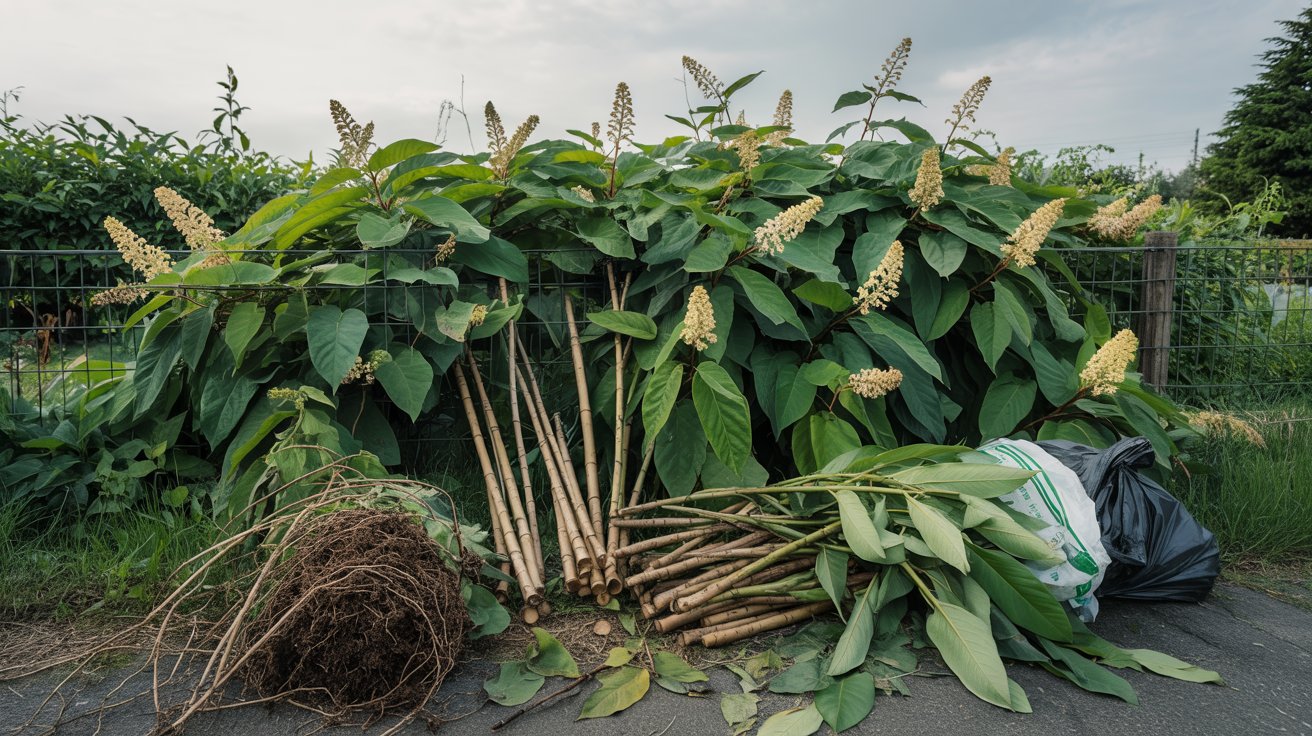
A single rhizome can extend 10 feet deep and 65 feet outward from the main stem, which means cutting the canes at ground level barely slows it down.
Removing it is a multi-year commitment, not a weekend project.
The good approaches share two traits: they attack the root system repeatedly, and they prevent any cut material from re-rooting on-site or downstream. Skipping either step is the most common reason homeowners spend years fighting the same patch.
This guide covers the four main removal paths - mechanical cutting, herbicide treatment, excavation, and containment - and helps you match the right method to your site, your proximity to water, and your local regulations.
You can also apply these principles when managing other stubborn persistent garden weeds without chemicals.
By the end, you'll know whether to hire a licensed contractor, whether your site requires a permit, and how to set a realistic monitoring schedule so you can confirm success over multiple growing seasons.
Japanese knotweed is a legally regulated invasive in many U.S. states. Effective removal requires repeated treatment over 3–5 years, proper rhizome disposal, and herbicide permits near waterways.
Mechanical cutting alone will not eradicate it.
Assessment: Site, Waterway, and Legal Considerations
Before cutting a single cane, map the full extent of the infestation. Walk the perimeter and mark where shoots emerge, because surface canes represent only a fraction of the underground rhizome network.
Remember it later
Planning to try this recipe soon? Save it for a quick find later!
Measure the distance to any water body - stream, pond, drainage ditch, or wetland - because that single number will determine which herbicides you can legally use and whether you need a permit.
Most states prohibit broadcast herbicide applications within 50-100 feet of a waterway without a licensed applicator permit. In some states, knotweed is listed as a noxious weed, which means you may be legally required to control it, not just encouraged.
Check with your state department of agriculture and your county extension office before purchasing any product.
Also note soil type and compaction - sandy or loose soil makes excavation more viable, while dense clay makes rhizome fragment retrieval difficult.
If the infestation crosses a property line, you'll need written permission from your neighbor before treating their side, and ideally a coordinated plan, since treating only your parcel leaves a reservoir next door.
Regulatory requirements vary significantly by state and even by county. In Pennsylvania and Connecticut, UConn Extension and other land-grant programs maintain up-to-date guidance on herbicide timing and permit requirements. Always confirm local rules before applying any product near water.
If water is within 25 feet, plan on mechanical-only control or hire a certified pesticide applicator who holds an aquatic endorsement. Document your assessment with photos and notes - this baseline record will be essential when evaluating treatment progress in year two and three.
Removal Options: When to Use Each Method
No single method works in isolation. Cornell Cooperative Extension recommends pairing cutting with herbicide application for the most reliable long-term control, and that combination holds true across most site types.
The table below summarizes each method's conditions, cost, and realistic outcome.
| Method | Best Conditions | Typical Timeline | Eradication Potential |
|---|---|---|---|
| Mechanical cutting | Near water, small patches | 3–5 years of repeated cuts | Low alone; medium when combined |
| Herbicide (foliar) | Away from water, fall application | 2–4 growing seasons | High with repeat treatment |
| Excavation | Small, accessible patches; loose soil | 1–2 seasons plus monitoring | High if all fragments removed |
| Containment barrier | Urban edges, foundation protection | Ongoing management | Controls spread only |
Mechanical cutting means cutting canes to ground level every 2-3 weeks from May through September. This starves the rhizome by preventing photosynthesis, but it requires consistent repetition across multiple seasons.
It's the only legal option directly at the water's edge without a permit.
Foliar herbicide is the fastest path to eradication away from water. Glyphosate and triclopyr are the most widely used active ingredients.
PSU Extension notes that late summer to early fall application - when the plant is translocating energy downward into rhizomes - achieves the deepest penetration into the root system. Stem injection is an alternative that reduces chemical contact with surrounding vegetation.
Excavation works best on patches under 50 square feet in loose soil. Every fragment larger than half an inch must be bagged and removed; a single piece left in soil will re-establish.
Sieving excavated soil through a fine mesh screen is worth the extra time. For larger infestations, deep soil disturbance often does more harm than good by spreading fragments.
Professional treatment is worth the cost when the infestation covers more than 200 square feet, sits within the herbicide buffer zone of a waterway, or straddles a property line.
Licensed applicators carry insurance and hold the aquatic endorsements needed for waterside work, which protects you legally as well.
Step-by-Step Plan: How to Implement Removal
Effective Japanese knotweed removal follows a fixed sequence. Jumping ahead - say, spraying before you've mapped the full patch - almost always means missing sections that re-seed the area within one season.
Work through each step in order, and document what you do and when.
- Bag all cut material immediately and send it to a licensed landfill.
- Apply herbicide in late summer when plants are moving sugars into the rhizome.
- Coordinate with neighbors so adjacent patches are treated at the same time.
- Use stem injection near non-target plants to avoid chemical drift.
- Don't compost knotweed - fragments survive most home compost piles and re-root.
- Don't excavate large patches without sieving for fragments; it spreads the problem.
- Don't apply foliar herbicide within the water buffer without an aquatic permit.
- Don't treat once and stop - single-season treatment almost never achieves lasting control.
Near property lines, consider installing a root barrier 30 inches deep to slow lateral rhizome spread while you work on the main colony. HDPE root barriers rated for invasive species hold up better than standard landscape fabric.
This won't stop the plant, but it buys time for chemical treatments to work. Managing boundary plants requires the same patience as learning summer garden maintenance for other high-effort species.
Monitoring, Maintenance, and Timelines
Post-treatment monitoring is where most removal programs fail. Homeowners see reduced shoot density after year one and assume the job is done.
The U.S. Fish and Wildlife Service documents that F. japonica rhizomes can remain viable underground for years, producing scattered regrowth long after the canopy has died back.
Plan for a minimum three-year monitoring window before declaring success.
Schedule site visits in early May, mid-July, and late September each year. Early May catches new shoot emergence before canes harden.
July visits identify any resurgence that escaped the spring check. September visits align with the ideal herbicide window if foliar re-treatment is needed.
Signs you need to re-treat include canes taller than 12 inches within the treated zone, new shoot clusters appearing at the patch perimeter, or any growth within the root barrier line. The National Park Service notes that even well-managed knotweed sites require ongoing vigilance, particularly after flood events that can redistribute rhizome fragments.
Track invasive plant pressure across your full property each season.
Photograph treated areas from the same vantage point each year. A simple dated photo log lets you compare shoot density year over year and gives you documentation if a contractor or neighbor disputes treatment progress.
Adapting to Local Realities: Waterways, Ownership, and Permits
Knotweed along a stream bank or river edge is among the hardest scenarios to manage. Flood events regularly move fragments downstream, reintroducing the plant to cleared areas.
In these cases, mechanical cutting is often the only compliant option unless you hold an aquatic herbicide permit - and even then, product selection is narrow.
The USFWS species profile and the Washington State Noxious Weed Control Board both maintain herbicide lists and site-specific constraints for waterside knotweed removal. Check these resources before purchasing any aquatic-label product.
For urban properties and shared boundaries, a written neighbor agreement is worth the conversation. Coordinated timing - treating both sides of a fence line within the same two-week window - cuts the risk of re-colonization from an adjacent untreated colony.
Local county weed boards in many states offer free advisory visits and sometimes cost-share programs. Just as you'd coordinate to manage deer pressure across yards, knotweed control works far better as a neighborhood effort than a solo one.
Climate also shapes timing. In USDA Zones 5-6, the optimal herbicide window runs from late August to mid-October.
In warmer zones (7-9), that window can extend into November. Adjust your calendar accordingly and recheck local extension guidance each season - label requirements and approved products do change.
Frequently Asked Questions
Most states require a licensed aquatic pesticide applicator permit within 50–100 feet of any waterway. Contact your state department of agriculture for the specific buffer distance and approved product list in your region.
Imazapyr with an aquatic label and glyphosate formulations specifically approved for aquatic use are the most commonly permitted options. Only a licensed aquatic applicator can legally use most of these products near open water.
Bag all cut material in heavy-duty contractor bags and send it to a licensed landfill. Never place knotweed in green waste bins or home compost — fragments as small as a half-inch node can re-root and establish new colonies.
Standard homeowner policies rarely cover invasive plant removal, but some policies cover structural damage caused by knotweed root intrusion into foundations. Document any structural damage with photos and get a contractor assessment before filing a claim.
Most glyphosate and triclopyr labels recommend keeping pets out of treated areas until the spray has fully dried, typically 1–2 hours. Always read the specific product label for re-entry intervals, as formulations vary.
Pin it for your next how to control japanese knotweed project.