A freshly painted deck can add years of life to aging wood and make your backyard feel finished rather than forgotten. Most homeowners put it off because they assume it's a multi-weekend project requiring professional tools.
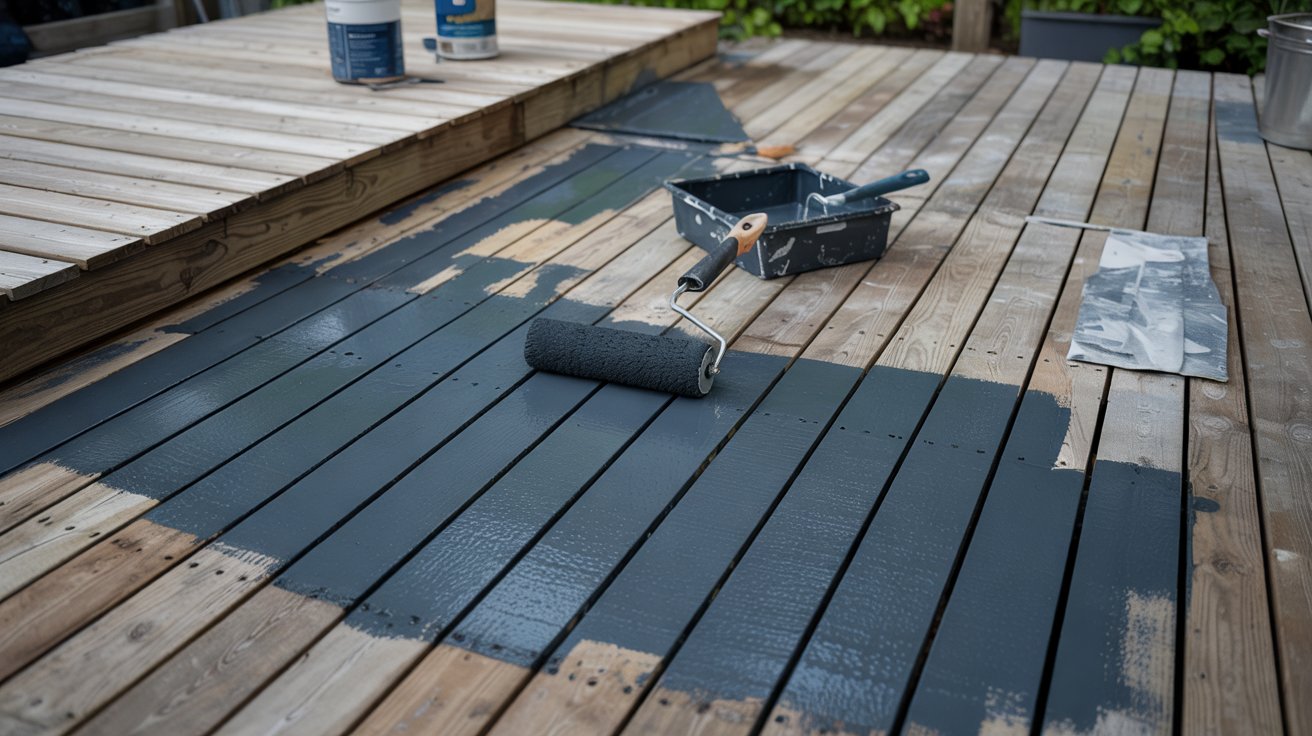
It isn't.
The real work is in the prep. Get that right, and the finish practically applies itself.
This guide walks through every stage: assessing your deck's condition, choosing between solid paint and penetrating stain, applying a durable finish coat, and building a maintenance habit that keeps the surface looking good for 3-5 years.
Research from the USDA deck finishes study confirms that surface preparation accounts for the majority of finish failures - meaning most peeling and bubbling starts before the brush ever touches wood.
Pressure-treated lumber adds a layer of complexity. The preservatives used in ACQ- or CCA-treated boards can interfere with adhesion if the wood hasn't dried or been primed correctly, as outlined in treated lumber painting guidance from University of Missouri Extension.
Skipping primer on treated wood is one of the most common reasons a paint job fails within one season.
Whether you're working with a weathered cedar deck or newly installed pressure-treated pine, the process below is designed to fit a single weekend.
Plan one day for prep and one for finish application, and you'll close out Sunday with a surface that can handle foot traffic by Monday morning.
Painting a deck successfully depends on thorough surface prep, selecting the right paint or stain for your climate, and applying in dry conditions above 50°F. Follow a seasonal maintenance routine to extend finish life to 3–5 years.
Deck Prep: Clean, Repair, and Prime
Nothing shortens a deck finish's life faster than painting over dirty, soft, or wet wood. Before you open a single can, the surface needs to be assessed, cleaned, repaired, and fully dry - in that order.
Remember it later
Planning to try this recipe soon? Save it for a quick find later!
Walk the deck and press a screwdriver firmly into each board. Any spot where it sinks more than ¼ inch has rot that must be replaced, not painted over.
Paint won't stabilize rotten wood; it just hides the problem until the board fails underfoot.
One often-skipped step is checking moisture content. Wood above 15% moisture will trap vapor under the finish and cause blistering.
If you don't own a moisture meter, the general rule is to wait at least three dry days after rain before applying any finish.
If you're deciding between a wood deck and other materials before committing to this project, it's worth reviewing the trade-offs when you compare composite and wood decking options. Composite boards, for instance, don't require painting at all.
Painting Your Deck Step by Step
Once prep is complete and the wood is dry, the actual painting goes quickly. The decisions you make before you open the can - finish type, tool selection, application order - have more impact on the result than technique alone.
Solid-color deck paints form a film on the wood surface and hide grain completely. They hold color longer but can peel as moisture cycles through the boards.
Penetrating stains soak into the wood fibers, don't peel, and are easier to recoat, but they need more frequent reapplication (every 2-3 years vs. 4-5 for paint). The USDA finishes research shows that semitransparent stains typically outperform solid paints on horizontal deck surfaces exposed to heavy UV and foot traffic.
For pressure-treated boards, use a finish specifically formulated for treated lumber. Standard latex paint can fail to adhere to the preservative salts still present in recently treated wood.
If the boards were installed within the past six months, the investment you made in your deck is best protected by waiting until the wood has fully dried before applying any finish.
Never apply deck paint or stain if rain is forecast within 24 hours. Moisture hitting a film-forming paint before it cures causes adhesion failure that no second coat can fix.
Stairs and high-traffic zones benefit from a non-slip additive mixed into the final coat. These fine-grain silica additives cost about $5-$10 per quart and significantly reduce slip hazard on wet mornings.
Drying, Curing, and Keeping It Looking Good
There's a difference between dry and cured. Paint feels dry to the touch in 2-4 hours and can handle light foot traffic after 24-48 hours.
Full cure - when the finish reaches its maximum hardness and chemical resistance - takes 7-14 days depending on temperature and humidity.
Avoid dragging furniture across the deck surface for at least two weeks after the final coat. Moving a heavy chair across uncured paint can scratch through to bare wood instantly.
Apply finish in early morning when temps are rising. Painting in afternoon heat causes the surface to flash-dry too fast, trapping solvent bubbles. The USDA deck finish study links application temperature directly to long-term film adhesion.
For long-term maintenance, clean the deck each spring with a mild deck cleaner to remove winter grime and mildew. Inspect the finish in early fall - checking for peeling, cracking, or grey areas - and touch up before moisture gets under the film over winter.
- Penetrating stain: Reapply every 2-3 years, or when water no longer beads on the surface.
- Solid paint: Expect a full repaint every 4-6 years; touch up high-traffic areas annually.
- Annual cleaning: Sweep weekly and wash with a deck cleaner each spring to slow UV degradation and prevent mildew from gaining a foothold.
If your backyard has other wood structures nearby, the same maintenance logic applies. Checking on wood versus vinyl fencing may inform whether you want to extend your annual painting routine to the fence line or switch materials entirely.
Timing Your Project Around Weather and Season
The finish manufacturer sets the conditions on the label, but the general rule for most exterior wood finishes is this: apply between 50°F and 90°F, with humidity below 85%, and no rain within 24 hours before or after application.
Late spring and early fall are the most reliable windows in most U.S. climates. Summer works in dry regions, but high humidity in the Southeast and Midwest can extend drying times significantly and raise the risk of blistering.
In humid Southern climates, morning humidity often exceeds 85% even on sunny days. Wait until mid-morning when humidity drops, and consult treated lumber finish timing guidance for your specific region. Northern decks exposed to freeze-thaw cycles need a finish with high flexibility ratings.
If your weekend window includes uncertain weather, paint the deck boards on Saturday and hold the second coat for Sunday morning - only after checking that overnight humidity didn't condense on the surface.
A simple touch test works: if the surface feels cool or damp, wait another hour.
Planning your project around the calendar also means thinking ahead about the rest of your backyard. Our seasonal outdoor maintenance guides cover when to tackle projects like staining, sealing, and weatherproofing throughout the year.
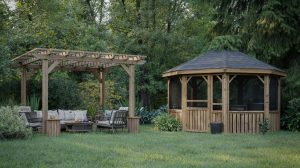
If you're building out other structures at the same time, the process of constructing a DIY pergola follows a similar prep-then-finish sequence that pairs well with a deck repaint weekend.
For those still deciding whether a deck is the right structure for their yard, comparing the cost and maintenance differences between patios and decks is a useful starting point.
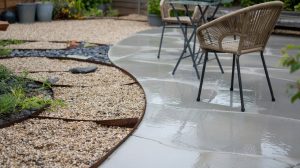
A gravel patio, for example, requires no painting at all - if you're curious whether that option fits your space, our guide on building a gravel patio yourself walks through the full process.
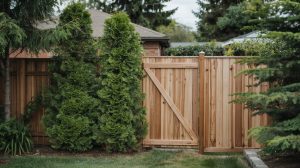
If fencing is part of your outdoor budget this year, estimating your total fence installation cost alongside deck painting helps you plan material purchases together and avoid mid-project cash crunches.
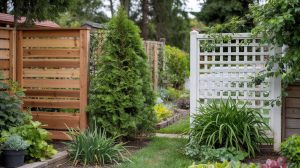
You might also find that achieving privacy with plants instead removes one painting task from the list entirely.

Frequently Asked Questions
Solid paint lasts 4–6 years before repainting but can peel. Penetrating stains last 2–3 years but never peel, making them easier to maintain. USDA finish research favors stains on horizontal, high-UV surfaces.
Yes, but only if the stain is fully stripped first. Solid paint applied over a penetrating stain will peel within one season because the film can't bond to an oil-saturated surface.
Most deck paints allow light foot traffic after 24–48 hours. Full cure takes 7–14 days; avoid placing furniture or heavy planters until the two-week mark.
Yes, on bare wood and pressure-treated lumber. Primer improves adhesion and blocks tannins from bleeding through. Skip it on previously painted surfaces that are still sound and well-adhered.
Two finish coats are standard, applied 4–6 hours apart. New or bare wood may also need one primer coat, bringing the total to three layers for maximum protection and color depth.
Pin it for your next how to paint a deck project.