A cutting garden is one of the most rewarding decisions you can make for your outdoor space - fresh stems from the yard beat anything from a grocery store bucket.
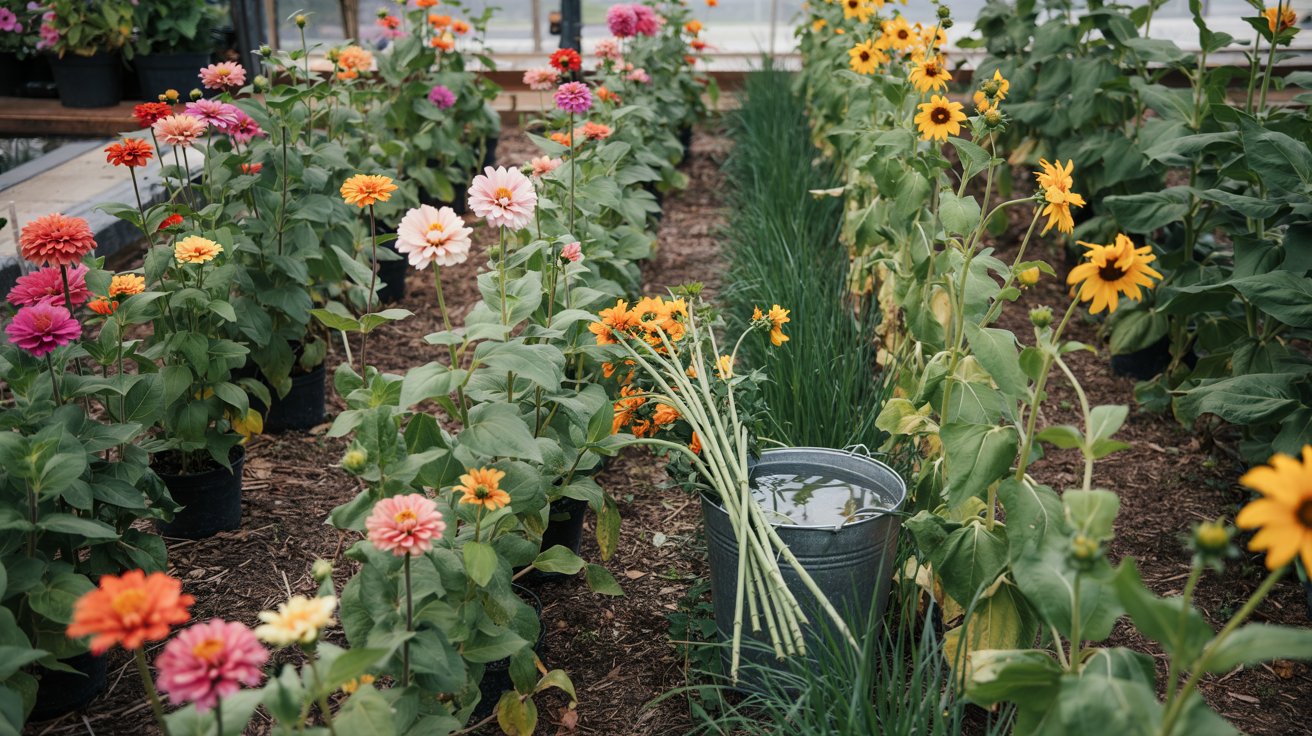
The difference between a mediocre cutting patch and a productive one comes down to variety selection. Not every flower holds up well after cutting, and not every stem is long enough to matter in a bouquet.
We put together this list of eight proven performers, all with long stems and solid vase life, based on cut flower farm guidance from University of Minnesota Extension.
These varieties cover annual and perennial options, cool-season and warm-season windows, and a range of colors - so you can build a full-season harvest plan from a single list.
Whether you're adding cottage-style pink blooms to a mixed border or planting dedicated rows for weekly bouquets, this guide gives you the roadmap.
The best flowers for a cutting garden combine long stems, sturdy petals, and strong vase life. Eight proven varieties — zinnias, cosmos, sunflowers, lisianthus, snapdragons, peonies, dahlias, and coneflowers — cover the full growing season.
Many can be started from seed indoors in winter for an earlier harvest window.
Top Picks for Cutting Gardens
These eight varieties appear consistently in seed-to-bouquet guidance from university extension programs because they reliably deliver the stem length and vase longevity home gardeners need.
Remember it later
Planning to try this recipe soon? Save it for a quick find later!
Use this table as a fast-reference overview before diving into each variety below.
| Flower | Stem Length | Vase Life | Type |
|---|---|---|---|
| Sunflower | 24–48 in | 7–12 days | Annual |
| Zinnia | 18–24 in | 7–10 days | Annual |
| Cosmos | 18–30 in | 5–8 days | Annual |
| Snapdragon | 18–24 in | 7–14 days | Cool-Season Annual |
| Lisianthus | 18–24 in | 14–21 days | Annual/Biennial |
| Dahlia | 12–24 in | 5–8 days | Tender Perennial |
| Peony | 18–24 in | 5–7 days | Hardy Perennial |
| Coneflower | 18–24 in | 6–9 days | Hardy Perennial |
Stem length matters as much as bloom appearance when you're designing arrangements. Varieties under 18 inches rarely give you enough room to work with in a standard vase.
You'll also notice that purple-toned varieties like lisianthus and coneflower anchor the cooler end of the palette, while zinnias and dahlias handle bold, warm tones.
Sunflowers
Bold Stems, Beginner-Friendly Easy Zone 3–9
Sunflowers (Helianthus annuus) are among the most forgiving flowers you can add to a cutting garden. They push up fast, tolerate average soil, and produce stems that frequently hit 24 to 48 inches tall.
Plant seeds directly in the ground after your last frost date - they don't transplant well. According to Minnesota Extension seed tips, sunflowers are among the easiest cuts to grow from seed with minimal setup.
Branching varieties like 'Velvet Queen' or 'ProCut' series give you multiple stems per plant instead of a single head, which extends your harvest window considerably.
Cut sunflowers when petals are just beginning to open, not in full bloom. Stems cut at that stage last up to 4 days longer in the vase. Keep them in deep water immediately after cutting.
Iowa State University Extension recommends cutting in morning hours when stems are most hydrated for the best vase performance. For deeper growing guidance, see our full breakdown on growing tall sunflower stems.
Zinnias
Prolific, Colorful, and Cut-Ready Easy Zone 3–10
Zinnias (Zinnia elegans) are a staple of any cutting garden because they produce heavily and recover fast after each cut. The more you cut, the more they bloom - a genuine virtuous cycle.
Choose tall cultivars like 'Benary's Giant' or 'Oklahoma' series, which regularly reach 24 inches or more and produce larger, sturdier flower heads suited for bouquets. According to UMN cut flower guidance, zinnias rank among the top varieties for small-scale cut flower production.
Direct sow seeds after the last frost into warm soil - soil temperature above 70°F speeds germination significantly. For a detailed walkthrough of spacing and succession planting, our guide on growing zinnias for cutting covers every step.
Zinnias are prone to powdery mildew in humid conditions. Space plants at least 12 inches apart and water at the base, not overhead. Poor airflow is the main culprit.
Cosmos
Airy Filler with Long, Flexible Stems Easy Zone 2–11
Cosmos (Cosmos bipinnatus) bring an airy, wildflower quality to mixed bouquets that heavier blooms can't match. Their stems reach 18 to 30 inches, with feathery foliage that adds texture even when buds haven't opened yet.
Direct sow after last frost - cosmos germinate in 7 to 10 days in warm soil and resent root disturbance, so transplanting rarely works as well. Minnesota Extension highlights cosmos as a low-effort annual with cutting-friendly stem length and a long bloom window.
Varieties like 'Sensation Mix' and 'Double Click' hold up better in the vase than older open-pollinated types. According to UMN small farms research, cosmos reliably fill mid-to-late summer harvest gaps that other flowers miss.
Cosmos actually bloom better in poor soil. Over-fertilizing pushes leafy growth at the expense of flowers. Skip the nitrogen-heavy feed and let them run lean.

Snapdragons
Tall Vertical Spikes for Cool Seasons Medium Zone 7–11 (perennial); grown as annual elsewhere
Snapdragons (Antirrhinum majus) are a cool-season standout that fills the gap between spring perennials and summer annuals. They produce tall, upright spikes reaching 18 to 24 inches with dense blooms along the full stem length.
Start seeds indoors 8 to 10 weeks before your last frost date, as they need time to size up before transplanting out in early spring.
Iowa State University Extension notes that cool-season annuals like snapdragons can extend your cutting garden harvest well before summer flowers come in.
Vase life runs 7 to 14 days when cut before the top buds open - one of the strongest performances among common cutting garden annuals. Deadhead or cut consistently to keep plants flowering rather than setting seed.
Plant snapdragons where they get morning sun and afternoon shade in warm climates. Heat above 85°F shuts down flowering — timing your planting to avoid peak summer heat extends the season by weeks.
Lisianthus
The Long-Lasting Elegant Stem Hard Zone 8–10 (perennial); grown as annual most zones
Lisianthus (Eustoma grandiflorum) is the longest-lasting cut flower on this list, with vase life running 14 to 21 days when cut at the right stage. Its rose-like blooms make it a favorite for wedding and market bouquets.
It's also the most demanding to grow from seed - germination takes 10 to 21 days under precise conditions, and seedlings develop slowly for the first 8 weeks. Most home gardeners start with purchased plugs rather than seed-starting.
According to UMN extension research, lisianthus is valued specifically for its exceptional vase performance in high-quality bouquets.
Select varieties bred for cutting, such as the 'Echo' or 'Voyage' series, which produce stems 18 to 24 inches long with multiple buds per stem. The layered bud structure means you get a progression of blooms over two weeks in the vase.
Cut lisianthus when 2–3 buds on the stem are showing color but haven't opened fully. Stems harvested too early will fail to open in the vase, wasting a long-effort crop.

Dahlias
Show-Stopping Focal Blooms Medium Zone 8–10 (perennial); grown as annual in zones 3–7
Dahlias (Dahlia spp.) deliver some of the most dramatic blooms available to a cutting garden, with dinner-plate varieties reaching 8 to 12 inches across on stems that top 24 inches.
Plant tubers after the last frost, once soil reaches 60°F. UMN cut flower guidance lists dahlias among the top picks for striking focal points in arrangements, particularly for late-summer harvest.
Stake taller varieties early - a plant that falls over usually breaks its best stems.
Pinch the central stem when plants reach about 12 inches tall. That one step forces multiple lateral branches and multiplies your stem count by the end of the season.
Harvest dahlias in the cool of early morning and place stems immediately in buckets of water. Unlike some flowers, dahlias do not rehydrate well if left out — a 30-minute delay noticeably shortens vase life.
Peonies
Fragrant Perennial Stems That Return Every Year Medium Zone 3–8
Peonies (Paeonia lactiflora) are the perennial backbone of a serious cutting garden. Plant once and you'll harvest fragrant, lush stems every spring for 20+ years without replanting.
They need a cold dormancy period - at least 6 weeks below 40°F - which makes them reliable in northern zones but poor performers in zone 9 and warmer.
UMN cut flower research confirms peonies as a premium perennial option for cutting gardens with long-term production value.
Cut stems when buds are at the "marshmallow stage" - firm but just starting to show color. Vase life runs 5 to 7 days at room temperature, or up to 3 weeks if refrigerated as cut buds before arranging.
Don't cut more than half the stems from a young peony plant in its first or second year. The foliage feeds the roots — stripping it too aggressively weakens the plant and reduces future flowering.

Coneflowers (Echinacea)
Drought-Tolerant Native with Late-Season Staying Power Easy Zone 3–9
Coneflowers (Echinacea purpurea) are among the most dependable plants you can add to a cutting garden, especially for late summer when other annuals start to flag. Strong stems reach 18 to 24 inches reliably, even in dry conditions.
They're a drought-tolerant native that attracts pollinators while also serving your vase - a dual-purpose plant that earns its space. For detailed growing guidance including division and spacing, our coneflower care deep-dive covers the full cycle.
According to UMN cut flower extension, coneflowers provide reliable late-season stems that fill gaps left by summer annuals.
Cut stems when the petals have just reflexed back from the central cone. Cutting too early reduces vase life; cutting too late shortens it further as the cone goes woody.
Coneflowers self-sow freely if you leave a few spent heads on the plant. Collect and dry them in fall if you want to control where next year's seedlings appear, or let them naturalize.
Planning Your Cutting Garden by Climate
The varieties above perform well across a wide range, but your USDA hardiness zone shapes when you plant, what you start indoors, and how long your cutting season runs.
A zone 5 gardener in Minnesota and a zone 9 gardener in Texas both grow zinnias - but their timelines differ by nearly two months.
In zones 3 to 5, start cool-season crops like snapdragons indoors 8 to 10 weeks before last frost, then transition to warm-season annuals once soil warms past 60°F. Your cutting window typically runs late June through September.
- Zones 6-7: A long, productive cutting season with room for both cool-season and warm-season crops. Start sunflowers and zinnias directly after last frost; pull and resow in late July for a fall flush.
- Zones 8-9: Grow lisianthus as a true long-season crop and overwinter snapdragons. Summer heat limits zinnias and cosmos to spring and fall windows, not midsummer.
- Zones 3-4: Peonies and coneflowers shine here as reliable perennials. Focus annuals on fast-maturing varieties - look for days-to-bloom under 60 days to beat early frosts.
Microclimates within your yard also matter. A south-facing bed against a wall can behave like a full zone warmer, letting you push lisianthus or dahlias into regions where they'd normally struggle.
The Minnesota Extension bouquet guide recommends mapping your sowing windows on a calendar before buying seed - that single step prevents the most common cutting garden mistake: planting everything at once and having no flowers during the gaps.
Iowa State University Extension's cutting garden resource also emphasizes succession planting every two to three weeks for continuous harvest.
If you're in zones 8–10, treat dahlias and lisianthus as perennials and skip the annual replanting cycle. In zones 3–6, dig dahlia tubers each fall before ground freeze and store them at 40–50°F through winter.
For a broader look at plant selection by color and season, our guides on which white flowers cut well and adding bold red to arrangements can help you build a full-spectrum cutting garden palette. If you're propagating existing plants to fill in gaps, our guide on growing plants from cuttings covers the basics.
You might also explore blue flowers versus purple alternatives for cooler bouquet tones, and our roundup of annual versus perennial flower planning for longer-season strategy.

Frequently Asked Questions
Sunflowers, lisianthus, and snapdragons consistently produce stems over 18 inches. Lisianthus offers the longest vase life at 14–21 days among common cutting garden varieties.
According to Minnesota Extension, start cool-season crops like snapdragons indoors 8–10 weeks before last frost; direct sow zinnias, cosmos, and sunflowers after frost danger passes.
Lisianthus leads at 14–21 days, followed by snapdragons at 7–14 days. Both outlast most common annuals when cut at the correct bud stage and kept in clean water.
Zinnias and cosmos grow reasonably well in containers at least 12 inches deep. Dahlias and sunflowers need larger pots — minimum 5 gallons — to produce stems long enough for cutting.
Vase life is the number of days a cut stem stays fresh after harvest. Iowa State Extension recommends cutting in morning, re-cutting stems under water, and changing the vase water every two days to maximize it.
Pin it for your next best flowers for cutting garden project.