A yard doesn't need to be large to support a real tree. Even a 20-by-20-foot front yard can hold a flowering dogwood or a compact Japanese maple without the roots lifting your walkway or the canopy blocking your neighbor's light.
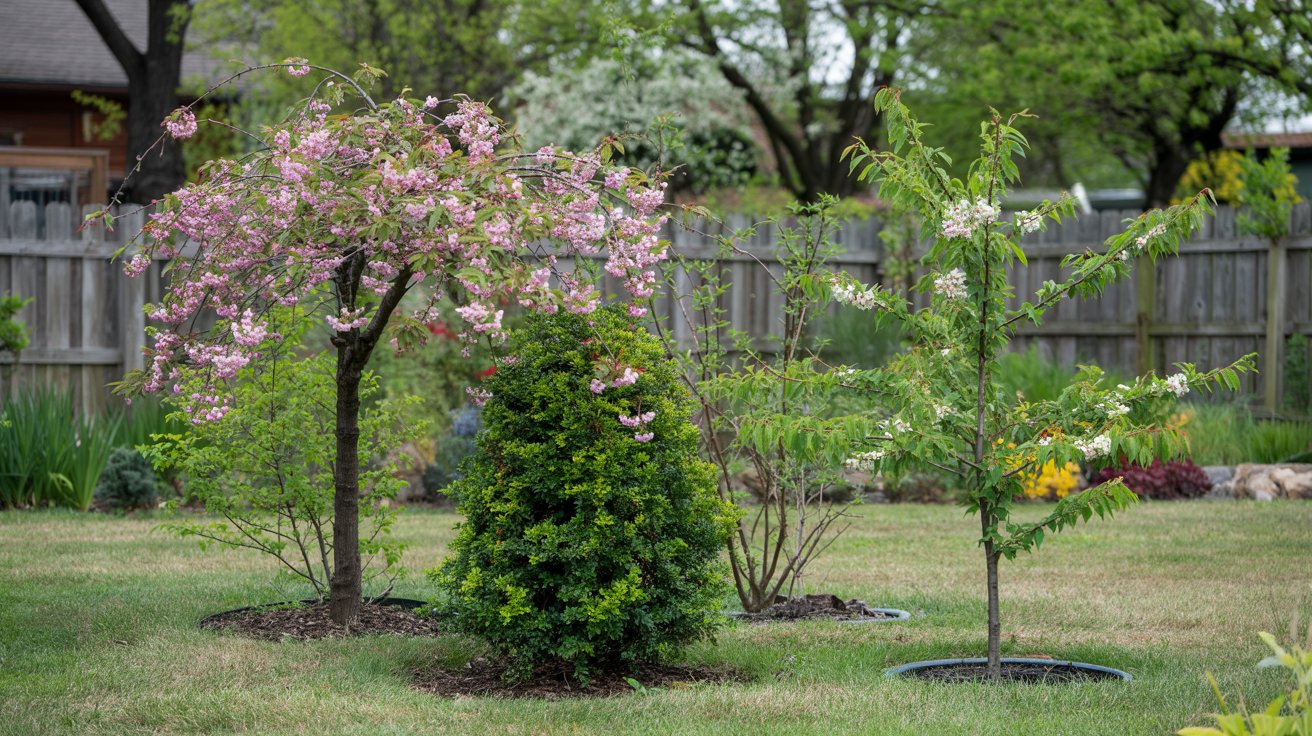
Picking the wrong tree is expensive. A silver maple planted too close to a fence looks charming at year two and becomes a structural problem by year ten.
The trees on this list top out between 15 and 30 feet at maturity. Most spread no wider than 15 to 20 feet, which means they fit in tight side yards, urban lots, and narrow front strips without overwhelming the space.
Many homeowners skip trees entirely in small yards, relying on shrubs for vertical interest. That's leaving a lot of seasonal value on the table - flowering canopies in spring, dappled shade in summer, and fall and winter interest from bark texture and berries.
The best trees for small yards stay under 30 feet, offer season-long interest, and won't outgrow a compact footprint. Picks range from flowering ornamentals like dogwood and redbud to dwarf fruit trees and privacy-friendly columnar forms suited to USDA zones 4–9.
Top Picks for Small Yards
These eight trees cover the most common small-yard needs: curb appeal, shade, privacy, and fruit. Each entry includes mature size, best light exposure, and the one reason it earns a spot on a tight lot.
Remember it later
Planning to try this recipe soon? Save it for a quick find later!
The UF/IFAS small-space guide confirms several of these as proven performers in urban residential settings.
Use the table below for a fast side-by-side comparison, then read the profiles to understand why each one works.
| Tree | Mature Height | Spread | Best Light | Zones |
|---|---|---|---|---|
| Japanese Maple | 10–25 ft | 10–15 ft | Part sun/shade | 5–9 |
| Eastern Redbud | 20–30 ft | 15–25 ft | Full–part sun | 4–9 |
| Flowering Dogwood | 15–25 ft | 15–20 ft | Part sun | 5–9 |
| Crape Myrtle | 15–25 ft | 10–15 ft | Full sun | 6–9 |
| Serviceberry | 15–25 ft | 10–15 ft | Full–part sun | 4–9 |
| Columnar Oak | 40–60 ft | 8–10 ft | Full sun | 4–8 |
| Dwarf Apple | 8–10 ft | 8–10 ft | Full sun | 4–8 |
| Snow Fountain Cherry | 8–15 ft | 6–8 ft | Full sun | 5–8 |
1. Japanese Maple Easy
Acer palmatum is the most reliable small ornamental tree for yards with shade constraints. It tops out at 10 to 25 feet depending on the cultivar, and its shallow, non-invasive root system makes it safe near patios and walkways.
Lace-leaf varieties like 'Crimson Queen' stay under 10 feet. You can grow Japanese maple for year-round color in zones 5-9 with minimal pruning.
2. Eastern Redbud Easy
Cercis canadensis produces magenta-pink flowers directly on bare branches in early spring before any leaves emerge. That early-season show makes it a standout for front-yard curb appeal in zones 4-9.
Mature spread reaches 15 to 25 feet, so leave room on each side. A weeping cultivar like 'Lavender Twist' fits even tighter footprints at under 8 feet wide.
3. Flowering Dogwood Medium
Cornus florida offers four-season interest: spring blooms, summer berries for birds, red fall foliage, and interesting horizontal branching in winter. It peaks at 15 to 25 feet tall with a similar spread.
Plant it in morning sun with afternoon shade and you'll have fewer disease issues. Dogwood anthracnose is a real concern in humid climates, so choose a resistant cultivar like 'Appalachian Spring.'
4. Crape Myrtle Easy
Lagerstroemia indica blooms heavily from June through September, longer than almost any other small tree. Dwarf and semi-dwarf cultivars like 'Dynamite' or 'Natchez' stay under 20 feet and handle urban heat well.
Crape myrtles tolerate drought once established and thrive in the hottest parts of zones 6-9. Avoid hard topping ("crape murder") - it disfigures the tree and isn't necessary to control size.
5. Serviceberry Easy
Amelanchier spp. is underused for small yards but earns its place with edible berries in June, white spring flowers, and orange-red fall color. Most cultivars stay 15 to 25 feet tall with a 10- to 15-foot spread.
It handles both wet soil and dry spells better than most ornamentals. 'Autumn Brilliance' is a widely available, disease-resistant selection that performs in zones 4-9.
6. Columnar Oak Medium
Quercus robur 'Fastigiata' grows tall - up to 60 feet - but its 8- to 10-foot spread makes it one of the only shade oaks that works in a narrow side yard or along a tight property line.
It functions like a column, not a canopy.
For genuine shade in a tight space without sacrificing sky exposure next door, this is the most practical option on the list. It's hardy in zones 4-8 and long-lived once established.
7. Dwarf Apple Medium
Dwarf apple trees grafted onto dwarfing rootstocks like M.9 or M.26 top out at 8 to 10 feet and produce full-size fruit.
That makes them one of the few options that give you fruit production in a yard with less than 400 square feet of planting space.
You can grow fruit trees in containers if ground space is truly limited. Dwarf apples need a pollinator partner within 50 feet, so plan for two compatible varieties side by side.
8. Snow Fountain Cherry Easy
Prunus 'Snofozam' is a weeping cherry that stays 8 to 15 feet tall with a 6- to 8-foot spread - one of the most compact ornamental trees available. Spring bloom is dense white, and the cascading form reads as a focal point even in winter.
It's disease-resistant compared to most ornamental cherries and performs reliably in zones 5-8. For a narrow strip between a driveway and a fence, this tree fits where almost nothing else will.
For front-yard curb appeal, redbud or dogwood. For shade in a narrow side yard, columnar oak.
For privacy without crowding, consider narrow privacy trees and shrubs that work alongside these picks.
Buying Guide: How to Choose for Your Tiny Lot
Every tree selection mistake starts the same way: someone falls in love with a tree at the nursery without knowing its mature footprint. The UF/IFAS small trees guide recommends measuring your planting zone before you shop, not after.
The Georgia extension landscape guide reinforces matching mature size to available space as the first decision.
Walk through these steps before purchasing any tree for a small yard.
When comparing trees at the nursery, ask for the mature spread, not just the height. A 20-foot-tall tree with a 25-foot spread takes more horizontal space than your yard may allow, even if the height sounds manageable.
If your lot has fast-growing tree options that appeal but you're unsure about scale, reviewing how fast-growing trees size up over 10 years helps set realistic expectations before you commit.
Care, Planting, and Spacing for Your New Tree
Getting a small tree established in its first two years determines how it performs for the next 30. Most planting failures come from a hole dug too deep, too little water in year one, or mulch piled against the bark.
The UF/IFAS small trees care notes specifically flag improper planting depth as the leading cause of early tree decline.
- Hole width: Dig 2-3 times the width of the root ball, but only as deep as the root ball height. The root flare should sit at or slightly above grade.
- Backfill: Use the native soil you removed. Amending only the planting hole creates a "bathtub" effect that limits root expansion.
- Mulch ring: Apply 3-4 inches of wood chip mulch in a 3-foot ring. Keep mulch 3 inches away from the trunk to prevent rot.
- Staking: Only stake if the tree can't stand upright on its own. Remove stakes after one growing season - long-term staking weakens trunk taper.
- First-year watering: Water deeply every 3-4 days for the first 8 weeks, then weekly through the first summer. In hot climates, water twice weekly during any stretch over 90°F.
| Tree | Mature Spread | Min. Distance from Structure | Min. Between Trees |
|---|---|---|---|
| Japanese Maple | 10–15 ft | 8 ft | 12 ft |
| Snow Fountain Cherry | 6–8 ft | 5 ft | 8 ft |
| Dwarf Apple | 8–10 ft | 6 ft | 10 ft |
| Crape Myrtle | 10–15 ft | 8 ft | 12 ft |
| Columnar Oak | 8–10 ft | 6 ft | 8 ft (narrow form) |
| Eastern Redbud | 15–25 ft | 12 ft | 20 ft |
Pruning for compact form should happen in late winter for most deciduous trees, just before bud break. Never remove more than 25% of the canopy in a single season — it stresses the tree and triggers excessive sucker growth.
A well-maintained compact yard benefits from the right tools alongside the right trees. A mower sized for small yards helps keep the grass around new tree plantings clean without compacting the root zone.
For ongoing planting coordination, a seasonal planting calendar helps you time companion plantings under your new trees by zone and month.
Regional Variations and Layout Tips
Zone hardiness is the starting point, but microclimates within your own yard matter just as much. A south-facing brick wall in zone 6 can push your effective growing range a full zone warmer for cold-tender trees like crape myrtle.
The UCANR Fresno small-spaces guide notes that reflected heat from pavement can stress shallow-rooted ornamentals in western climates even in mild zones.
In zones 4–5 (Upper Midwest, New England), serviceberry and columnar oak are your most reliable picks — both handle -20°F winters. In zones 8–9 (Deep South, Pacific Coast), crape myrtle and flowering cherry perform best, while dogwood struggles with summer heat and humidity.
Coastal yards face salt spray and wind, which rules out thin-barked trees like birch and most ornamental cherries. Japanese maple and serviceberry hold up better near the coast when planted with a windbreak on the exposure side.
For layout in tight spaces, consider a triangle planting pattern: one anchor tree as the focal point, two smaller shrubs at angles to frame it. This uses vertical space efficiently without crowding the horizontal plane.
Underplanting with shade-tolerant ground covers extends the visual footprint of a single small tree across a wider area.
If you're in the Southwest or Central Valley, which palm species fit your zone is a related question worth answering - some compact palms serve the same structural role as a small ornamental tree in arid climates. The Georgia extension's landscape plants guide also covers zone-by-zone selection logic useful for the Southeast and transition zones.
For additional small-tree options beyond this list, our guide to choosing trees for small yards covers more cultivar-level detail. You can also review our companion planting chart to find what grows well beneath these canopies.
Frequently Asked Questions
Columnar oak provides the most shade in the narrowest footprint, spreading only 8–10 feet wide. Japanese maple and flowering dogwood also cast light dappled shade suitable for small patios.
Crape myrtle and serviceberry are the most drought-tolerant compact trees once established, typically requiring no supplemental irrigation after their second full growing season in zones 6–9.
Dwarf apples on M.9 rootstock stay under 10 feet and produce full-size fruit. They need a pollinator variety within 50 feet and at least 6 hours of direct sun daily.
Mature height varies by region. Eastern redbud reaches 30 feet in the South but often stays closer to 20 feet in northern zones 4–5 where shorter growing seasons limit overall size.
Columnar oak at 8–10 feet wide gives vertical privacy without spreading into neighboring space. 'Sky Pencil' holly is an evergreen alternative that stays under 3 feet wide at full height.
Pin it for your next best trees for small yards project.