Zone 3 winters are brutal. Temperatures drop to -40°F, the ground freezes solid, and a surprising number of plants marketed as "hardy" simply don't come back in spring.
That gap between what plant tags promise and what actually survives is exactly why zone-specific lists matter.
The USDA zone system gives you a reliable baseline, but it only tells you the minimum survival temperature - not how a plant performs after a rough winter, or which spot in your yard suits it best.
This list covers seven perennials with proven track records in zones 3-5. Each one returns reliably year after year without extensive coddling.
We've paired every plant with its actual light and water needs, bloom timing, and spacing requirements so you can make a confident decision before anything goes in the ground.
Seven frost-tolerant perennials rated for USDA zones 3–5 — covering sun exposure, water needs, and bloom windows. Each plant survives winter lows below -30°F and returns consistently without replanting.
Zone ratings on plant tags reflect average annual minimum temperatures, not hard freeze frequency or snow cover. According to the USDA hardiness map, zone 3 averages lows of -30°F to -40°F, while zone 5 bottoms out around -10°F to -20°F.
Top 7 Cold Hardy Plants for Zones 3-5
Each plant below has been selected based on documented zone performance, not just catalog claims. Sun and water requirements reflect field conditions, not greenhouse ideal environments.
Remember it later
Planning to try this recipe soon? Save it for a quick find later!
Coneflower, daylily, and bleeding heart are familiar names - but their zone tolerance varies significantly by cultivar. Pay attention to the zone floor, not just the average.
| Plant | Zone Range | Sun | Water | Bloom / Notes |
|---|---|---|---|---|
| Purple Coneflower (Echinacea purpurea) | Zone 3–9 | Full sun | Low–moderate | Summer; attracts pollinators, drought tolerant once established |
| Daylily (Hemerocallis spp.) | Zone 3–9 | Full sun to part shade | Moderate | Summer; each bloom lasts one day; spreads over time |
| Bleeding Heart (Lamprocapnos spectabilis) | Zone 3–9 | Part to full shade | Moderate | Spring; goes dormant by midsummer in heat |
| Siberian Iris (Iris sibirica) | Zone 3–8 | Full sun to part shade | Moderate | Late spring; more reliable in cold climates than bearded iris |
| Hosta (Hosta spp.) | Zone 3–9 | Part to full shade | Moderate–high | Foliage plant; late summer blooms; slug-prone in wet sites |
| Black-Eyed Susan (Rudbeckia hirta) | Zone 3–7 | Full sun | Low | Midsummer to fall; self-seeds freely; short-lived but naturalizes |
| Creeping Phlox (Phlox subulata) | Zone 3–9 | Full sun | Low | Early spring; excellent groundcover on slopes; evergreen foliage |
The University of Minnesota Extension cold-hardy perennial guide confirms that Siberian iris and hosta both perform reliably in zone 3, provided they're planted with adequate drainage and mulch protection.
Bleeding heart is worth highlighting for shaded zones 3-4 gardens where few flowering perennials perform. It emerges early, flowers in April or May, then quietly dies back - leaving space for summer annuals or ferns to fill in.
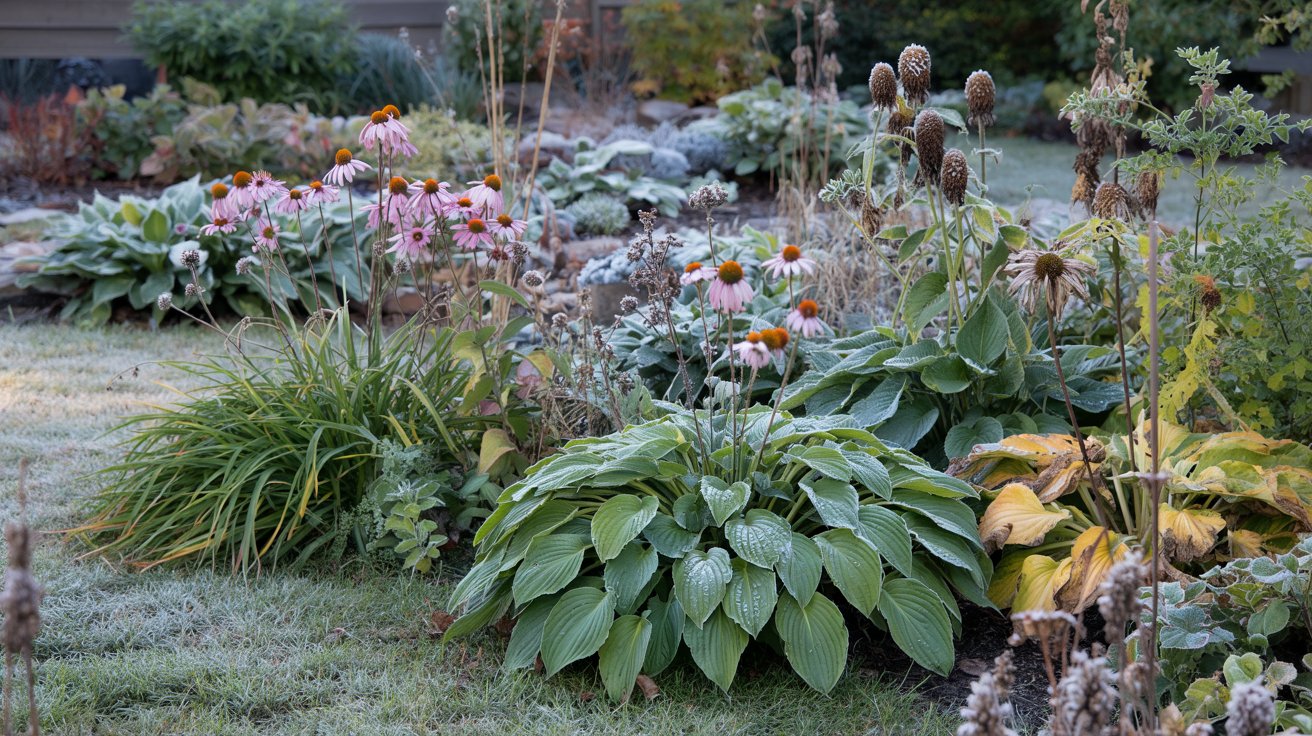
- Purple Coneflower: Seed heads persist through winter and provide food for goldfinches, making it a dual-season plant beyond its summer bloom window.
- Daylily: Dry-soil resilience makes daylilies a practical choice for sloped sites where irrigation is difficult, though they rebound faster with consistent moisture.
- Siberian Iris: Unlike bearded iris, this species tolerates wet soil in spring - critical in zones 3-4 where snowmelt can saturate beds for weeks.
- Hosta: Leaf size ranges from 2 inches to over 18 inches depending on cultivar; 'Sum and Substance' reaches 3 feet wide and handles zone 3 consistently.
- Black-Eyed Susan: Technically a short-lived perennial, it self-seeds aggressively enough to maintain a permanent colony without replanting.
- Creeping Phlox: Blooms before most perennials break dormancy, covering slopes and rock walls in dense pink, white, or lavender color as early as April in zone 5.
Minnesota Department of Agriculture zone 3 hardiness data supports coneflower and black-eyed susan as reliable self-sustaining options for exposed northern sites with minimal amendment.
If you're also managing a cold-climate Japanese maple, position your coneflowers or black-eyed susans nearby — they share full-sun requirements and similar watering schedules, making bed management easier.
How to Choose, Plant, and Pair These Perennials?
Selecting a zone-rated plant is only the first step. Microclimates within your yard - a north-facing slope, a windbreak hedge, a low-lying frost pocket - can shift effective hardiness by a full zone in either direction.
A spot sheltered by a south-facing wall, for instance, may allow a zone 5 plant to survive reliably in a zone 4 garden. Exposed, wind-swept sites push the opposite direction.
Avoid planting cold-hardy perennials in low spots where water pools after snowmelt. Standing water combined with repeated freeze-thaw cycles in zones 3–4 damages root systems far more than dry cold alone.
Pairing these plants by height creates layered structure that reads well in winter too. Hosta and creeping phlox work as low borders; coneflower and black-eyed susan anchor mid-beds at 24-36 inches; Siberian iris provides vertical contrast at the back.
If you're expanding beyond perennials, comparing hydrangea types helps identify which species handle zone 4 winters without dieback - panicle hydrangeas are the most reliable cold-climate option.
Care Tips and Seasonal Adjustments
These perennials are low-maintenance by design, but seasonal timing still matters. Cutting back stems at the wrong time, or pulling mulch too early, can set plants back by weeks in a zone 3 spring.
Most of the seven plants listed require minimal intervention once established - but "minimal" doesn't mean zero. A few well-timed actions each season make a measurable difference in bloom quality and long-term vigor.
- Fall cutback timing: Leave coneflower and black-eyed susan stems standing through winter - seed heads feed birds and the stems act as natural snow catches that insulate crowns.
- Spring emergence: In zone 3, hosta and bleeding heart may not emerge until late May. Don't assume they've died before the 6-week mark after your last frost date.
- Mulch removal: Pull back winter mulch gradually once nighttime temps stay consistently above 28°F. Sudden exposure to a late hard freeze can damage new growth more than leaving crowns unprotected all winter.
- Division schedule: Daylilies and hostas benefit from division every 3-5 years to prevent clump crowding that reduces bloom production. Early spring, just as growth tips emerge, is the easiest time to divide.
Sheltered microclimates - against a south wall, or in a walled courtyard - can push bloom times 2-3 weeks earlier than exposed beds in the same yard.
If you're interested in what blooms before these perennials break dormancy, winter-blooming plant options cover species that flower in late February and March.
For gardeners managing dahlias alongside cold-hardy perennials, the dahlia overwintering process is worth reviewing - dahlias are not cold hardy and require tuber storage in zones 3-5, unlike the perennials in this list.
Zone 3 gardens can gain a full season's worth of cold protection by using row cover fabric in spring and fall during unexpected hard frosts. A single layer of frost cloth keeps air around plant crowns 4–6°F warmer than ambient temperature — often enough to prevent frost damage on new growth.
Pairing cold-hardy perennials with zone-appropriate shrubs and trees rounds out a winter-resilient garden. Check our year-round planting guides for region-specific timing and companion planting suggestions beyond the perennial list above.
If you want to add structural variety, hydrangea growing basics walk through panicle and smooth hydrangea cultivars that pair well with Siberian iris and coneflower in zone 4-5 mixed borders.
For accent color in late summer and fall, orange-flowering perennials like helenium and hemerocallis cultivars extend the season after coneflowers fade - several are rated to zone 3.
Frequently Asked Questions
Siberian iris, purple coneflower, and creeping phlox are proven zone 3 performers, surviving minimum temperatures of -40°F without mulch protection once fully established.
Plant in late spring after the last frost date, typically late May to early June in zone 3. This gives roots 16–18 weeks to establish before the first fall freeze.
Frost tolerance refers to surviving brief dips below 32°F, while winter hardiness means surviving sustained freezes — often weeks below 0°F — without crown or root damage.
Several are. Siberian iris, creeping phlox, and coneflower are rarely browsed by deer. Hosta and daylily, however, are frequently targeted and need protection in high-deer-pressure areas.
None of the seven listed bloom in true winter in zones 3–5. Creeping phlox comes closest, flowering in April — often before the last frost date in zone 4.
Pin it for your next best cold hardy plants project.