A lawn that goes brown by July isn't a water problem - it's a grass problem. Choosing the right species from the start means you water less, mow less, and spend less time worrying about the next dry stretch.
Drought-tolerant grasses survive low rainfall by rooting deep, going dormant strategically, or simply using water more efficiently than cool-season varieties. These aren't compromises.
This article covers four grasses - Bouteloua dactyloides (buffalograss), Cynodon dactylon (bermudagrass), Zoysia spp., and Paspalum notatum (bahiagrass) - ranked for practical home lawn use. Each entry includes water needs, regional fit, and what establishment actually looks like.
The WaterSense turfgrass guidance from the EPA makes clear that low-water lawn choices cut outdoor water use significantly. That's real money saved every summer.
We drew on U.S. extension research and federal water-efficiency data throughout, so every recommendation here has a source behind it - not just word-of-mouth.
Four drought-tolerant grasses — buffalograss, bermudagrass, zoysia, and bahiagrass — cover most U.S. climates and lawn types. Each offers deep roots, low irrigation needs after establishment, and a practical path from seed or sod to a finished lawn.
Water your new lawn deeply and infrequently from day one — even drought-tolerant grasses need consistent moisture during the first 6 weeks of establishment. Once rooted, cut back to once per week or less.
Top Drought-Tolerant Grasses for Lawns
These four grasses represent the most practical options for homeowners who want a low-water lawn that still looks presentable. Each one handles drought differently, so understanding the mechanism matters as much as the ranking.
Remember it later
Planning to try this recipe soon? Save it for a quick find later!
Knowing what each grass type offers before you buy seed or sod saves you from replanting in two years.
1. Buffalograss
Bouteloua dactyloides is native to the Great Plains and arguably the most drought-adapted turfgrass available for home lawns. Established lawns commonly need about 1 inch of water per week, and in many climates that comes entirely from rainfall, according to University of Arizona extension research.
It spreads by stolons, forms a fine-textured gray-green turf, and goes dormant in both hard freezes and extended heat. Best suited for Zones 3-9 in low-rainfall regions with full sun.
- Water need: Very low - 0.5-1 inch per week once established, often met by rain alone in the Great Plains.
- Traffic tolerance: Moderate - fine for family lawns, not for athletic fields.
- Shade tolerance: Poor - needs at least 6 hours of direct sun daily.
- Mow height: 2-4 inches; can be left unmowed for a naturalistic look.
2. Bermudagrass
Cynodon dactylon is the standard for warm-season drought tolerance across the South, Southwest, and transition zone. Its deep root system - reaching 6 feet in some soils - lets it pull moisture long after surface soil dries out.
Missouri extension research confirms bermudagrass as highly drought-tolerant with superior suitability for warm-season lawns.
It recovers fast from dormancy once rain returns, which makes it forgiving in unpredictable summers. If you're weighing your options, our bermuda vs. zoysia comparison breaks down the trade-offs in detail.
- Water need: Low to moderate - about 1-1.25 inches per week during active growth.
- Traffic tolerance: Excellent - widely used on sports fields and golf fairways.
- Shade tolerance: Poor - needs full sun to perform well.
- Mow height: 0.5-2 inches depending on variety.
3. Zoysiagrass
Zoysia spp. occupies a useful middle ground - it handles both warm summers and mild winters better than bermudagrass, making it the go-to for the transition zone and upper South. University of Florida extension lists zoysiagrass as a common drought-tolerant lawn option in warm climates.
It forms a dense, weed-suppressing turf that also handles moderate shade - a genuine advantage over bermuda and buffalograss.
- Water need: Low to moderate - 1 inch per week, less once deeply established.
- Traffic tolerance: Good - dense turf recovers well from foot traffic.
- Shade tolerance: Moderate - tolerates 3-4 hours of shade, unlike most warm-season grasses.
- Mow height: 1-2.5 inches depending on variety.
4. Bahiagrass
Paspalum notatum is the low-maintenance workhorse of the Deep South and Gulf Coast. It roots aggressively in sandy, infertile soils where other grasses struggle.
Mowing frequency is the main maintenance demand - it sends up seed heads quickly in summer.
Bahiagrass won't win beauty contests, but for a functional, low-input lawn in Zones 7-11, few grasses are easier to keep alive. Comparing it to natural versus artificial grass options often shifts homeowners toward keeping a living lawn.
- Water need: Very low - survives on rainfall alone in most of Florida and the Gulf Coast.
- Traffic tolerance: Moderate - tough but not as resilient as bermudagrass under heavy use.
- Shade tolerance: Poor - needs full sun for dense coverage.
- Mow height: 3-4 inches; mow weekly in summer to control seed heads.
| Grass | Best Zones | Weekly Water Need | Shade Tolerance | Traffic Tolerance |
|---|---|---|---|---|
| Buffalograss | 3–9 (low rainfall) | ~1 inch | Poor | Moderate |
| Bermudagrass | 7–10 | 1–1.25 inches | Poor | Excellent |
| Zoysiagrass | 5–10 | ~1 inch | Moderate | Good |
| Bahiagrass | 7–11 | Very low | Poor | Moderate |
How to Choose and Establish Drought-Tolerant Grass in Your Region?
Picking the right grass is only half the work. Establishment done poorly wastes the drought tolerance you paid for - especially if you water inconsistently in the first few weeks before roots anchor in.
A solid monthly lawn care schedule makes the early establishment period much less stressful to manage.
Aerating before establishment removes compaction that blocks root penetration. Our guide on when and how to aerate covers timing by grass type. Skip this step and even drought-tolerant roots may stay shallow.
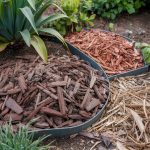
Xeriscape Lawn Design with Drought-Tolerant Grasses
Xeriscape doesn't mean no grass. It means using water-efficient plants - including turfgrass - strategically, so irrigation goes only where it's needed.
A well-designed xeriscape lawn can cut outdoor water use by 50-75% compared to a conventional cool-season lawn.
The EPA's WaterSense turfgrass program supports exactly this approach: right-sizing turf areas and choosing species that match local rainfall rather than fighting it.
In the arid Southwest (Zones 8–10), buffalograss and bermudagrass work best in full-sun turf zones, while native groundcovers handle shaded or sloped areas. In the humid Southeast, bahiagrass and zoysia tolerate seasonal flooding better than any xeriscape alternative.
The core xeriscape principle is zoning: place your drought-tolerant turf in the areas that get foot traffic, and replace lawn edges with native mulched beds or low-water perennials. This reduces your irrigated turf area without eliminating the lawn feel.
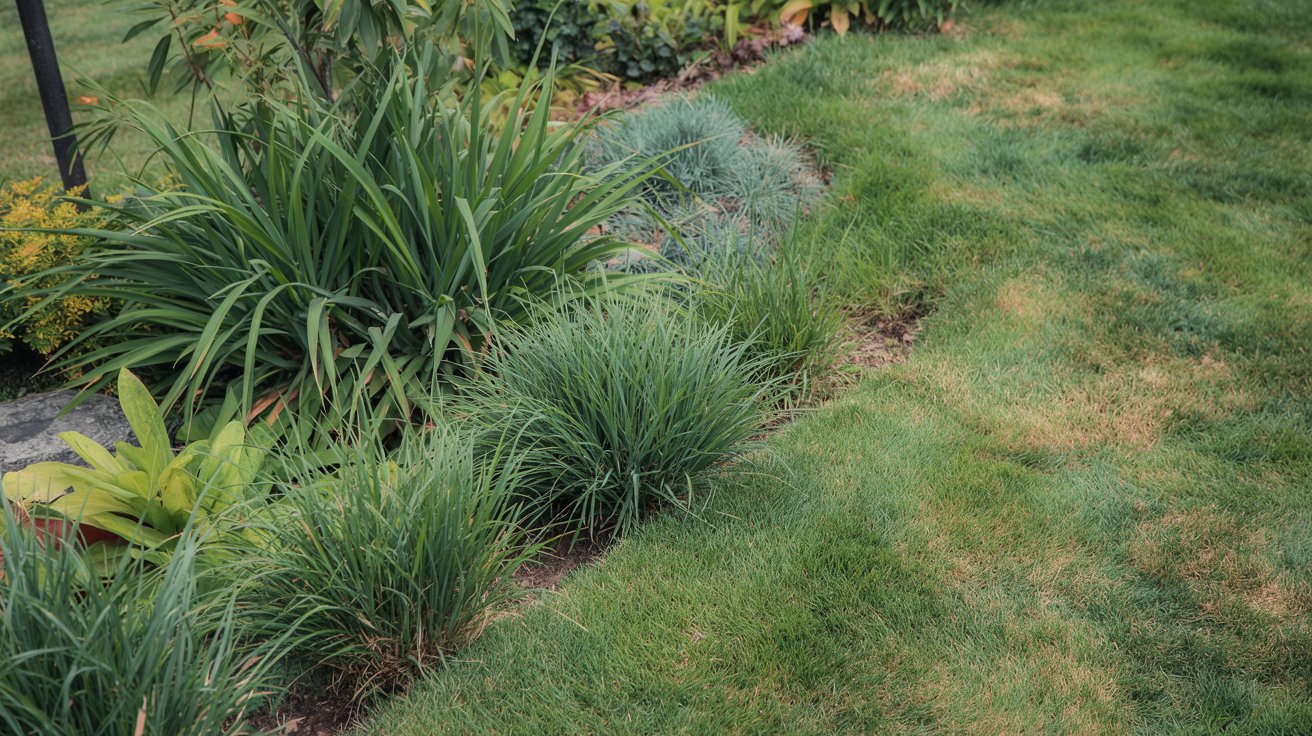
For warm-season regions, bermudagrass and bahiagrass pair well with native ornamental grasses like Muhlenbergia capillaris (pink muhly grass) along borders. This creates a visual transition that signals the design is intentional, not just neglected.
- Turf zone: Reserve bermudagrass or zoysia for high-use areas - play zones, paths, front yard viewing strips.
- Transition borders: Edge turf areas with 3-4 inch mulch beds and drought-adapted natives to cut irrigation needs at the perimeter.
- Slope areas: Buffalograss handles dry slopes in Zones 5-9; bahiagrass stabilizes sandy slopes in the Gulf Coast region.
- Irrigation scheduling: Run drip or targeted sprinklers for turf zones only - never broadcast-irrigate native or xeriscape beds alongside turfgrass.
Seasonal scheduling matters too. Warm-season grasses go dormant in winter, which means zero irrigation needed from November through March in most of the South.
Use that window to prepare your landscape for summer by refreshing mulch, trimming borders, and checking irrigation heads for leaks before the growing season starts.
If you're converting from a cool-season lawn like Kentucky bluegrass or fescue, plan for a full growing season transition. Overseed with ryegrass in fall only if you need green color through winter - otherwise, let the warm-season grass go dormant naturally and save the irrigation.
For a direct comparison of switching from ryegrass to fescue, our guide walks through the timing and costs involved.
The right lawn care tools make a real difference in xeriscape maintenance. Basic soil and irrigation equipment - a moisture meter, a quality hose timer, and a sharp reel mower - handle 90% of what drought-tolerant turf actually needs.
Frequently Asked Questions
Drought-tolerant grass survives extended dry periods through deep rooting, dormancy, or low water use. Most warm-season species need 25–50% less water than cool-season alternatives like Kentucky bluegrass.
Buffalograss and bermudagrass are the top xeriscape turf choices. Buffalograss needs as little as 0.5 inches of water per week once established, often met by rainfall in the Great Plains.
Established buffalograss typically needs about 1 inch of water per week, according to University of Arizona extension research. In many Great Plains locations, natural rainfall covers that entirely.
Yes — buffalograss is cold-hardy to Zone 3 and native to the northern Great Plains. It goes fully dormant in winter but greens up reliably each spring once soil temperatures reach 60°F.
Bermudagrass is highly drought-tolerant due to roots that can extend 6 feet deep in loose soils. Missouri extension research confirms it as one of the most drought-resistant warm-season lawn grasses available.
Pin it for your next best drought tolerant grasses project.