You can completely change how your backyard feels after dark without hiring an electrician or spending thousands of dollars.
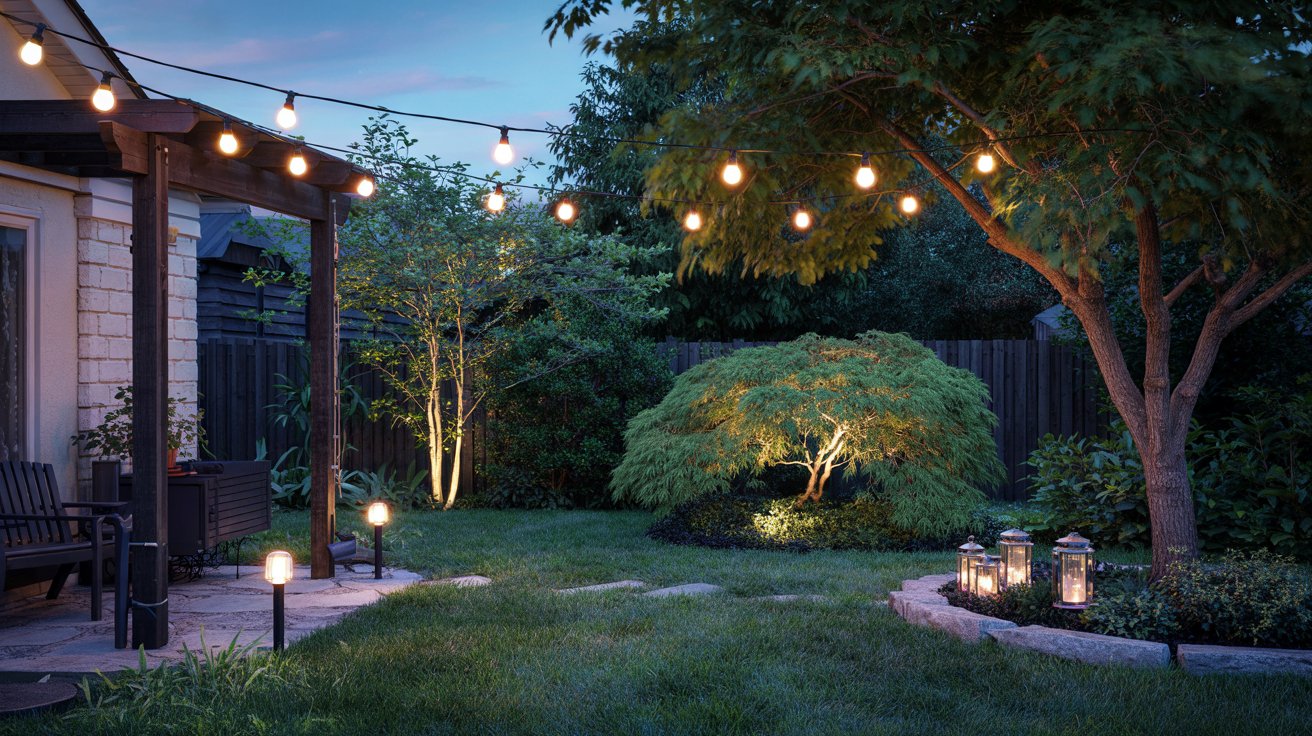
The right outdoor lighting turns a plain yard into a space you actually want to use at night - safer walkways, a more welcoming patio, and a garden that looks intentional rather than just dark.
Most homeowners pick lights based on what looks good at the store, then wonder why the result feels underwhelming or patchy.
Matching the right lighting type to the right job is what separates a yard that glows evenly from one with a few bright spots and a lot of shadow.
Solar, low-voltage, and string lights each solve different problems. Solar lights are the easiest to install but the least reliable in cloudy climates.
Low-voltage systems give you the most control but require a transformer and some planning. String lights cost almost nothing and deliver atmosphere fast - but they're not a substitute for path or security lighting.
Before buying anything, it helps to think about what your yard needs most - ambiance, safety, or both. This guide ranks seven practical outdoor lighting ideas by versatility and value, then maps each one to the yard size where it works best.
Seven outdoor lighting ideas ranked by versatility — from solar path lights and low-voltage spotlights to string lights and security flood lights. Each idea is matched to its best yard size and use case, with rough cost guidance and energy-efficiency notes.
7 Best Outdoor Lighting Ideas, Ranked
These seven ideas cover the full range of yard lighting needs - from basic safety to full backyard ambiance. Each ranking reflects real-world ease, cost, and how widely the idea applies across different yards.
Remember it later
Planning to try this recipe soon? Save it for a quick find later!
According to DOE lighting design principles, layering task, ambient, and accent lighting produces the most functional and efficient outdoor spaces.
Every entry below includes a best-use verdict so you can skip straight to what fits your situation.
| Rank | Lighting Idea | Best For | Approx. Cost | Verdict |
|---|---|---|---|---|
| 1 | Low-Voltage LED Path Lights | Walkways, driveways | $80–$300 system | Most versatile overall |
| 2 | String Lights (Overhead) | Patios, pergolas | $20–$80 | Fastest ambiance boost |
| 3 | Solar Stake Path Lights | Low-traffic paths | $15–$60 | Best no-wiring option |
| 4 | Low-Voltage Spotlights | Trees, architectural features | $100–$400 system | Best accent lighting |
| 5 | Motion-Sensor Flood Lights | Security, garage, shed | $30–$120 | Best for safety |
| 6 | In-Ground Well Lights | Uplighting walls, pillars | $150–$500 | Most polished look |
| 7 | Deck & Step Lights | Stairs, raised decks | $60–$200 | Best injury-prevention |
Low-voltage LED path lights rank first because they work in nearly every yard, connect to a programmable transformer, and last 25,000-50,000 hours per bulb. They consume roughly 4-7 watts per fixture while still throwing enough light - around 40-100 lumens - for safe walkway navigation.
Industry guidelines from landscape lighting professionals recommend spacing path lights every 6-8 feet for even coverage without dark gaps.
String lights rank second purely on speed and cost. A single strand across a pergola or fence line changes the feel of a patio in under an hour, and weatherproof LED string sets draw as little as 15-25 watts for a 48-foot run.
They don't replace functional lighting, but nothing else delivers atmosphere this cheaply.
Solar path lights drop to third because their output depends entirely on sun exposure. A solar stake light typically stores 4-8 hours of charge and produces 10-30 lumens - enough to mark a path, but not enough to read by or replace low-voltage fixtures.
In cloudy regions or shaded yards, they can fail to charge fully, leaving paths dark by 10 p.m.
Low-voltage spotlights give you precise beam control, which matters when you're uplighting a tree or washing light across a textured wall. Most kits let you aim the beam within a 30-120 degree spread.
Pair them with your landscape lighting installation project if you're already running wire.
- Motion-sensor flood lights: Choose models rated at 1,000-2,000 lumens for driveways and garage areas. LED versions with adjustable sensitivity run on standard 120V outlets and typically cost $30-$120 installed.
- In-ground well lights: These require digging and conduit, but the result - a completely flush, glare-free uplight - looks far more finished than a surface-mounted spike. Expect to budget $150-$500 per fixture installed.
- Deck and step lights: Low-profile LED step inserts rated at 20-50 lumens each are enough to prevent trips without washing out the deck in bright light. Most run on the same low-voltage transformer as your path lights.
Connect low-voltage path lights, spotlights, and step lights to a single transformer with a built-in timer or photocell. A 150-watt transformer handles most average yards, and automatic shutoff can cut energy use by 30–50% compared to leaving lights on all night.
Match the Lighting Idea to Your Yard Size
Yard size changes which ideas make sense. A small patio doesn't need a full low-voltage transformer system - string lights and two or three solar stakes may be enough.
A large property with long driveways and multiple garden beds, on the other hand, will outgrow solar stakes quickly. The University of Maryland Extension recommends choosing fixtures based on lumen output matched to the task, not just fixture count.
Use the table below as a starting point, then adjust based on how much shade your yard gets and how many distinct zones - path, patio, garden - you're working with.
| Yard Size | Best Ideas | What to Skip | Budget Range |
|---|---|---|---|
| Small (under 500 sq ft) | String lights, solar stakes, step lights | Full LV transformer system | $40–$150 |
| Medium (500–1,500 sq ft) | LV path lights, string lights, motion sensor | In-ground well lights (high cost) | $150–$500 |
| Large (1,500+ sq ft) | LV system (path + spotlight), flood lights, well lights | Solar-only setups | $400–$1,500+ |
Small patios benefit most from overhead string lights because they create a ceiling effect that makes a compact space feel complete. A single 48-foot weatherproof strand, hung in a zigzag pattern between two posts or a fence line, covers most small patios without any wiring beyond an outdoor outlet.
If you're working with a tight layout, our small yard lighting tips show how to layer light without overcrowding.
Medium yards hit the sweet spot where a low-voltage transformer pays off.
A 150-watt transformer running 10-12 path lights plus two spotlights stays well within capacity and, per DOE efficiency guidance, LED fixtures on a timer will draw less power annually than a single incandescent porch bulb left on all night.
Large yards with long driveways or multi-zone gardens need a 300-watt or multi-zone transformer to avoid voltage drop - the gradual dimming that happens when too many fixtures share a single wire run over a long distance.
Keep wire runs under 100 feet per zone where possible.
In the Pacific Northwest or other cloudy regions, solar lights often underperform from October through March. Low-voltage LED fixtures with a photocell timer are more reliable in low-sun climates, regardless of yard size.

Solar vs Low-Voltage vs String: Quick Comparison
Choosing between solar, low-voltage, and string lights comes down to where you're installing, how much control you want, and whether you're running wire. Each type has a distinct set of trade-offs that matter over a 3-5 year ownership window, not just at purchase.
For a full cost breakdown, our outdoor lighting cost guide covers fixture and installation pricing in detail.
The compare block below focuses on the factors most homeowners weigh when deciding between a permanent system and a no-wiring approach.
Low-voltage LED wins on longevity. Solar light batteries - typically NiMH or lithium - degrade after 500-800 charge cycles, meaning most units need battery replacement or full replacement within 2-4 years.
LED fixtures on a low-voltage system, by contrast, last a decade or more with almost no maintenance. The DOE lighting efficiency data confirms LEDs use at least 75% less energy than incandescent equivalents while lasting 25 times longer.
String lights sit in a separate category - they're not a replacement for either system but a complement. Per low-voltage lighting guidelines, decorative overhead string lighting should always be supplemented with task-level path or step lights for safety.
- Zero installation cost — no transformer, no wire, no electrician
- Fully portable — move fixtures anytime without rerouting wire
- No electricity bill impact, ideal for rarely-used accent spots
- Consistent brightness regardless of cloud cover or season
- Longer total lifespan — 10–15 years vs 2–4 for solar
- Programmable timers and photocells reduce energy waste automatically
Installation and Safety Tips
Most low-voltage landscape lighting is genuinely DIY-friendly - the 12-volt current is safe to handle and doesn't require an electrician. That said, a few mistakes cause most of the problems homeowners report: overloaded transformers, buried wire at the wrong depth, and fixtures aimed where they cause glare rather than light.
Our guide to installing landscape lighting walks through the full process step by step.
Start by calculating your total fixture wattage before buying a transformer. Add up every fixture's wattage, then choose a transformer rated at least 20% above that total to avoid running it at full capacity constantly.
A transformer working at 100% load runs hot and fails faster.
- Bury low-voltage wire 3-6 inches deep: Shallower than 3 inches risks nicks from shovels and aerators. You don't need conduit for low-voltage, but depth protects the cable.
- Aim spotlights at 45 degrees or less: Fixtures angled too steeply throw glare into neighbors' yards and windows, contributing to light pollution flagged by NPS dark-sky principles.
- Use connectors rated for outdoor use: Cheap barrel connectors corrode within one season. Gel-filled or waterproof snap connectors last far longer in soil contact.
- Install a photocell or timer on every transformer: Per UMD Extension energy guidance, automatic controls cut outdoor lighting energy use by 30-50% without any change in how the yard looks.
Test your full fixture layout with extension cords before digging anything. Lay wire along the surface, plug in, and walk the yard at night to confirm placement. Moving stakes before burying wire costs nothing — moving buried wire costs an hour of work.
String lights need two specific checks before installation: confirm the fixture is rated UL Listed for outdoor use, and make sure the anchor points - hooks, eye bolts, or cable posts - can hold the strand weight in wind.
A 48-foot strand of glass-globe LED lights can weigh 8-12 pounds and acts like a sail in gusty conditions.
If you're adding a fire pit area or other focal point to your yard, plan the lighting layout around it before running any wire - retrofitting around hardscape is far harder than planning for it upfront.
Consider your overall yard design priorities before committing to a lighting plan.
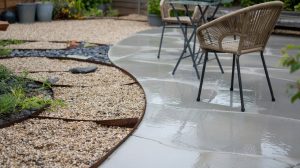
If your yard has a privacy fence or gravel patio, you can mount low-voltage wire along fence posts instead of burying it — use UV-resistant staples or clips rated for outdoor use. This approach also makes it easy to reposition fixtures later. Use our backyard cost calculator to estimate total project spend before purchasing.
Finally, check the IP (Ingress Protection) rating on every fixture. IP65 or higher means the fixture is fully dust-tight and protected against water jets - suitable for in-ground or near-sprinkler placement.
IP44 is fine for covered patios but not for exposed garden beds.

Frequently Asked Questions
Overhead string lights work best for small patios. A 48-foot LED strand in a zigzag pattern covers most compact spaces and needs only one outdoor outlet, no wiring runs required.
Walkway path lights work well at 40–100 lumens per fixture, spaced every 6–8 feet. Step lights need only 20–50 lumens each — enough to prevent trips without harsh glare.
Low-voltage LED systems last 10–15 years. Solar lights are limited by their rechargeable batteries, which typically fail after 500–800 charge cycles, meaning replacement within 2–4 years.
Yes — low-voltage systems run at 12 volts and are safe for DIY installation. You only need an electrician if you're adding a new 120V outlet for a transformer or flood light.
Warm white (2700K–3000K) flatters most plants and hardscape. Cool white above 4000K can look clinical outdoors and, per NPS dark-sky principles, contributes more to light pollution than warmer tones.
Pin it for your next best outdoor lighting ideas project.