For most backyard gardeners, the choice between topsoil and garden soil comes down to one practical question: will this fill my beds without turning into a waterlogged brick by August?
The answer depends on what you're actually buying - because neither label guarantees what's inside the bag.
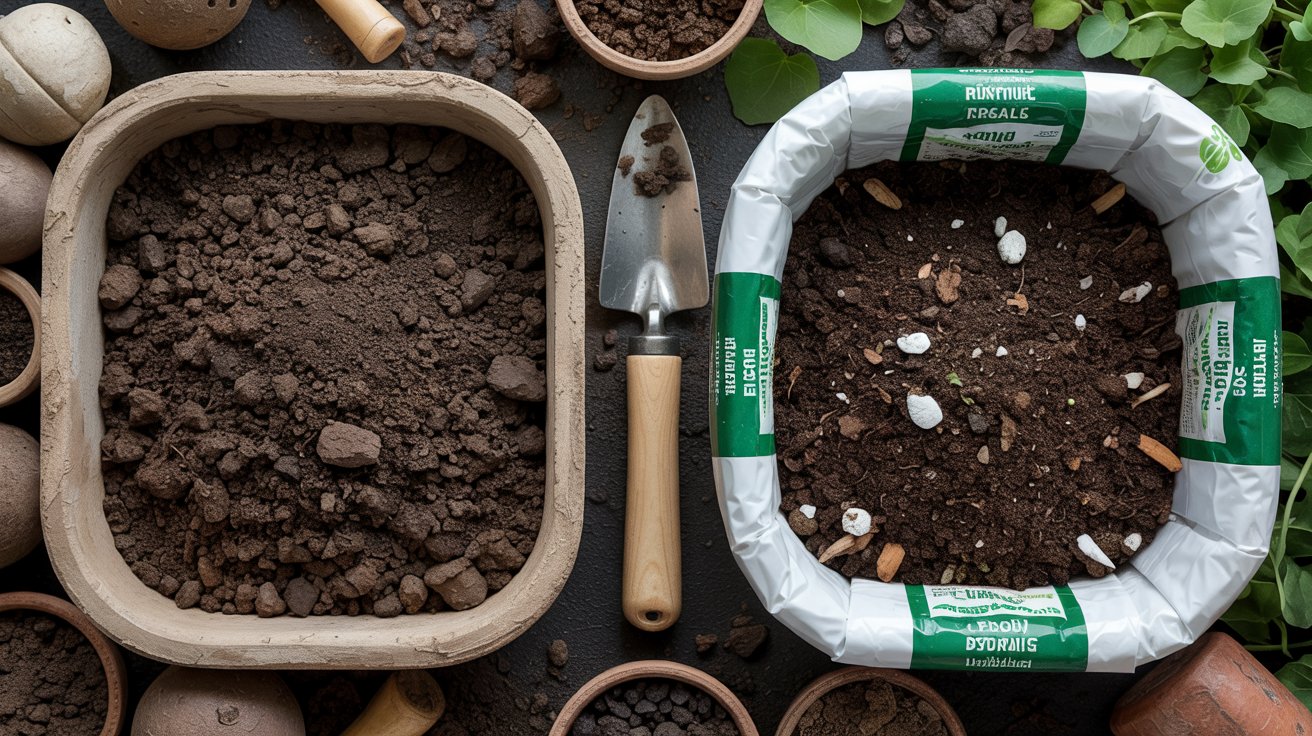
Topsoil is the real, mineral-based upper layer of earth, sold in bulk or bags. Garden soil is typically a blended, bagged product marketed for planting.
Neither is automatically better, but for raised beds especially, straight versions of both fall short without amendment.
University extension programs consistently point to the same solution: a raised bed soil blend that combines topsoil with compost in the right ratio. That blend outperforms either product alone on drainage, aeration, and long-term nutrient retention.
Exact ratios shift based on your bed depth, local material quality, and budget. This guide gives you a direct verdict first, then unpacks the cost, durability, and a step-by-step mixing framework to make the call confidently.
For raised beds, a topsoil-compost blend (roughly 60% topsoil, 40% compost) or a pre-mixed raised bed soil outperforms straight topsoil or bagged garden soil. Garden soil is often too dense.
Bulk topsoil is cheapest per yard; pre-mixed bed soil saves labor.
Topsoil vs Garden Soil: Definitions
Topsoil refers to the uppermost layer of native earth - typically the top 10-12 inches of ground, though this varies by site. When bagged or sold in bulk, it's often stripped, screened, and blended to a consistent texture.
Remember it later
Planning to try this recipe soon? Save it for a quick find later!
According to UC ANR soil resources, topsoil quality ranges widely depending on where it was sourced and how it was processed.
Garden soil, by contrast, is a manufactured blend. Manufacturers combine topsoil with peat moss, bark fines, or compost, then sell it in bags at garden centers.
It's more consistent than raw topsoil, but the added density can work against you in raised beds.
| Feature | Topsoil | Garden Soil |
|---|---|---|
| Source | Stripped and screened native earth | Pre-blended manufactured product |
| Texture | Varies: sandy, loamy, or clay-heavy | Typically denser, more uniform |
| Organic content | Low to moderate | Moderate (peat, bark, compost added) |
| How sold | Bulk cubic yards or bags | Bagged only (typically 1–2 cu ft) |
| Best use | Filling large areas; base layer for beds | Topping existing ground beds |
| Raised bed rating | Good — when amended with compost | Poor alone — too dense without extra organic matter |
Iowa State University Extension notes that garden soil in raised beds compacts over time and restricts root development without added organic matter. That density is the core problem - roots struggle to push through, and water pools rather than draining freely.
Topsoil sold as "loam" sits in between: it's mineral-based but often has a sandier structure that drains better. The University of Maine Extension notes that mineral soils marketed as topsoil or loam improve meaningfully once compost is incorporated to boost organic matter and microbial activity.
Understanding what's actually different in each product - not just the label - shapes every cost and mixing decision that follows.
If you want a broader picture of how these products fit into the wider spectrum of materials, the different soil types explained guide covers loam, clay, sandy soil, and more in full detail.
Cost and Availability for Beds
Price is often the deciding factor once you understand what each product does. Bulk topsoil is almost always cheaper per cubic yard than bagged options, but delivery minimums and local availability affect the real math.
A standard 4x8 raised bed at 12 inches deep needs about 2.67 cubic yards of material - just under 3 yards if you account for settling. At that volume, bulk sourcing beats bagged products significantly on cost.
According to Angi's topsoil cost data, bulk topsoil runs $10-$55 per cubic yard depending on quality tier and whether delivery is included. Premium screened loam sits closer to the upper end of that range.
| Material | Cost/cu yd | Total Est. Cost |
|---|---|---|
| Bulk topsoil (low quality) | $10 | ~$27 |
| Bulk topsoil (screened) | $40 | ~$108 |
| Bulk raised bed mix | $56 | ~$151 |
| Bagged garden soil | $75 avg | ~$200+ |
Kansas City Composting prices their bulk raised bed mix at around $56 per cubic yard, blending native soil, compost, pine bark, and sand.
That product eliminates the need to source and mix components separately, which saves time even if the unit price runs higher than raw topsoil.
Bagged garden soil from big-box stores looks affordable per bag, but the cost per cubic yard adds up fast - often exceeding $80-$90 per yard once you do the math. For large beds, bulk materials almost always win on price.
Keep in mind that mulch layered over your bed surface can also reduce how often you need to amend or top up soil - see our breakdown of mulch pricing per yard if you're budgeting the full bed setup.
When comparing bulk topsoil prices, always ask whether the price includes delivery and if the soil is screened. Unscreened topsoil can contain rocks, roots, and debris that you'll spend time removing.
Core Differences by Attribute
Knowing each product's label is one thing. Understanding how each performs in an actual bed over a full growing season is what drives the real decision.
These five attributes matter most for raised bed gardening.
The University of Minnesota Extension recommends raised bed mixes with compost specifically because they improve drainage and aeration over dense mineral soil. That improved structure is what keeps roots healthy and water moving through the bed rather than pooling at the bottom.
Weed seed content is the one area where garden soil edges out raw topsoil. Bulk topsoil sourced from fields or construction sites can carry weed seeds and debris that show up as a dense carpet of unwanted seedlings in spring.
Asking your supplier whether the topsoil is heat-treated or screened reduces that risk considerably.
Bagged garden soil labeled "in-ground use" is not the same as raised bed mix. Using it straight in a deep bed without amendment leads to compaction that can cut root depth by half within a season.
Long-term durability favors topsoil blended with compost. The mineral base holds structure across years, while the organic matter from compost feeds microbial life and maintains pore space.
Garden soil mixes, especially those heavy in peat, break down faster and need annual topping up to maintain volume and performance.
For root vegetables especially, these differences are consequential. Growing carrots in beds demands loose, well-draining soil to at least 12 inches - a compacted garden soil blend will fork and stunt roots before they reach full length.
- Cost-effective at scale: Bulk topsoil is far cheaper per cubic yard for filling multiple or deep beds.
- Structural longevity: Mineral base holds bed shape and volume across multiple seasons.
- Amendment flexibility: Mix in exactly as much compost, perlite, or fertilizer as your crop needs.
- Widely available: Most landscaping suppliers stock bulk topsoil year-round.
- Lower weed risk: Processed blends carry fewer viable weed seeds than raw topsoil.
- No delivery needed: Bagged product works for small beds without requiring bulk delivery minimums.
- Ready to use: Some blends include starter nutrients, reducing the need to add separate fertilizer at planting.
If you're weighing aeration amendments beyond just compost, understanding the difference between perlite and vermiculite drainage helps you choose the right additive for your bed's specific drainage and moisture-retention needs.
How to Choose: a 4-Step Process?
Most bed-filling mistakes happen at the planning stage - not at the garden center. Working through these four steps before you buy saves money and avoids a mid-season realization that your soil is wrong for your setup.
If you're also building the bed frame, wood choice affects how you manage soil moisture long-term. Cedar resists rot naturally and won't leach chemicals — compare cedar vs pressure-treated lumber before you commit to a frame material.
Once you've filled and planted, ongoing soil health depends on what you add each season. Knowing when to use organic vs synthetic fertilizers keeps nutrient levels stable without degrading the soil structure you built.
Pairing that with a consistent mulch layer - covered in our guide on reducing soil moisture loss - extends the life of your bed mix by reducing evaporation and temperature stress on soil microbes.
For container gardens specifically, neither topsoil nor standard garden soil is the right choice - both compact too much in pots. A dedicated potting mix with perlite performs better in containers, and our roundup of potting mixes for containers breaks down the best options by plant type.
All of this connects back to the broader decisions covered in the soil health and amendment resource hub.
Frequently Asked Questions
Loam is a specific soil texture — roughly 40% sand, 40% silt, and 20% clay. Topsoil is a position term; loam describes the texture, and screened topsoil sold as "loam" is often the best bagged topsoil option for beds.
Yes — this is the recommended approach. Use roughly 60% topsoil and 40% compost by volume. That ratio gives roots the mineral structure of topsoil plus the drainage and nutrients that compost provides.
In ground-level beds with good native drainage, bagged garden soil can work short-term. In raised beds, it compacts within one season and restricts root depth — a topsoil-compost blend performs better for vegetables over multiple years.
A 4x8 bed at 12 inches deep needs about 2.67 cubic yards total. Add 10–15% extra to account for settling after watering. Order roughly 3 cubic yards to fill that bed comfortably.
Neither topsoil nor garden soil works well in containers — both compact too densely in pots. Use a potting mix that includes perlite or bark for drainage; containers need a mix specifically designed for restricted root space.
Pin it for your next top soil vs garden soil project.