Most homeowners spend between 40 and 60 hours per year pushing a mower across their lawn. A robotic mower promises to reclaim every one of those hours - but only if the math actually works out in your favor over a realistic timeframe.
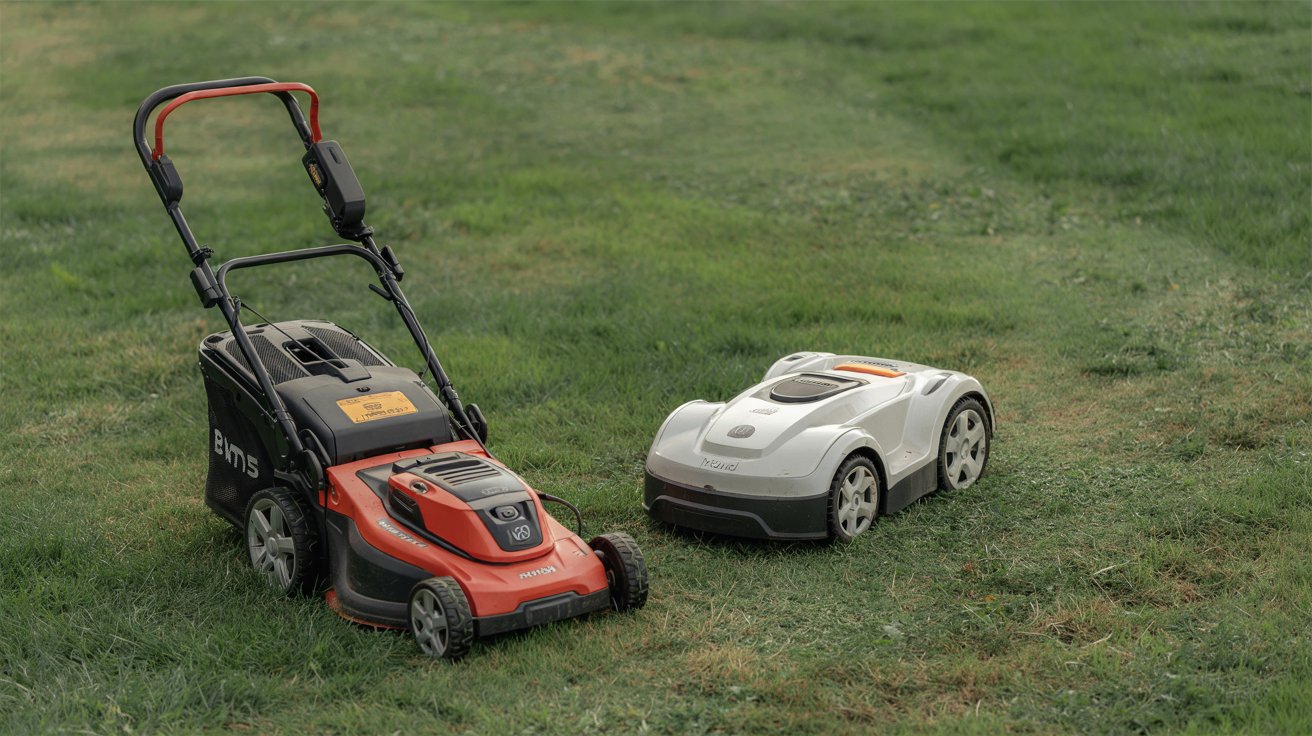
The upfront cost gap between these two mower types is real and significant. A decent push mower costs $300-$600, while entry-level robot mowers start around $700 and mid-range models easily run $1,500-$2,500.
That price difference is only part of the story. Labor, maintenance schedules, yard complexity, and how long you plan to own the mower all shift the calculation in ways that raw sticker prices don't capture.
We looked at five-year total cost of ownership, real-world durability data, and deployment evidence - including campus-scale robotic mowing at Carnegie Mellon - to give you a grounded verdict rather than a spec-sheet comparison.
If you're also weighing gas vs electric mower differences, the same cost-over-time logic applies, and the numbers in this article will help frame that decision too.
Robot mowers win on long-term labor savings for yards under ½ acre with simple layouts. Push mowers stay ahead on upfront cost, slope handling, and terrain flexibility.
Over five years, the robot mower break-even point lands around year three for most suburban homeowners who value their time.
Bottom-Line Verdict
For a flat suburban lawn between 5,000 and 20,000 square feet, a mid-range robot mower returns its investment within two to three mowing seasons when you factor in time savings.
Remember it later
Planning to try this recipe soon? Save it for a quick find later!
Push mowers hold a clear edge on sloped terrain, lots with heavy obstacles, and any situation where your budget can't absorb a $1,000-plus purchase upfront.
The decision hinges on three variables: yard complexity, available time, and how long you plan to stay in the home. If any two of those three favor simplicity and long tenure, a robot mower is worth the premium.
Newer GPS and RTK models like the Segway Navimow's yard coverage have pushed the practical upper limit for robotic mowing well past a half-acre, which changes the calculus for larger properties.
Even so, Carnegie Mellon's autonomous mower deployment confirms that reliable operation still requires thoughtful setup and ongoing monitoring.
- Small flat lots under 5,000 sq ft: Push mower wins - mowing time is short enough that a robot mower's cost rarely pays back.
- Suburban lawns 5,000-20,000 sq ft: Robot mower earns its keep within 2-3 seasons for time-strapped owners.
- Slopes over 35%: Push or self-propelled gas mower; most robot mowers lose traction and accuracy on steep grades.
- Large estates over ½ acre: Premium robot mowers ($2,500-$3,500+) are viable, but setup complexity rises sharply.
Push mowers also win on flexibility for irregular lot shapes, narrow gates, and areas with dense landscaping beds. A robot mower that can't navigate a yard efficiently will underperform its spec-sheet numbers significantly.
You'll find our ranked picks in top-rated robotic mower models if you're ready to compare specific units.
Cost Snapshot: Upfront and 5-Year TCO
Sticker price is the first number most buyers check - and it's where push mowers dominate. A corded electric push mower starts around $150-$250, while a reliable self-propelled gas model runs $350-$600.
Robot mowers enter the market at roughly $700 for a basic boundary-wire unit covering up to 5,000 square feet.
Mid-range robot mowers covering up to 20,000 square feet typically run $1,200-$2,000, and premium GPS/RTK models - the kind that need no boundary wire - start at $2,500 and climb past $3,500 for larger estates.
Robotic mower pricing tiers break down into entry, mid, and premium categories that correspond almost directly to the square footage covered and the navigation technology used.
| Mower Type | Tier | Upfront Cost | Coverage | 5-Year TCO Est. |
|---|---|---|---|---|
| Corded Push | Entry | $150–$250 | Any size (cord limit) | $300–$500 |
| Gas Self-Propelled | Mid | $350–$600 | Any size | $900–$1,400 |
| Robot (boundary wire) | Entry | $700–$1,100 | Up to 5,000 sq ft | $1,000–$1,600 |
| Robot (boundary wire) | Mid | $1,200–$2,000 | Up to 20,000 sq ft | $1,600–$2,400 |
| Robot (GPS/RTK) | Premium | $2,500–$3,500+ | ½ acre and up | $3,000–$4,500 |
The 5-year TCO gap narrows when you account for fuel, oil changes, spark plugs, and blade sharpening costs for gas push mowers. A gas mower realistically costs $80-$150 per year in consumables and servicing, adding $400-$750 over five years on top of the purchase price.
The Navimow's model range illustrates how quickly prices scale with coverage area - the H800E covers roughly ¾ of an acre and retails near $2,300, putting it firmly in the mid-to-premium overlap zone.
Battery replacement is the sleeper cost in the robot mower budget. Most lithium-ion packs degrade noticeably after 500-800 charge cycles, which on a typical mowing schedule translates to 4-6 years.
Budgeting $200-$400 for a replacement pack keeps the five-year TCO estimate honest. For choosing a mower for compact yards, the corded push mower often wins on pure cost grounds with no battery concerns at all.

Durability and Maintenance
Push mowers have a durability edge rooted in mechanical simplicity. A well-maintained gas push mower can last 10-15 years with regular oil changes and blade sharpening.
Corded electric models last just as long with almost no maintenance beyond keeping the blade sharp.
Robot mowers carry more failure points by design: the motor, battery, boundary-wire circuit, rain sensor, lift sensor, and charging dock are all components that can fault independently.
That said, premium brands report 8-10 year lifespans under normal residential conditions, and University of Vermont Sea Grant's coverage of their campus robotic mower highlights that routine robotic mower care centers mostly on blade changes and dock cleaning rather than major repairs.
| Task | Robot Mower | Push Mower (Gas) |
|---|---|---|
| Blade replacement | Every 1–3 months (micro-blades) | Once per season (sharpen or replace) |
| Oil change | None | Every 50 hours or annually |
| Battery service | Replace every 4–6 years ($200–$400) | Not applicable |
| Charging dock | Clean contacts seasonally | Not applicable |
| Perimeter wire | Check/repair annually | Not applicable |
| Spark plug | None | Annually |
| Winter storage | Remove battery, store indoors | Drain fuel, store dry |
The STIHL whitepaper on robotic mower value notes that professional robotic mower costs are heavily influenced by boundary-wire repairs and blade consumables over a multi-year period - a pattern that holds in residential use too.
Robot mower micro-blades are cheap — usually $10–$20 for a pack of 9 — but they need replacing every 4–8 weeks during peak season. Keep two packs on hand at the start of summer so a worn blade never interrupts your mowing schedule.
Terrain affects durability meaningfully for both types. Obstacles that a robot mower contacts repeatedly - tree roots, decorative edging, sprinkler heads - cause accelerated wear on the chassis and bump sensors.
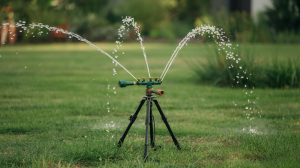
Push mowers take that same abuse more gracefully because the operator can steer around hazards in real time. If your yard has above-ground sprinkler heads scattered across the lawn, mark them clearly before any robot mower's first run.
Weather sealing is another durability factor. Most mid-range and premium robot mowers carry an IPX4 or IPX5 rating, meaning they tolerate rain but should not be run through standing water.
Push mowers are generally more weather-tolerant, though gas engines dislike extended exposure to moisture in storage.
Use-Case Mapping by Yard Size and Lifestyle
Yard size sets the outer boundary of what each mower type can handle efficiently, but lifestyle factors - how often you're home, whether you have kids or pets in the yard, and how much you value your weekend hours - determine which option actually fits your life.
A flat 8,000-square-foot suburban lawn is the sweet spot for a mid-range robot mower. At that size, push mowing takes roughly 45-60 minutes per session, two or three times a week during peak growth, while a robot mower runs quietly on its own schedule.
Carnegie Mellon's experience with autonomous mowing at scale reinforces that predictable, open terrain is where robotic systems deliver consistent results.
| Yard Size | Slope | Best Fit | Reason |
|---|---|---|---|
| Under 5,000 sq ft | Any | Push mower | Short mow time; robot ROI too low |
| 5,000–10,000 sq ft | Flat–moderate | Robot mower (entry/mid) | Clear time savings; manageable setup |
| 10,000–20,000 sq ft | Flat–moderate | Robot mower (mid) | Strong ROI; frequent mowing without effort |
| Over 20,000 sq ft | Any | Robot (premium) or push | Complex setup; push mower may suit slopes better |
| Any size | Over 35% grade | Push or self-propelled | Most robots lose traction above this threshold |
Households with young children or free-roaming pets need to schedule robot mowing windows carefully - most manufacturers recommend keeping the yard clear during operation. That scheduling friction reduces the convenience advantage of automation for families with unpredictable yard use.
For properties with separate lawn zones divided by paths or driveways, push mowers move between areas in seconds. Robot mowers require either separate charging setups or manual relocation, which adds friction that chip away at their convenience advantage.
Our lawn care equipment overview covers multi-zone yard tools if you're managing a more complex property layout. You'll also want to pair your mower choice with a solid summer lawn care routine to keep results consistent across the season.

Edge Cases and Boundary Setups
Boundary wire has been the standard way robot mowers know where to stop, but it comes with real installation friction.
Burying wire 1-3 inches underground takes several hours on a typical suburban lot, and a single nick from a spade or aeration tine breaks the circuit and grounds the mower until repaired.
Wire-free GPS and RTK systems solve that problem at a price. Models like the Segway Navimow use satellite positioning to define virtual boundaries, and Navimow's boundary-free design maps the mowing zone through a smartphone app with no physical wire needed.
The trade-off is that GPS signal can drift near dense tree canopy or tall structures, occasionally causing the mower to stray toward garden beds.
RTK-based systems (like Mammotion LUBA) are significantly more accurate than standard GPS, achieving centimeter-level positioning. They cost $2,000–$3,500 but are the right call for properties where traditional wire installation is impractical.
Slopes are the sharpest edge case in robot mower use. Most mid-range robot mowers handle grades up to 25-35% reliably; beyond that, wheel slip and inaccurate cutting patterns become common.
On steep terrain, a self-propelled gas push mower remains the most practical option regardless of how technically capable the robot mower's spec sheet claims to be.
Smart-home integration is increasingly a differentiator. Many 2023-2024 robot mowers connect to Amazon Alexa, Google Home, or proprietary apps to let you start, pause, or schedule mowing from your phone.
Carnegie Mellon's robotic mower program demonstrates that even institutional deployments benefit from remote monitoring capability to catch faults early.
Charging docks must stay outdoors year-round in most setups, which means they're exposed to UV degradation, frost cracking, and rodent damage. Situate the dock under a roof overhang or purchase a purpose-made dock cover — replacement docks run $80–$150 and are often backordered.
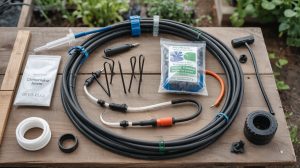
If you're building out a fully automated yard, pairing a robot mower with a smart irrigation system makes sense. See our guide on installing drip irrigation and how it fits into a low-effort yard maintenance setup.
A quality drip irrigation kit can complement the robot mower's autonomous schedule, keeping the lawn healthy without requiring you to be present for either task. And while you're upgrading yard tools, a battery-powered leaf blower rounds out the cordless outdoor toolkit neatly.
One final edge consideration: theft. Robot mowers are a target, and most mid-range models include a PIN-code lockout and an alarm, but not GPS theft tracking.
If your yard is accessible to the street, budget for a ground anchor or a locking dock enclosure.
Frequently Asked Questions
For lawns between 5,000 and 20,000 square feet with flat terrain, a mid-range robot mower typically recoups its cost within 2–3 seasons when labor savings are factored in.
Most quality robot mowers last 8–10 years with regular blade changes and seasonal storage. The lithium-ion battery typically needs replacing at year 4–6, costing $200–$400.
A low-voltage wire buried 1–3 inches underground emits a signal the mower detects to stay within bounds. A single break in the wire stops the mower until repaired.
Most mid-range robot mowers handle grades up to 35% reliably. Beyond that threshold, wheel slip causes uneven cuts and most manufacturers void the terrain warranty.
Micro-blades need replacing every 4–8 weeks during mowing season. Seasonal tasks include cleaning the charging dock, checking the perimeter wire, and storing the battery indoors over winter.
Pin it for your next robotic mower vs push mower project.