
Pothos is the plant that survives neglect, forgives missed waterings, and still sends out new leaves while you're busy with everything else.
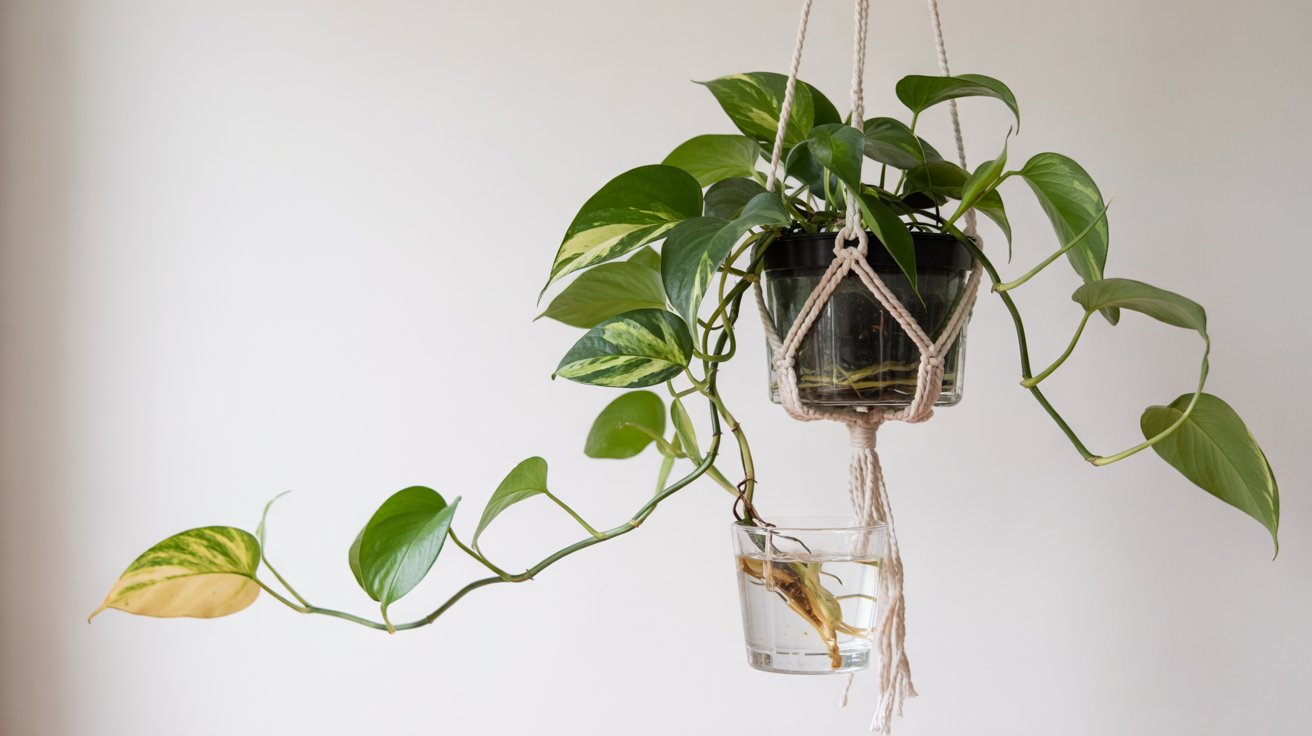
Epipremnum aureum, commonly called devil's ivy, earns its reputation as the ultimate beginner houseplant because it adapts to a genuinely wide range of indoor conditions.
A healthy pothos can trail 6 to 10 feet indoors within a single growing season, given decent light and occasional feeding.
Whether you're placing it on a high shelf to cascade down, training it up a moss pole, or rooting a cutting in a jar of water on your windowsill, the care routine stays simple and consistent.
This guide covers everything from light and watering basics to cultivar selection and a practical 30-day care plan.
Penn State Extension notes that pothos ranks among the most adaptable foliage houseplants available, tolerating low light conditions that would stress most other species.
Follow this guide and you'll avoid the two mistakes that kill most pothos - overwatering and putting them in truly dark corners - while building a lush, trailing plant faster than you'd expect.
Pothos (Epipremnum aureum) is a fast-growing tropical vine that handles low to bright indirect light, infrequent watering, and basic potting mix. It grows in soil or water, propagates easily from stem cuttings, and suits nearly any indoor space.
Pothos at a Glance
A fast-trailing tropical vine native to the Solomon Islands, pothos is grown indoors worldwide for its heart-shaped, often variegated foliage. It tolerates low light and irregular watering, making it ideal for apartments, offices, and first-time plant owners.
Remember it later
Planning to try this recipe soon? Save it for a quick find later!
Pothos leaves emerge directly from long, flexible vines that root at every node - which is exactly why propagation is so straightforward. Indoor plants rarely flower, but the foliage alone delivers year-round visual impact.
The plant handles temperature swings between 60°F and 85°F without complaint, which covers the typical range inside most homes. Below 50°F, growth slows sharply and cold drafts near windows can cause blackened leaf edges.
One detail that surprises new owners: pothos leaves stay larger and more vibrant when the plant has something to climb.
Trailing vines produce progressively smaller leaves over time, while vines trained up a moss pole or trellis often push out leaves twice the size of hanging specimens.
Pothos is toxic to cats, dogs, and humans if ingested — the calcium oxalate crystals in the leaves and stems cause mouth irritation and vomiting. Keep it out of reach of pets and small children.
For indoor growers who also want a low-fuss outdoor option, drought-tolerant aloe shares a similarly forgiving care profile and complements a pothos collection well in sunny spots.
Care Basics: Light, Water, Soil, and Feeding
Pothos handles a wider light range than almost any other houseplant, but "tolerates low light" doesn't mean it prefers darkness. In dim rooms, variegated cultivars like Marble Queen will revert toward plain green as the plant conserves energy.
Bright indirect light - think a spot 3 to 6 feet from an east- or north-facing window - produces the fastest growth and the most vivid leaf color. Direct afternoon sun bleaches and scorches the foliage.
Water when the top 1 to 2 inches of soil feel dry - roughly every 7 to 10 days in summer and every 14 days in winter.
Overwatering is the most common pothos killer; yellowing lower leaves are the first sign of root rot from soggy soil.
UF/IFAS Extension lists pothos among the best low-maintenance houseplants precisely because it signals thirst clearly - leaves go slightly limp before any permanent damage sets in.
For soil, use a standard well-draining potting mix with added perlite at a ratio of about 3:1 potting soil to perlite. This keeps roots moist between waterings without staying waterlogged.
- Fertilizer: Feed with a balanced liquid fertilizer (10-10-10) diluted to half strength once a month from spring through early fall. Skip feeding entirely in winter when growth slows.
- Pot size: Repot every 1 to 2 years, moving up only one pot size at a time. Oversized pots hold excess moisture and invite root rot.
- Humidity: Average indoor humidity (40-60%) suits pothos fine. Misting is optional, but a pebble tray with water raises local humidity without overwatering risks.
Pothos grown in the same space as moisture-loving tropical companions like low-light peace lily benefit from grouped placement, which naturally raises ambient humidity for all plants involved.
Pothos leaves accumulate dust quickly, which reduces photosynthesis. Wipe leaves with a damp cloth every few weeks to keep them working efficiently and looking their best.
Pothos Varieties and Selection
The most commonly sold pothos is the standard golden variety - green leaves streaked with yellow - but the species includes cultivars ranging from near-white to electric lime. Choosing the right one comes down to your light levels and the look you want.
University of Florida research introduced two cultivars, Pearls and Jade and Neon, that have become widely available and represent the range of what pothos can look like, from two-toned white-and-green to a solid chartreuse that almost glows in bright rooms, as documented in UF/IFAS cultivar research