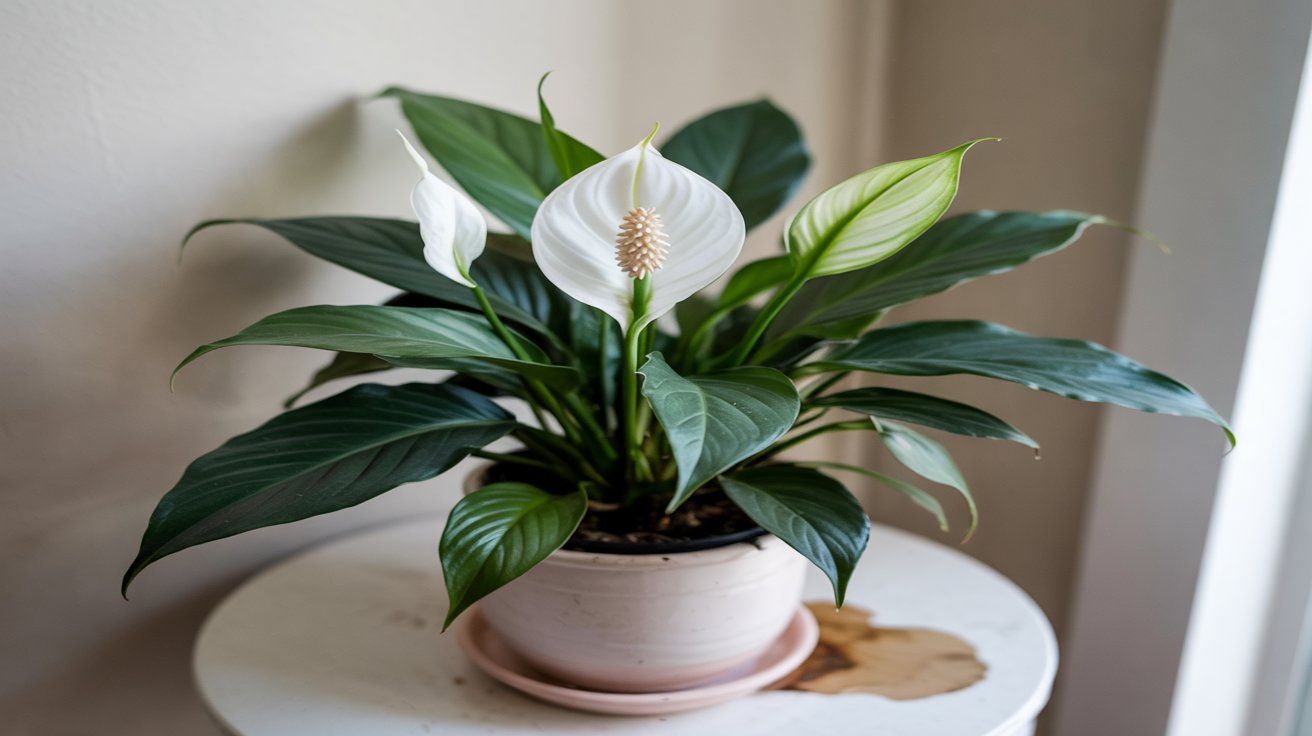
Peace lily is one of those rare indoor plants that rewards minimal effort with real results - glossy leaves, white blooms, and a forgiving temperament that works even in apartments with limited natural light.
Spathiphyllum is native to tropical regions of the Americas and Southeast Asia, where it grows beneath dense forest canopies.
That origin explains everything about its preferences: filtered light, consistent moisture, and warm temperatures are the conditions it already knows.
What separates a peace lily that blooms twice a year from one that just sits there is usually one or two small adjustments - light placement, watering timing, or seasonal fertilizing. This guide walks through each of those levers in plain terms.
If you've been struggling with low-light plant options indoors, peace lily belongs near the top of your list.
Peace lily (Spathiphyllum) grows 1–4 feet tall indoors and produces long-lasting white blooms in bright indirect light. Keep soil moderately moist, maintain temperatures of 65–85°F, and fertilize at quarter strength every 6–8 weeks in spring and summer.
Light, Water and Humidity Needs
A compact tropical houseplant reaching 1–4 feet indoors. Known for white spathe blooms and air-purifying reputation. Adapts to lower light than most flowering plants, but blooms best in bright, filtered light.
Remember it later
Planning to try this recipe soon? Save it for a quick find later!
According to the Clemson extension factsheet, peace lilies tolerate low light but produce their best blooms in bright indirect light. Direct sun scorches the leaves within days, leaving pale or brown patches that don't recover.
A north- or east-facing window works well for leaf growth. A west-facing window with a sheer curtain is often ideal for triggering blooms.
Soil moisture is the most critical variable to get right. The top inch of soil should feel dry before you add more water - soggy roots rot fast, and overwatering is the top cause of peace lily decline indoors.
Humidity above 40% keeps the leaf edges from browning. If your home runs dry in winter, a pebble tray with water beneath the pot raises local humidity without soaking the roots.
A moisture-loving comparison plant like monstera needs similar humidity management.
Peace lilies are also sensitive to fluoride, chlorine, and salt buildup from tap water. Using filtered water or letting tap water sit overnight before watering reduces fluoride-related leaf tip burn significantly.
Care Routine: Step-By-Step
A reliable weekly and monthly rhythm keeps peace lily healthy year-round. The SDSU Extension guide recommends watering when the top inch of soil dries, maintaining temperatures near 65-80°F, and fertilizing lightly during the growing season.
Each step below maps to a specific task - weekly checks take under five minutes, and monthly tasks rarely go beyond 15.
Peace lily grows best in well-drained potting mix according to the UF/IFAS gardening guide from the University of Florida. Avoid heavy garden soil, which compacts in containers and suffocates roots.
If you want to compare this routine against another easy-care plant, does snake plant need less water than peace lily? Yes - snake plant can go two to three weeks between waterings, making peace lily slightly more demanding on the moisture side.
For gardeners who also grow outdoors, the same fertilizer discipline that works here applies to summer container plants - see the fertilizing schedule for containers for a broader framework.
Peace lily is toxic to cats and dogs if ingested, causing mouth irritation and drooling. Keep it on a high shelf or in a room pets don't access. It's also a mild irritant to human skin, so wear gloves when repotting or dividing.
If your peace lily isn't blooming, the most common fix is simply moving it closer to a window. Low light produces leaves but rarely flowers.
Most healthy plants bloom in spring with possible reblooming in fall, especially after spent stalks are removed promptly.
For low-maintenance flowering options that follow a similar care pattern, check out reliable blooms with minimal effort from daylilies if you also grow outdoors.
Seasonal Adjustments and Common Problems
Peace lily slows down in winter, and that shift catches many growers off guard. Growth nearly stops between November and February, which means watering frequency should drop and fertilizer should stop completely until spring returns.
The Clemson extension fact sheet notes that daytime temperatures of 68-85°F keep the plant in its comfort zone year-round - a radiator or cold draft near a window can push temperatures outside that range without you noticing.
Move the pot at least 12 inches from any heat source or drafty glass in winter.
- Drooping leaves: Usually underwatering - water thoroughly and the plant typically recovers within a few hours. If soil is already wet and leaves still droop, root rot is likely; unpot and check roots.
- Brown leaf tips: Most often caused by fluoride in tap water or low humidity. Switch to filtered water and mist leaves or add a pebble tray.
- Yellow leaves: Overwatering is the primary cause. Let the soil dry further between waterings and ensure the pot has working drainage holes.
- No blooms: Insufficient light in most cases. Move the plant to a brighter spot and remove any old flower stalks that are still attached.
If brown tips keep returning after switching to filtered water, flush the pot thoroughly once a month by running water through the soil for 30 seconds. This clears accumulated fertilizer salt buildup that also causes tip burn.
Peace lily is relatively pest-resistant, but spider mites and mealybugs appear occasionally. Wipe leaves with a damp cloth at the first sign of webbing or white fuzz, then treat with insecticidal soap if the problem persists.
Regular leaf-wiping, as described in the care routine above, is your best prevention.
For other houseplants that handle similar indoor conditions, managing humidity for fiddle leaf fig follows many of the same principles. And if you want a plant that needs even less attention on the water front, drought-tolerant succulent care covers aloe vera as a contrast option.
For those expanding their indoor plant collection beyond foliage, the broader indoor plant watering and light topics covered across our garden plant guides offer a useful reference base.
You might also enjoy learning to grow zinnias from seed once the outdoor season returns, or try growing basil in a sunny window alongside your peace lily.
Frequently Asked Questions
Water when the top 1 inch of soil dries out — roughly every 5–7 days in summer and every 10–14 days in winter. Always use filtered or overnight-settled tap water to avoid fluoride tip burn.
Yes, peace lily survives in low light but rarely blooms there. Bright indirect light — within 3–5 feet of a window — is needed for reliable flowers.
Yellowing is most commonly caused by overwatering. Let the soil dry further between waterings and confirm the pot has functional drainage holes to prevent root rot.
Most peace lilies bloom primarily in spring, with a possible second flush in fall. Removing spent flower stalks promptly and increasing light exposure encourages reblooming.
Use a balanced liquid fertilizer (such as 20-20-20) at ¼ the label strength. Apply every 6–8 weeks from spring through summer only — stop completely in fall and winter.
Pin it for your next how to grow and care for peace lily project.