Ficus lyrata, better known as the fiddle leaf fig, has earned its spot as one of the most recognized indoor trees in modern homes. Those oversized, violin-shaped leaves make a genuine design statement, but the plant also has a reputation for being finicky with beginners.
That reputation is partly deserved - but mostly manageable.
Get three things right - light, watering rhythm, and stable placement - and this plant rewards you with rapid vertical growth and bold, glossy foliage. Seasonal care adjustments matter too, since fiddle leaf figs behave differently in winter than in the active growing months.
This guide covers every core care pillar: where to put the plant, how to read its moisture needs, what soil to use, and how to fix the most common problems before they become fatal.
Fiddle leaf fig (Ficus lyrata) needs bright indirect light, well-draining soil, and consistent watering when the top 2 inches dry out. Avoid cold drafts, low humidity, and waterlogged roots.
Feed monthly in spring and summer with a balanced fertilizer.
Light and Placement
Fiddle leaf figs are native to the tropical rainforest understory of West Africa, where they receive strong, filtered light for most of the day.
Remember it later
Planning to try this recipe soon? Save it for a quick find later!
Indoors, that translates to a spot within 3-5 feet of a large south- or east-facing window, where bright light reaches the leaves without direct midday sun hitting them.
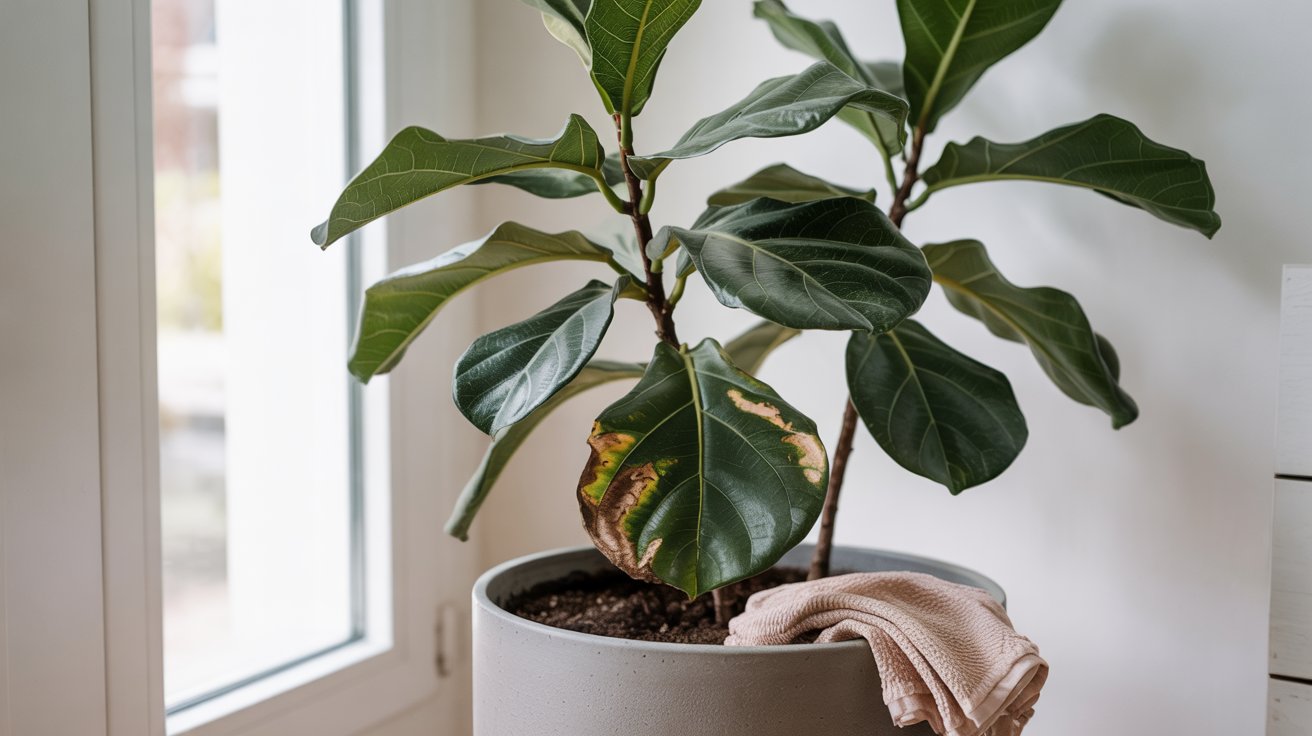
Direct sun through glass can scorch those large leaves fast. Brown, papery patches that appear in the center of a leaf - not at the edges - are almost always a sun-scorch signal.
A north-facing window rarely provides enough intensity, and low-light stagnation shows up as pale, yellowing leaves and minimal new growth.
If your only viable spot is a lower-light room, a full-spectrum grow light running 12-14 hours daily can bridge the gap, according to Fine Gardening's profile.
Rotating the pot 90 degrees every 2-4 weeks prevents the plant from leaning heavily toward the light source. Fiddle leaf figs respond to uneven light by bending their trunk noticeably over several months.
Seasonal light shifts require real attention. In winter, the sun sits lower in the sky, and a spot that worked perfectly in July may drop below the plant's threshold by December.
Move the pot 6-12 inches closer to the glass in late fall as a simple fix.
Drafts near windows are a separate problem from light. Cold air from a poorly sealed window frame can trigger leaf drop in low-light periods even when the light levels seem adequate.
Keep the plant away from air conditioning vents and heating registers for the same reason.
According to the University of Florida EDIS database, Ficus lyrata is best treated as a high-light indoor specimen, and placement decisions have a direct impact on long-term plant health. Prioritize the brightest available spot in your home before worrying about any other care variable.
Clean the large leaves with a damp cloth every 2–3 weeks. Dust buildup on fiddle leaf fig leaves measurably reduces their ability to photosynthesize, especially in lower-light winter months.
Watering, Soil, and Feeding
Watering is where most fiddle leaf fig care goes wrong. Overwatering causes root rot, which is the leading cause of decline for this plant indoors.
The rule is simple: water only when the top 2 inches of soil are dry, which typically means every 7-10 days in summer and every 14-21 days in winter.
Stick your finger into the soil before every watering. If it still feels damp at the second knuckle, wait another few days.
Consistent overwatering, even by a small amount, suffocates roots and invites fungal problems that are hard to reverse, as detailed in this UF/IFAS ficus guide.
| Care Factor | Recommendation | Key Detail |
|---|---|---|
| Soil mix | Well-draining potting mix + perlite | 60% potting mix, 40% perlite |
| Watering frequency | When top 2 in. are dry | Every 7–10 days (summer) |
| Watering frequency | Reduce in dormancy | Every 14–21 days (winter) |
| Pot drainage | Drainage holes required | Never leave in standing water |
| Fertilizer type | Balanced liquid (3-1-2 ratio) | Monthly, spring through summer |
| Fertilizer pause | Stop in fall and winter | Feeding dormant plants causes salt buildup |
Soil texture is as important as watering frequency. A standard potting mix alone tends to retain too much moisture for Ficus lyrata.
Mixing in perlite at roughly 40% keeps the medium aerated and drains quickly after each watering.
Pot choice matters. Terracotta pots wick moisture through their walls and dry out faster than plastic or glazed ceramic, giving you more room for error on the watering schedule.
Always confirm there are drainage holes - similar moisture-sensitive plants like peace lily also suffer badly without them.
Repotting becomes necessary when roots circle the bottom of the pot or emerge from drainage holes. Move up one pot size (2 inches in diameter) in spring, the start of the active growth period.
Going too large too fast holds excess moisture the roots can't use.
Feeding supports the large leaf production this plant is known for. Use a balanced liquid fertilizer with a roughly 3-1-2 nitrogen-phosphorus-potassium ratio once a month from March through August.
Fine Gardening's care notes on fiddle leaf fig caution against over-fertilizing, which causes salt accumulation in the soil and brown leaf tips.
Flush the soil with plain water every 2-3 months to clear built-up mineral salts. Pour water through until it runs freely from the drainage holes, then allow the pot to drain completely before returning it to its saucer.
Tap water with high fluoride or chlorine content can cause brown leaf-tip spotting on fiddle leaf figs. Let tap water sit uncovered overnight, or use filtered water, to reduce this effect.
Water temperature also plays a small role. Room-temperature water causes less shock to roots than cold water straight from the tap, particularly in winter when soil temperatures are already lower.

Seasonal Care and Troubleshooting
Fiddle leaf figs follow a clear seasonal rhythm. Spring and summer are for growth - expect new leaves to unfurl regularly when light and warmth peak.
Fall and winter call for reduced watering, no feeding, and minimal disturbance. Keeping to that summer maintenance rhythm during the growing season pays off in dense, upright canopy growth.
Temperature stability matters more than exact temperature. Ficus lyrata handles a range of 60-85°F (15-29°C) well, but sudden drops - like a cold draft from an opened door - cause rapid leaf drop that can strip a branch in days.
- Maintain 40-65% humidity by grouping plants together or using a pebble tray with water beneath the pot.
- Keep the pot in one spot for months at a time; moving the plant repeatedly stresses it and causes unnecessary leaf drop.
- Flush soil every 2-3 months to prevent salt buildup from fertilizer, which causes brown tips.
- Check drainage after every watering to confirm water flows freely through the pot and isn't pooling.
- Don't place near heating vents or AC units - forced air dries out leaves and causes edge browning fast.
- Don't water on a fixed schedule - always check soil moisture first, since seasons and indoor conditions vary.
- Don't repot in fall or winter when the plant is dormant; root disturbance during dormancy leads to prolonged stress.
- Don't ignore early yellowing at the base of the plant - lower yellow leaves signal overwatering before visible root rot sets in.
Brown leaf edges or tips are the most common complaint, and they almost always trace back to low humidity or salt buildup in the soil, according to Fine Gardening's troubleshooting notes.
Brown spots in the middle of leaves, by contrast, usually signal sunscorch or bacterial infection from overwatering.
Humidity below 30% is a real problem in heated homes during winter. A humidity-loving tropical like monstera faces the same issue - grouping several plants together raises the local humidity naturally without needing a humidifier.
Pest pressure is generally low on fiddle leaf figs, but spider mites and scale can establish in dry, warm conditions. Inspect leaf undersides monthly, especially in winter when interior air is dry.
Wipe mites off with a damp cloth and treat scale with neem oil diluted in water at 2 tablespoons per quart.
Fiddle leaf figs are mildly toxic to cats and dogs. The milky sap from cut stems or leaves causes oral irritation and GI upset. Keep the plant out of reach of pets, or consider a pet-safer snake plant as an alternative.
If you're comparing care demands with lower-maintenance alternatives, aloe vera's drought tolerance makes it far more forgiving, while growing spider plants requires almost no specialized humidity management. Fiddle leaf fig sits firmly in the intermediate-to-advanced range for indoor plant care.
Indoors, Ficus lyrata can reach 6-10 feet tall over several years in a bright room. If height becomes an issue, cut the main stem just above a leaf node in spring to encourage branching rather than further vertical growth.
That single cut, made correctly, can transform a single-trunk tree into a multi-branch specimen within one growing season. For visual variety in your indoor garden, adding seasonal color outdoors or growing basil on a sunny sill pairs well with a statement fiddle leaf fig as the anchor plant indoors.
Frequently Asked Questions
Position the plant within 3–5 feet of a south- or east-facing window for at least 6 hours of bright indirect light daily. Avoid direct midday sun, which scorches the large leaves.
Water when the top 2 inches of soil are dry — roughly every 7–10 days in summer and every 14–21 days in winter. Always check by feel, not by calendar.
Use a blend of 60% well-draining potting mix and 40% perlite. This ratio keeps roots aerated and prevents the waterlogging that leads to root rot.
Brown leaf edges signal low humidity or salt buildup; center spots indicate sunscorch or overwatering. Yellowing lower leaves are an early overwatering warning — reduce watering immediately.
Yes — take a stem cutting with 2–3 leaves in spring, dip the cut end in rooting hormone, and place in moist potting mix. Roots typically develop within 4–6 weeks in a warm, bright spot.
Pin it for your next how to grow and care for fiddle leaf fig project.