Chlorophytum comosum, the spider plant, is one of the most forgiving houseplants you can grow - and that's not accidental. Its thick, fleshy roots store water and nutrients, giving it a built-in buffer against the occasional missed watering or dim corner.
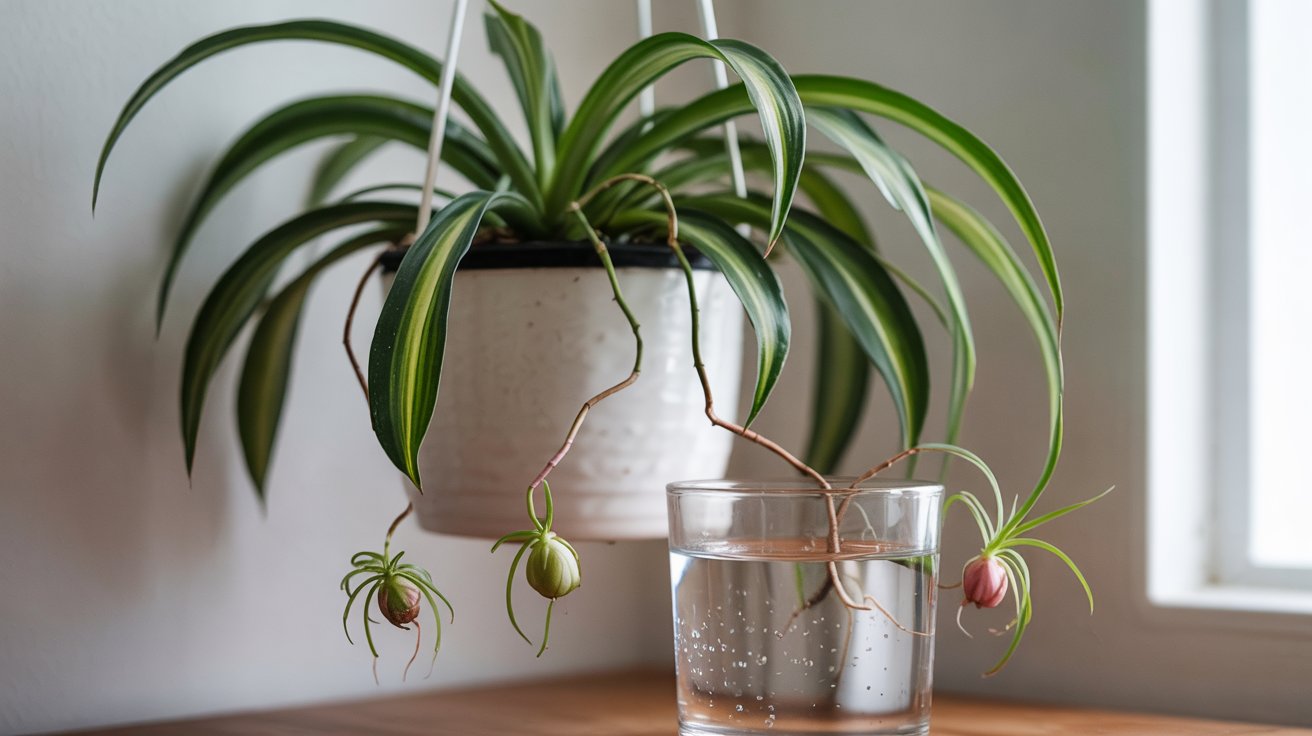
Mastering spider plant care takes fewer than 15 minutes a week once you know the handful of numbers that actually matter: light intensity, watering cadence, and the temperature range where it produces those signature arching runners loaded with spiderettes.
This profile covers everything from bright-window placement to propagating babies in a glass of water on your kitchen counter. You'll also find a pet-safety note, because this plant turns up in a lot of homes with cats and dogs.
If you're already growing other easy-care houseplants, keeping a peace lily healthy follows a similar indirect-light logic - spider plants fit right into that same routine.
Spider plant (Chlorophytum comosum) needs bright to moderate indirect light, watering when the top inch of soil dries out, and temperatures between 65–75°F during the day. It's non-toxic to pets, propagates easily from plantlets, and tolerates some neglect better than most houseplants.
Care at a Glance
Spider plant care is built on a short list of repeatable habits.
Remember it later
Planning to try this recipe soon? Save it for a quick find later!
UF/IFAS extension guidance confirms it prefers bright to moderate indirect light and needs the upper inch of soil to dry briefly between waterings - two rules that cover most of what this plant needs from you.
According to Clemson's HGIC factsheet, plants grown in hanging baskets typically trail 2-3 feet long, making vertical space a real consideration. A ceiling hook near an east-facing window is often the sweet spot.
The plant's fleshy, tuberous roots store water efficiently, which is why it handles irregular watering far better than most tropical houseplants. That same root structure means overwatering is a bigger threat than underwatering for most indoor growers.
Soil should drain freely - a standard indoor potting mix works, though adding 20-30% perlite improves drainage if your pot lacks bottom holes. Spider plants also adapt to a range of houseplant care basics you'd apply to other indoor growers.
Light, Water, and Temperature
Placement determines how often you water and whether your plant pushes out runners. An east or west window giving 3-4 hours of indirect morning or afternoon light is close to ideal for most homes.
Avoid south-facing windowsills where midday sun hits the leaves directly. RHS plant detail notes partial shade as the recommended position, with well-drained conditions - direct summer sun scorches the leaf margins within days.
In a north-facing room, the plant survives but slows down noticeably - expect fewer runners and paler leaf color. Low-light houseplant options can fill that north wall better if you want active, fast-growing foliage.
Temperature is straightforward: 65-75°F during the day and 50-55°F at night covers the comfortable range. Keep the plant away from heat vents and drafty windows, both of which stress the roots more than light fluctuations do.
Watering cadence depends on pot size and season. In summer, most indoor spider plants need water every 5-7 days; in winter, stretch that to every 10-14 days as growth slows.
Water quality matters here. UF/IFAS extension notes that fluoride in tap water can be problematic and recommends rainwater or distilled water to prevent leaf-tip yellowing.
If tap water is your only option, fill the watering can the night before - letting it sit 24 hours off-gasses some chlorine.
Stick your finger into the soil to the first knuckle. If it feels dry at that depth, water thoroughly until it drains from the bottom. If it's still damp, wait two more days and check again.
If you're comparing light and water demands across species, how much water does snake plant need covers a similarly drought-tolerant plant that pairs well with spider plants on a shelf.
Propagation and Babies
Spider plants produce long, arching runners - sometimes called stolons - that carry small rosettes called spiderettes or plantlets. A mature plant in good light can generate dozens of these each growing season, making propagation essentially free.
UW Extension's plant profile recommends leaving plantlets attached to the runner until their own roots form, then detaching - this gives the highest establishment rate. Cutting too early means the baby depends entirely on you for water uptake before it's ready.
Division of root clumps also works if your plant has grown very dense. Simply unpot, separate the clump into two or three sections by hand, and repot each into fresh mix.
This doubles your collection while refreshing the original pot.
For anyone building out a full indoor plant collection, getting monstera to put out new leaves uses a similar humidity-and-light logic during establishment.
Troubleshooting and Common Problems
Most spider plant problems trace back to three causes: water quality, overwatering, or low humidity. Identifying which one is affecting your plant takes about 30 seconds of observation.
Brown leaf tips are the most common complaint. Clemson's HGIC spider plant guide links tip burn directly to salt buildup, fluoride, or low humidity - all fixable without repotting or fertilizer changes.
Switch to distilled water and flush the soil thoroughly every 2-3 months to clear accumulated salts.
Soggy soil for more than 5–7 days invites root rot, which shows up as yellowing lower leaves and a mushy stem base. If you catch it early, unpot the plant, trim black roots, and repot into dry fresh mix.
- Yellow leaves: Usually overwatering or natural aging of the oldest lower leaves. Check soil moisture before watering again and remove yellowed foliage at the base.
- Pale, washed-out color: Too much direct sun is bleaching the variegation. Move the plant 2-3 feet back from a south or west window.
- No runners or spiderettes: Often a sign of insufficient light or a pot-bound root system. Repot into a container one size up and move closer to a bright window.
- Spider mites or mealybugs: Wipe leaves with a damp cloth weekly and apply a diluted neem oil spray if you spot webbing or cottony residue. Increase humidity to deter spider mites.
If your plant looks generally unhappy despite correct watering, check whether the roots are circling the drainage holes - a pot-bound spider plant stops producing runners and slows growth noticeably. Repot in spring, going up just one pot size to avoid excess soil retaining moisture.
Aloe vera faces a similar overwatering-versus-drought balance - reading about aloe vera's drainage requirements reinforces the same soil-dryness principle.
Care That Fits Your Space
Spider plant's adaptability is its defining trait. UF/IFAS extension describes it as exceptionally forgiving for indoor spaces, with a trailing habit that suits hanging baskets and a tolerance for periods of neglect that few tropical plants can match.
Here's how to adjust care for four common situations:
- Low-light apartment: Place the plant within 6 feet of a north or east window and expect slower growth. The variegated cultivar Chlorophytum comosum 'Variegatum' holds its white stripe better in brighter spots; in low light, the green-leafed form stays more vigorous.
- Frequent travelers: Bottom-watering works well here - fill a tray with water, set the pot in it for 20-30 minutes, then drain. The fleshy roots absorb enough to stay hydrated for up to 10 days.
- Pet households: Spider plant is non-toxic to cats and dogs according to the ASPCA, though ingestion can cause mild stomach upset. Hanging it out of reach is still worth doing since cats are attracted to the trailing runners.
- Water-conscious setups: A self-watering pot with a reservoir extends the interval between waterings to 10-14 days in cooler months, cutting water use significantly over a season.
Outdoors, spider plant is winter-hardy only in USDA Zones 9–11. In Zone 8 and below, treat it as a seasonal patio plant and bring it inside before temperatures drop below 50°F.
For compact spaces, look for dwarf cultivars like 'Bonnie', which has curly leaves and stays under 12 inches in diameter - a practical fit for a small shelf or bathroom windowsill without the full trailing spread.
Spider plant also pairs naturally with a summer outdoor rotation. If you move it to a shaded porch in summer, managing your garden in summer heat covers the watering and light adjustments worth making at the same time.
If you enjoy building out an indoor collection, how spider plant compares to fiddle leaf fig in terms of maintenance effort makes the case for starting with the more forgiving option. For outdoor contrast, hydrangea's specific soil pH needs illustrate just how low-maintenance spider plant really is by comparison.
And if you want more color in your garden alongside your houseplant collection, getting zinnias to bloom all season offers a simple outdoor companion project.
Frequently Asked Questions
Spider plants are non-toxic to cats and dogs according to the ASPCA, but ingestion may cause mild vomiting or diarrhea. Hanging the plant out of reach is still a sensible precaution.
Water every 5–7 days in summer and every 10–14 days in winter. Always let the top inch of soil dry out before watering again to prevent root rot.
A standard indoor potting mix works well. Adding 20–30% perlite improves drainage, which is the single most important soil factor for avoiding root rot.
Yes, but growth slows and the plant produces fewer runners. Position it within 6 feet of a north or east window; below that threshold, variegated leaf color fades noticeably.
Early NASA studies showed spider plants absorb formaldehyde and carbon monoxide, but real-world air purification impact in a typical room is modest. You'd need many plants for measurable air quality change.
Pin it for your next how to grow and care for spider plant project.