Crepe myrtle is one of the most recognizable flowering trees in the American South, but poor pruning habits have made it just as famous for the wrong reasons.
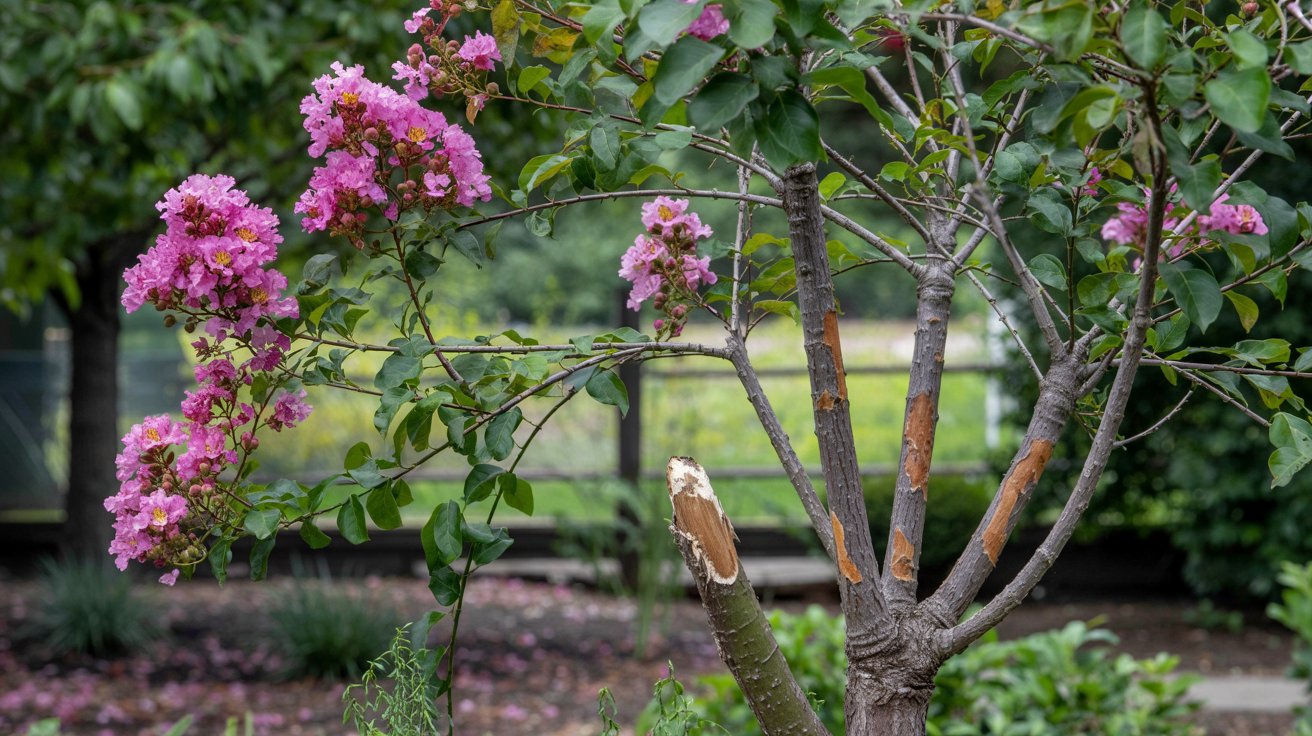
Get the basics right - sun, drainage, and restrained pruning - and this plant rewards you with months of color and some of the most attractive bark in the landscape.
Lagerstroemia indica, the common crepe myrtle, can reach anywhere from 6 to 30 feet tall depending on the cultivar you choose.
That size range matters more than most gardeners realize at planting time. A dwarf selection fits a container or foundation bed; a standard tree-form cultivar can anchor a whole yard.
Matching the cultivar to your space from day one prevents the "crepe murder" pruning disasters that happen when a 25-foot tree gets crammed into a 10-foot spot.
The good news extends to maintenance, too. Once established, crepe myrtles are drought-tolerant, relatively pest-resistant, and bloom reliably through summer heat that shuts down most other flowering plants.
Our year-round planting calendar can help you time planting and other garden tasks alongside your crepe myrtle care schedule.
This guide pulls from university extension research - primarily NC State, University of Florida IFAS, and Arkansas Cooperative Extension - so every recommendation has a practical, evidence-based foundation.
Crepe myrtle (Lagerstroemia indica) is a full-sun, drought-tolerant flowering tree or shrub hardy in zones 6–9, with bloom windows from summer through early fall. It needs well-drained soil, minimal pruning, and a cultivar matched to your available space.
Profile at a Glance
A deciduous flowering tree or large shrub native to Asia, crepe myrtle delivers showy summer blooms in white, pink, red, and purple, followed by attractive exfoliating bark through winter. Growth form ranges from compact dwarfs under 4 feet to multi-trunk trees topping 30 feet, making cultivar selection the single most important planting decision.
Remember it later
Planning to try this recipe soon? Save it for a quick find later!
According to NC State Extension, common crepe myrtle can reach 6 to 30 feet tall and wide, and is most often grown as a multi-trunk tree or a large shrub depending on how it's trained in early years.
The plant's growth form is flexible. Left unpruned, a standard cultivar develops an arching, vase-shaped canopy with multiple trunks that show off the cinnamon-colored exfoliating bark in winter - one of crepe myrtle's most underrated features.
Sun and drainage are non-negotiable. NC State Extension confirms that full sun and well-drained soil are the core requirements, and that pruning should be avoided or done only lightly, preferably completed by late summer to avoid cutting off next season's bloom buds.
For gardeners who also grow other flowering shrubs, the care rhythm here is similar to managing bloom cycles in azaleas - timing and restraint matter more than aggressive intervention.
Zones, Bloom Window, and Growth Forms
Crepe myrtle is reliably hardy in USDA zones 6 through 9, covering most of the South, the mid-Atlantic, and parts of the Pacific Coast. In warmer zones (8-9), plants may retain some foliage through mild winters and re-flush quickly in spring.
Zone 5 and 6 gardeners face a real trade-off. NC State Extension notes that winter injury is common in zones 5-6, so cultivar selection becomes critical - look for cold-hardy hybrids like the National Arboretum's Natchez series or the more cold-tolerant Lagerstroemia fauriei hybrids.
Bloom timing runs June through September across most of the range, with peak color typically in July and August. Some cultivars rebloom if spent flower clusters are removed promptly - a light deadheading rather than a heavy cutback.
Growth form splits into four practical size classes. Matching these to your landscape scale prevents overcrowding and the reactive heavy pruning that follows it.
- Dwarf (under 4 ft): Cultivars like 'Pocomoke' and 'Chickasaw' suit containers, borders, and tight foundation plantings.
- Semi-dwarf (4-8 ft): Mid-size selections like 'Acoma' work as informal hedges or specimen shrubs without overwhelming a small yard.
- Large shrub (8-15 ft): Cultivars such as 'Tuscarora' fill screening roles and still show off the multi-trunk form attractively.
- Tree form (15-30 ft): 'Natchez' and 'Muskogee' develop into full canopy trees - best for open spaces, parking strips, or as a fast-growing privacy screen along property lines.
The National Arboretum's hybrid program produced many of the named cultivars in common use today, crossing L. indica with L. fauriei specifically for improved cold hardiness and disease resistance.
That parentage is worth checking on any cultivar tag if you garden in zone 6 or colder.
Care Basics: Light, Water, Soil, and Establishment
Crepe myrtle's care needs are genuinely simple once you respect its non-negotiables. Full sun - meaning at least 6 uninterrupted hours per day - is the most important factor in flower production.
Shade pushes the plant toward foliage at the expense of blooms and increases susceptibility to powdery mildew.
Soil fertility requires a counterintuitive approach. As NC State Extension confirms, highly fertile soils reduce flowering because excess nitrogen drives vegetative growth instead of bloom set.
Avoid amending planting beds with heavy compost or high-nitrogen fertilizers unless a soil test identifies a specific deficiency.
Prep / Light Pruning
Establishment Watering
Bloom Peak
Drainage matters as much as fertility. Crepe myrtle tolerates clay soil better than many ornamentals, but standing water after heavy rain will cause root rot.
Raise beds by 4-6 inches in heavy clay sites, or choose a slightly elevated spot in the yard.
Watering strategy shifts between year one and established plants. During the first growing season, water deeply every 5-7 days when rainfall is absent - this means soaking to a depth of 10-12 inches, not a light surface spray.
After the second year, most established plants survive on rainfall alone except during extended drought.
- Drought stress signals: Wilting by midday on otherwise healthy plants, or leaf drop in summer, indicate the plant needs a deep soak rather than frequent light watering.
- Wet foliage risk: NC State Extension advises avoiding wet foliage where possible, as moisture on leaves promotes powdery mildew - a common problem in humid climates.
- Fertilization timing: If you fertilize, apply a balanced slow-release formula in early spring before new growth flushes. Stop fertilizing by late July to avoid pushing tender growth before frost.
University of Florida IFAS research confirms that flower production declines as pruning severity increases, linking care and pruning directly - a point worth keeping in mind as you plan the first few seasons of establishment.
For comparison, zinnias offer a lower-maintenance bloom option for hot summer gaps while your crepe myrtle establishes. If you want year-round interest from flowering plants, pairing crepe myrtle with plants that bloom in winter fills the dormant window beautifully.
Pruning, Varieties, and Design Considerations
Pruning is where most crepe myrtle care goes wrong. "Crepe murder" -
the practice of topping or severely cutting back the canopy each year - is so widespread that Arkansas Cooperative Extension directly addresses it, noting that winter topping reduces flowering and produces dense clusters of weak, whippy sprouts the following season.
University of Florida IFAS research confirms the mechanism: pruning severity is inversely linked to bloom production. Dormant-season topping removes the terminal growth buds that carry the most vigorous flower clusters, and the resulting regrowth blooms less and breaks more easily in wind.
The right approach involves three specific tasks - and nothing more. Remove dead, crossing, or rubbing branches in late winter before bud break.
Thin any suckers growing from the base. Leave the rest of the canopy intact.
- Dead wood removal: Snap-test branches in late February - brittle, grey stems with no green tissue underneath are dead and should come out at the base.
- Sucker management: Basal sprouts compete with the main trunks for energy; remove them flush with the root collar as soon as they appear in spring.
- Crossing branches: Remove one of any two branches rubbing together to prevent bark wounds that invite disease and borers.
- Spent flower heads: Deadheading clusters promptly in late summer can encourage a second flush on some cultivars, but this is optional - seed heads also provide winter bird interest.
Pruning timing carries a zone-based risk too.
Arkansas Extension advises that winter pruning in colder zones can compound top-growth injury if a hard freeze follows fresh cuts - another argument for waiting until you see the first signs of bud swell in spring before making any cuts.
Cultivar choice shapes design outcomes more than any other decision. The National Arboretum's named series - Natchez, Tuscarora, Acoma, Muskogee - were bred for resistance to powdery mildew, which is a significant advantage in humid Southeast gardens.
Color range runs from pure white ('Natchez') through coral-pink ('Tuscarora') to deep red ('Dynamite') and lavender ('Muskogee').
For mixed borders, pair compact crepe myrtles with late-season perennials that share the same sun and drainage preferences. Clematis climbing a nearby structure extends vertical interest into the same bloom window.
If you want striking foliage contrast, the layered canopy of a Japanese maple for four-season interest works well in the same bed.
In zones 6 and colder, choose L. fauriei hybrids over straight L. indica cultivars. The fauriei parentage adds meaningful cold hardiness — some selections survive brief dips to -5°F with minimal dieback.
Design-wise, tree-form crepe myrtles earn their place as four-season specimens. Summer brings the flowers; fall delivers orange and red foliage on many cultivars; winter exposes the sculptural cinnamon-and-grey exfoliating bark that rivals ornamental grasses for off-season appeal.
That full-year contribution justifies giving them prime real estate in the landscape.

Zone and Season Planning at a Glance
Planning your crepe myrtle maintenance around the calendar prevents the two most common mistakes: pruning too late in summer (which removes next year's buds) and pruning too hard in late winter (which reduces the following year's bloom).
A simple month-by-month framework keeps both risks in check.
Zone 7-9 gardeners have the widest window for establishment planting - fall planting in October through November gives roots a full cool season to anchor before summer heat arrives. In zone 6, spring planting is safer to avoid exposing fresh transplants to hard freezes.
Planting / Light Pruning Window
Establishment & Growth
Peak Bloom
For ongoing summer maintenance, pairing your crepe myrtle care with a broader summer garden maintenance routine keeps watering, deadheading, and pest checks on a consistent schedule. If you enjoy training flowering plants with a similar summer care rhythm, wisteria pruning follows comparable timing rules.
Complete all pruning cuts before new buds break in spring. Any cut made after bud swell removes developing flower clusters and directly reduces that season's bloom count.
Frequently Asked Questions
Prune in late winter just before bud swell — typically February to early March. Avoid cutting after buds break, as that removes the current season's flower clusters directly.
Dwarf cultivars like 'Pocomoke' (under 3 ft) and 'Chickasaw' (2–4 ft) suit tight spaces and containers without needing any corrective pruning to stay in bounds.
Yes — dwarf cultivars under 4 feet work well in 15–25 gallon containers with drainage holes. Container-grown plants need watering every 2–3 days during summer heat.
Shade and poor air circulation are the primary drivers. Choosing mildew-resistant National Arboretum hybrids like 'Natchez' or 'Tuscarora' eliminates the problem more reliably than fungicide sprays.
Most cultivars grow 3-5 feet per year in ideal conditions, reaching mature height in 7-10 years. Tree-form varieties like 'Natchez' hit 20-25 feet within a decade in zones 7-9.
Save This GuidePin it for your next how to grow and care for crepe myrtle project.