Wisteria is one of those plants that demands a clear-eyed plan before the first stem goes in the ground.
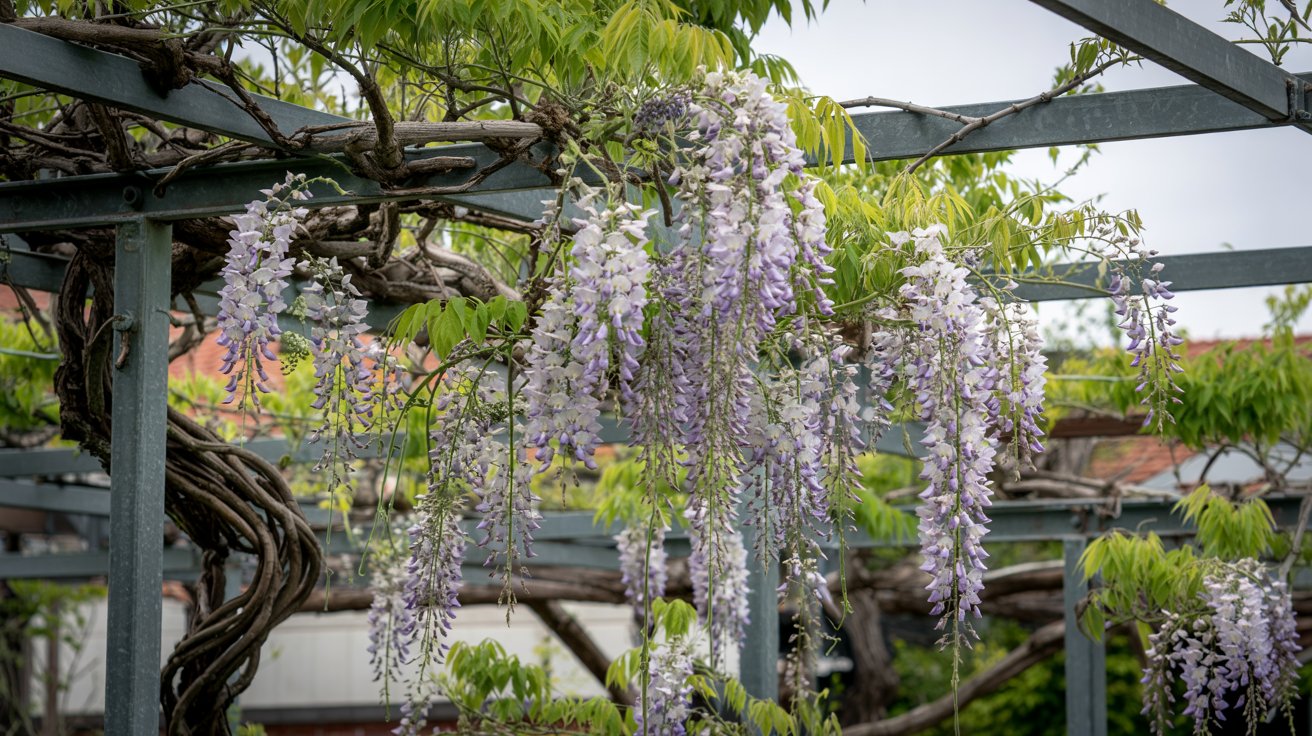
Left unchecked, it can swallow a pergola, buckle gutters, and still refuse to bloom - but give it full sun, a real support structure, and a consistent pruning rhythm, and it produces cascading flower clusters that stop traffic every spring.
Wisteria sinensis (Chinese wisteria) and Wisteria floribunda (Japanese wisteria) are the two species most gardeners grow. Both want the same basic conditions, but W. floribunda twines clockwise and carries longer flower racemes, while W. sinensis twines counter-clockwise and opens all at once rather than tip-to-base.
For gardeners comparing vigorous spring bloomers, wisteria sits in a different league from something like training a clematis vine - the stems are woody, the roots are persistent, and the plant can live for over a century.
This guide covers site prep, support installation, a two-prune-per-year framework, and a month-by-month calendar so you always know what to do next.
Wisteria needs full sun, sturdy support, and two annual prunings — one in winter for bloom spurs, one in late summer to control growth. Established plants flower reliably in spring, but young vines may take 3-7 years before their first flush.
Care Snapshot
A woody, deciduous vine producing pendulous clusters of fragrant lavender, purple, or white flowers each spring. Long-lived and vigorous, it requires firm structural support and regular pruning to stay productive and in bounds.
Remember it later
Planning to try this recipe soon? Save it for a quick find later!
The single biggest factor in bloom performance is light. According to the RHS wisteria guide, wisteria needs at least 6 hours of direct sun daily - sites that only get dappled shade produce plenty of foliage but few or no flowers.
Water needs shift with the season: newly planted vines need consistent moisture for the first two years, while established plants are fairly drought-tolerant between deep waterings. Avoid waterlogged soil at all stages.
Feeding is a place where many gardeners overcorrect. High-nitrogen fertilizers push lush growth at the expense of flowers.
Use a low-nitrogen, high-potassium feed (such as a tomato fertilizer) once in early spring if the soil is poor.
Support is non-negotiable. As the OSU Extension pruning guide notes, wisteria can climb 30-40 feet tall - a trellis bolted to house siding will not hold it long-term.
Plan for a freestanding pergola, heavy timber arbor, or reinforced masonry wall from day one.
Common issues include failure to bloom (usually caused by shade or excess nitrogen), wayward stems that root where they touch soil, and the rare but real risk of structural damage to gutters and downspouts if the vine is left unmanaged for several seasons.
Site, Soil, and Training
Choosing the right site saves years of frustration. Pick a spot with unobstructed southern or western exposure, away from tree canopy and structures you don't want the vine to colonize.
Leave at least 10 feet of lateral space - wisteria spreads wide as it matures.
Soil preparation is straightforward. The RHS growing guide recommends well-drained soil at a neutral to slightly alkaline pH (around 6.0-7.0).
On heavy clay, mix in coarse grit and compost to improve drainage before planting.
Training takes 3-5 years to establish the permanent framework. Resist the urge to let stems run freely in year two just because the plant looks healthy - undisciplined growth now means a tangle that is very difficult to unpick later.
If you're comparing vigorous climbers and want something slightly more compact for a smaller space, reading about reliable spring-flowering shrubs can help you decide whether a vine or a freestanding shrub suits your site better.
Pruning, Bloom, and Structure
Wisteria blooms on short spurs that develop on mature wood - and those spurs only form if you cut the vine back hard enough, often enough. Most gardeners either skip pruning entirely or prune randomly, and neither approach produces flowers consistently.
The two-prune system is well-established. Winter pruning (January-February) builds the flowering framework; summer pruning (July-August) controls rampant extension growth and stops the vine from shading itself out.
- Winter spur pruning: Cut all side shoots back to 3-5 buds from the main stem. According to the OSU Extension pruning guide, leaving 3-5 buds per spur is the standard for encouraging reliable flowering.
- Summer thinning: In late July or August, shorten the long whippy shoots back to 5-6 leaves from the base. This redirects energy toward next year's flower buds.
- Tie in new framework stems: If you're still filling out the support, select one or two strong new shoots and tie them in before the summer prune.
- Remove suckers promptly: Cut any stems sprouting from the base back to soil level as soon as you see them.
- Pruning during bloom: The RHS guide warns against cutting heavily while the vine is actively flowering - you'll remove developing buds and cut the display short.
- Leaving long lateral shoots all season: Unpruned extension growth shades the spur system and exhausts the plant's energy on leaves rather than flower buds.
- Skipping winter pruning: Without the annual hard cutback, spurs elongate into stems and the flowering zone migrates to the tips - out of sight at the top of the structure.
- Using high-nitrogen fertilizer: Excess nitrogen produces dark green foliage and zero flowers on an otherwise healthy plant.
If your wisteria hasn't bloomed in 2+ years, root-prune it in late autumn. Push a spade vertically into the soil about 18 inches from the main stem all the way around — severing some feeder roots stresses the plant just enough to trigger flower-bud formation the following spring.
Young grafted plants typically bloom within 3-5 years; seed-grown plants can take up to 20 years. Always buy a named grafted cultivar - look for the graft union near the base of the stem - and you'll dramatically shorten the wait.
For a shrub that rewards similar hard annual pruning with equally spectacular flowers, crepe myrtle pruning follows comparable logic about cutting to old wood for bloom.
Seasonal Care Calendar
Wisteria's care rhythm follows a clear seasonal pattern tied directly to its spring bloom window. Timing varies by climate - in USDA Zone 5, flowers appear in late April to May; in Zone 8, blooms can open as early as March.
Plan your pruning and feeding dates around your last frost, not the calendar.
According to the USU Extension wisteria guide, keeping soil consistently moist but never waterlogged during the bloom period directly supports flower development - this is the one window where letting the soil dry out fully will cut the display short.
Prep / Prune
Active Growth
Peak Bloom
Here's how to approach each phase of the year:
- January-February (winter prune): Cut all lateral shoots back to 3-5 buds from the main stem. This is the most important task of the year for bloom. Apply a high-potassium fertilizer if the soil is very poor.
- March-May (bloom and moisture): The RHS notes that bloom timing varies significantly with climate and cultivar - water deeply every 7-10 days if rainfall is scarce and avoid fertilizing while flowers are open.
- June (post-bloom tidy): Remove spent flower clusters and check ties for any that are cutting into stems. This is a good month to assess whether any framework branches need redirecting.
- July-August (summer prune): Shorten all the long whippy extension shoots to 5-6 leaves from their base. This is also the window covered in our summer garden maintenance checklist for managing fast-growing vines.
- September-October (late-season tidy): No hard pruning. Remove any dead or diseased wood and keep an eye out for stems that have self-layered into the soil - cut them free before they establish.
- November-December (rest): Once leaves drop, you can see the structure clearly. Mark any major framework decisions for the January prune. Mulch around the base with 2-3 inches of compost to protect surface roots in colder zones.
In Zone 4-5, a late frost after buds break can kill an entire season's flowers — the plant survives, but you'll wait another year. Covering the vine overnight with horticultural fleece when a hard frost threatens in April or early May is worth the effort.
Cultivar choice affects timing too. Wisteria floribunda 'Multijuga' carries racemes up to 4 feet long but opens its flowers sequentially over several weeks.
Wisteria sinensis 'Prolific' opens all at once for a single dramatic flush, typically 2-3 weeks earlier than most Japanese cultivars.
If you're building a broader spring-blooming garden around wisteria's peak, pairing it with plants that offer staggered interest is a practical move. Checking guides on when hydrangeas start blooming or reading about long-lived peony companions can help you sequence color across the whole season.
Deadheading wisteria after bloom is optional for appearance but doesn't affect next year's flowering - the plant sets buds on old wood regardless.
If you want to learn which plants do benefit from removing spent flowers, our guide on removing spent blooms correctly walks through species-specific rules.
For gardeners planning a full seasonal planting scheme, our month-by-month planting guides cover companion timing for spring-blooming vines and shrubs across all zones. And if you're weighing wisteria against other late-season bloomers, our piece on extending the bloom season covers plants that carry color well into autumn.
Gardeners who want a late-summer counterpoint to wisteria's spring show often look at growing dahlias for late color.
Frequently Asked Questions
The most common cause is pruning at the wrong time or cutting back too far, removing next year's buds. Winter pruning must leave 3-5 buds per spur — not flush-cut to the main stem.
A freestanding timber pergola with 4x4-inch posts set 18-24 inches into the ground handles mature weight best. Lightweight aluminum or plastic trellis panels will fail under a vine that can weigh hundreds of pounds.
Yes, in a large container of at least 15-20 gallons, but root restriction slows growth and may limit flowering. Japanese wisteria cultivars like 'Domino' are better suited to container culture than Chinese species.
A named grafted cultivar typically flowers within 3-5 years of planting. Seed-grown plants can take 15-20 years, so always buy a grafted plant with the graft union visible near the stem base.
Chinese and Japanese wisteria are considered invasive in parts of the eastern US. American wisteria (Wisteria frutescens) and Kentucky wisteria (Wisteria macrostachya) are native alternatives that are non-invasive and still bloom reliably.
Pin it for your next how to grow and care for wisteria project.