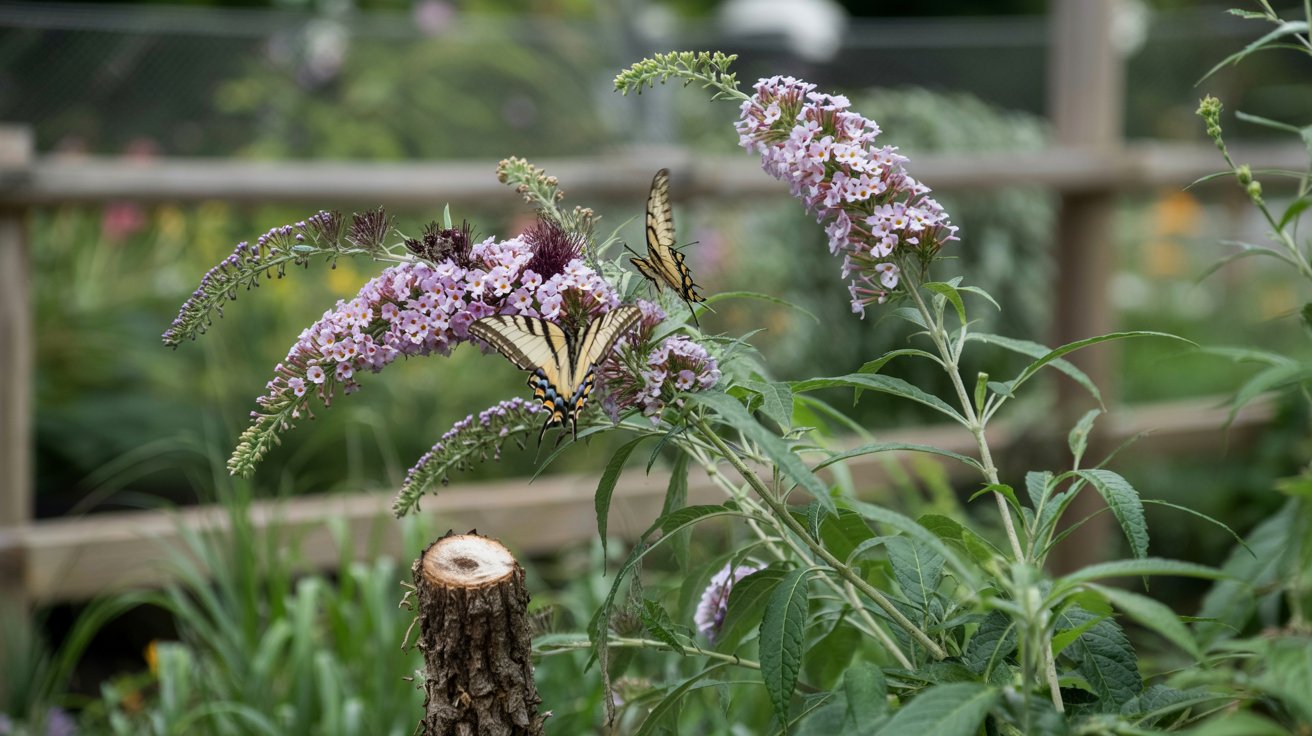
Butterfly bush earns its name honestly - few shrubs pull in more pollinators per square foot from midsummer through fall.
But getting the most out of it means understanding a tight care rhythm: when to prune, how much water it actually needs, and whether your region even allows it in the ground.
Buddleja davidii blooms on new wood, so your pruning decisions directly control next season's flower output. Skip the cutback and you get a leggy, sparsely blooming shrub.
The other side of the coin is invasiveness. In parts of the Pacific Northwest and Mid-Atlantic, butterfly bush spreads aggressively along roadsides and riparian areas.
According to Oregon State Extension, seed dispersal is a documented concern in western Oregon.
This guide covers full-season butterfly bush care - soil and light needs, a pruning schedule that maximizes bloom, and the cultivar choices that let you grow this plant responsibly.
Butterfly bush (Buddleja davidii) is a fast-growing, full-sun shrub that blooms heavily on new wood from midsummer through fall. Hard pruning in late winter or early spring is the single biggest driver of bloom quality.
Invasiveness varies by region — check local rules before planting.
Plant Profile: Butterfly Bush (Buddleja davidii) at a Glance
A fast-growing deciduous shrub native to central China, butterfly bush produces long, cone-shaped flower spikes in purple, pink, white, or red. It blooms from midsummer through fall and can reach 6–12 feet tall if left unpruned. Its fragrant flowers draw butterflies, bees, and hummingbirds in large numbers.
Remember it later
Planning to try this recipe soon? Save it for a quick find later!
Butterfly bush is a deciduous to semi-evergreen shrub depending on how cold your winters get. In Zones 8-9 it may hold leaves through mild winters, while in Zones 5-6 it often dies back to the crown before resprouting in spring.
Either way, new growth drives bloom production - which is exactly why pruning matters so much.
The plant's natural habit is open and arching, with stems that can easily reach 8-10 feet in a single growing season without intervention. Most home gardeners keep it at 4-6 feet through annual cutbacks.
Left alone it becomes woody, loses flower density, and shades out whatever's planted nearby.
Light is non-negotiable. According to the UF/IFAS Extension, butterfly bush demands full sun and well-drained soil to perform well.
Fewer than six hours of direct sun noticeably reduces flower count and encourages leggy growth.
Soil requirements are modest. Butterfly bush tolerates average, even poor soils as long as drainage is good - standing water kills roots fast.
A slightly alkaline to neutral pH of 6.0-7.0 is ideal, though the plant adapts to mild variations without much fuss.
If you're growing other sun-loving flowering shrubs nearby, the same full-sun summer shrub principles apply: space generously, avoid overwatering, and prioritize airflow. Crowding butterfly bush against a fence or wall leads to mildew problems, especially in humid climates.
Fertilizer needs are low. A single application of balanced, slow-release granules in early spring is usually all that's needed.
Heavy feeding produces lush foliage at the expense of flowers and increases unwanted seed production - a real concern given invasiveness risks discussed later.
One issue worth flagging upfront: the NC State Extension notes that butterfly bush has confirmed invasive status in several regions, and local planting regulations may apply. Check with your county extension office before purchasing.
For gardeners who also grow acid-loving shrubs like azaleas nearby, keep in mind that butterfly bush prefers neutral soil - you may need to manage pH separately in mixed borders.
Care and Pruning: Seasonal Routine
The care calendar for butterfly bush is front-loaded - most of the work happens in late winter and early spring, with lighter maintenance through summer. Getting the timing right on pruning is the single biggest factor in how well the plant blooms.
Watering needs shift significantly by season. Newly planted shrubs need 1 inch of water per week for the first growing season.
Established plants are drought-tolerant and rarely need supplemental irrigation except during extended dry spells in summer.
Deadheading is the most time-sensitive summer task. A neglected spent spike can produce up to 40,000 seeds, many of which disperse on the wind before you notice.
For context, that's enough seed to colonize a significant area outside your intended garden bed.
For gardeners managing multiple summer-blooming plants, pairing this routine with summer garden upkeep tasks keeps deadheading from becoming a backlog. Visiting butterfly bush twice a week in peak bloom is a reasonable pace.
If your plant doesn't bloom well despite good sun and regular pruning, check soil drainage first. Waterlogged roots slow growth dramatically, and slow growth means fewer flowering shoots.
Raised beds or amended soil can fix a poorly draining site more reliably than any feeding program.
Hydrangeas and butterfly bush are sometimes grown together because both respond strongly to pruning decisions - if you want to understand how pruning timing affects bloom wood on other shrubs, the guidance on pruning old vs. new wood is directly useful.
Use the "pencil test" before spring pruning: scratch a stem with your fingernail. Green underneath means it's alive and worth keeping longer. Brown and dry means cut it off at the base. This prevents removing viable growth too aggressively in Zones 5–6.
Invasiveness, Climate, and Alternatives
Butterfly bush's invasive potential is well-documented but highly regional. It's a significant problem in the Pacific Northwest, parts of the Mid-Atlantic, and the Southeast, where mild winters and moist conditions allow seedlings to establish readily outside cultivated gardens.
University of Maryland Extension lists butterfly bush as an invasive species in Maryland, where it naturalizes in disturbed areas, roadsides, and woodland edges. In these regions, even diligent deadheading doesn't eliminate risk - wind carries seeds far beyond the garden boundary.
Butterfly bush is banned or restricted in some Oregon counties and discouraged by many extension services in the Mid-Atlantic and Southeast. Before planting, confirm your county's current regulations — rules have tightened in recent years and can change season to season.
The practical response to invasiveness risk depends on your zone and local ecology. Gardeners in Zones 7-9 in the Southeast or Pacific Coast face higher risk than those in Zones 5-6, where cold winters kill most escaped seedlings before they establish.
- Sterile cultivars: 'Lo & Behold' series, 'Flutterby' series, and 'Miss Molly' produce little to no viable seed. These are the safest choices in invasive-risk regions and perform comparably in bloom quality.
- Native alternatives: Cephalanthus occidentalis (buttonbush) and Asclepias tuberosa (butterfly weed) attract the same pollinators without any invasive risk, and both support native bee species more broadly.
- Other pollinator shrubs: Caryopteris (bluebeard) blooms late summer in similar colors, stays compact without hard pruning, and has no documented invasive issues in North America.
If invasiveness is a concern but you still want the visual effect, the sterile cultivars listed above are widely available at garden centers and perform identically in care requirements. They just can't spread.
For gardens that also include controlled growth of vigorous plants, applying the same containment mindset - deadhead consistently, choose lower-seed varieties - is the right framework.
For gardeners who want a different pollinator plant that also works hard in shade, the shade-tolerant foliage option of hostas can fill that niche, though it doesn't replace butterfly bush's flower output in open sunny spots.
Similarly, if you're planning a full seasonal garden, the month-by-month planting calendar helps sequence bloom times across the whole yard.
Gardeners in invasive-risk zones who plant standard Buddleja davidii carry a real ecological responsibility. Deadheading every two weeks during bloom season is the minimum.
Removing the entire plant before seed set if you miss a cycle is the right call. For low-maintenance gardens, a sterile cultivar or native alternative is simply a better fit.
Clematis and butterfly bush bloom in overlapping windows and work well together on a sunny trellis-and-border combination - if that pairing appeals, the advice on climbing bloom timing is worth reviewing.
For a contrasting, long-lived perennial to anchor the same border, peonies for long-term structure and growing zinnias for summer color both complement butterfly bush's midsummer-to-fall bloom window.
Frequently Asked Questions
Butterfly bush performs best in Zones 5–9. In Zones 5–6, stems die back to the crown each winter but regrow reliably in spring, still producing a full bloom cycle.
Cut all stems to 12–18 inches in late winter before new growth appears. This hard prune forces vigorous new wood, which carries the heaviest flower spikes each season.
Yes — the 'Lo & Behold', 'Flutterby', and 'Miss Molly' series are bred to produce little to no viable seed, making them safe choices in regions where standard Buddleja davidii is restricted.
Bloom typically runs July through October. Regular deadheading of spent spikes every 1–2 weeks extends the season by triggering new flower bud development continuously.
Butterfly bush is considered non-toxic to dogs and cats by the ASPCA. However, ingesting large quantities of any plant material can cause mild digestive upset in pets.
Pin it for your next how to grow and care for butterfly bush project.