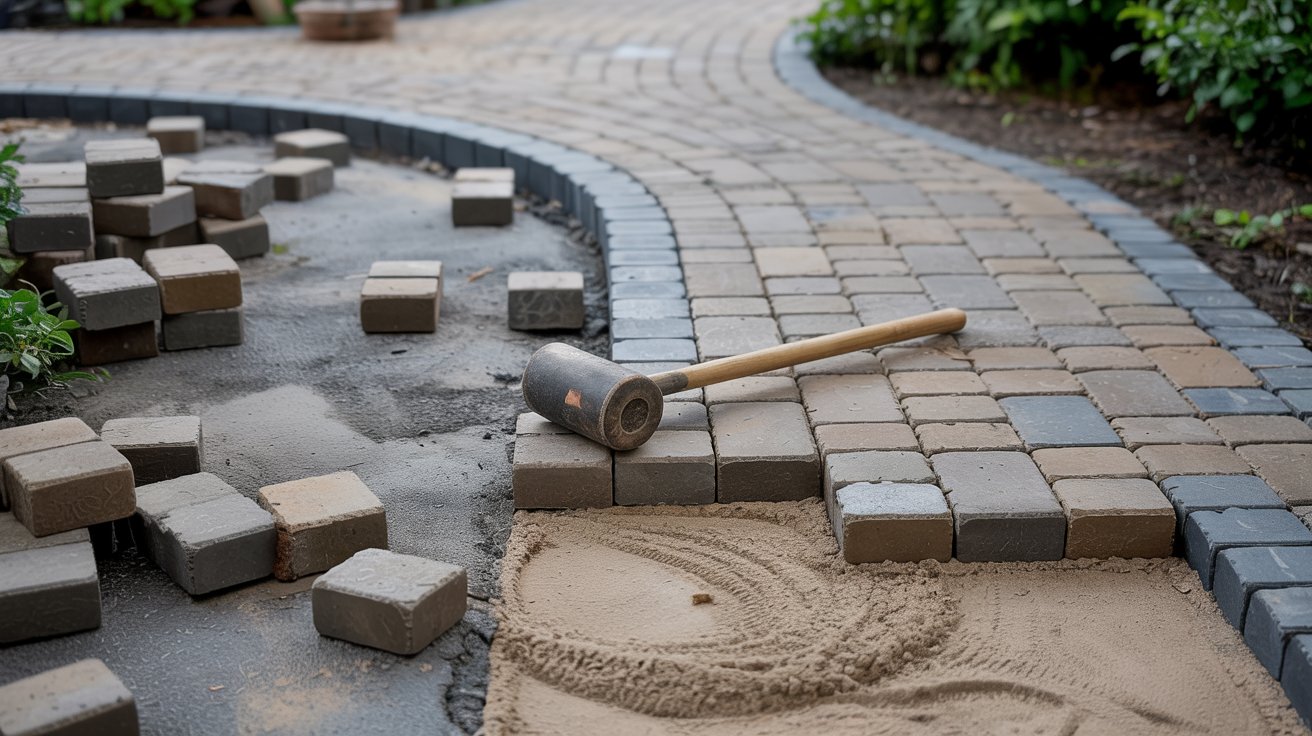
A paver walkway can run anywhere from $8 to $35 per square foot installed, depending on the material you choose and what the ground under your feet actually requires.
That spread is wide enough to turn a straightforward budget conversation into a frustrating guessing game - unless you know which numbers apply to your project.
Most homeowners get surprised not by the pavers themselves, but by the site prep bill. Excavation, base material, edge restraints, and drainage can quietly add $5 or more per square foot before a single paver gets placed.
This guide breaks down real installed cost ranges by material, explains every line item that moves the total, and gives you a practical framework for comparing bids.
If you're also weighing concrete versus pavers as a surface choice, the cost differences between them matter more than most contractors admit upfront.
By the end, you'll have a specific per-square-foot baseline, a scalable budget for your project size, and a checklist for getting quotes that actually compare apples to apples.
A paver walkway costs $8–$35 per sq ft installed, varying by material type, site conditions, and design complexity. Concrete pavers are the most affordable entry point; natural stone sits at the top.
Site prep, base material, and edge restraints add measurably to every project total.
Installed Cost Per Square Foot by Material
The fastest way to frame your budget is to anchor it to installed cost - meaning pavers plus labor, base, and basic site prep combined. A 100-square-foot walkway in concrete pavers typically runs $800-$1,600; the same footprint in natural stone can reach $3,500.
Remember it later
Planning to try this recipe soon? Save it for a quick find later!
Those totals reflect what most contractors charge as an all-in price, not just materials.
According to paver cost data, natural stone installs at $15-$35 per sq ft, concrete pavers at $8-$16, and brick pavers at $10-$20 - with base materials and site prep adding roughly $1-$4 per sq ft on top.
Site prep costs are often listed separately in quotes, so it helps to know what they cover individually. Excavation and grading run $2-$4 per sq ft, while the compacted gravel base adds another $1-$3 per sq ft.
On a 150-square-foot project, that's $450-$1,050 in prep work alone before any paver is touched.
| Material | Materials Only | Labor | Installed Range |
|---|---|---|---|
| Concrete Pavers | $3–$7 | $4–$9 | $8–$16/sq ft |
| Brick Pavers | $4–$10 | $5–$10 | $10–$20/sq ft |
| Natural Stone | $7–$20 | $8–$15 | $15–$35/sq ft |
| Excavation/Grading | — | $2–$4 | $2–$4/sq ft |
| Compacted Base | $1–$2 | $0.50–$1 | $1–$3/sq ft |
Edging and drainage are frequently excluded from the base quote. Always ask whether the per-square-foot price includes edge restraints and whether any drainage work has been scoped — both can add hundreds of dollars to a mid-size project.
What Drives the Total: Materials, Design, and Site Prep?
Five line items account for nearly every dollar in a paver walkway quote. Understanding each one lets you evaluate bids side by side rather than comparing apples to oranges.
Pattern complexity is the most underestimated driver. A simple running bond (straight rows) costs less in labor than a herringbone or basket-weave layout, which requires more cuts and more time to align.
You can use a project cost estimate as a starting point before calling contractors.
| Line Item | Unit | Typical Range |
|---|---|---|
| Excavation & Grading | Per sq ft | $2–$4 |
| Base Material (gravel) | Per sq ft | $1–$3 |
| Edge Restraints | Per linear ft | $3–$7 |
| Drainage | Per project | $300–$1,000 |
| Paver Material + Labor | Per sq ft | $8–$35 |
Edge restraints keep pavers from shifting over time and cost $3-$7 per linear foot. A 150-square-foot walkway might have 60 linear feet of edging, putting that line item at $180-$420.
Drainage work, when needed, adds a flat $300-$1,000 per project depending on slope and soil conditions, according to walkway installation data.
- Ask for every line item itemized - base, edging, drainage, pattern, and pavers should each appear separately.
- Confirm the base depth in the quote; a proper 4-6 inch compacted gravel base is standard for walkways.
- Get quotes during off-season (late fall or winter) when contractor schedules are lighter and pricing can be more flexible.
- Don't compare lump-sum bids that don't separate prep costs from paver costs - you can't tell what you're paying for.
- Avoid skipping a drainage assessment on sloped or clay-heavy sites; water under an improperly drained base destroys the walkway within a few years.
- Don't assume a low bid includes edging - many low quotes omit it entirely.
Concrete, Brick, and Natural Stone: A Closer Look
Each material occupies a distinct price tier, and the gaps between them widen considerably once you factor in labor. Concrete pavers are manufactured to uniform dimensions, which makes installation faster and cuts labor costs.
Brick and stone require more handwork per square foot.
Concrete pavers install at $8-$16 per sq ft and offer the widest range of colors and textures at the entry-level price point. Brands like Belgard and Techo-Bloc both offer budget lines that sit near the lower end of that range, while architectural series with aged or tumbled finishes push toward the top.
The Techo-Bloc budgeting tool shows clearly how pattern choice and product tier shift installed costs even within one brand.
| Material | Installed Range | Best For | Pattern Options |
|---|---|---|---|
| Concrete Pavers | $8–$16 | Budget-conscious, high-traffic paths | Running bond, herringbone, fan |
| Brick Pavers | $10–$20 | Traditional or classic home styles | Herringbone, basket-weave, stack bond |
| Flagstone (Natural) | $15–$30 | Irregular, naturalistic walkways | Random irregular, stepstone |
| Bluestone / Granite | $20–$35 | High-end formal entries | Cut square, running bond |
Brick pavers at $10-$20 per sq ft installed suit traditional architecture well and age gracefully. Clay bricks cost more than concrete bricks but resist fading better over decades.
Reclaimed brick adds character but drives labor costs up because of irregular sizing.
Natural stone covers a wide internal range. Flagstone runs $15-$30 per sq ft installed, while cut bluestone or granite can hit $35 per sq ft or more for premium selections.
Stone weight also affects delivery costs, which rarely appear in initial quotes but show up on final invoices. Comparing these patio surface costs side by side is useful if you're deciding between a walkway and a connected outdoor living area.
- Concrete pavers: Most affordable and fastest to install; wide color range but can look manufactured compared to natural materials.
- Brick pavers: Mid-range cost; clay bricks last 50+ years and hold color better than concrete equivalents.
- Flagstone: Irregular shapes require more cutting and fitting time, which pushes labor costs toward the top of the range.
- Bluestone/Granite: Premium cut stone with the highest material cost; best for high-visibility entries where aesthetics justify the price.
In freeze-thaw climates (USDA Zones 4–6), base depth matters more than material choice. A thicker gravel base — typically 6 inches versus the standard 4 — prevents frost heave and adds $0.50–$1.50 per sq ft to base costs. Skip this and even premium pavers will shift within a few winters.
Pattern complexity affects cost regardless of material. A simple running bond across a rectangular path is the cheapest labor option in any material tier.
A circular or fan pattern in the same concrete paver can add $2-$5 per sq ft in labor alone because of the additional cuts required. Always confirm which pattern is included in the quote before signing.
Getting Real Numbers: The Quote Process
A per-square-foot range from any cost guide - including this one - is a starting point, not a final price. Your actual number depends on your soil type, access constraints, local labor rates, and which specific pavers you select.
The only way to close that gap is with itemized quotes from local contractors.
Installed costs vary by region as much as by material, as installation cost breakdowns consistently show - urban markets often run 20-30% higher than rural ones for the same scope. Knowing your landscaping budget range before you call helps you qualify contractors faster.
| Line Item | Should Be Itemized? | Red Flag If Missing |
|---|---|---|
| Paver material cost | Yes | Can't verify material quality |
| Labor (installation) | Yes | Can't compare contractor rates |
| Base material & depth | Yes | Base shortcuts cause failure |
| Edge restraints | Yes | Often quietly omitted |
| Drainage allowance | Yes (if sloped) | Major cost surprise later |
| Permit fees | Yes | Varies $0–$300 by municipality |
A fixed-price contract protects you from cost creep once excavation begins. Time-and-materials contracts can balloon 15–25% if the crew hits unexpected rock or roots. Get the full scope in writing before work starts, including how change orders are handled.

Budget Scenarios by Project Size
Once you have a per-square-foot range anchored to your material choice, scaling it to your actual project size is straightforward. The table below uses mid-range installed costs for each material tier and adds a standard site prep allowance.
Larger projects don't always cost proportionally more per square foot - contractor mobilization costs spread across more area, which can bring the per-foot price down slightly on jobs over 300 sq ft. Use the patio vs. deck comparison if you're still deciding between hardscape types before locking in a budget.
You can also explore how fence installation pricing structures similarly around linear versus square-foot measurements to get comfortable with contractor quotes in general.
| Project Size | Concrete Pavers | Brick Pavers | Natural Stone |
|---|---|---|---|
| Small (80 sq ft) | $960–$1,280 | $1,200–$1,600 | $1,600–$2,800 |
| Mid (150 sq ft) | $1,800–$2,400 | $2,250–$3,000 | $3,000–$5,250 |
| Large (300 sq ft) | $3,300–$4,500 | $4,200–$5,700 | $5,700–$9,500 |
The Techo-Bloc budget tool demonstrates how pattern complexity adds a predictable premium at every project scale. A herringbone layout on a 150-square-foot walkway in concrete pavers can push the total $300-$700 higher than a running bond in the same material - worth knowing before you commit to a design.
If you're also budgeting for surrounding areas, comparing sod installation costs alongside hardscape work helps you plan the full yard budget in one pass. You might also want to check deck installation pricing or consider a gravel patio as a lower-cost DIY option if the paver numbers stretch your budget too far.
The full picture of what outdoor project costs look like across different scopes helps avoid sticker shock once quotes arrive.
Frequently Asked Questions
Concrete pavers run about $8–$16 per sq ft installed; brick pavers $10–$20; natural stone $15–$35 per sq ft, all including labor and basic site prep.
Concrete pavers are generally the lowest-cost option at $8–$16 per sq ft installed, though complex patterns like herringbone can add $2–$5 per sq ft in labor.
Base material ($1–$3/sq ft), excavation ($2–$4/sq ft), edge restraints ($3–$7/linear ft), and drainage ($300–$1,000/project) all add significantly to the final number.
Collect at least 3 itemized bids, each listing base, edging, drainage, and pattern separately. A fixed-price contract prevents cost creep if the crew hits unexpected conditions.
Small to mid-size walkways (80–150 sq ft) typically take 2–4 days. Larger or complex projects with drainage work can run 1–2 weeks depending on site access.
Pin it for your next how much does a paver walkway cost? project.