A backyard shed can cost $300 for a bare-bones metal kit or climb past $10,000 for a custom wood build with a poured foundation. That spread makes budgeting feel impossible before you've compared materials, factored in labor, or checked local permit rules.
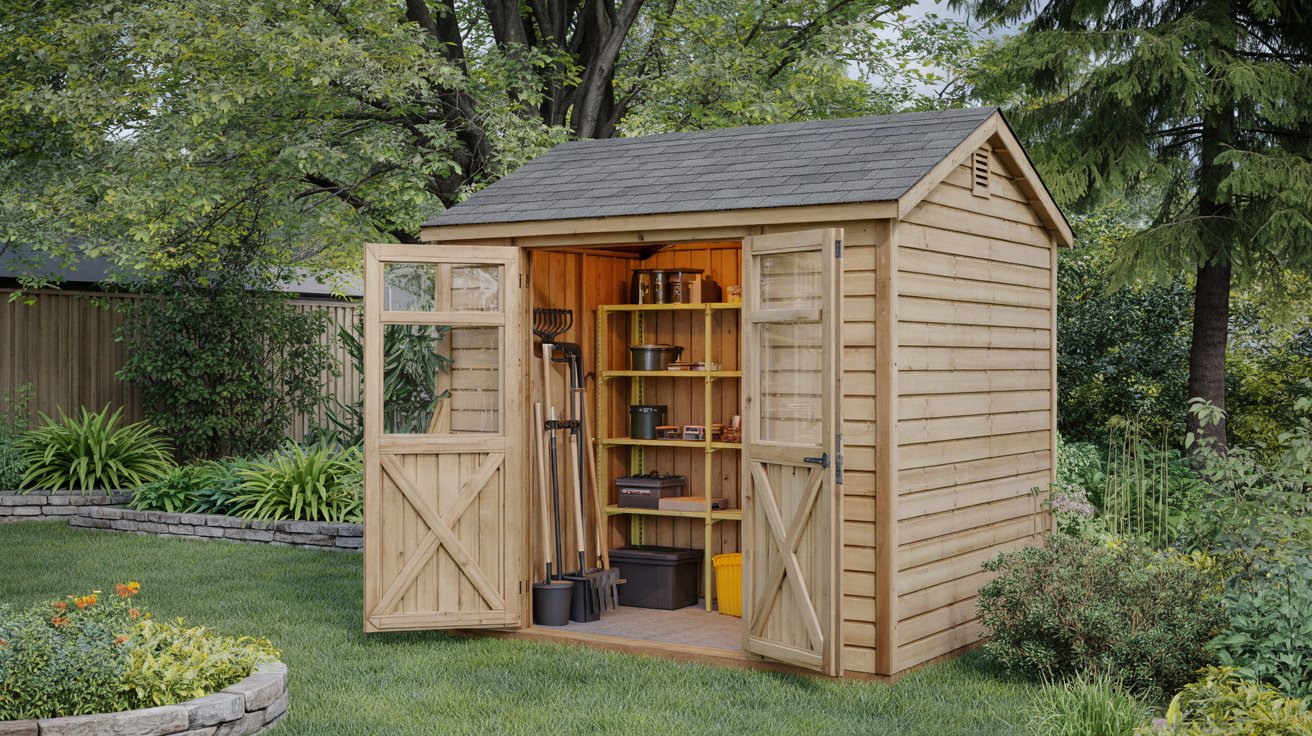
According to OSU Extension cost guidance, labor alone can represent over 35% of the total price on a turnkey shed build - a figure most shoppers underestimate when comparing kit sticker prices.
This guide gives you real price bands by material, a regional context check, and a five-step estimator so you can collect accurate local quotes and avoid surprises at the permit office.
Shed costs range from $300 for a metal kit to $10,000+ for a contractor-built wood shed. Material choice drives the base price, but labor, site prep, and permits can add 40–60% on top of kit costs.
Shed Cost Snapshot by Material
The fastest way to set a realistic budget is to anchor to three material tiers: resin, wood, and metal. Each has a distinct price floor, a different maintenance burden, and a wide gap between the kit price and the fully installed price.
Remember it later
Planning to try this recipe soon? Save it for a quick find later!
Understanding that gap is critical. A resin kit priced at $600 can easily land at $1,800 once delivery, site prep, and installation labor are included.
The same math applies across all three categories.
Metal sheds sit at the bottom of the price ladder for kits, but installed costs can approach wood shed pricing at larger sizes. According to Fixr's shed cost data, national installed averages for a basic 10×12 shed run $1,500-$4,000 depending on material.
Wood kits carry the widest spread because quality varies enormously - from thin-walled big-box store panels to heavy-frame barn-style structures. If you're comparing shed types by use case, material quality differences become even more pronounced at the upper end.
| Material | Kit Price | Installed Price |
|---|---|---|
| Resin / Plastic | $400–$1,500 | $800–$2,500 |
| Wood | $1,000–$3,500 | $2,000–$6,000 |
| Metal / Steel | $300–$2,000 | $800–$3,500 |
| Custom / Premium Wood | N/A | $5,000–$15,000+ |
Custom contractor-built sheds - particularly barn-style or workshop designs - can push well past $10,000 once electrical, shelving, and a concrete slab are included. That's a different product category from a prefab kit, and budgets should reflect that from the start.
According to Buildsandbuys shed pricing research, the installed price gap between a basic metal kit and a mid-range wood shed narrows significantly once you factor in a gravel or concrete base for the metal option.
Resin, Wood, and Metal: What the Price Actually Buys You
Price tags don't tell the full story. Each material has long-term cost implications that affect the real 10-year value of your shed purchase.
Resin sheds need almost no maintenance - no painting, no staining, and no rot risk. Their structural weakness is UV degradation and panel flex in extreme cold, which can crack joints over time in northern climates.
- Resin/Plastic: Lowest maintenance cost over time; UV fading is cosmetic but affects backyard appearance after 7-10 years without UV-resistant panels.
- Wood: Highest upfront and ongoing cost; requires staining or painting every 3-5 years and is vulnerable to rot without proper site drainage.
- Metal/Steel: Rust-prone in humid climates without a galvanized finish; repair panels are inexpensive, but denting is permanent and reduces resale value.
OSU Extension building cost guidance notes that many outdoor structures cost $3-$6 per sq ft at the basic end - a figure that applies to agricultural-grade metal and simple wood framing, not finished residential sheds.
Wood sheds offer the most flexibility for upgrades: windows, loft storage, electrical, and custom doors all integrate cleanly. That adaptability is why wood dominates the premium market even though it costs more to maintain.
Minnesota Extension research confirms that labor can represent over 35% of total turnkey building cost. On a $4,000 installed wood shed, that's roughly $1,400 in labor alone — which is why kit-plus-installation quotes often run higher than contractor-built packages when sourced separately.
Metal sheds are the practical choice for tool and equipment storage in mild, dry climates. In coastal or high-humidity zones, a galvanized or powder-coated finish is non-negotiable if you want the shed to last a decade without surface rust spreading to the frame.
For comparison, a pergola installation or a new deck build follows the same labor-heavy cost pattern - material is only part of the final number.
Regional Costs and Permits
Where you live affects shed pricing in two direct ways: what contractors charge per hour and what your municipality requires before you can pour a base or set a structure.
Labor rates in the Northeast and Pacific Northwest run 20-40% higher than Midwest or Southeast averages for the same shed size and complexity. Material delivery costs also climb in rural areas where freight surcharges apply.
- Check your municipality's permit threshold before purchasing - many jurisdictions require a permit for sheds over 100-200 sq ft.
- Call your HOA before selecting a material; some communities restrict metal sheds or mandate specific exterior finishes.
- Get a soil and slope assessment before pricing a foundation - soft or sloped ground adds $500-$2,000 to site prep.
- Compare total installed quotes, not just kit prices, when evaluating regional contractors.
- Don't assume a small shed skips the permit process - OSU Extension building guidance notes that permit and planning checks affect both cost and project timing.
- Don't skip a foundation because it seems optional - an unlevel base voids most manufacturer warranties.
- Don't accept a single quote; regional labor variation means two contractors in the same zip code can differ by $800-$1,500 on identical work.
- Don't place a shed over buried utilities - call 811 before any ground work to avoid costly repairs.
Permit fees themselves are usually modest - $50-$200 in most jurisdictions - but failed inspections requiring structural changes cost far more. Budget the permit fee into your initial estimate, not as an afterthought.
If you're planning multiple backyard projects, use a full backyard budget estimate to stack shed costs against fencing, patios, and landscaping in one view. A new fence installation in the same season may qualify for combined labor discounts from some contractors.
How to Estimate Your Shed Cost?
A five-step process keeps your estimate realistic and gives you a structured basis for comparing quotes from local builders or big-box kit suppliers.
Start with what you actually need the shed to do. A lawn equipment shed needs double doors and a ramp; a potting shed needs light and ventilation.
Defining use before size prevents overspending on space you won't use.
Map your quotes to the simple budget ladder: Resin < Metal < Wood < Custom.
If a wood kit quote comes in near a custom-built price, the contractor-built option often includes better materials and a foundation - making it the stronger value at that price point.
For a side-by-side look at how outdoor project costs stack up, comparing patio and deck costs uses the same kit-vs-built framework.
You might also check sod installation costs if site restoration after shed placement is part of your budget, or review whether a gravel base is DIY-viable before pricing a contractor-laid foundation.
Ask each contractor to itemize site prep, materials, and labor separately. That breakdown makes quotes directly comparable and reveals whether a lower total bid is cutting corners on foundation work or material grade.
Frequently Asked Questions
Metal kits are the cheapest entry point, starting around $300 for a basic 6×8 ft unit, though galvanized finishes cost more and are necessary in humid climates.
Installation adds $400–$2,500 on top of kit price depending on size and site conditions; labor typically represents over 35% of a fully installed shed's total cost.
Most jurisdictions require permits for sheds over 100–200 sq ft; permit fees typically run $50–$200, but failed inspections can trigger costly structural changes.
For sheds under 10×12 ft, a kit usually wins on price; above that size, contractor-built options often include site prep and warranties that close the cost gap significantly.
A small resin or metal kit can be assembled in one day; larger wood sheds or custom contractor builds typically take 3–7 days depending on site prep and weather.
Pin it for your next how much does a shed cost? project.