A small backyard can feel like a problem until you see it as a tight canvas with real potential.
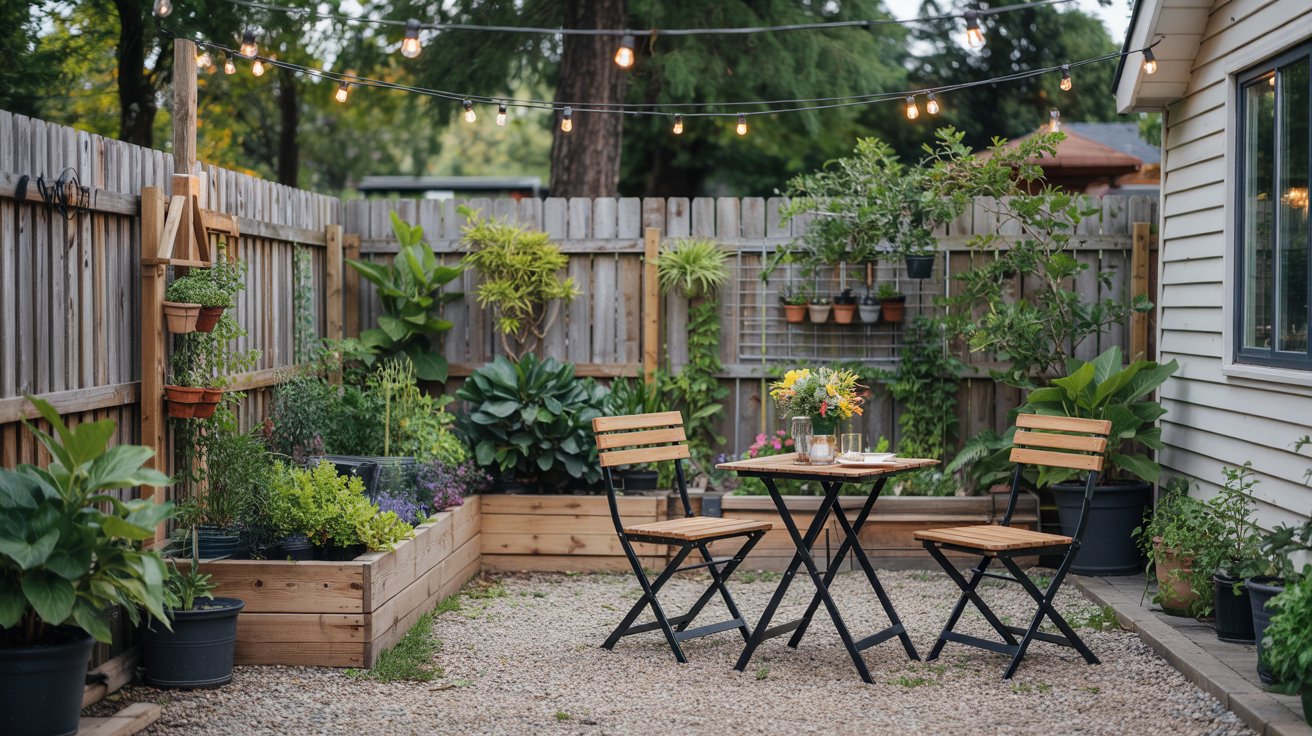
Most tiny yards stay underwhelming not because of their size, but because the owner spent money in the wrong order - big patio first, no seating, no greenery, no plan.
This list gives you 20 real, actionable landscaping improvements sorted into four budget bands, from under $100 to around $1,000.
Each idea includes a rough material cost, a before/after snapshot, and a note on maintenance load. University extension programs across the U.S. consistently show that budget-conscious yard design scales to almost any space or wallet size - the sequencing matters more than the spending.
We built this list with renters and owners in mind. Some ideas are fully portable; others are worth a small permanent investment if you own your home.
Skip to whatever budget band fits your situation right now. You can stack ideas across bands as the season progresses and your budget opens up.
Twenty budget backyard ideas grouped by cost band — from under $100 quick wins to $300–$1,000 midrange upgrades. Each entry includes material hints, maintenance level, and space-impact notes so you can pick the right move for your yard this season.
Before buying anything, walk your yard with a tape measure and note sun direction and wet spots. Placing seating in a shady corner or a container garden over a drainage low point wastes money no matter your budget.
Group A: Quick Wins Under $100
These five ideas cost almost nothing but shift how the whole yard feels. Most take a single weekend afternoon, and none require a contractor or permit.
Remember it later
Planning to try this recipe soon? Save it for a quick find later!
Reusing materials is the fastest path to a polished result at this price point. Low-income gardening guidance from Oregon State Extension consistently highlights material reuse and inexpensive focal points as the highest-return moves in a tight-budget yard.
- Edging with reclaimed brick: Salvaged bricks from a demolition site or Facebook Marketplace define beds cleanly. A 10-foot run costs under $15 and makes a scraggly lawn edge look intentional.
- Container herb cluster: Three mismatched pots planted with basil, mint, and parsley sit near the back door and cost under $30 total. Move them when you need the space.
- Mulch refresh: A single bag of cedar mulch ($6-$8) spread 2 inches deep over one neglected bed covers about 8 square feet and suppresses weeds for a full season.
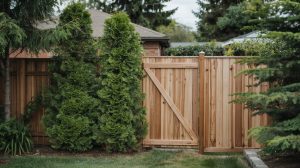
- Painted fence panel accent: One can of exterior paint ($12-$18) transforms a single fence panel into a color backdrop. It costs nothing to undo if you rent.
- String light canopy: A simple overhead string light setup between two posts or fence corners runs $25-$60 and makes the space usable after dark.
Every idea below is portable or reversible, making them safe choices for renters. The table below breaks down the specifics so you can compare at a glance.
| Idea | Approx. Cost | Maintenance | Before/After Impact |
|---|---|---|---|
| Reclaimed brick edging | $10–$20 | Low | Messy beds → defined borders |
| Container herb cluster | $20–$35 | Medium | Bare corner → functional greenery |
| Mulch refresh | $10–$25 | Low | Weedy bed → clean, weed-free ground |
| Painted fence accent | $12–$20 | Low | Dull fence → bold focal point |
| String light canopy | $25–$60 | Very low | Dark yard → usable evening space |
The University of Minnesota Extension notes that small, high-impact changes to yard edges and planting beds set the visual foundation before any larger investment makes sense.
String lights rated for outdoor use (look for UL wet-location listing) last 3–5 seasons. Indoor-rated lights fail within months when left outside year-round.
Group B: Budget $100-$300
This band is where most small backyards make their biggest visible leap. You have enough money to add structure - a defined seating area, a small raised bed, or a vertical element that draws the eye upward and makes the space feel larger.
Salvaged wood, bulk mulch, and low-cost containers do most of the heavy lifting here. According to landscaping cost data, even modest small-yard projects in this range consistently add perceived and resale value when executed cleanly.
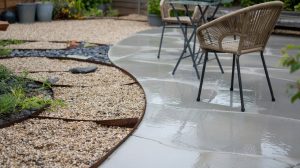
- Gravel seating pad: A 6×6-foot pea gravel pad with landscape fabric underneath costs $80-$150 in materials and creates a dedicated spot for two chairs. It drains well and requires no concrete.
- Raised bed from lumber: A single 4×4-foot cedar raised bed uses three 8-foot boards ($40-$70) and transforms a patchy lawn corner into a productive kitchen garden.
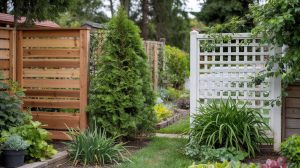
- Trellis + fast-growing vine: A $20-$40 wood or metal trellis planted with Thunbergia alata (black-eyed Susan vine) or annual climbing beans adds 6 feet of vertical green in one season.
- Pressure-washed and sealed concrete: Renting a pressure washer for $40-$60 and applying a concrete sealer ($25-$35) makes an existing slab look nearly new. No demo required.
- Privacy screen with planters: Two tall planter boxes ($30-$50 each) flanking a seating area, planted with ornamental grasses, create a low-cost privacy barrier without a permit or post holes.
These five ideas all work in yards as small as 150 square feet. The table below shows a direct comparison so you can prioritize based on your yard's biggest weakness.
| Idea | Approx. Cost | Maintenance | Space Impact |
|---|---|---|---|
| Gravel seating pad | $80–$150 | Low | Defines gathering zone |
| Raised garden bed | $60–$110 | Medium | Adds vertical + productive layer |
| Trellis + climbing vine | $50–$100 | Low–Medium | Draws eye up, softens fences |
| Pressure-wash + seal slab | $65–$95 | Very low | Existing slab looks brand new |
| Planter privacy screen | $80–$130 | Medium | Creates shelter without permits |
The yard and garden design principles from University of Minnesota Extension reinforce that designing within a fixed budget - rather than expanding it mid-project - produces more cohesive results. Set your ceiling before you shop.
Want to estimate what the whole yard could cost at full build-out? The project cost estimator helps you map spending before committing to materials.
Group C + Flex: Midrange to Smart-Flex Ideas ($300-$1,000)
At this budget level, you can make structural changes that reshape how the yard functions - not just how it looks.
The five core ideas here add permanence; the two flex entries show how to adapt concepts for long, narrow, or oddly shaped lots without costly renovations.
Maryland Extension's landscape planning framework emphasizes that flexible, phased layouts serve small yards better than single large projects, because you can adjust as you learn how you actually use the space.
- Poured stepping stone path: DIY concrete stepping stones in a mold cost $150-$250 for a 10-foot run. They formalize movement through the yard and reduce lawn wear. Compare concrete against paver options before you pour.
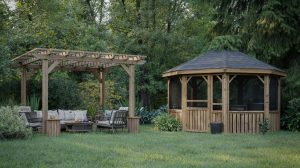
- Pergola kit: A basic 8×8-foot freestanding pergola kit runs $350-$600 at most home improvement stores. It defines an outdoor room without enclosing it and accepts string lights or shade cloth.
- Decomposed granite patio: A 10×10-foot DG patio with edging costs $300-$500 in materials. It drains better than concrete, installs in a weekend, and suits dry climates especially well.
- Low retaining wall + raised bed combo: Stacked concrete block retaining walls cost $400-$700 for a small run and solve uneven grade problems while creating an integrated planting bed.
- Outdoor rug + modular furniture set: A weather-resistant outdoor rug ($60-$120) paired with a modular 3-piece seating set ($200-$400) converts any flat surface into a living room. Fully portable for renters.
The two flex entries below work specifically for long, narrow, or irregular yards where standard layouts fail.
- Vertical planter wall: A wall-mounted pocket planter or stacked pallet garden takes up zero floor space. A 4-foot-wide vertical setup costs $80-$200 and works on any fence or exterior wall.
- Zigzag path layout: In a narrow corridor yard, a path that angles slightly side to side (rather than running straight) makes the space feel 30-40% wider visually and costs nothing extra in materials.
| Idea | Approx. Cost | Flex-Friendly? | Key Benefit |
|---|---|---|---|
| Stepping stone path | $150–$250 | Yes | Defines circulation, reduces mud |
| Pergola kit | $350–$600 | Partial | Creates outdoor room overhead |
| Decomposed granite patio | $300–$500 | Yes | Drains well, easy to adjust |
| Retaining wall + raised bed | $400–$700 | No | Fixes grade, adds planting space |
| Modular furniture + rug | $260–$520 | Yes — fully portable | Instant living room feel |
| Vertical planter wall | $80–$200 | Yes | Greenery with zero footprint |
| Zigzag path layout | $0 extra | Yes — any shape | Makes narrow yards feel wider |
Decomposed granite works best in USDA zones 7–11 where freeze-thaw cycles are rare. In colder zones, repeated freezing heaves DG surfaces and requires annual re-leveling. Opt for gravel or pavers in zone 6 and below.
University of Arizona Extension confirms that small midrange improvements - particularly defined paths and overhead structures - have the strongest effect on how usable a yard feels day to day, even before any planting happens.
If you're choosing between a deck and a simple patio at this budget, the cost and durability comparison breaks down where each makes sense for a small yard.
Group D: Final 5 Ideas + Practical Sequencing
These last five ideas round out the full 20 and are specifically chosen for beginner-friendly execution. Each one can slot into a week-by-week plan if you're building up the yard across a single season rather than tackling everything at once.
UMD Extension's landscape planning resources make clear that stepwise sequencing - ground prep first, hard surfaces second, planting last - reduces rework and unnecessary material waste. That logic applies here even at small scale.
- Lawn patch seeding: Bare spots seeded with a shade-tolerant blend ($15-$30 per bag) fill in within 3-4 weeks and cost a fraction of sod. Tackle this in week one so grass establishes while you work on other areas.
- DIY fire pit ring: A simple stacked-stone or concrete-block fire pit costs $50-$120 in materials. It anchors an evening gathering spot and makes the yard feel like a destination. See fire pit design options to choose the right style for your space.
- Fence board planter boxes: Scrap fence boards cut into shallow planter boxes mount directly to the fence face at eye level. Total cost is near zero if you have leftover lumber, or $20-$50 if you buy new boards.
- Low-voltage path lighting: A solar-powered path light kit (6-8 lights) costs $25-$60 and installs in under an hour with no wiring. Place them week three after path layout is finalized.
- Lawn-free ground cover bed: Replacing a struggling grass patch with Thymus serpyllum (creeping thyme) or Pachysandra terminalis costs $40-$80 for a 4×6-foot area and cuts mowing time permanently.
Oregon State Extension's stepwise planning advice notes that spreading tasks over 4-6 weeks prevents overspending and lets you evaluate each change before adding the next. The rough sequence below matches that logic.
| Week | Task | Approx. Cost | Why This Order |
|---|---|---|---|
| Week 1 | Lawn patch seeding | $15–$30 | Grass needs lead time to establish |
| Week 2 | Fence board planter boxes | $0–$50 | Use scrap before buying anything new |
| Week 3 | Solar path lighting | $25–$60 | Install after path layout is set |
| Week 4 | DIY fire pit ring | $50–$120 | Anchors the social zone last |
| Week 5 | Ground cover bed | $40–$80 | Final touch after structure is done |
You can see a full breakdown of what small yards typically cost to landscape end-to-end by checking the per-square-foot landscaping costs guide before finalizing your material list.
If a new fence is part of your longer-term plan, getting a real fence cost estimate early prevents it from blowing your remaining budget in season two. And the outdoor living design hub covers how all these elements fit together into a cohesive small-yard plan.
Frequently Asked Questions
Start with edging and mulch to define existing beds, then add vertical elements like trellises. A tidy edge alone costs under $20 and makes a 200-square-foot yard look twice as intentional.
Stick to fully portable options: container gardens, outdoor rugs, string lights, and modular furniture. None require holes, concrete, or landlord approval, and all move with you at lease end.
Measure the space first, then spend under $50 on edging and a mulch refresh before buying any furniture or structures. Establishing clean ground-level definition prevents costly layout mistakes later.
A phased approach across 4–6 weeks produces the most durable results. A single weekend handles quick wins; structural additions like gravel pads or pergola kits take one to two full days each.
Decomposed granite, cedar mulch, and ground cover plants like creeping thyme cut ongoing maintenance significantly. Creeping thyme needs mowing only once or twice per year once fully established.
Pin it for your next small backyard ideas on a budget project.