Picking a grow light sounds simple until you're staring at a wall of options with specs that read like a physics exam. PPFD, DLI, efficacy, PAR - each number matters, but only once you know what your plants actually need.
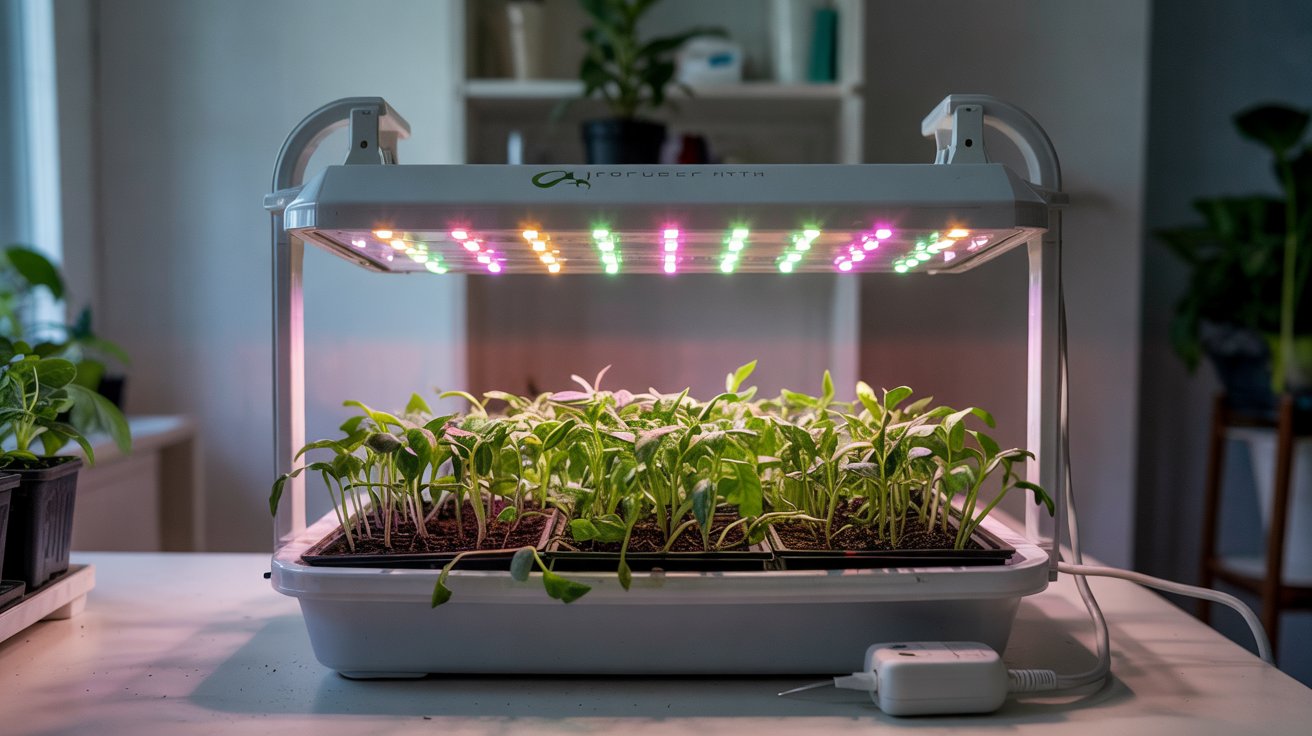
This guide cuts through that noise. We matched extension-backed light science to real growing scenarios so you can land on the right fixture the first time.
Whether you're starting tomato seedlings under a shop light or keeping a low-maintenance snake plant alive through winter, the setup principles stay the same: match light intensity and spectrum to plant stage, then fit that into your space and budget.
We've organized everything into a four-step decision framework - space, plant type, budget, then product. Affiliate links are present throughout; they cost you nothing extra and help keep this resource free.
The best grow lights for seedlings and houseplants depend on three factors: spectrum, PPFD (light intensity), and your available space. Full-spectrum LED panels cover most home setups efficiently, while fluorescent T5s still work for budget seed-starts.
Before shopping, measure your growing area in square feet and note ceiling height. A fixture rated for 4 sq ft at 18 inches won't cover a full seed tray at 24 inches — seedling light duration and positioning together determine whether your starts grow compact or leggy.
Key Specs That Matter: Spectrum, PPFD, and Efficiency
Most buyers focus on wattage, but wattage tells you how much electricity a fixture draws - not how much usable light actually reaches your plants.
Remember it later
Planning to try this recipe soon? Save it for a quick find later!
The number that matters is PPFD (Photosynthetic Photon Flux Density), measured in µmol/m²/s, which quantifies photons hitting a surface per second.
Seedlings need a PPFD of roughly 200-400 µmol/m²/s to develop properly without stretching. Mature houseplants vary widely - low-light species like pothos need 50-150 µmol/m²/s, while herbs and flowering plants push toward 400-600 µmol/m²/s.
Distance from the canopy directly affects PPFD, so a fixture's published number is only valid at a stated height.
| Metric | What It Measures | Target (Seedlings) |
|---|---|---|
| PPFD | Instantaneous light intensity (µmol/m²/s) | 200–400 |
| DLI | Total daily light dose (mol/m²/day) | 12–20 |
| Efficacy | Efficiency (µmol per joule) | ≥2.0 µmol/J |
| Coverage | Footprint at rated height (sq ft) | Match tray size |
| Color Temp | Spectrum bias (K) | 4000–6500K |
DLI (Daily Light Integral) combines intensity and duration - it's the total moles of light a plant receives in 24 hours. A seedling tray targeting a DLI of 15 mol/m²/day at 300 µmol/m²/s needs about 14 hours of light.
Running lights longer compensates for lower-intensity fixtures, but only to a point.
Efficacy above 2.0 µmol/J is the modern LED benchmark; budget panels often fall below 1.5 µmol/J, meaning you pay more in electricity for the same output.
Per indoor lighting guidance from the University of Minnesota Extension, both intensity and spectrum quality directly shape root development and leaf thickness.
Spectrum matters most at the seedling stage. Blue-leaning light (5000–6500K) keeps stems compact; red wavelengths (620–680 nm) drive photosynthesis. University of Maryland Extension's seed-start guidance recommends full-spectrum sources that balance both ranges rather than single-band red/blue "blurple" panels.
LED vs HID vs Fluorescent: Which Type Is Best for You?
Three technologies dominate the indoor grow light market, and each suits a different scenario. For most home growers - whether you're raising seedlings or keeping houseplants healthy - LED wins on almost every axis: energy efficiency, heat output, lifespan, and spectrum control.
University of Minnesota Extension's indoor plant lighting guide confirms that modern LEDs now deliver the spectrum and intensity needed for both foliage and fruiting plants.
HID (High Intensity Discharge) fixtures - metal halide and high-pressure sodium - were the commercial greenhouse standard for decades, but they run hot, require ballasts, and consume far more power than a home setup justifies.
They're rarely the right call for a spare bedroom or kitchen shelf.
- Lower electricity cost over the fixture's lifetime
- Runs cool enough to hang close to seedlings without scorching
- Full-spectrum models support seedlings and mature plants equally
- Dimmable options let you adjust intensity by growth stage
- Lower upfront price makes T5s accessible for a first seed-starting setup
- Widely available at hardware stores without waiting for shipping
- Adequate for low-light houseplants and basic seed germination
Fluorescent T5 fixtures still work well for low-light indoor plants and first-time seed starters on tight budgets. Maine Extension's houseplant lighting notes confirm that light quality — not just wattage — determines plant response, so even modest fluorescents beat a dim windowsill.
Budget Tiers and Top Picks
The grow light market runs from under $20 clip-on panels to $300+ commercial bar systems. Each tier makes real tradeoffs in coverage, spectrum quality, and build durability.
Knowing which tier fits your use case prevents both overspending and buying something underpowered.
University of Minnesota Extension's spectrum and intensity guidance makes clear that coverage area and spectrum quality matter more than wattage labels - a cheap 45W blurple panel often underperforms a quality 20W full-spectrum LED at the same canopy distance.
| Tier | Best For | Coverage | Key Tradeoff |
|---|---|---|---|
| Budget Clip-On ($10–$30) | Single houseplants, desks | 1–2 sq ft | Low PPFD, narrow footprint |
| Entry Panel ($30–$80) | Small seed trays, herb pots | 2–4 sq ft | Adequate for starts, not fruiting |
| Mid-Range LED ($80–$180) | Full seed trays, shelves | 4–9 sq ft | Best efficiency-per-dollar |
| Pro Bar System ($180–$350) | Multiple trays, grow tents | 9–16 sq ft | High upfront cost |
Maine Extension's houseplant care resource notes that light quality directly affects foliage color and growth rate. Budget fixtures often lack red-wavelength depth, which limits flowering and fruiting plants even when PPFD looks adequate on paper.
Mid-range LEDs in the $80-$180 band deliver the strongest value for most home growers. They cover a standard 10×20-inch seed tray at proper intensity, include full-spectrum diodes, and often feature adjustable height and dimmer controls - useful when transitioning seedlings from germination to pre-transplant hardening.
Seedlings vs Houseplants: Tailored Recommendations and a Flex Plan
Seedlings and houseplants have genuinely different light needs, and a fixture that excels for one can underserve the other. Seedlings demand higher intensity and longer daily duration for compact, transplant-ready growth.
Houseplants - especially shade-tolerant species - need much less and benefit more from consistent spectrum quality than raw power.
For indoor herb growing, expect needs closer to the seedling end: basil and cilantro want 400-600 µmol/m²/s and do poorly with less. Peace lilies and shade-loving ferns sit at the opposite end, needing only 50-150 µmol/m²/s.
| Plant Type | PPFD Target | Daily Hours | Recommended Fixture |
|---|---|---|---|
| Vegetable seedlings | 200–400 µmol/m²/s | 14–16 hrs | Mid-range LED panel |
| Herb starts | 400–600 µmol/m²/s | 14–16 hrs | Mid-range or pro LED bar |
| Low-light houseplants | 50–150 µmol/m²/s | 10–12 hrs | Entry panel or clip-on |
| Medium-light houseplants | 150–300 µmol/m²/s | 12 hrs | Entry to mid-range LED |
| Flowering houseplants | 300–500 µmol/m²/s | 12–14 hrs | Mid-range full-spectrum LED |
Unconventional spaces need purpose-built solutions. Short shelving units (under 18 inches of vertical clearance) work best with slim T5 strip fixtures or thin LED bars mounted directly under the shelf above - they sit just 4-6 inches above the canopy without eating vertical space.
For peace lily setups in dim corners, a 10W clip-on full-spectrum LED on a 12-hour timer is genuinely sufficient.
Windows with limited sun - north-facing or blocked by trees - can support succulents that need brightness only if supplemental light fills the gap. Place a mid-range LED 12-18 inches above the plant and run it during the darkest midday hours to mimic what a south-facing window provides naturally.
University of Minnesota Extension's indoor lighting resource confirms that supplemental lighting works best when placed to extend - not replace - natural light cycles.
Maine Extension's houseplant adaptation tips suggest moving plants gradually toward supplemental light rather than switching them abruptly — sudden intensity changes can cause leaf drop or bleaching even in otherwise healthy specimens.
Growers with a mix of seedlings and houseplants on the same shelf can use a dimmable mid-range LED set to full power during seed-start season, then dialed to 50-60% for houseplant maintenance the rest of the year. This single-fixture approach suits most spare-room setups and keeps costs down versus running separate systems.
If you're also growing cut-and-come-again lettuce indoors, keep the fixture at full power year-round - lettuce wants consistent high DLI to stay productive.
Install, Position, and Tune: a Quick-Start Setup
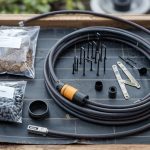
Getting a grow light into place takes about 30 minutes. The bigger investment is the first week of observation - watching how plants respond to distance and duration before locking in a permanent schedule.
University of New Hampshire Extension's seedling light fact sheet recommends starting with 16 hours on, 8 hours off for most vegetable starts, then adjusting based on stem thickness and internode spacing.
Never run grow lights on an extension cord rated below 15 amps, and avoid daisy-chaining multiple fixtures on a single strip. High-wattage LED bars can draw 150–200W continuously — always check the total draw against your circuit's breaker rating before installation.
Energy cost adds up over a seed-starting season. A 150W LED running 16 hours daily for 10 weeks consumes roughly 168 kWh - about $20-$25 at average U.S. electricity rates.
Efficient fixtures with efficacy above 2.0 µmol/J cut that number meaningfully while delivering the same or better light output. If you're growing perennials started from seed each spring, the energy savings of a quality LED pay back the price premium within two seasons.
For broader context on what plants belong in your indoor lineup, the garden plant resource hub covers species-level light needs across dozens of varieties.
Frequently Asked Questions
Full-spectrum light with a blue emphasis (5000–6500K) keeps seedlings compact. Red wavelengths around 660 nm drive photosynthesis and matter most once true leaves appear.
Most vegetable seedlings need 14–16 hours per day. Running lights beyond 18 hours offers diminishing returns and can stress some species that require a dark period.
Yes. Quality LEDs deliver 2.0–3.0 µmol of light per joule of electricity, roughly double what fluorescent T5s provide and three times better than older HID fixtures.
Start at 18–24 inches for most LED panels, then lower toward 12 inches if seedlings stretch. Always check the manufacturer's PPFD chart at your specific hanging height.
Not always. Many houseplants — including shade-tolerant varieties — do fine under any full-spectrum LED rated 50–200 µmol/m²/s. High-light species like citrus or orchids need a stronger dedicated fixture.
Pin it for your next best grow lights for indoor plants project.