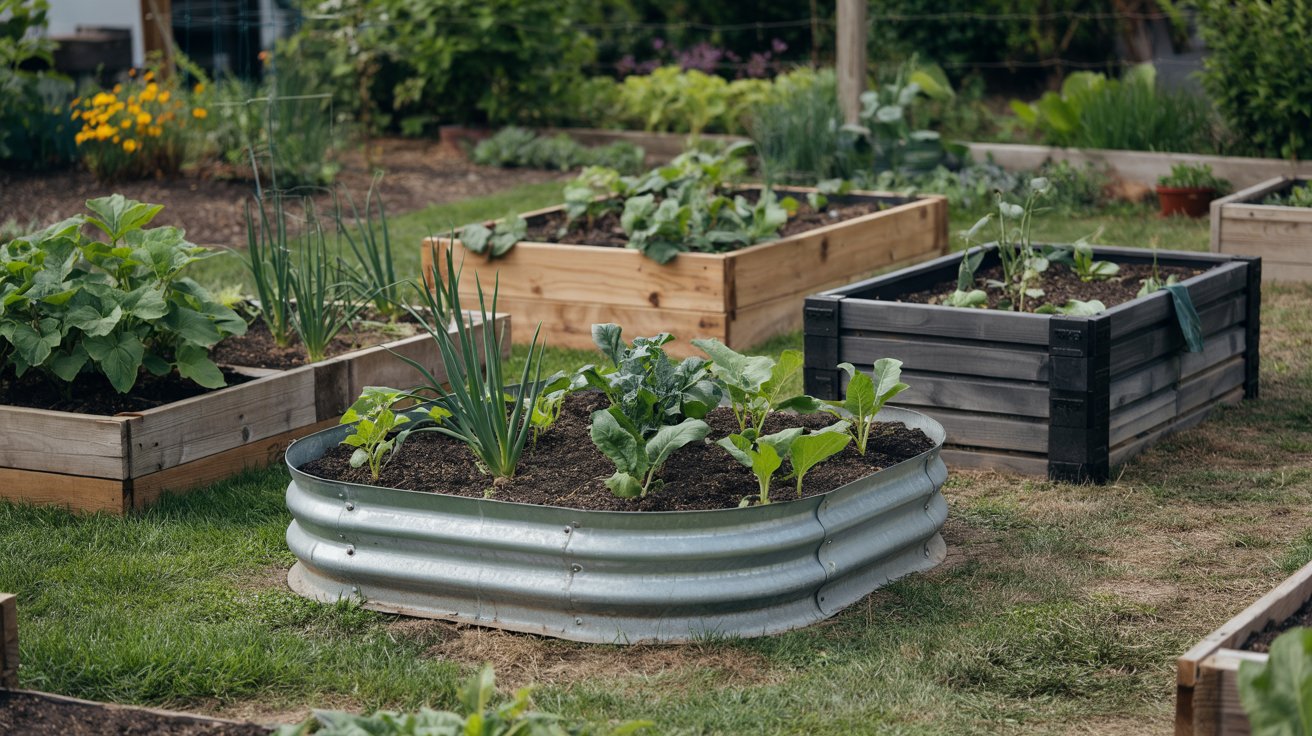
Raised garden beds have moved from niche to mainstream fast, and the product options have multiplied just as quickly. Walk into any garden center or scroll through any retailer and you'll find galvanized steel panels, rot-resistant cedar planks, and flat-pack wood kits all promising the same outcome - a productive, tidy growing space.
Sorting through them without a framework wastes time and money.
This guide cuts through the noise. We cover the three main material categories, lay out a direct comparison, walk through sizing decisions, and map each option to a realistic budget.
The right bed depends on how long you plan to garden, how much assembly you want to do, and what your soil depth requirements actually are.
OSU raised bed guidance notes that material choice, bed depth, and framing method all interact - changing one often shifts the others.
Whether you're fitting a raised bed versus container setup on a balcony or building out a full kitchen garden in a backyard, the same buying logic applies: match material to lifespan goals, match size to what you can reach and maintain, and match cost to your actual season count.
By the end of this guide, you'll have enough to place an order or pull lumber this weekend.
This guide compares metal, wood, and wood-kit raised beds across durability, cost, heat transfer, and maintenance. Use it to match a material to your garden goals, confirm the right bed depth and footprint, and find a clear price tier before buying.
Materials and Durability
Every raised bed material involves a real trade-off. Longer lifespan usually means higher upfront cost or more heat transfer to the soil; lower cost usually means more maintenance or shorter service life.
Remember it later
Planning to try this recipe soon? Save it for a quick find later!
Understanding each category makes the choice straightforward.
Metal raised beds - typically galvanized steel or aluminum - outlast every other option. A quality galvanized steel bed carries a realistic lifespan of 20 years or more, and the panels resist warping, cracking, and pest damage completely.
The trade-off is heat: metal absorbs and radiates solar energy, which can push soil temperatures several degrees higher than ambient air on hot afternoons.
That heat effect matters most in USDA zones 8 and above, where soil temps above 95°F stress root systems and can slow germination. In cooler northern zones, the same warming effect is actually useful - it extends the shoulder seasons by a few weeks in spring and fall.
If you're weighing the specifics, our side-by-side on choosing between aluminum and steel covers the thermal and corrosion differences in detail.
Untreated wood - cedar, redwood, or Douglas fir - brings a natural aesthetic and doesn't heat the soil the way metal does. Cedar is the benchmark: its natural oils resist rot and insects, and a properly built cedar bed realistically lasts 10 to 15 years without any chemical treatment.
Redwood performs similarly but costs more in most U.S. markets. Pine and fir are cheaper but typically degrade within 5 to 7 years when in direct soil contact.
If you're deciding between cedar and treated lumber, read our breakdown of food-safe wood options before buying boards. Pressure-treated lumber rated for ground contact (UC4B) is now considered safe by most extension services, but it's worth understanding what's in the mix.
Wood kits occupy a middle ground. They use pre-cut, pre-drilled lumber - typically untreated fir or pine - assembled with corner brackets or dovetail joints.
The convenience is real: most kits go together in under an hour. The durability, however, mirrors whatever species the kit uses, which is often softwood with a 5 to 8 year lifespan.
UMN Extension raised-bed guidance confirms that material selection drives both longevity and long-term maintenance needs more than any other single factor.
| Material | Typical Lifespan | Heat Transfer | Maintenance | Relative Cost |
|---|---|---|---|---|
| Galvanized Steel | 20+ years | High | Very low | Premium |
| Aluminum | 15–20 years | Moderate–High | Very low | Premium |
| Cedar / Redwood | 10–15 years | Low | Low | Mid–High |
| Pine / Fir (DIY) | 5–7 years | Low | Moderate | Entry |
| Wood Kit (softwood) | 5–8 years | Low | Moderate | Entry–Mid |
Direct Comparison: Metal vs Wood, Kit vs Ready-Made
Knowing the material categories is one step; knowing which scenario fits your garden is the next. These head-to-head comparisons answer the practical questions most buyers actually face.
Metal vs wood comes down to lifespan priority and climate. Metal wins on longevity and zero-maintenance performance.
Wood wins on soil temperature stability and visual warmth, which matters in hot climates or ornamental kitchen gardens. A deeper breakdown of those trade-offs is covered in our guide to picking the right material for your specific setup.
For most long-term gardeners, metal wins outright. For someone building a showcase bed in a cottage-style yard or in a hot desert climate, cedar edges ahead on practicality and looks.
Wood kit vs ready-made (prebuilt) kit is a different question - both use wood, so the decision shifts to convenience versus customization.
CSU Extension's raised-bed overview notes that standard kit dimensions often don't match available garden spaces, which is the most common reason buyers later wish they'd gone custom.
- Speed: Most kits assemble in 30–60 minutes with no cuts required.
- Beginner-friendly: All hardware is included; no measuring or sawing needed.
- Consistent fit: Corner joints are pre-engineered, reducing wobble and gap issues.
- Lower barrier: Entry-level kits start under $50, making trial gardening low-risk.
- Custom size: Build any dimension to fit odd spaces or maximize bed count.
- Material choice: Upgrade to cedar or redwood; kits mostly ship pine or fir.
- Longer lifespan: Using 2x6 cedar boards doubles the lifespan of most kit softwood.
- Cost at scale: Building 3+ beds from lumber is almost always cheaper than buying 3+ kits.
Scenario shortcut: First-time gardener with one bed on a patio - buy a kit. Urban gardener with an irregular side yard - DIY wood to fit.
Someone planning 5 or more beds over multiple years - metal panels pay off fastest on a per-season cost basis. For ideas on what to actually grow once the bed is built, our list of high-yield raised-bed vegetables is a practical next step.

Sizing, Depth, and Placement
Getting the size wrong is the most common first-time mistake. A bed that's too wide means leaning in and compacting soil; a bed that's too shallow means root-bound crops and dry-out problems within days of watering.
Width is the most important dimension. The standard advice - and it holds up - is to keep beds no wider than 4 feet when accessible from both sides, or 2 feet when against a wall or fence. That keeps every inch reachable without stepping inside the bed.
For deep-rooted crops like carrots, growing carrots in raised beds requires a minimum of 12 inches of loose, rock-free soil to develop properly.
OSU's raised bed framing guide recommends a minimum of 6 inches of bed depth for most annual vegetables, with 10 to 12 inches being the practical sweet spot for mixed plantings.
Their raised bed basics PDF includes layout diagrams that show how depth affects root zones across common crop types.
Two common layouts that work: A 4×8 ft bed at 12 inches deep suits a mixed vegetable garden - tomatoes at the back, lettuces and herbs at the front. A 2×6 ft bed at 8 inches deep works for a narrow side yard, fitting herbs, radishes, and compact peppers without overwhelming the space.
Comparing raised beds versus in-ground planting shows where the depth and drainage advantages matter most.
Cost and Value by Material
Raised bed pricing spreads wider than most buyers expect. A basic pine kit runs under $50, while a fully assembled galvanized steel system for the same footprint can exceed $300.
Neither price is inherently wrong - the question is cost per season, not sticker price.
A $60 pine kit that degrades in 5 years costs $12 per season. A $280 galvanized steel bed that lasts 20 years costs $14 per season.
The numbers are nearly identical, but the metal bed requires zero upkeep and holds its shape perfectly, while the pine kit needs replacement boards by year 4 and may need full replacement at year 6. At three or more beds, the math shifts decisively toward metal or cedar.
For a full cost breakdown by material and region, our raised bed cost guide covers current pricing in more detail.
Regional lumber prices fluctuate significantly. Cedar costs 30 to 50 percent more in the Mountain West and Pacific Northwest compared to the Southeast, where it's more readily available.
In high-demand seasons - late winter through early spring - both lumber and prefab kit prices spike at major retailers. Buying boards or kits in late summer or fall typically saves 15 to 25 percent.
DIY builds save money at scale but require tools, time, and at least basic carpentry confidence. For a single 4×8 ft bed, the labor savings from a kit often outweigh the higher per-board cost.
For four or more beds, buying cedar 2×6 lumber and cutting to length cuts total material cost by 20 to 40 percent compared to equivalent-quality kits.
Maintenance extends value significantly. Applying a food-safe linseed or tung oil finish to cedar boards every two to three years slows moisture uptake and can add several years to bed life.
Metal beds need only an annual rinse and a check for scratched galvanization - a dab of cold galvanizing paint on any bare spots prevents rust from taking hold. Building on a well-draining base and filling with quality soil and compost mixes also reduces physical stress on the bed walls over time.
Galvanized coatings on modern raised bed panels use a zinc-aluminum alloy, not pure zinc. This formulation is considered food-safe by current horticultural standards and resists corrosion significantly better than older single-metal coatings.
Never place a raised bed directly on compacted clay without breaking up the base 6 inches. Even a well-built bed with great soil will drain poorly and develop anaerobic zones if the underlying ground can't absorb water at a reasonable rate.

Frequently Asked Questions
Galvanized steel lasts 20-plus years with minimal upkeep; cedar lasts 10 to 15 years and keeps soil cooler. For most gardeners, cedar DIY or metal panels offer the best long-term value.
A 10 to 12 inch depth suits most vegetables. Root crops like carrots need at least 12 inches of loose soil; leafy greens and herbs grow well in just 6 inches.
Yes. Modern galvanized panels use a zinc-aluminum alloy coating rated safe for edible gardens. Zinc levels in soil from galvanized beds are well below harm thresholds in published horticultural studies.
Cedar and redwood need no chemical treatment — their natural oils resist rot. Applying food-safe linseed oil every 2 to 3 years extends service life by several years on any untreated species.
For one or two beds, kits save time and typically cost within $20 to $40 of DIY. Building three or more beds from cedar lumber cuts total cost by 20 to 40 percent over equivalent kits.
Pin it for your next best raised garden beds project.