Black-Eyed Susans light up borders and meadows from midsummer well into fall, delivering golden-yellow daisy-like blooms with dark chocolate centers that almost no other native can match for sheer staying power. If you're building a low-fuss, high-reward garden, Rudbeckia hirta belongs on your shortlist.
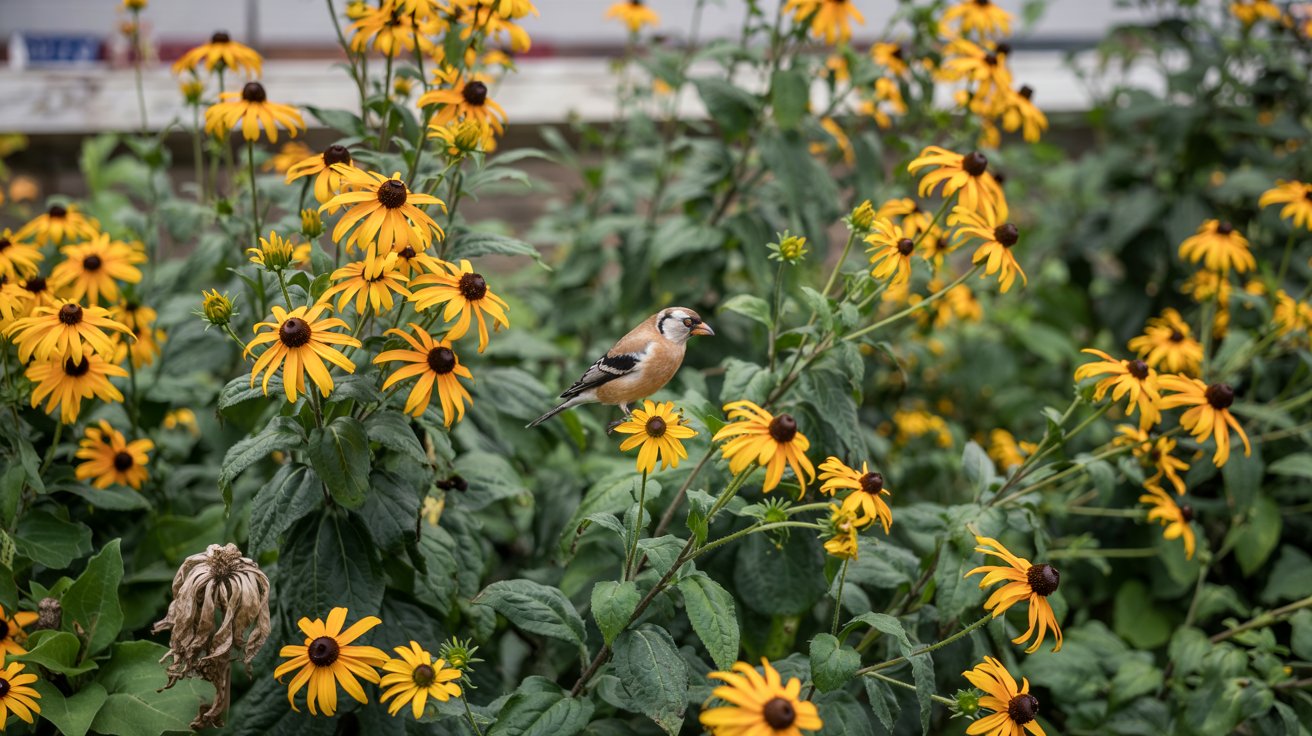
These plants are native to North American prairies and open woodlands, which means they already know how to handle heat, dry spells, and average soil without much help from you.
That native toughness also translates into genuine pollinator value - bees, butterflies, and goldfinches all visit regularly, making them a practical choice for anyone adding regional wildlife habitat plants to a yard.
Established plants need very little water, no rich soil, and minimal fertilizer. The main care tasks - deadheading, occasional division, and watching for powdery mildew in humid summers - are manageable even for a first-year gardener.
This guide walks through everything: choosing the right species and cultivar, setting up the best site, and building a seasonal care routine that keeps plants blooming year after year.
Black-Eyed Susan (Rudbeckia hirta) is a native, drought-tolerant wildflower that blooms from July through October. It grows in full sun with well-drained soil, self-seeds readily, and attracts pollinators.
Minimal watering and occasional deadheading keep it performing season after season.
What Black-Eyed Susan Is (and Why It Works)?
A native North American wildflower with bright yellow ray petals surrounding a dark brown central cone. Behaves as an annual, biennial, or short-lived perennial depending on zone and cultivar. Self-seeds freely in good conditions, making it nearly self-sustaining in established beds.
Remember it later
Planning to try this recipe soon? Save it for a quick find later!
Rudbeckia hirta is technically a short-lived perennial in most zones, but it self-seeds so reliably that established plantings replenish themselves annually without any help. A single plant can produce hundreds of seeds, which means a small planting often becomes a full stand within two seasons.
According to South Dakota State Extension, Rudbeckia is a native, long-blooming, low-maintenance addition to beds that delivers color from midsummer through hard frost. That bloom window - often 12 to 16 weeks - is unusually long for a sun-garden perennial.
The plant's root system is notably efficient at finding moisture in dry soils, which explains why it outperforms many showier perennials during summer drought. Unlike moisture-sensitive flowering perennials, Black-Eyed Susans rarely wilt or stall during heat waves once roots are settled.
For gardeners building lower-maintenance landscapes, this native combines well with ornamental grasses, coneflowers, and salvia in mixed borders where it fills gaps left by spring-blooming plants.
Varieties Worth Knowing
Not all Rudbeckias behave the same way, and picking the right species for your space prevents a lot of frustration later. The two you'll encounter most often are Rudbeckia hirta and Rudbeckia fulgida, and they have meaningfully different habits.
- Rudbeckia hirta (Common Black-Eyed Susan): Grows 1-3 ft tall, behaves as an annual or biennial, and self-seeds aggressively. Best for naturalized meadow plantings or cottage-style borders where some spread is welcome.
- Rudbeckia fulgida 'Goldsturm': A true, long-lived perennial reaching 18-24 in., with a tighter clumping habit. Better for formal borders or containers where controlled growth matters.
- 'Indian Summer': An R. hirta cultivar with extra-large blooms up to 6-9 inches across. Grown as an annual; excellent for cutting gardens.
- 'Prairie Sun': An eye-catching cultivar with golden-orange petals and a green center instead of black, reaching up to 3 ft. Tolerates heat and humidity well.
- 'Toto' series: Compact dwarf cultivars at 10-12 in., suited for container planting or front-of-border use in small gardens.
According to Clemson Extension's plant profile, R. hirta varieties span a wide range of heights and bloom colors, from classic yellow to deep mahogany bicolors. That range makes it easy to match a cultivar to specific border conditions without sacrificing the species' toughness.
For a garden that also includes woody ornamentals, compact Rudbeckias pair well alongside shrubs - similar to how pairing azaleas with understory companions creates layered seasonal color without crowding. Taller cultivars work better at mid-border, behind low edging plants.
If you're comparing perennial options for a sunny bed, note that R. fulgida 'Goldsturm' vs. a climbing vine like clematis serves a very different structural role - Rudbeckia fills horizontal space while climbers move vertically. Both can coexist in the same border with zero competition.
Site Selection and Growing Conditions
Getting the site right is where most of Black-Eyed Susan's low-maintenance reputation is either earned or lost. Plant it in the wrong spot and you'll fight disease, poor flowering, and short-lived plants every season.
Full sun - at least 6 hours of direct light daily - is non-negotiable for strong flowering. Plants in partial shade still grow but produce noticeably fewer blooms and are more prone to powdery mildew, especially in humid climates.
Soil drainage is just as critical as sun. According to the UF/IFAS cultivation fact sheet, Rudbeckia hirta prefers well-drained soils with a pH of 6.0-7.0 and tolerates both sandy and clay-loam textures as long as water doesn't pool around roots.
Standing water after rain is the fastest way to rot the crown.
Average or even poor soil actually suits this plant better than rich, amended beds. High fertility pushes leafy growth at the expense of blooms and can make plants floppy, requiring staking that defeats the low-maintenance purpose.
Spacing plants 18-24 inches apart improves airflow between stems, which directly reduces fungal disease pressure in warm, humid summers. Crowded plants trap moisture and are the first to develop mildew.
Never amend soil with compost before planting Black-Eyed Susans in a new bed. Lean soil produces more blooms and sturdier stems than enriched garden beds.
In zones 7-9, afternoon shade from a building or large shrub can actually extend bloom by reducing heat stress on flowers.
This is one of the few situations where less than full sun is a useful trade-off, especially for darker-centered cultivars that fade in intense southern heat.
For gardeners building layered landscapes, Rudbeckia works as a mid-height filler between ground covers and taller screening shrubs or trees at the back of a border.
That layering keeps the visual structure intact while the Rudbeckia handles midsummer color when many other plants have stopped blooming.
Drought tolerance increases significantly after the first full growing season. Newly planted specimens still need consistent watering - about once a week in the absence of rain - until roots reach 6-8 inches deep.
After that, established plants handle two-week dry stretches without visible stress.
Gardeners choosing between multiple sun-loving, low-water perennials will find that Rudbeckia outperforms most options in the mid-border slot, especially in zones 4-7 where summer rain is unreliable. Its competitive root system also helps it hold ground against grass encroachment in meadow-style plantings.
Seasonal Care from Spring Through Fall
Black-Eyed Susan's care calendar is lighter than most perennials, but timing a few key tasks correctly makes a noticeable difference in bloom duration and plant health. The goal is maximum flower production from July through October with the least intervention possible.
Prep/Plant
Active Growth
Peak Bloom
In spring (March-May), cut back any dead stems from the prior season to about 2-3 inches above ground.
This is also the window for dividing established clumps - every 3-4 years is enough to keep plants vigorous and prevent the hollow center that forms in older crowns.
Fertilizing is rarely needed. If soil is genuinely poor, a single application of balanced slow-release granules (10-10-10) in early spring is sufficient.
Feeding in midsummer pushes foliage instead of flowers.
During peak bloom (July-September), SDSU Extension recommends deadheading spent flowers every 1-2 weeks to redirect energy from seed production back into new blooms. Remove the stem down to the next side bud, not just the flower head, for the best rebloom response.
According to the Wisconsin Extension cultivar guide, 'Prairie Sun' and similar heat-tolerant cultivars can bloom continuously from June through hard frost when deadheaded consistently. That's a 16-plus-week bloom window from a single plant.
If you want self-seeding for next year, stop deadheading in late September and let seed heads mature. Goldfinches feed on those seeds through winter, which adds wildlife value.
Cut old stems to the ground after the first hard frost or leave them standing until late February if birds are actively feeding.
Watch for powdery mildew on lower leaves in humid summers - it looks like a white talcum powder dusting. Remove affected leaves promptly and improve airflow by thinning stems.
Full-blown mildew rarely kills plants but shortens their season noticeably. Aphids occasionally cluster on new growth; a firm spray of water dislodges them without chemicals.
For gardeners who also tend woody plants with distinct seasonal needs, this Rudbeckia routine is far simpler than managing a Japanese maple's annual care or keeping up with cutting back crepe myrtles each spring.
The lighter workload makes it a strong anchor plant for mixed beds that include higher-maintenance companions.
For anyone building a broader pollinator-friendly yard, pairing Black-Eyed Susans with native grasses and other year-round structural plants creates a border that feeds wildlife from spring through winter. Rudbeckia's seed heads are a late-season resource that most ornamental annuals simply don't offer.
Gardeners in zones 3-5 can also direct-sow seeds outdoors in fall, letting winter cold stratify them naturally for reliable spring germination in wildflower beds. That self-sowing cycle is what makes Black-Eyed Susan a near self-sustaining plant once it's established in the right spot.

Frequently Asked Questions
Most act as short-lived perennials or biennials, but self-seed so reliably that established plantings return annually without replanting, especially in Zones 4–7.
The compact 'Toto' series tops out at 10–12 inches, making it ideal for containers or tight front-of-border spots without spreading aggressively.
Yes, but only if drainage is adequate. Amend heavy clay with coarse sand or grit so water drains within 30 minutes after rain, preventing crown rot.
Deadhead every 1–2 weeks during July through September, cutting the stem to the next side bud. This can extend bloom by 4–6 additional weeks.
Rudbeckia is considered mildly toxic to pets. Ingestion can cause mild gastrointestinal upset, so keep curious animals away from new plantings as a precaution.
Pin it for your next how to grow and care for black-eyed susan project.