Burgundy sits at the intersection of deep red and dark purple, giving garden beds a richness that neither color achieves alone.
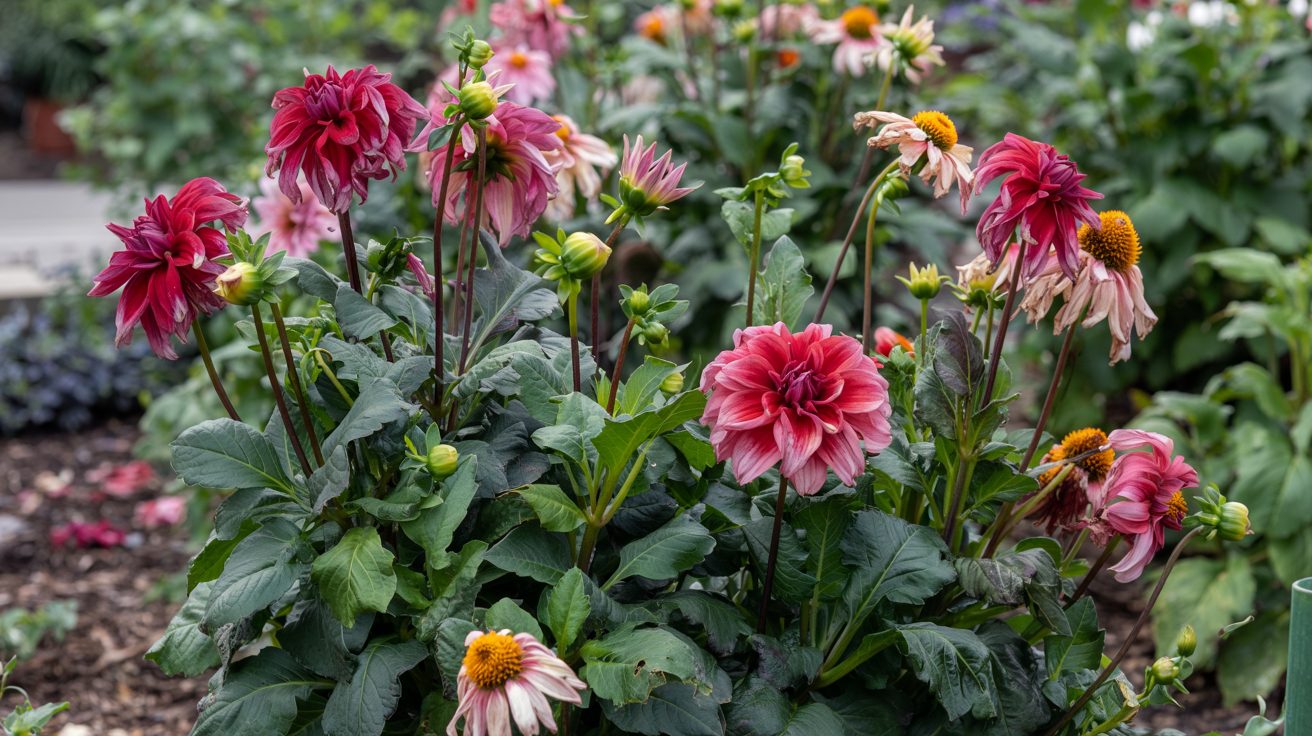
It reads as dramatic without being garish, and it pairs naturally with silver foliage, pale pink, and cream-making it one of the most versatile color tones in a planting palette.
From near-black tulips to velvety dahlias and dark-foliaged perennials, burgundy plants span every season and garden style. This list covers 12 varieties—annuals, bulbs, perennials, and foliage plants—chosen for true maroon-to-burgundy color, wide availability at North American nurseries, and clear practical uses.
Spring Burgundy: Bulbs and Cool-Season Bloomers
Spring burgundy comes mostly from bulbs, and a few of these bloom so dark they're nearly black. Getting that color to read well in the garden means planting them against lighter backdrops-pale stone, silver foliage, or white blooms.
Remember it later
Planning to try this recipe soon? Save it for a quick find later!
Several of these spring options also make exceptional cut flowers, lasting well over a week in a vase when harvested just as buds open.
The garden plants listed here range from zones 3 to 10, so there's a burgundy bulb for nearly every North American climate.
Tulip 'Queen of Night'
Zone 3–8 Easy
This is the tulip most gardeners picture when they say "dark tulip." The petals are a glossy, near-black maroon with a satin sheen that catches light differently at each hour of the day.
- Bloom time: Mid-to-late spring, roughly May in zones 5-6.
- Best use: Cut stems last 10-14 days in a vase; plant in masses of 15+ for visual impact in borders.
- Planting depth: Set bulbs 6-8 inches deep in fall for reliable spring performance.
Bearded Iris 'Superstition'
Zone 3–9 Easy
Among tall bearded irises, 'Superstition' produces the darkest color available-velvety maroon standards and falls that approach black under full sun. At 28-36 inches, it creates strong vertical accents in late spring borders.
- Planting: Rhizomes need the top half exposed to sun-don't bury them fully or they'll rot rather than bloom.
- Reblooming: Not a reliable rebloomer; pair with later-season burgundy plants to extend the color through summer.
Columbine 'Black Barlow'
Zone 3–8 Easy
Aquilegia vulgaris 'Black Barlow' is a double-flowered heritage variety with densely packed near-black petals and no spurs-an unusual silhouette that reads as a dark pompom above delicate gray-green foliage.
- Self-seeding: Spreads freely in cool summers, filling gaps between other perennials by year two or three.
- Light preference: Tolerates partial shade well; in hot climates, afternoon shade prevents early dieback.
- Pairing tip: Combines well with pale yellow or cream flowers-the contrast reads as elegant rather than stark.
Anemone coronaria 'Burgundy'
Zone 7–10 Medium
These De Caen-type anemones produce single to semi-double deep burgundy blooms on wiry 10-14 inch stems in early spring. In zones 7-10, you can plant alongside purple-flowering bulbs like alliums for a layered early-season display.
- In colder zones: Treat as forced indoor bulbs or start corms in pots 8-10 weeks before last frost.
- Cut flower quality: Excellent-stems hold 7-10 days and the dark blooms photograph beautifully.
Soak anemone corms in lukewarm water for 4–6 hours before planting. Dry corms can take weeks to break dormancy; pre-soaking cuts that to 10–14 days.
Summer Burgundy: Dahlias, Roses, and Annuals
Summer is when the burgundy palette deepens across the garden. Dahlias and roses dominate this season, but a handful of tender annuals and fragrant oddities round out the lineup.
Rose 'Black Baccara'
Zone 5–9 Medium
This hybrid tea repeat-blooms from summer through fall when fed every 4-6 weeks with a balanced rose fertilizer. The velvety petals are a true deep burgundy in cool weather and shift slightly toward red in peak summer heat.
- Cut flower lifespan: 10-14 days in a vase; harvest stems when buds are just cracking open.
- Pruning: Deadhead down to the first 5-leaflet set to encourage new flowering stems. Consistent deadheading technique matters more with hybrid teas than with any other rose class.
- Disease: Moderately susceptible to black spot-give it 18-inch spacing and avoid wetting leaves when watering.
Dahlia 'Bishop of Llandaff'
Zone 8–10 Medium
Two plants in one: the burgundy-black foliage provides season-long contrast even before flowers appear, and the single to semi-double red-maroon blooms carry the color through late summer. In zones 5-7, dig tubers after the first frost and store them dry at 40-50°F through winter.
- Height: 18-28 inches-compact enough for containers but bold enough for mixed border mid-ground.
- Pollinators: Single flowers give bees direct access to pollen; this cultivar consistently attracts more pollinators than fully double dahlias.
Chocolate Cosmos
Zone 7–10 Medium
Cosmos atrosanguineus is singular in one specific way: the dark mahogany-burgundy blooms carry a faint chocolate scent, strongest in warm afternoon sun. No other flower on this list smells remotely similar.
- Hardiness: Tuberous root survives in-ground to zone 7; in zones 5-6, lift and store like dahlias.
- Bloom habit: Flowers continuously from midsummer until frost with no deadheading required.
- Propagation: Sterile-doesn't set seed, so propagation is by tuber division in spring.
Chocolate cosmos sold as annuals at big-box stores are sometimes a different species without the chocolate scent. Buy from specialty bulb suppliers and confirm the species is Cosmos atrosanguineus before purchasing.
Calla Lily 'Black Star'
Zone 8–10 Medium
Zantedeschia 'Black Star' produces funnel-shaped blooms in deep burgundy to near-black from late spring through summer. The contrast between the dark spathe and glossy green foliage is one of the sharpest visual effects available in container gardening.
- In colder zones: Lift corms after foliage dies back; store at 50-55°F in dry peat moss.
- Watering: Keep soil consistently moist during active growth-these are bog-origin plants that punish drought with yellowing leaves.
Petunia 'Black Velvet'
Annual Easy
Trailing and mounding dark-maroon petunias reached a new depth of color with 'Black Velvet' and similar near-black selections. At 6-12 inches trailing, they're built for hanging baskets and window boxes rather than open borders.
- Feeding: Feed every 10-14 days with a high-phosphorus fertilizer to sustain bloom from planting through frost.
- Color pairing: Silver dichondra or white calibrachoa trailing alongside deepens the visual impact of the dark blooms dramatically.
In zones 9–10, dark petunias often struggle through peak summer heat and look best from fall through spring rather than midsummer. Start a second round of plants in August for a strong fall display.

Shade-Tolerant Burgundy: Perennials for Darker Spots
Full-sun planting gets most of the attention in burgundy gardening, but several standout plants deliver deep color in partial shade-some even require it. These are the varieties that work where most other dark-flowered plants won't.
Heuchera 'Palace Purple'
Zone 4–9 Easy
Heuchera micrantha 'Palace Purple' won the Perennial Plant of the Year designation in 1991, and four decades later it remains the standard for burgundy shade foliage. The leaves provide color from spring through late fall even when the plant isn't blooming.
- Flowers: Airy spikes of small pale bells emerge in late spring-less showy than the foliage but attractive to hummingbirds.
- Edging: At 12-18 inches, it works cleanly as a border edge in shaded beds alongside hostas or ferns.
- Division: Divide every 3-4 years in early spring to prevent the crown from heaving out of the soil.
Astilbe 'Fanal'
Zone 4–9 Easy
In moist, humus-rich soil under partial shade, 'Fanal' produces deep red-burgundy plumes from late spring into early summer. Unlike most shade perennials that bloom white or pink, this one delivers real color intensity in low-light conditions.
- Soil: Needs consistent moisture-drought causes brown leaf tips within days in summer heat.
- Dried interest: Leave spent plumes standing through winter; the dried flower heads provide subtle texture and seed for birds.
Astilbe 'Fanal' and Heuchera 'Palace Purple' make an almost effortless combination in shaded beds—one delivers burgundy flowers from May to July, the other carries burgundy foliage all season long. Plant them 18 inches apart in drifts of three to five each.
Late-Season Burgundy: Perennials That Peak in Late Summer and Fall
The season doesn't have to fade to bronze and yellow. These two perennials hold burgundy color into September and beyond, bridging the gap between summer dahlias and autumn foliage.
Sedum 'Purple Emperor'
Zone 3–9 Easy
This upright stonecrop carries burgundy-tinted foliage from the moment it emerges in spring, then produces dense, flat-topped flower heads in deep pink-burgundy from August through September. Where black-eyed Susans begin to fade, 'Purple Emperor' hits its stride.
- Drought: One of the most drought-tolerant plants on this list-established plants need water only once a week in dry summers.
- Pollinators: Flat flower heads make excellent late-season landing pads for monarch butterflies migrating south.
- Winter interest: Leave stems standing until March; seed heads add structure to winter borders and feed finches.
Burgundy vs. Purple vs. Deep Red: Telling Them Apart at the Nursery
This is genuinely useful information that most plant tags skip entirely. Burgundy sits between deep red (leaning warm with orange undertones) and purple (leaning cool with blue undertones).
At the nursery, you're making a judgment call based on ambient lighting that may not reflect what the plant looks like in your garden.
| Color Term | Undertone | Example Variety | Pairs Best With |
|---|---|---|---|
| Burgundy/Maroon | Neutral red-purple | Tulip 'Queen of Night' | Cream, silver, pale pink |
| Deep Red | Warm, orange-red base | Astilbe 'Fanal' | White, chartreuse |
| Near-Black | Very dark, absorbs light | Iris 'Superstition' | Pale yellow, white |
| Dark Purple | Cool, blue-violet base | Allium 'Purple Sensation' | Silver, burgundy |
Under overcast nursery shade structures, burgundy blooms often look darker-nearly black-and deep red blooms can look burgundy. Check photos from multiple sources before buying, or ask staff which plants are already in bloom in the display beds.
If you want to compare near-black flowers to true burgundy side by side, the difference becomes obvious in direct afternoon sun-near-black absorbs light with almost no sheen, while burgundy shows a subtle gloss or warmth at the petal edges.
How to Keep Burgundy Foliage Dark All Season?
Plants like Heuchera 'Palace Purple' and Dahlia 'Bishop of Llandaff' are bought for their dark foliage, but that color isn't guaranteed to hold. Several factors push burgundy leaves toward green by midsummer.
- Light exposure: Most burgundy-foliaged plants produce more anthocyanin (the pigment causing dark color) under higher light. Moving a heuchera from full shade to morning sun often deepens the leaf color noticeably within 3-4 weeks.
- Nitrogen levels: High nitrogen pushes plants toward green vegetative growth and dilutes dark pigmentation. Use a low-nitrogen fertilizer (like a 5-10-10) for foliage plants to maintain color intensity.
- Heat stress: Dahlias under extreme heat (above 90°F for extended periods) often lose foliage darkness. Consistent soil moisture and a light mulch layer keep root temperatures down and hold color longer.
- Variety selection: Some heuchera cultivars like 'Obsidian' and 'Black Beauty' hold color more reliably than 'Palace Purple' in warmer zones. In zone 7 and south, start with those instead.
Growing native perennials nearby can also reduce aphid pressure on heucheras-aphid damage shows as pale, stippled patches that wash out foliage color before any other sign of infestation appears.

Comparison: Top 5 Burgundy Flowers for Cut Stems
Not every plant on this list translates well to a vase. These five rank highest specifically for cut flower performance-stem length, vase life, and how well the color holds after cutting.
| Variety | Stem Length | Vase Life | Scent | Ease of Growing |
|---|---|---|---|---|
| Tulip 'Queen of Night' | 16–20 in | 10–14 days | None | Easy |
| Rose 'Black Baccara' | 20–28 in | 10–14 days | Light | Medium |
| Chocolate Cosmos | 12–18 in | 5–7 days | Chocolate | Medium |
| Calla 'Black Star' | 18–24 in | 7–10 days | None | Medium |
| Anemone 'Burgundy' | 10–14 in | 7–10 days | None | Medium |
For a cutting garden focused on contrasting cool tones, pair burgundy tulips with soft blue muscari or pale blue scilla in spring arrangements-the color tension between warm burgundy and cool blue reads as sophisticated rather than busy.
Which Burgundy Plant Should You Choose?
The best choice depends on your zone, how much sun your planting area gets, and whether you want seasonal drama or sustained foliage color.
- Want burgundy all season without replanting: Heuchera 'Palace Purple' delivers foliage color from early spring through hard frost in zones 4-9 with almost no maintenance.
- Need a reliable cut flower: Tulip 'Queen of Night' for spring or Rose 'Black Baccara' for summer-both have professional-grade stem length and vase life.
- Working with partial shade: Astilbe 'Fanal' and Heuchera 'Palace Purple' are the only two on this list that genuinely prefer shade over sun.
- Want a conversation piece: Chocolate Cosmos is the one plant strangers will stop and ask about-the scent alone makes it memorable.
- Zone 3 or 4 garden: Stick with Tulip 'Queen of Night', Bearded Iris 'Superstition', or Sedum 'Purple Emperor'-all rated to zone 3 and require no winter lifting.
- Containers and window boxes: Petunia 'Black Velvet' trails beautifully and keeps blooming all summer with regular feeding. Pair it with white-flowered companions to make the dark blooms pop visually.
- Naturalizing in a border: Columbine 'Black Barlow' self-seeds year after year, gradually colonizing gaps and requiring nothing once established. Learning how self-seeding annuals establish themselves helps set expectations for its spread rate.

Frequently Asked Questions
Burgundy flowers are often described using terms like maroon, deep crimson, or wine-red in plant catalogs—all referring to the same red-purple range without a single universally agreed botanical term.
In zone 5, reliable burgundy perennials include Heuchera 'Palace Purple' (zones 4–9), Sedum 'Purple Emperor' (zones 3–9), Bearded Iris 'Superstition' (zones 3–9), and Astilbe 'Fanal' (zones 4–9)—all winter hardy without lifting or mulching.
Give burgundy-foliaged plants like Heuchera more morning sun and switch to a low-nitrogen fertilizer (5-10-10); high nitrogen pushes growth toward green and dilutes the anthocyanin pigment responsible for dark color.
Yes—treat Cosmos atrosanguineus as a tender perennial in zone 6 by digging tubers after the first frost and storing them dry at 40–50°F through winter, then replanting in May after frost risk passes.
Some do—Petunia 'Black Velvet' holds color best with light afternoon shade in zones 8–10, while Tulip 'Queen of Night' and Iris 'Superstition' actually show richer gloss and depth under direct full sun.
Pin it for your next burgundy flowers: 15 stunning varieties project.