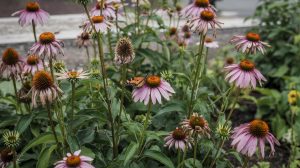
Vertical space is the most underused resource in most gardens. A bare fence, an exposed wall, or a plain pergola post can become a living structure in a single season - if you pick the right climber for the job.
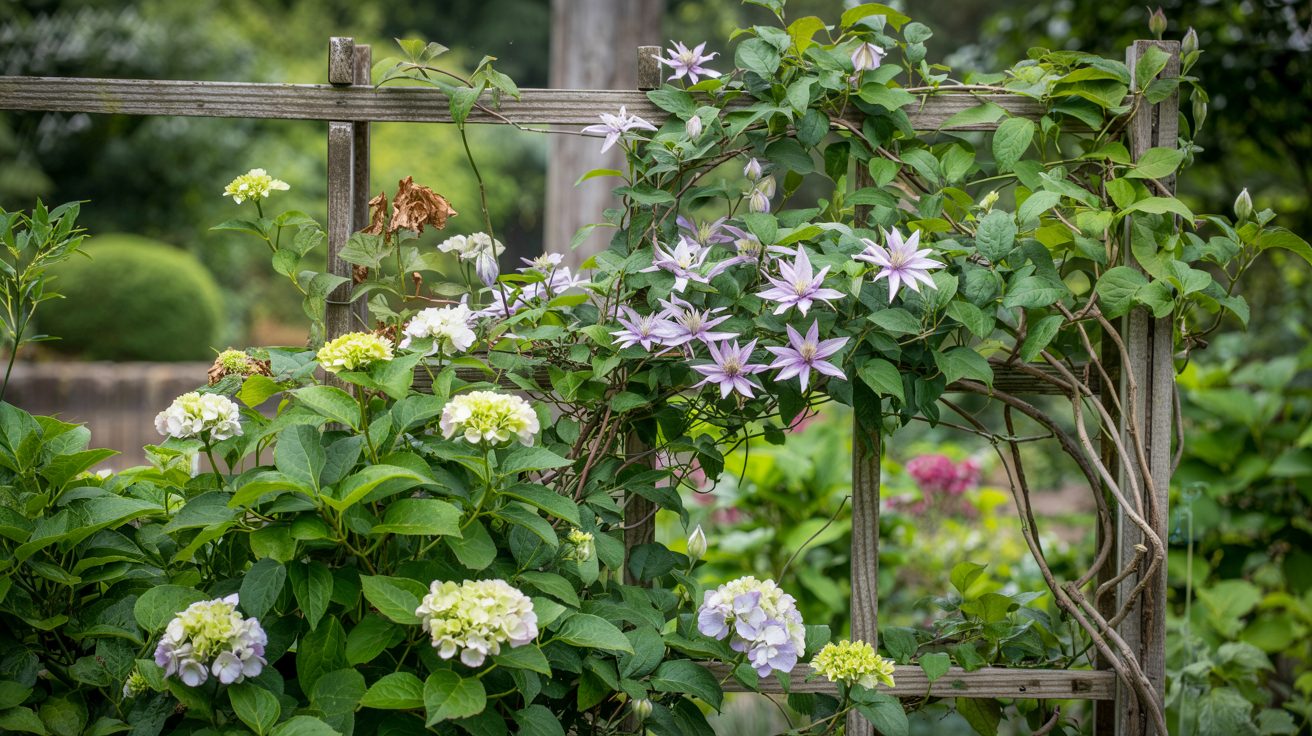
This list covers 12 climbing plants across USDA zones 4–11, from fast annuals to slow-building perennials. We sorted them by type to help match each vine to its best support structure and site conditions.
Flowering Perennial Climbers
These are the workhorses of a vertical garden - plants that return each year and build structure over time. Most need a few seasons to hit full stride, but the payoff in coverage and bloom is substantial.
Remember it later
Planning to try this recipe soon? Save it for a quick find later!
Clematis 'Jackmanii'
Zone 4–9 Easy
'Jackmanii' is the benchmark purple clematis - deep violet blooms June through September on established plants that have been cut back hard each spring. Keep roots shaded with mulch or low ground cover, and let the crown receive full sun.
- Pruning: Cut back to 12-18 inches in late winter - this is a Group 3 clematis, so hard pruning produces the best blooms.
- Support: Twines by leaf stalks, so open trellis or wire mesh works better than a smooth post.
- Height: 8-12 feet; manageable for most fences and pergola legs.
Climbing Rose 'New Dawn'
Zone 5–9 Medium
'New Dawn' produces pale blush-pink flowers on repeat from early summer, and it's among the most disease-resistant climbing rose varieties widely available today. Canes grow fast - expect 8-15 feet in a mature season - so the structure needs to be robust from day one.
- Training: Fan canes horizontally along wires to maximize lateral flowering shoots.
- Disease resistance: Significantly better than older climbers like 'Albertine,' though black spot can still appear in humid summers.
- Pruning: Remove oldest canes at the base each spring; knowing when to cut back prevents the plant from becoming a tangled mass.
Coral Honeysuckle
Zone 4–9 Easy
Lonicera sempervirens is the well-behaved alternative to Japanese honeysuckle, which is invasive in much of the eastern U.S. Tubular red flowers appear from May through September, and hummingbirds treat it as a primary food source where it grows.
- Habit: Twining stems reach 8-15 feet; not aggressive enough to damage structures.
- Wildlife value: Among the top coral-flowered plants for attracting pollinators and hummingbirds.
- Maintenance: Light trim after main flush keeps it tidy; no hard pruning required.
Plant coral honeysuckle near a seating area for hummingbird viewing. It flowers longest when given at least 6 hours of direct sun, but it holds its own in partial shade better than most red-flowered vines.
Chinese Wisteria
Zone 5–9 Hard
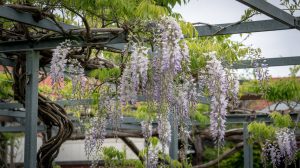
Few climbers match the spring spectacle of Wisteria sinensis - pendulous blue-lavender racemes up to 12 inches long, covering a mature plant before leaves emerge. The trade-off is vigor: wisteria will pull guttering off a house and uproot weak pergola posts within a decade.
- Structure: Needs steel, heavy timber, or masonry support - not a lightweight garden arch.
- Pruning schedule: Twice yearly - shorten whippy shoots to 5-6 leaves in August, then cut back to 2-3 buds in February.
- Patience required: Grafted plants bloom in 3-5 years; seed-grown plants can take 10-15 years.
For more on managing this plant's growth without sacrificing bloom, the wisteria pruning calendar covers both summer and winter cuts in detail.
Climbing Hydrangea
Zone 4–8 Medium
Hydrangea anomala subsp. petiolaris is the answer to a shaded north-facing wall - one of the very few climbers that actually prefers low light.
White lace-cap flowers appear in midsummer once the plant matures, which takes 3-5 years after planting.
- Attachment: Self-clinging aerial rootlets grip masonry and timber without wires, but can penetrate cracked mortar over time.
- Slow start: Spends its first 2 years establishing roots - don't assume it's failing.
- Scale: Can reach 30-50 feet on a large wall; not suited to small fences.
Self-clinging climbers — climbing hydrangea, Boston ivy, and trumpet vine — can work rootlets into mortar joints. On older brick walls with deteriorating mortar, inspect annually and redirect stems before they root into cracks.
Passionflower
Zone 6–10 Medium
Passiflora incarnata, native to the southeastern U.S., produces some of the most architecturally complex flowers in the plant kingdom - fringed purple-and-white blooms followed by edible maypop fruit. In zones 6-7, it dies to the ground each winter but regrows vigorously from the root system.
- Fruit: Egg-sized yellow fruit in late summer; edible raw, with a tart tropical flavor.
- Root spread: Spreads by underground runners - plant where lateral spread is acceptable or use a root barrier.
- Height: 10-15 feet in a season when growing from established roots in warm zones.
Trumpet Vine
Zone 4–9 Hard
If you need fast coverage on a large, open structure in full sun, Campsis radicans delivers orange trumpet flowers from July through September and can cover 20-40 feet of wall.
The problem is stopping it - trumpet vine spreads by root suckers that emerge 10-15 feet from the main plant.
- Control: Install a 12-inch deep root barrier around the base and mow suckers in lawn areas immediately.
- Support damage: Self-clinging on masonry, but the sheer woody weight can stress lighter structures.
- Wildlife: Major hummingbird plant - the tubular flowers are built for long-tongued birds, not bees.
Tropical and Tender Climbers
These plants need warmth to perform - either a mild winter climate or container growing with overwintering indoors. In the right zone, they're among the most spectacular vines available.
Star Jasmine
Zone 8–10 Easy
Trachelospermum jasminoides grows at a measured pace - around 12-18 inches per year - but the evergreen foliage and intensely fragrant white flowers in late spring make it worth the wait for gardeners in warmer zones.
It's a top choice for garden walls and fences where year-round coverage matters.
- Training: Doesn't self-cling - needs horizontal wires or trellis every 12-18 inches to tie in stems.
- Fragrance: Strongest in evenings; ideal planted near doorways, patios, or open windows.
- Cold tolerance: Handles brief frosts to around 10°F (-12°C) with wall protection; unreliable below zone 8.
Bougainvillea
Zone 9–11 Medium
In frost-free climates, Bougainvillea spectabilis is unmatched for sheer color density - the intense bracts (not true flowers) range from magenta to orange to white, and a well-trained plant in full sun blooms for months.
In zones below 9, grow it in a large container and move it under cover before first frost.
- Soil: Fast-draining is non-negotiable - standing water causes root rot faster than cold.
- Bloom trigger: Slight drought stress encourages flowering; overwatering produces lush growth with few bracts.
- Height: 6-8 feet in a container; up to 30 feet trained against a sunny wall in zone 10-11.
Gardeners in zones 7–8 can overwinter bougainvillea in an unheated greenhouse or bright garage kept above 40°F (4°C). Cut back by one-third before bringing it inside, and water only once every 3–4 weeks through winter.
Annual Climbers for Quick Results
When a perennial is still establishing or a gap needs filling fast, annual climbers are the practical answer. Both options below go from seed to flowering cover in a single season.
Sweet Pea
Annual Easy
Lathyrus odoratus is unbeatable for fragrance - a small bunch of cut sweet peas scents a room more effectively than most shop-bought flowers. Sow in autumn in mild zones or in early spring elsewhere, and have supports in place before seedlings reach 4 inches tall.
- Cutting rule: Pick flowers every 2-3 days without fail - any pod allowed to set seed signals the plant to stop flowering.
- Heat sensitivity: Stops blooming once temperatures stay above 85°F (29°C); ideal for cool-spring regions.
- Support: Clings by tendrils to twiggy pea sticks, netting, or fine-mesh wire; not suited to smooth stakes.
Scarlet Runner Bean
Annual Easy
Sow Phaseolus coccineus directly in the ground after last frost and it will reach 6-10 feet by midsummer, covering a trellis or teepee frame with bold scarlet flowers followed by large edible beans.
It's one of the few annual climbers that fixes atmospheric nitrogen, improving soil for whatever follows it.
- Cool tolerance: Handles cooler summers better than French beans - a good option for northern gardens.
- Harvest: Pick pods young at 4-6 inches for eating; let later pods mature and dry for next year's seed.
- Wildlife: Flowers attract bumblebees reliably - long-tongued bees can access the deep tubular blooms.
Self-Clinging Wall Covers
Some structures need a climber that attaches itself without annual tying-in. These two handle large surfaces without wire systems, but both require honest thought about the wall surface before planting.
Boston Ivy
Zone 4–8 Easy
Named for its prominence on northeastern U.S. university buildings, Parthenocissus tricuspidata turns walls a vivid scarlet-red in autumn before dropping its leaves for winter. Growth reaches 6-12 feet per year once established, making it one of the fastest ways to cover a large surface.
- Fall color: Among the most reliable autumn-interest plants for walls in zones 4-7.
- Wall damage: Adhesive discs bond to painted surfaces and stain masonry - removal is destructive.
- Deciduous benefit: Bare in winter means the wall dries out fully, reducing damp penetration compared to evergreen climbers.
How Climbing Plants Attach - and Why It Matters?
Choosing the wrong support for an attachment method is one of the most common planting mistakes. A twining vine given a flat board accomplishes nothing; a self-clinger on new painted render can peel the surface within five years.
| Attachment Type | Examples | Best Support | Avoid |
|---|---|---|---|
| Twining stems | Wisteria, Honeysuckle, Star Jasmine | Wire, trellis, poles | Flat walls (no grip) |
| Leaf-stalk tendrils | Clematis, Sweet Pea | Open mesh, wire, twiggy sticks | Smooth single stakes |
| Adhesive discs | Boston Ivy | Masonry, rough timber | New render, painted surfaces |
| Aerial rootlets | Climbing Hydrangea, Trumpet Vine | Brick, stone, rough wood | Crumbling mortar, weatherboard |
| Thorns (scrambling) | Climbing Rose | Horizontal wires, fan training | Nothing — needs tying in manually |
Roses don't technically climb - they scramble, using thorns to hook into surrounding growth. On a wall, every stem needs to be tied to wires manually; they won't self-attach regardless of support type.
When growing climbers for wildlife value, choosing plants native to your region multiplies the ecological benefit. Native climbers like coral honeysuckle and passionflower support specialist insects that garden-center exotics simply can't replace.
Quick Comparison: Top 5 Climbers by Key Attributes
Narrowing down from 12 to a shortlist depends heavily on zone, sun, and available structure. This table puts the most commonly asked-about variables side by side.
| Plant | Zone | Max Height | Sun | Best Use |
|---|---|---|---|---|
| Clematis 'Jackmanii' | 4–9 | 12 ft | Full/Part | Trellis, pergola post |
| 'New Dawn' Rose | 5–9 | 15 ft | Full sun | Wall wires, arch |
| Star Jasmine | 8–10 | 20 ft | Full/Part | Fence, warm wall |
| Boston Ivy | 4–8 | 50 ft | Full/Part | Large masonry wall |
| Climbing Hydrangea | 4–8 | 50 ft | Part/Full shade | North wall, large tree |
Which Climber Fits Your Situation?
Use these scenario-based shortcuts to cut to your best match without reading every entry above.
- Shaded north-facing wall: Climbing hydrangea is the only climber here that actively prefers shade - it'll succeed where others fail outright.
- Fast annual cover for a new fence: Scarlet runner bean reaches 8-10 feet from a late-spring sowing and improves soil nitrogen at the same time.
- Fragrance near a seating area: Sweet pea for cool climates; star jasmine for zones 8-10 where you need year-round foliage too.
- Trellis in zone 7 with full sun: Clematis 'Jackmanii' blooms June-September with hard annual pruning, or coral honeysuckle if you also want hummingbirds.
- Tropical color in a container: Bougainvillea in a large terracotta pot, overwintered inside below zone 9 - keep it slightly dry through winter to trigger spring bloom.
- Long-term wall cover that needs no wires: Boston ivy on masonry in zones 4-8 covers large surfaces with zero infrastructure; climbing hydrangea for shadier spots in the same zone range.
Match vigor to structure. A wisteria on a lightweight trellis or trumpet vine on a wooden fence will outgrow and damage it within 5 years. Build or choose the support for the plant's mature size, not its size at planting.
Frequently Asked Questions
Clematis 'Jackmanii' (zones 4–9) and coral honeysuckle (zones 4–9) both perform reliably on trellis in zone 7, with 'Jackmanii' blooming June–September and honeysuckle flowering from May through early fall.
Star jasmine and climbing roses are safe on masonry because they need wires rather than self-adhering — Boston ivy and climbing hydrangea self-cling but can penetrate deteriorating mortar joints over 10–15 years.
Plant climbing roses 12–18 inches from the base of a wall — the soil near the wall base is dry and compacted, and angling the plant toward the structure at 45 degrees improves establishment significantly.
Vigorous woody climbers like wisteria and trumpet vine can warp or crush timber fences within 5–7 years; lightweight twiners like clematis and sweet pea cause no structural damage to standard fence panels.
Boston ivy is the fastest perennial climber at 6–12 feet per year once established; among annuals, scarlet runner bean reaches 8–10 feet in a single season from a post-frost sowing.
Pin it for your next climbing plants: best varieties and growing tips project.