Choosing between determinate and indeterminate tomatoes is one of the first real decisions a tomato grower makes - and it shapes everything from how much space you need to when you'll be harvesting.
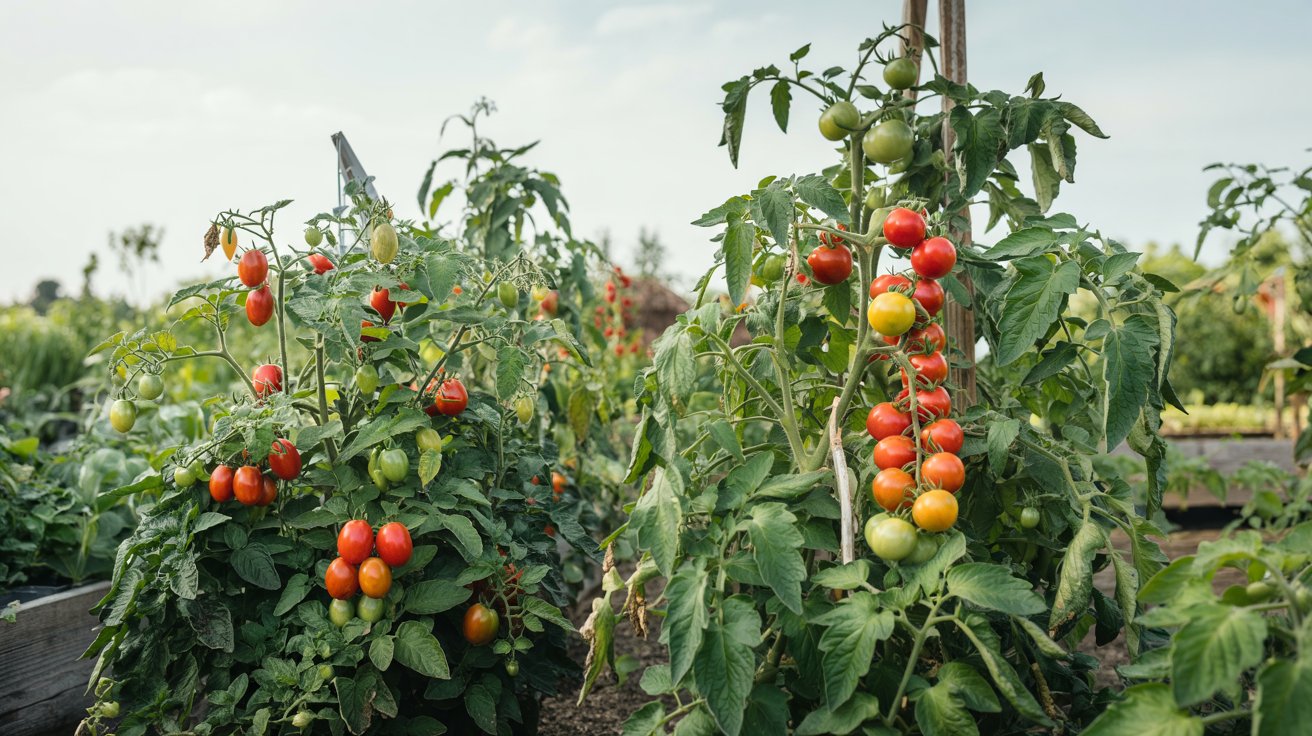
Get it wrong and you're either drowning in tomatoes all at once or waiting all season for a trellis-climbing vine to finally deliver.
The terms come from how each type grows. Determinate (bush) tomatoes grow to a set height, flower, and fruit in a concentrated window.
Indeterminate (vine) tomatoes keep growing and setting fruit until frost kills them.
According to OSU growth habit guide, these two categories describe fundamentally different plant architectures - not just size differences. That distinction matters for every decision that follows: support structures, pruning schedules, and harvest planning.
Whether you're working with a successful tomato harvest in a raised bed or a single container on a balcony, this article gives you a direct verdict and a practical planting plan before you buy a single seedling.
Determinate tomatoes are compact bush types that produce a concentrated harvest, ideal for canning and small spaces. Indeterminate vine types fruit continuously through the season and need vertical support.
Your choice depends on available space, harvest goals, and how much ongoing maintenance you want to do.
Determinates vs Indeterminates: Quick Verdict at a Glance
Most gardeners need a fast answer before they dig into the details. Here's the short version: if you have limited space or want all your tomatoes ready at once for canning, go determinate.
Remember it later
Planning to try this recipe soon? Save it for a quick find later!
If you have vertical room and want steady fresh tomatoes through summer, go indeterminate.
The ISU Extension tomato guide confirms that indeterminate varieties keep flowering and setting fruit across the season, making them the natural pick for fresh eating over months rather than weeks.
For container gardens and balconies, OSU Extension research notes that determinate bush types are well-suited to confined growing conditions where vine sprawl isn't practical.
If you want a continuous supply of tomatoes for salads and sandwiches, indeterminate varieties are the clear fit. You'll need to commit to weekly pruning and a sturdy support system, but the payoff is tomatoes from July through October in most climates.
- Tight space or containers: Determinate types stay compact and don't need heavy staking.
- Large beds or vertical structures: Indeterminate vines reward the extra room with a long harvest.
- Canning and batch cooking: Determinates deliver bulk fruit at once, which suits sauce-making schedules.
- Fresh daily use: Indeterminates produce a steady stream, reducing waste from a single glut.
Many gardeners grow one of each. Plant a determinate variety for an early canning batch and an indeterminate for fresh eating through the rest of the season.
Determinates: Bush Tomatoes
Determinate tomatoes reach a genetically fixed height - typically 2 to 4 feet - then stop vegetative growth and push all their energy into flowering and fruiting. Once that fruit ripens, the plant's productive life is essentially over for the season.
That concentrated growth habit makes them practical for compact garden plant layouts and containers. According to OSU Extension, determinates are specifically well-suited to smaller growing spaces because of that controlled size.
| Attribute | Detail | Why It Matters |
|---|---|---|
| Typical height | 2–4 ft | Fits containers and small beds |
| Harvest window | 2–3 weeks | Ideal for batch canning |
| Pruning needed | Minimal | Lower maintenance commitment |
| Cage or stake | Short cage or none | Saves cost and setup time |
| Popular varieties | Roma, Celebrity, Rutgers | Widely available at nurseries |
| Best use | Sauces, canning, paste | Bulk harvest suits processing |
The condensed harvest is a genuine advantage for anyone making tomato sauce or canning salsa. As noted by Cornell Cooperative Extension, that short production window means you can plan your canning days in advance rather than scrambling every few days.
Pruning is largely unnecessary with determinates. Removing suckers on a bush type can actually reduce your final yield, since the plant relies on that foliage to fuel its one big fruiting push.
- Roma: A classic paste tomato with meaty flesh and low moisture - perfect for sauce.
- Celebrity: Disease-resistant and reliably productive in most climates.
- Rutgers: An heirloom-style variety with good flavor for fresh use or canning.
- Bush Early Girl: Compact version of a popular slicer, ripens in about 54 days.
Determinate tomatoes can benefit from a simple tomato cage for wind support, even if they don't need heavy staking. A 3-foot cage keeps the loaded branches from flopping onto the soil.
If you're also growing other edibles nearby, the low-maintenance profile of determinates pairs well with crops like basil companion planting, which needs similar sun exposure and watering frequency.

Indeterminates: Vine Tomatoes
Indeterminate tomatoes never stop growing until frost ends the season. A single plant can reach 6 to 12 feet tall by late summer, with new flower clusters forming above every few sets of leaves all season long.
That continuous growth cycle, confirmed by ISU Extension tomato research, means you'll be picking tomatoes from midsummer right through the first frost - but only if you keep up with the plant's support and pruning needs.
| Attribute | Detail | Why It Matters |
|---|---|---|
| Typical height | 6–12 ft | Needs tall stake or trellis |
| Harvest window | Midsummer to frost | Steady fresh supply |
| Pruning needed | Weekly sucker removal | Controls size and improves fruit |
| Support required | Stake, cage, or trellis | Prevents collapse under fruit load |
| Popular varieties | Cherokee Purple, Sun Gold, Brandywine | Range from slicer to cherry types |
| Best use | Fresh eating, salads, sandwiches | Produces across the season |
The Chicago Botanic Garden recommends staking or trellising and regular pruning to manage the vigor of indeterminate types and keep fruit load from breaking branches.
Sucker removal is the most important weekly task. Suckers are the shoots that emerge in the crotch between a stem and a branch - left unchecked, each one becomes a full side stem, and the plant quickly turns into an unmanageable thicket.
- Sun Gold: Cherry tomato with exceptional sweetness; sets fruit prolifically all season.
- Brandywine: Large beefsteak type prized for rich flavor; needs a sturdy 6-foot stake.
- Cherokee Purple: Heirloom slicer with complex flavor; productive in warm-summer climates.
- Black Krim: Deep red-purple flesh with a slightly salty taste; good disease tolerance.
Water consistency matters more with indeterminates than with any other tomato type. Irregular watering causes blossom end rot and fruit cracking - two problems that can wipe out weeks of harvest.
Water deeply every 2-3 days in dry summer weather, and mulch heavily to hold soil moisture.
For gardeners who enjoy building vertical structures, indeterminate vines make the effort worthwhile. You can train them much like you'd manage a tall shrub - directing growth, removing dead wood, and shaping for airflow.
Decision Framework: Choose with Confidence
The right tomato type follows from four concrete questions: How much space do you have? How long is your growing season?
What will you do with the harvest? How much time can you give the plants each week?
Work through the steps below and you'll land on a clear answer before you buy a single transplant.
Common scenarios map cleanly to one type. Apartment balcony with two pots?
Determinates. Half-acre backyard with a fence line?
Train indeterminate vines along the fence and harvest all season. Both types in the same 10x10 bed?
Plant determinates at one end for an early sauce batch, indeterminates at the other end for summer eating.
Don't plant indeterminate varieties in small raised beds without a plan for vertical support. A single unsupported indeterminate vine will collapse onto neighboring plants by August and block airflow, inviting disease.
Starter Planner: Flex Setup for Real-World Gardens
Knowing which type to grow is only half the work. Translating that into an actual layout - how many plants, what support, how much room - is where most first-season plans fall apart.
Use these benchmarks to build a setup that fits your actual garden, whether that's a single container or a full vegetable bed.
The University of Arizona tomato tips confirm that container-friendly determinate varieties work well on balconies and patios, while trellised indeterminate vines maximize yield per square foot in larger plots.
For a balcony or patio setup, plant one determinate variety per 5-gallon container, place in full sun, and water every 2 days in warm weather. Roma and Bush Early Girl are reliable choices that stay under 3 feet.
In a raised bed (4x8 ft), you can fit two indeterminate plants if you install a 6-foot stake or Florida weave trellis system before planting. Space plants 24 inches apart and remove all suckers below the first flower cluster to keep airflow open.
- Container plan: 2 determinate plants in 5-gallon pots, placed 18 inches apart on a sunny surface.
- Small raised bed (4x4): 2-3 determinate plants with short cages; no trellis required.
- Large bed or fence line: Indeterminate vines spaced 24 inches apart, trained to 6-foot stakes or wire.
- Mixed planting: One determinate at the bed's south end for an early harvest, one indeterminate at the north end for season-long production.
Planning your tomato layout pairs well with thinking about the rest of your vegetable garden. If you're also figuring out space for larger crops, the spacing logic used for pumpkin vine spacing follows similar principles for managing sprawl.
Gardens that mix tomatoes with ornamentals benefit from the contrast in structure. Low determinate bushes sit neatly beside low-maintenance perennial borders without shading them out.
Tall indeterminate trellises work well as a backdrop to shorter flowering plants.
Whatever your setup, label your plants at the time of planting so you remember which type is which.
By midsummer, a well-grown indeterminate looks nothing like it did in May, and mixing up your canning batch with a continuous-harvest variety will throw off your entire processing schedule.
Frequently Asked Questions
Determinate types stop growing at a fixed height (2–4 ft) and ripen all fruit in 2–3 weeks. Indeterminate types grow continuously and fruit until frost, often reaching 6–12 feet tall.
Determinate varieties like Roma are best for canning because they produce a large, concentrated harvest over 2–3 weeks, making it practical to process a full batch at once.
Yes. Plant them in separate sections and install stakes for indeterminate plants before they get tall. Space indeterminates 24 inches apart to prevent their canopy from shading the bush types.
Most determinate varieties don't need staking, but a short 3-foot tomato cage helps keep heavily loaded branches off the soil and reduces disease risk during wet weather.
Semi-determinate varieties grow taller than bush types (4–5 ft) but stop before a full vine height. They produce over a longer window than determinates but need less support than true indeterminates — a middle-ground option for medium-sized beds.
Pin it for your next determinate vs indeterminate tomatoes project.