Cucumbers are one of the fastest rewards a vegetable garden can offer - from seed to first harvest in as little as 50 days. But skipping the basics on soil prep, variety selection, or watering sends most first-timers into a cycle of bitter fruit, yellowing vines, and frustration.
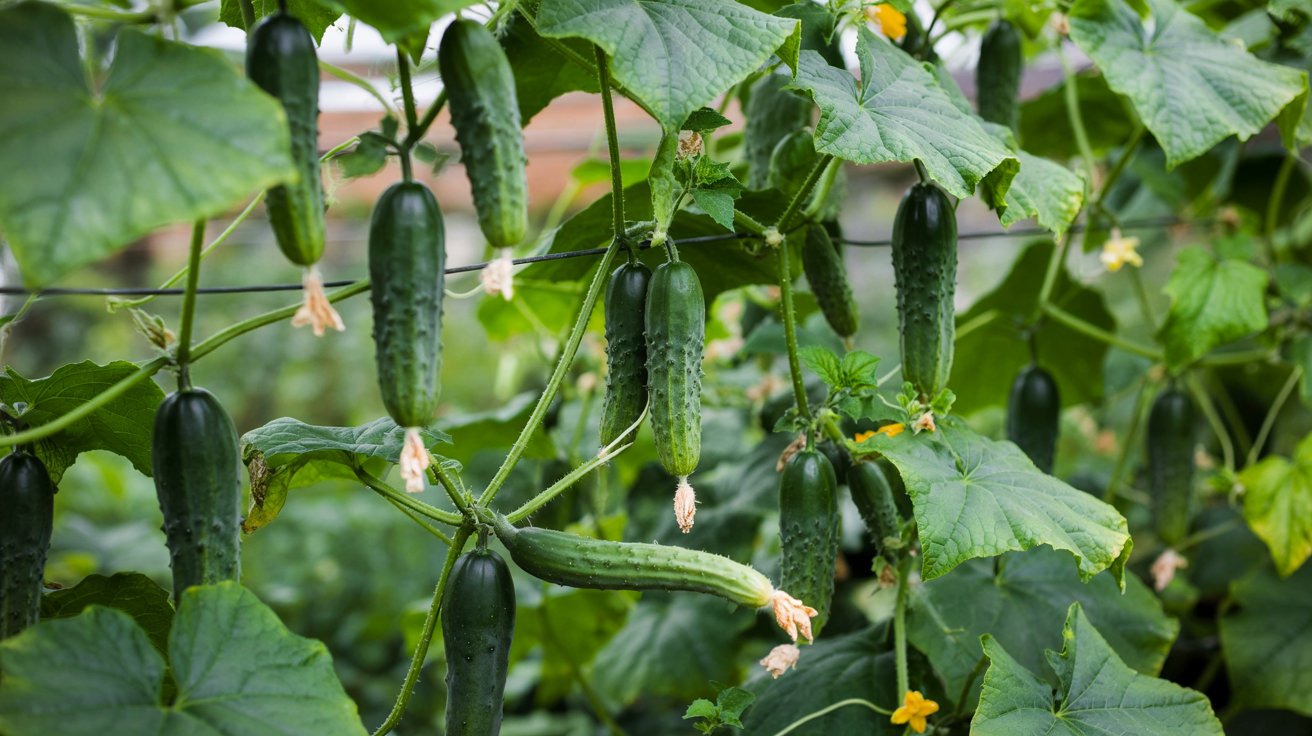
Get the fundamentals right, and cucumbers almost grow themselves.
Cucumbers need warm soil, consistent moisture, and a reliable support structure to produce well. Plant after your last frost date, choose a variety suited to your space, and keep soil pH between 6.0 and 7.0.
Powdery mildew and cucumber beetles are the two biggest threats to watch for.
Choosing the Right Cucumber Variety
Not all cucumbers are interchangeable. Cucumis sativus splits into two broad categories - slicing cucumbers and pickling cucumbers - and each behaves differently in the garden.
Remember it later
Planning to try this recipe soon? Save it for a quick find later!
- Slicing cucumbers: Varieties like 'Marketmore 76' and 'Straight Eight' produce long, smooth fruit meant for fresh eating. They typically run 8-9 inches at harvest and need more space per plant.
- Pickling cucumbers: Shorter, bumpier, and faster-maturing than slicers. 'National Pickling' and 'Calypso' reach harvest size in 50-55 days and tolerate a range of soil conditions.
- Bush varieties: 'Bush Pickle' and 'Spacemaster' stay compact - under 3 feet - making them workable in raised beds or containers without a tall trellis.
- Disease-resistant varieties: Look for codes like "PM" (powdery mildew resistance) or "CMV" (cucumber mosaic virus) on seed packets. In humid climates, these varieties can double your productive weeks.
If you browse garden plant profiles before committing to a variety, you'll often find regional performance data that seed catalogs leave out.
Gynoecious varieties (all-female flowers) produce earlier and more heavily than standard types, but they need a pollinator plant — usually one standard variety — nearby. Seed packets for gynoecious types almost always include a few pollinator seeds marked with dye.
Preparing the Soil Before You Plant
Cucumbers are shallow-rooted but heavy feeders. Loose, well-drained soil with a pH of 6.0-7.0 gives roots room to spread and nutrients room to move.
Work the bed to at least 12 inches deep and mix in 3-4 inches of compost before planting. Compost does two jobs here - it improves drainage in clay soils and improves water retention in sandy ones.
- Soil pH: Below 6.0, manganese and iron become unavailable, leading to yellow leaves even in fertilized beds. A $10 soil test saves weeks of guessing.
- Drainage: Cucumbers sitting in waterlogged soil develop root rot within days. Raised beds solve this problem in most clay-heavy yards.
- Fertility: Work a balanced 10-10-10 fertilizer into the top 6 inches at planting, then switch to a low-nitrogen formula once flowers appear to push fruit instead of foliage.
Warm the soil with black plastic mulch one week before planting. Cucumbers planted into 65°F+ soil germinate in 3 days. Planted into 55°F soil, they can take two weeks and are far more vulnerable to damping off.
Planting Step by Step
Cucumbers dislike root disturbance, so direct-seeding into the garden is generally better than transplanting - unless your growing season is short. Either way, soil temperature matters more than the calendar date.
Watering and Feeding Through the Season
Cucumbers are roughly 96% water by weight. That fact alone tells you how critical consistent soil moisture is from flower set through harvest.
Water deeply - to 6 inches - every 2-3 days in summer heat, or daily during stretches above 90°F. Inconsistent watering causes the two most common cucumber problems: bitter fruit and blossom end softening.
- Method: Drip irrigation or a soaker hose keeps foliage dry, which cuts powdery mildew risk significantly compared to overhead watering.
- Frequency check: Push a finger 2 inches into the soil near the base. If it's dry, water immediately - cucumbers don't bounce back from wilting as well as drought-tolerant plants do.
- Feeding schedule: Side-dress with compost or a liquid balanced fertilizer every 3 weeks. Once fruit sets, reducing nitrogen inputs shifts energy from leaf production to fruit fill.
In zones 9–11, summer heat pushes soil temperature above 95°F, which causes blossom drop. Shade cloth (30–40% density) over beds during July and August keeps soil cooler and extends the productive period by 3–4 weeks.

Picking the Best Trellis for Cucumbers
A trellis is not optional for vining varieties - it's what separates a productive plant from a tangled pile on the ground. The right structure affects airflow, harvesting ease, and how long the vine stays productive.
Unlike growing something like blueberries, which are permanent plantings, cucumber trellises get rebuilt each season, so low-cost and reusable beats fancy every time.
- Cattle panel arch: A 16-foot panel bent into an arch gives cucumbers 5+ feet of climbing space and lets fruit hang freely underneath, making harvest fast. It lasts 20+ years.
- A-frame trellis: Two panels leaned together with a ridge pole works well in narrow beds. Access both sides for picking without stepping into the bed.
- Wooden stake and twine: Cheapest option. Pound 6-foot stakes every 3 feet and run horizontal twine every 8 inches. Works, but sagging twine is a real problem by midsummer.
- Tomato cage (not recommended): Too narrow for vigorous vining varieties - vines outgrow a standard cage in 3 weeks and become impossible to manage.
Pests and Disease to Watch For
Two problems kill more cucumber plants than anything else: powdery mildew and cucumber beetles. Catching either early changes the outcome completely.
Powdery mildew shows up as white chalky patches on upper leaf surfaces, usually in late summer when nights cool and humidity spikes. It rarely kills plants outright, but it shuts down photosynthesis quickly and shortens the harvest window by weeks.
- Powdery mildew control: Remove affected leaves immediately. Spray remaining foliage with a solution of 1 tablespoon baking soda per quart of water. Resistant varieties like 'Marketmore 97' are a better long-term fix than spraying.
- Cucumber beetles: Yellow-green beetles with black spots or stripes. They chew leaves and transmit bacterial wilt, which kills plants in days with no cure. Yellow sticky traps catch adults early. Row cover at planting prevents most infestations - remove it once flowers appear to allow pollination.
- Aphids: Check the undersides of leaves weekly. A strong jet of water knocks colonies off before they establish. Unlike azaleas, which recover from aphid damage slowly, cucumbers can outgrow minor aphid pressure if the plant is otherwise healthy.
- Squash vine borer: Affects cucurbits in the eastern US, though cucumbers are less susceptible than squash. Look for frass at the stem base and slit stems to remove larvae if found.

4 Mistakes That Wreck a Cucumber Crop
Most cucumber failures trace back to the same small errors. These aren't obscure problems - they're what trips up the majority of first-time growers, and fixing them costs nothing.
- Planting too early: Cold soil (below 60°F) causes seeds to rot instead of germinate, and young transplants stall without putting on any growth. A soil thermometer costs $8 and eliminates this mistake entirely.
- Letting fruit overripen on the vine: A single yellow, oversized cucumber signals the plant to stop producing new fruit. Harvest every 1-2 days once fruit reaches picking size - for slicing types, that's 6-8 inches.
- Watering overhead in the evening: Wet foliage overnight is the single fastest way to trigger powdery mildew. Water at the base in the morning so leaves stay dry. Unlike shade plants that prefer cool, humid conditions, cucumbers need dry foliage to stay healthy.
- Ignoring the first cucumber beetle: One beetle quickly becomes dozens, and the bacterial wilt it carries spreads vine to vine. Act on day one - remove by hand or apply kaolin clay to create a physical barrier on leaves.
Companion Planting for Cucumbers
What grows next to cucumbers affects pest pressure, pollinator activity, and even soil moisture retention. This is one area where a small decision at planting time pays off all season.
Compared to root vegetables like growing carrots - which compete minimally above ground - cucumbers benefit strongly from tall neighbors that provide light afternoon shade in hot climates.
- Nasturtiums: Planted at the bed edge, they attract aphids away from cucumbers (acting as a trap crop) while drawing predatory insects that hunt cucumber beetles.
- Dill: Attracts beneficial wasps that parasitize cucumber beetle larvae. Keep dill in the flowering stage near your cucumber bed, not in the seedling stage, which can inhibit germination.
- Radishes: Fast-growing radishes planted between cucumber hills deter cucumber beetles. Harvest them before cucumber vines sprawl and shade them out.
- Marigolds: French marigolds (Tagetes patula) emit a scent that deters multiple cucurbit pests. Plant them every 2-3 feet along the row border for best effect.
- Avoid planting near: Aromatic herbs like sage and fennel, which can suppress cucumber growth. Melons and squash planted too close also compete for the same pollinators and can cross-harbor shared pests.
Cucumbers and potatoes share several pests and diseases, including potato blight. Keep them on opposite sides of the garden — at least 10 feet apart — and avoid planting cucumbers in a bed where potatoes grew the previous season.
Ground cover plants between rows can reduce soil splash and moisture loss, but avoid anything dense that would block air circulation at soil level - good airflow under cucumber vines is what low ground covers can disrupt if chosen without care.
Deer are a genuine threat to cucumber vines in rural and suburban gardens. Cucumbers are not among deer-resistant plants, so fencing or motion-activated deterrents are worth considering if pressure is high in your area.
Frequently Asked Questions
Plant cucumbers 1–2 weeks after your last frost date, but only once soil temperature reaches 60°F at 2 inches deep — in most of zones 5–6, that means late May rather than early May.
A bent cattle panel arch — typically 16 feet long and 5 feet tall — outperforms other options because it offers maximum climbing space, allows fruit to hang freely, and can last 20 or more years with no maintenance.
Water deeply every 2–3 days during normal summer weather, increasing to daily when temperatures exceed 90°F — cucumbers need moisture to 6 inches deep to prevent bitter flavor and blossom failure.
Bitter cucumbers are almost always caused by inconsistent watering or heat stress above 90°F, which triggers cucurbitacin production — a compound concentrated at the stem end and skin that is largely absent in modern slicing varieties like 'Sweet Success'.
Remove infected leaves immediately, switch to base-level morning watering to keep foliage dry, and apply a baking soda spray (1 tablespoon per quart of water) — or plant resistant varieties like 'Marketmore 97' from the start.
Pin it for your next how to grow cucumbers successfully project.