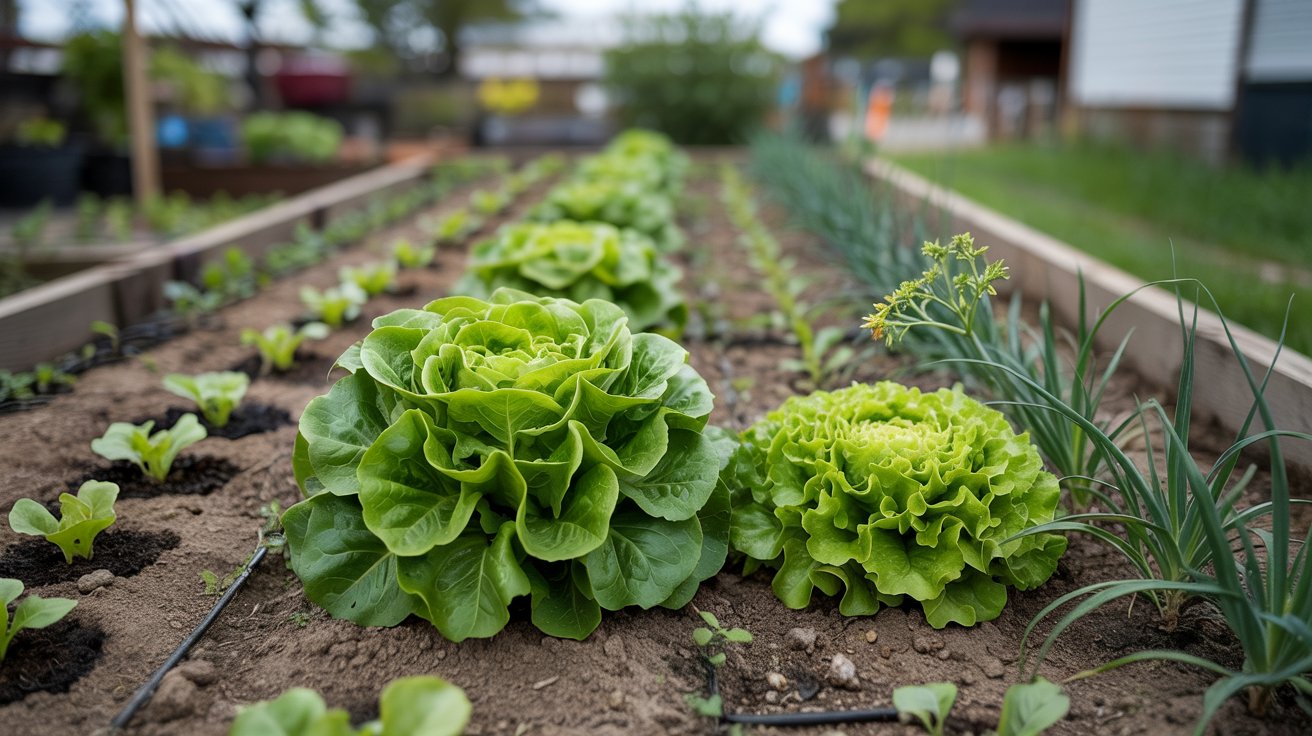
Fresh lettuce from your own garden or windowsill is one of the most achievable year-round crops for home growers. Lactuca sativa is a cool-season annual that matures fast, takes up little space, and adapts well to both outdoor beds and indoor containers under grow lights.
The real challenge is managing the gaps: the summer heat that triggers bolting and the short winter days that slow growth indoors. A simple succession planting schedule and a basic understanding of temperature limits solve most of those problems before they start.
This guide covers both paths - outdoor cool-season windows and indoor grow-light setups - so you can keep leafy greens in production in every season.
According to University of Minnesota Extension, starting seeds indoors in early April for transplanting in late April and early May gives outdoor growers a strong head start before summer heat arrives.
Whether you have a backyard bed, a balcony, or just a south-facing windowsill, this plan scales down without losing effectiveness.
Grow lettuce year-round by combining outdoor cool-season sowings with indoor grow-light cycles. Sow every 2–3 weeks to maintain a continuous harvest, keep temperatures between 60–70°F, and use shade cloth or move plants indoors to prevent bolting when heat arrives.
Lettuce Varieties and Year-Round Viability
Choosing the right lettuce type matters as much as timing. Different varieties mature at different speeds and handle heat or cold with varying tolerance - and those differences directly shape how you build a year-round plan.
Remember it later
Planning to try this recipe soon? Save it for a quick find later!
Loose-leaf types like 'Black Seeded Simpson' are the fastest, often ready in 45-50 days, making them ideal for quick indoor rotations or filling gaps between outdoor crops. Butterhead types such as Buttercrunch or Bibb take roughly 60-70 days and produce dense, sweet heads suited to spring and fall outdoor windows.
Romaine varieties like Paris Island and Paris White run 70-75 days and tolerate cold better than heat, according to Purdue Extension.
Bolting - when the plant sends up a flower stalk and turns bitter - becomes a real risk as temperatures climb above 70°F. Romaine bolts slightly later than butterhead, and loose-leaf types vary by cultivar.
For summer indoor setups, keeping the grow room at or below 70°F is more effective than variety selection alone.
| Type | Days to Harvest | Best Season (Outdoor) | Indoor Viability |
|---|---|---|---|
| Loose-leaf | 45–50 days | Spring, Fall, Winter | Excellent — fastest rotation |
| Butterhead / Bibb | 60–70 days | Spring, Fall | Good — needs stable temps |
| Romaine | 70–75 days | Spring, Fall | Good — bolt-resistant in cool rooms |
| Crisphead / Iceberg | 70–80 days | Spring (early) | Fair — needs consistent cool |
For a continuous indoor harvest, loose-leaf varieties win on speed and regrowth. You can harvest outer leaves repeatedly with cut-and-come-again picking, extending each planting by 2-3 weeks beyond its listed maturity date.
This approach works well when you're also learning to grow herbs indoors alongside your lettuce trays.
Crisphead types like iceberg are rarely worth growing year-round - they need a long, consistently cool window and don't recover well after a cut. Stick to loose-leaf and butterhead for rotation-based growing.
How to Grow Lettuce Year-Round: Indoors and Outdoors?
The process for both paths shares the same core requirements: cool temperatures, consistent moisture, and enough light. Where they differ is in how you control those conditions.
Indoor growers doing well with lettuce often find that adding a low-light plant layer below the grow station makes use of the ambient light spill, maximizing the setup's footprint without extra equipment.
Set your grow lights on a timer for 14–16 hours per day. Lettuce under consistent artificial light rarely bolts from photoperiod alone — the bigger trigger indoors is heat, not day length.
Succession Planting and Year-Round Calendar
A single sowing of lettuce gives you a two-to-three week harvest window. To keep cutting week after week, you need multiple plantings staggered across the calendar - each one picked up just as the last peaks.
The standard interval is every 2-3 weeks. In Wisconsin and similar cool-climate states, the University of Wisconsin-Madison Extension recommends successive outdoor plantings every 2-3 weeks starting after the last frost, sustaining production as long as cool weather lasts.
Indoor growers can run the same interval regardless of season, simply swapping outdoor cool windows for controlled light-and-temperature cycles.
Prep (start seeds indoors)
Active (indoor or outdoor growing)
Peak (outdoor prime season)
June and July show as inactive for most outdoor growers in temperate zones - daytime highs regularly exceed 75-80°F, pushing plants to bolt within days of the heat arriving.
Indoor growers with air conditioning can maintain production through summer by keeping rooms below 70°F and running lights on the 14-16 hour schedule.
August marks a prep window: sow indoors 3-4 weeks before your first fall frost date so seedlings are ready to transplant as temperatures drop back into the 55-65°F range outdoors.
Fall outdoor lettuce often tastes sweeter than spring crops because cool nights slow growth and concentrate sugars.
- January-February: Sow under grow lights indoors every 2-3 weeks; maintain 65-70°F and 14-16 hours of light daily.
- March-April: Start transplant seedlings indoors; move cold-hardy starts to a cold frame or unheated greenhouse when nighttime temps stay above 28°F.
- April-May (peak outdoor): Direct sow or transplant every 2-3 weeks; harvest actively before summer heat builds.
- June-July: Pause outdoor sowings; continue indoor rotations in a cool room or switch entirely to heat-tolerant leaf types like 'New Red Fire'.
- August: Restart outdoor prep; sow fall transplants indoors 3-4 weeks before first frost.
- September-October (peak fall): Plant out fall successions every 2-3 weeks; use row cover to extend the window by 4-6 weeks past first frost.
- November-December: Shift back to full indoor production; maintain the same light and temperature schedule used in winter months.
Growing carrots on a similar cool-season rotation pairs well with this calendar - see our guide on root vegetable timing for a companion schedule.
Tailor the Plan to Your Climate and Space
Not every setup looks the same. A grower with a south-facing balcony in Atlanta has different constraints than one with a basement grow station in Minnesota.
The core calendar stays the same - what changes is how aggressively you manage heat and light.
In warm climates (USDA Zones 8–10), greenhouse lettuce production benefits from 50% shade cloth from April through October, as Alabama Cooperative Extension recommends. Without it, even shaded greenhouse lettuce can bolt during summer peak hours.
Windowsill growers in cooler climates can run productive rotations with just a south or west-facing window plus a single LED strip light to supplement on cloudy days.
Basil grown under the same setup benefits from the same light schedule - our guide on basil light requirements explains the overlap well.
- Balcony or patio: Use 8-12 inch deep containers with drainage holes; move pots to shade during afternoon heat above 75°F.
- Windowsill: Supplement natural light with a LED grow strip on a 14-hour timer; rotate pots 180° every 3 days for even growth.
- Cold-climate full indoor: A 2-foot LED shop light suspended 4-6 inches above trays handles 2-4 trays of loose-leaf lettuce in a spare corner.
- Greenhouse (warm climates): Install 50% shade cloth April-October and aim for ventilation that keeps air below 75°F during the day.
If you're building out a broader indoor plant area, understanding flowering plant care alongside food crops helps you plan light zones more efficiently. For those new to indoor growing overall, our low-maintenance plant options can fill decorative gaps while your lettuce rotation gets established.
Peony gardeners adapting raised beds for lettuce in spring will find the timing lines up neatly - peony bed prep in early spring happens right as your first lettuce succession goes in the ground.
And for those expanding a mixed garden, browsing landscape plant combinations or drought-tolerant edging plants can help you plan borders around your lettuce beds without competing for water or light.

Frequently Asked Questions
Loose-leaf varieties like 'Black Seeded Simpson' and 'Salad Bowl' perform best indoors — they mature in 45–50 days and regrow well after cut-and-come-again harvesting.
A full-spectrum LED panel or T5 fluorescent light positioned 4–6 inches above plants, running 14–16 hours daily, supports healthy growth without bolting from light stress.
With a 2–3 week succession schedule and both outdoor and indoor cycles, most growers complete 10–15 harvests annually, with indoor setups adding 4–6 extra cycles through summer and winter.
Lettuce grows best between 60–70°F. Below 45°F, growth stalls significantly; above 75°F, bolting risk rises sharply regardless of whether plants are indoors or outside.
In mild climates (Zones 8–10), winter outdoor growing is possible with row cover protection. Elsewhere, a south-facing window plus supplemental LED lighting keeps lettuce productive through the darker months.
Pin it for your next how to grow lettuce year-round project.