Sunflowers are one of the fastest payoffs in the garden - direct-sow a seed in May and you can have a six-foot plant in bloom by August. Helianthus annuus is dead simple to grow from seed, but a few wrong turns early on (wrong timing, wrong depth, wrong spot) will cost you weeks of progress.
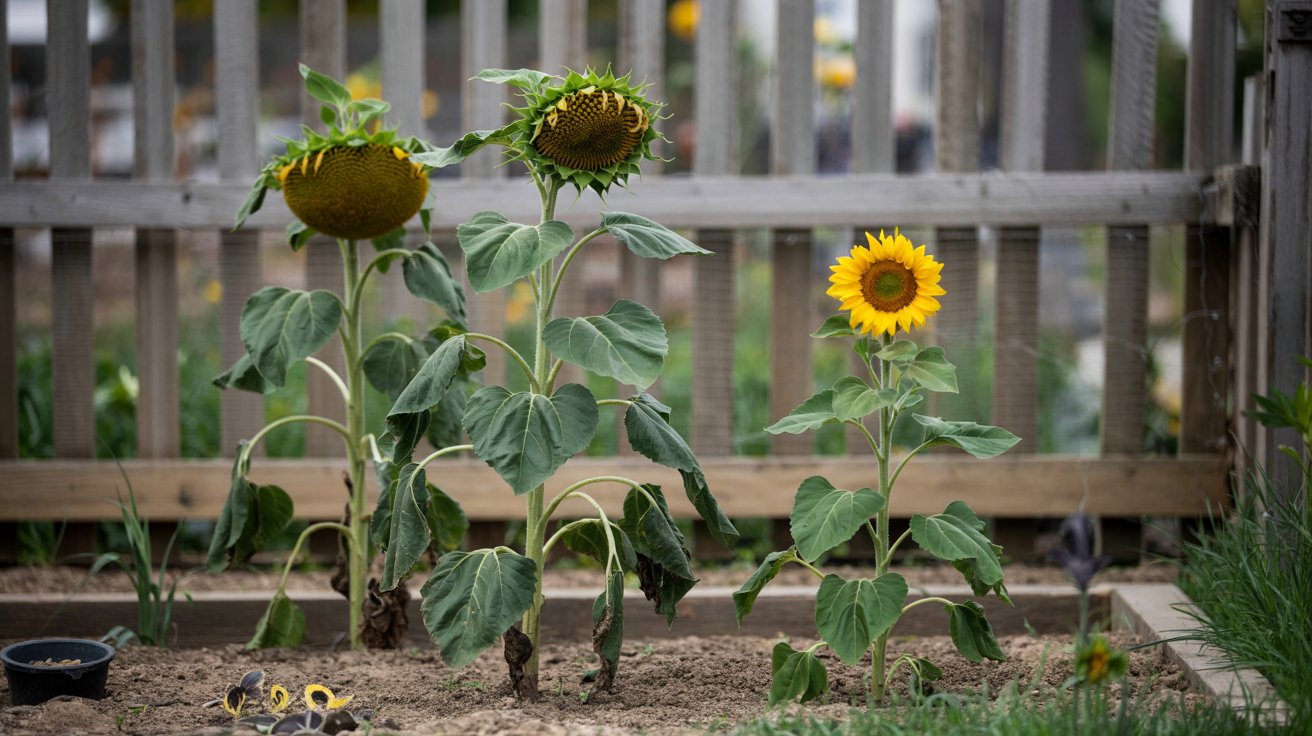
This guide covers everything from choosing your variety to keeping giant sunflowers upright in summer storms.
Direct-sow sunflower seeds after the last frost in full sun and well-drained soil. Most varieties germinate in 7–10 days and bloom 70–100 days later.
Giant varieties like 'Mammoth Russian' need staking once they pass 4 feet tall. Minimal care is required between sowing and harvest.
Choosing the Right Sunflower Variety
Not all sunflowers behave the same way, and picking the wrong type for your space is the first mistake most new growers make. A 12-foot giant needs very different conditions than a compact 2-foot dwarf grown in a container.
Remember it later
Planning to try this recipe soon? Save it for a quick find later!
- Giant single-stem ('Mammoth Russian', 'American Giant'): Grows 8-14 feet tall with heads up to 14 inches across. Best for back-of-border planting and seed harvesting. Needs staking above 4 feet.
- Multi-branching ('Autumn Beauty', 'Velvet Queen'): Produces several smaller blooms per plant across a longer season. Good for cut flowers. Grows 4-6 feet, less staking required.
- Dwarf/patio ('Sunspot', 'Big Smile'): Tops out at 18-24 inches. Suited to containers or front borders. Will not produce harvestable seeds in quantity.
- Pollenless ('Inferno', 'Joker'): Bred for the vase - no pollen drop on tablecloths. Same growing requirements, just less attractive to bees for those who want that.
For most first-time growers, a multi-branching variety gives the longest bloom window with minimal fuss. If you're specifically after edible garden plants with high yield, stick to a single-stem giant variety for the largest seed heads.
In zones 3–4, start seeds indoors 2–3 weeks before the last frost date to extend the season. In zones 8–10, you can sow as early as late February for a late-spring bloom, or again in late summer for a fall flush.
What You Need Before You Sow?
Sunflowers need very little equipment, but a few items make a real difference. Having everything ready before you sow prevents the scramble once seeds are in the ground.
- Seeds: Buy from a reputable supplier or save from a previous season's open-pollinated variety. Hybrid seeds won't reproduce true to type.
- Compost: Work 2-3 inches of compost into the top 6 inches of soil before planting. Sunflowers are heavy feeders during their first 30 days of growth.
- Seed-starting mix (optional): Only needed if starting indoors. Use a lightweight, well-draining mix - not standard potting soil, which packs too densely around delicate roots.
- Stakes and twine: Essential for giant varieties. Have 6-foot bamboo stakes or metal T-posts ready before plants hit 3 feet - staking after they tip over rarely works well.
- Trowel or dibber: For making precise 1-inch planting holes at consistent spacing.
- Watering can or drip line: A gentle flow prevents washing seeds out of position right after planting.
You don't need to invest in fertilizer at planting time if your compost is fresh. Over-feeding with nitrogen early on pushes leafy growth at the expense of flowers - the same lesson that heavy-fruiting tomatoes teach every season.
How to Sow Sunflower Seeds Step by Step?
Sunflowers strongly prefer direct sowing because their taproots resent disturbance. Transplanting is possible but always sets them back.
If your growing season is short, start in 3-inch biodegradable pots you can plant whole - but direct sowing beats it whenever conditions allow.
Sow a second batch of seeds 3 weeks after your first sowing. Staggered planting gives you blooms for 6–8 weeks instead of all at once — especially useful if you're cutting flowers for the house regularly.
Staking and Supporting Giant Varieties
A 10-foot sunflower with a dinner-plate-sized head is genuinely top-heavy. Wind at that height can snap a stem that's an inch thick, and once a main stem breaks, the plant is finished.
Proactive staking is the difference between a showstopper and a disaster.
Drive a stake into the ground 4-6 inches from the stem before the plant reaches 4 feet. If you wait until it's leaning, you risk spearing the root zone.
Tie the stem loosely to the stake with soft twine or old pantyhose in a figure-eight loop - too tight and you'll girdle the stem as it thickens.
- Single bamboo stake: Works for plants up to 6-7 feet. Use a 6-foot stake and drive it 12 inches into the ground for stability.
- T-post and twine corral: For a row of giants, run twine between metal T-posts on either side of the row. Retie every 2 feet of height as plants grow.
- Cage method: A wide tomato cage works for multi-branching varieties - it supports multiple stems without individual tying.
Plants grown against a fence or wall gain natural wind protection and often need no staking at all. South-facing walls also reflect heat, which speeds up flowering by 5-7 days in cooler zones.
Don't tie stakes to the head itself. The sunflower head rotates to track the sun during its early growth phase (a process called solar tracking), and a fixed tie will prevent this, stressing the plant and reducing seed set.
Dealing with Pests and Common Problems
Sunflowers are relatively tough, but a handful of problems show up reliably every season. Catching them early costs you nothing; ignoring them costs you the whole plant.
- Aphids on stems and buds: Yellow-green clusters appear on soft new growth. Blast them off with a hose jet - the same approach used on zinnia aphid outbreaks in summer. Ladybugs will follow if you leave them alone for a day or two.
- Cutworms at the base: Seedlings cut clean at soil level overnight are almost always cutworms. Slip a cardboard collar around new transplants or push a stick into the soil right against the stem to block them.
- Birds stealing seeds: Once heads form and petals drop, birds - especially finches and jays - will strip seeds fast. Cover maturing heads loosely with paper bags or netting if you want to harvest the seeds yourself.
- Downy mildew: White or gray patches on leaves in cool, wet weather. Improve airflow by spacing plants adequately and avoid overhead watering once plants are established.
- Sunflower moth larvae: Small caterpillars that tunnel into the flower head and destroy seeds. Most common in the central U.S. Bt (Bacillus thuringiensis) spray applied at bud stage controls them effectively.
Most sunflower problems trace back to stress - poor drainage, overcrowding, or inconsistent watering. Healthy plants in good soil shrug off minor pest pressure the same way low-maintenance perennials do when sited correctly.
4 Mistakes That Kill Sunflower Seedlings
Most sunflower failures happen in the first three weeks. The plant is surprisingly forgiving once it's established, but the seedling stage is when bad habits do lasting damage.
- Sowing too early in cold soil: Soil below 50°F causes seed rot, not germination. A soil thermometer costs under $10 and removes all guesswork - don't rely on calendar date alone.
- Overwatering after germination: Once seedlings emerge, daily watering keeps the root zone too wet and encourages damping off. Switch to deep, infrequent watering and let the top inch dry between sessions.
- Planting in partial shade: Sunflowers planted where they get under 6 hours of direct sun grow tall and spindly, lean aggressively toward light, and produce small heads with poor seed set. There's no workaround - they need full sun, full stop.
- Skipping thinning: Two plants competing in the same hole both lose. Crowded sunflowers produce thinner stems and smaller heads than a single plant given proper spacing. Thinning feels wasteful but pays off every time.
Sunflowers are allelopathic — their roots release compounds that suppress nearby plant growth. Keep them at least 12 inches from vegetable crops like beans and squash, and don't compost large quantities of sunflower plant material from a diseased crop.
Harvesting Seeds at the End of Season
If your goal is edible sunflower seeds or saving seed for next year, timing the harvest matters. Cut too early and seeds aren't fully developed.
Wait too long and birds beat you to it.
Watch the back of the flower head: when it turns from green to yellow-brown and the seeds look plump and striped, it's ready. Cut the head with 12 inches of stem attached and hang it upside down in a dry, airy space - a garage or shed works well.
After 2-3 weeks, rub the seeds loose with your hands over a bucket.
- For eating: Soak seeds in salted water overnight, drain, and roast at 300°F for 30-40 minutes. Single-seed giant varieties like 'Grey Stripe' have the largest, meatiest seeds.
- For replanting: Store dry seeds in a paper envelope in a cool, dark place. Open-pollinated varieties store well for 2-3 years at around 40°F. Hybrid seeds will not produce true-to-type plants.
- For birds and wildlife: Simply leave the heads on the plant after they brown. Goldfinches especially will work through them for weeks - worth doing in at least part of your garden.
Saving seed from your best-performing plants over several seasons is how gardeners end up with locally-adapted strains.
The same principle applies when you save runners from strawberries - you're selecting for what performs in your specific conditions, not just what looked good in a catalog photo.
Growing sunflowers from seed is one of those genuinely satisfying projects where what you put in closely mirrors what you get out.
Good sun, correct depth, a little patience on the watering, and a stake in the ground before things get tall - that's the whole formula.
Frequently Asked Questions
Sow after your last frost date once soil reaches 50°F — roughly mid-April in zones 6–7, late April to mid-May in zones 4–5, and as early as late February in zones 9–10 for a spring crop.
Plant sunflower seeds exactly 1 inch deep. Shallower than half an inch leaves them exposed to drying and bird predation, while planting deeper than 1.5 inches slows emergence noticeably in cool soils.
Drive a 6-foot bamboo stake 12 inches into the ground beside the stem before plants reach 4 feet, then tie loosely with soft twine in a figure-eight loop — never tie around the head, which needs to rotate freely.
Dwarf varieties like 'Sunspot' and 'Big Smile' grow well in containers that are at least 12 inches deep and wide — they top out at 18–24 inches and won't need staking in a sheltered spot.
A single side-dressing of balanced 10-10-10 fertilizer at 12–18 inches tall is enough for most soils; switch to a low-nitrogen feed once buds form, since excess nitrogen after bud set delays flowering by 1–2 weeks.
Pin it for your next how to grow sunflowers from seed project.