Most rooms in a typical home offer far less light than a plant catalog assumes. North-facing windows, interior offices, and hallways with no windows at all present a real challenge - but a manageable one.
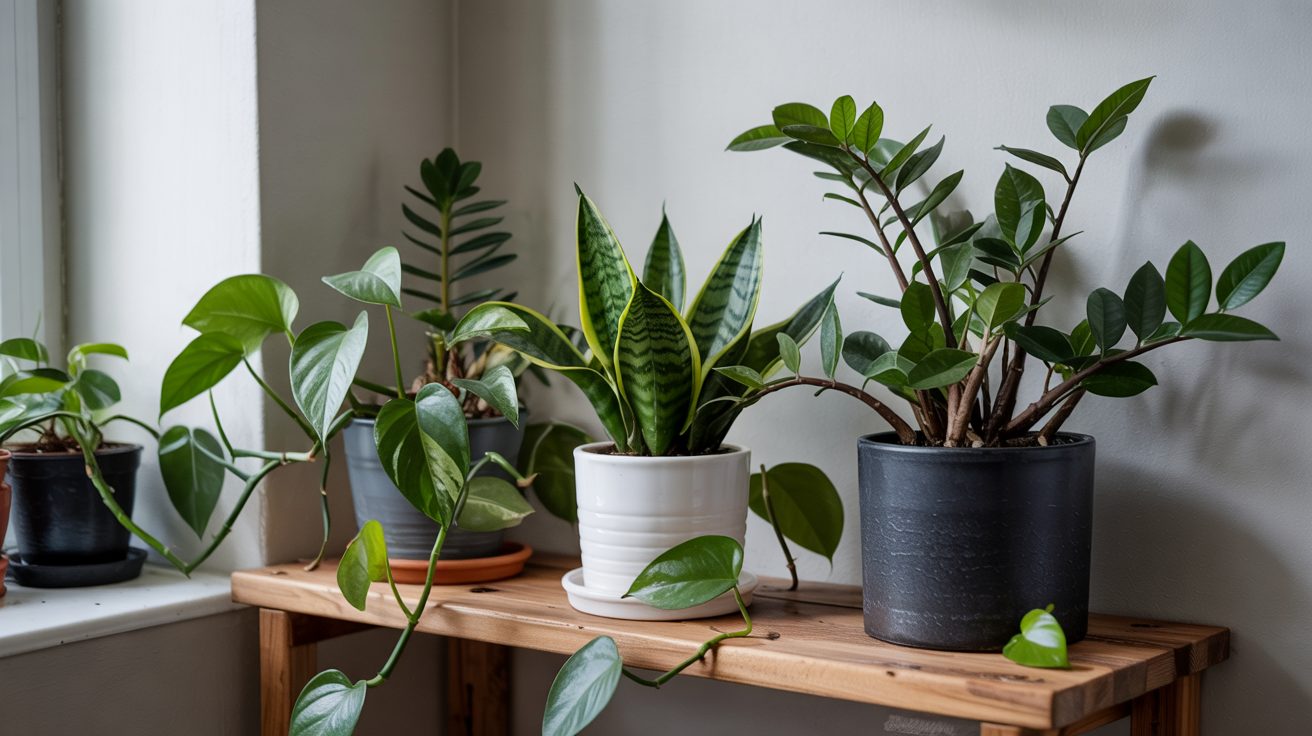
The 12 varieties below have been selected because they genuinely perform in low-light conditions, not just survive for a few weeks before declining.
These low-light houseplants tolerate fluorescent office light, dim rooms, and reduced watering schedules. From trailing vines to compact rosettes, each variety is proven in real low-light conditions.
Watering frequency ranges from every 10 days to every 6 weeks depending on species.
What "Low Light" Actually Means for Indoor Plants?
Low light indoors means no direct sun rays hit the leaves at any point during the day. It typically measures between 25 and 100 foot-candles - roughly the brightness of a well-lit hallway or a spot 8 to 12 feet from a window.
Remember it later
Planning to try this recipe soon? Save it for a quick find later!
Fluorescent office lighting hovers around 50 foot-candles at desk level. That's enough for several plants on this list, including snake plants and ZZ plants, but not enough for flowering species that need 200+ foot-candles to bloom reliably.
- North window: Delivers consistent, low indirect light year-round - ideal for ferns, cast iron plants, and Chinese evergreens.
- Interior rooms with no window: Rely on overhead fluorescent or LED light. Limit choices to snake plants, ZZ plants, and pothos within 4 feet of a light fixture.
- East window blocked by a porch: Produces filtered morning light - suitable for peace lilies, parlor palms, and bird's nest ferns.
- Supplemental grow lights: A full-spectrum LED panel at 6-12 inches above foliage bumps foot-candles enough to keep any plant on this list healthy indefinitely.
Plants don't die immediately in very low light — they slow growth, drop lower leaves gradually, and stop producing new shoots. If a plant looks stalled for more than 8 weeks, the light is too low even for shade-tolerant species.
Foliage Plants: Upright and Floor-Filling Varieties
These species form the backbone of a low-light indoor space. Most reach 2 to 4 feet tall and fill corners or flank furniture without sprawling.
The garden plants in this group share one trait: they hold their form and color even when light drops below 50 foot-candles for weeks at a time.
Snake Plant 'Laurentii'
Zone 9-11 Easy
Dracaena trifasciata 'Laurentii' is arguably the single most forgiving houseplant available. Its upright, sword-shaped leaves with yellow margins stay firm even after 4 to 6 weeks without water in winter.
- Watering: Every 6 weeks in winter, every 2-3 weeks in summer. Yellow leaf bases indicate overwatering, not underwatering.
- Light range: Tolerates fluorescent office light; variegation stays sharp even at 25 foot-candles.
- Best use: Bedroom corners or office desks where watering is easily forgotten.
ZZ Plant
Zone 10-12 Easy
Zamioculcas zamiifolia stores water in thick rhizomes at its base - those potato-like roots mean it can handle weeks of darkness and drought without losing its glossy look. It's a slow grower, adding only a few new stems per year.
- Watering: Every 3-4 weeks. Overwatering is the main cause of failure; let soil dry completely.
- Root-bound tolerance: Does fine staying pot-bound for 2-3 years, which suits low-maintenance setups.
- Best use: Low-traffic interior corners where nothing else survives.
Cast Iron Plant
Zone 7-11 Easy
The name earns its reputation. Aspidistra elatior handles temperature swings down to 40°F indoors, making it the best candidate for unheated entryways and cold porches in zones 7-9 during shoulder seasons.
- Growth rate: Very slow - expect 2-3 new leaves per year. Don't repot more than once every 3-4 years.
- Light floor: Tolerates true deep shade, the deepest of any plant on this list.
- Best use: Entryways, hallways, and porch transitions in zones 7-9 where frost stays brief.
Cast iron plants establish slowly — they may look completely unchanged for the first 6 months. Don't increase watering or fertilizer to force growth; that causes root rot in these otherwise bulletproof plants.
Chinese Evergreen 'Silver Bay'
Zone 10-12 Easy
Aglaonema 'Silver Bay' carries metallic silver-green patterning that holds its color through 4 to 6 weeks of reduced winter light without fading. Unlike brighter-patterned aglaonemas (pink or red varieties), 'Silver Bay' stays stable in shade.
- Watering: Every 10-14 days in active growth, every 3-4 weeks in winter.
- Humidity: Tolerates dry indoor air better than ferns - works in heated rooms with 30-40% humidity.
- Best use: Tabletop or credenza in rooms with no direct sun, where color is still wanted.
Trailing and Climbing Varieties for Shelves and Hangers
Vining plants fill vertical space that upright specimens can't. These three species trail from shelves or hanging pots, and all handle low-effort indoor care schedules without dropping leaves or losing pattern.
Pothos 'Golden'
Zone 10-12 Easy
Epipremnum aureum 'Golden' is the fastest grower on this list, capable of pushing 12 to 18 inches of new vine per month in active summer growth.
The yellow-green variegation stays visible even at low foot-candle levels, unlike white-marbled pothos cultivars that revert to solid green in shade.
- Watering: Every 10-14 days; let the top inch of soil dry before watering again.
- Training: Clip to a wall with adhesive hooks or let trail from a high shelf.
- Best use: High shelves, bookcase tops, or hanging planters where length is an asset.
Philodendron 'Heartleaf'
Zone 10-12 Easy
At only 2 to 3 inches per leaf, Philodendron hederaceum stays denser and tidier than pothos in low light. Rotating the pot 90 degrees every 6 weeks prevents one-sided lean toward any available light source.
- Growth habit: Trails or climbs a moss pole - moss poles produce larger leaves over time.
- Watering: Every 10-14 days; more drought-tolerant than it looks.
- Best use: Small hanging pots in bathrooms or offices where trailing length stays manageable.
Silver Satin Pothos
Zone 10-12 Medium
Scindapsus pictus 'Argyraeus' is slower and neater than golden pothos, reaching 4 to 8 feet of vine rather than 10.
Its matte green leaves with silver splotches - similar in palette to silver-toned garden plants - stay patterned in low light more reliably than pure white-variegated cultivars.
- Watering: Every 12-14 days. More susceptible to root rot than golden pothos if overwatered.
- Pattern stability: Silver markings hold well at 40-75 foot-candles - good for dimmer rooms.
- Best use: Hanging baskets in rooms where a slower, more controlled vine is preferred.
Compact Tabletop Plants Under 24 Inches
Not every room needs a floor plant. These four varieties top out at 12 to 24 inches and work well on desks, windowsills, side tables, and bathroom counters.
Peace Lily 'Mauna Loa'
Zone 10-11 Easy
Spathiphyllum 'Mauna Loa' is the only plant on this list that flowers in low light - white spathes appear in spring and sometimes again in fall even at 50-75 foot-candles. It droops dramatically when thirsty, which functions as a reliable watering reminder.
- Watering signal: Leaves wilt noticeably 1-2 days before soil fully dries - water when you see the first droop.
- Root rot risk: High if kept in standing water. Use a pot with drainage; avoiding overwatering peace lilies is the single most important care step.
- Best use: Bathrooms and offices where occasional flowers matter.
Bird's Nest Fern
Zone 10-11 Medium
Unlike divided ferns that shed in dry air, Asplenium nidus has smooth, strap-like fronds that handle lower humidity better than most shade-loving fern species. Keep humidity above 50% for best growth - bathrooms work well.
- Watering: Keep soil consistently moist but not soggy; water every 7-10 days.
- Light caution: Direct sun scorches frond edges within days. Stay below 100 foot-candles.
- Best use: Bathroom shelves or humid kitchens where moisture stays consistent.
Peperomia 'Rosso'
Zone 10-12 Easy
At 6 to 12 inches tall, Peperomia caperata 'Rosso' is the smallest plant on this list. Its deeply ridged leaves show dark green on top and crimson red underneath - a dramatic two-tone effect that holds in low indirect light without extra effort.
- Watering: Every 10-14 days; thick leaves store water and rot easily when overwatered.
- Soil preference: Well-draining mix - add 20% perlite to standard potting soil.
- Best use: Desks, windowsills, and bathroom counters where a 6-inch pot fits easily.
Spider Plant 'Vittatum'
Zone 10-11 Easy
Chlorophytum comosum 'Vittatum' handles low light well, though it produces fewer trailing plantlets (spiderettes) in dim conditions. The arching green-and-white striped leaves stay attractive regardless.
Anyone wondering how fast spider plants spread should know: in low light, expect one-third the offshoot production compared to bright indirect light.
- Watering: Every 7-10 days; tolerates occasional missed waterings without browning.
- Propagation: Pin spiderettes to moist soil in a separate pot - roots within 2-3 weeks.
- Best use: Hanging pots in rooms where occasional propagation is a bonus project.

Low-Light Palms and Parlor Varieties
True palms need more light than most houseplants, but parlor palm is the reliable exception. It's been used as a low-light indoor palm since Victorian conservatories - no other palm species comes close to matching it for dim indoor conditions.
Parlor Palm
Zone 10-12 Easy
Chamaedorea elegans reaches 2 to 4 feet indoors and stays compact under fluorescent lighting - the only true palm that performs reliably at 50-75 foot-candles. Its feathery fronds clean up easily with light pruning, removing older yellow fronds at the base.
- Watering: Every 10-14 days; allow top 2 inches of soil to dry between waterings.
- Humidity: Tolerates 40-50% indoor humidity without browning tips, unlike most tropical palms.
- Fertilizing: Feed once in spring and once in summer with a balanced liquid fertilizer - no more than twice a year in low light.
- Best use: Floor plant in corners or beside furniture where a structured, tropical silhouette is wanted.
Side-by-Side: How These Plants Compare
Choosing between similar species often comes down to three factors: minimum light tolerance, watering frequency, and mature size. The table below puts the top picks in direct comparison.
| Plant | Min. Light (fc) | Water Frequency | Max Height | Best Spot |
|---|---|---|---|---|
| Snake Plant 'Laurentii' | 25 | Every 6 weeks (winter) | 48 inches | Office, bedroom |
| ZZ Plant | 25 | Every 3-4 weeks | 36 inches | Interior corners |
| Cast Iron Plant | 15 | Every 3 weeks | 30 inches | Entryways, porches |
| Pothos 'Golden' | 40 | Every 10-14 days | 10 ft vine | High shelves |
| Peace Lily | 50 | When leaves droop | 36 inches | Bathrooms, offices |
| Peperomia 'Rosso' | 40 | Every 10-14 days | 12 inches | Desks, counters |
| Parlor Palm | 50 | Every 10-14 days | 48 inches | Floor corners |

Watering Low-Light Plants Without Killing Them
The single most common mistake with low-light houseplants is watering on a calendar schedule rather than checking the soil.
Plants in dim rooms use water far more slowly than those near bright windows - a pot that needs water every 7 days in summer may only need water every 21 days in January.
Push a finger 2 inches into the soil before every watering. If it feels damp, wait 3 more days and check again. This one habit prevents 90% of root rot cases in low-light houseplants.
- Terracotta pots: Dry out faster than plastic or ceramic - good for snake plants and ZZ plants that prefer dry cycles.
- Drainage holes: Non-negotiable. Every pot on this list needs drainage; peace lily and bird's nest fern are especially prone to root rot in sealed containers.
- Seasonal adjustment: Cut all watering frequency by 30-40% from November through February when light levels and plant metabolism drop.
- Self-watering pots: Work well for bird's nest fern and heartleaf philodendron, which prefer consistent moisture rather than dry-wet cycles.
Fertilizer needs also drop sharply in low light. A plant's nutrient uptake is directly tied to its growth rate - and none of these species grow fast in dim conditions.
Feed with a diluted balanced liquid fertilizer (half the labeled dose) once in April and once in June. Skip fertilizing entirely from July through March.
Which Plant Fits Your Situation?
The right low-light plant depends more on your space constraints and watering habits than on any single care factor. Use the scenarios below to match quickly.
- You forget to water for weeks at a time: Snake Plant 'Laurentii' or ZZ Plant - both handle 4-6 week gaps without permanent damage.
- You want trailing vines for a high shelf: Pothos 'Golden' for speed and length, Silver Satin Pothos for a slower, tidier result.
- You need something under 12 inches: Peperomia 'Rosso' is the most compact and most drought-tolerant small option on this list.
- You want flowers, not just foliage: Peace Lily 'Mauna Loa' is the only low-light plant here that blooms reliably indoors.
- You have a cold, dim entryway: Cast Iron Plant tolerates 40°F and true deep shade - nothing else here comes close for cold tolerance.
- You need a floor plant with a tropical look: Parlor Palm gives palm-tree structure at 4 feet without requiring any direct sun.
- Your room has high humidity (bathroom/kitchen): Bird's Nest Fern rewards the moisture with large, glossy fronds that look polished year-round.
Most of these species are rated Zone 10-12 for outdoor use, but they perform as reliable houseplants in any USDA zone when kept indoors. Cast Iron Plant is the standout exception — it can overwinter outdoors in Zones 7-9 on a sheltered porch, which makes it the best choice for gardeners who move plants outside in summer.
When starting plants in a new space, give each one 4 to 6 weeks to acclimate before judging performance.
A plant that looks stalled for two weeks after moving indoors from a nursery is adjusting to lower light - adjusting to new light conditions is normal and temporary for nearly all the species on this list.

Frequently Asked Questions
Yes, but only a handful of species manage it long-term. Snake Plant 'Laurentii' and ZZ Plant tolerate as few as 25 foot-candles — achievable under standard fluorescent office tubes — for months without permanent decline, provided watering is reduced accordingly.
ZZ Plant and Snake Plant 'Laurentii' need water least frequently — as rarely as every 6 weeks in winter. Peperomia 'Rosso' and Silver Satin Pothos also tolerate 12-14 day gaps without damage, making all four strong choices for irregular schedules.
Twice a year is enough — once in April and once in June, using a balanced liquid fertilizer at half the labeled dose. Low light slows growth so dramatically that more frequent feeding just accumulates salt in the soil without benefiting the plant.
Yes, noticeably so. Cast Iron Plant adds only 2-3 new leaves per year even in good conditions, and ZZ Plant produces just a few stems annually. Golden Pothos is the fastest exception, still pushing 12-18 inches of vine per month even at 50 foot-candles.
Pin it for your next indoor plants low light: best varieties and growing tips project.