Few perennials deliver the same garden payoff as a well-planted peony. Wide, fragrant blooms in shades from white to deep crimson appear every spring without fail - for decades - once you get the setup right.
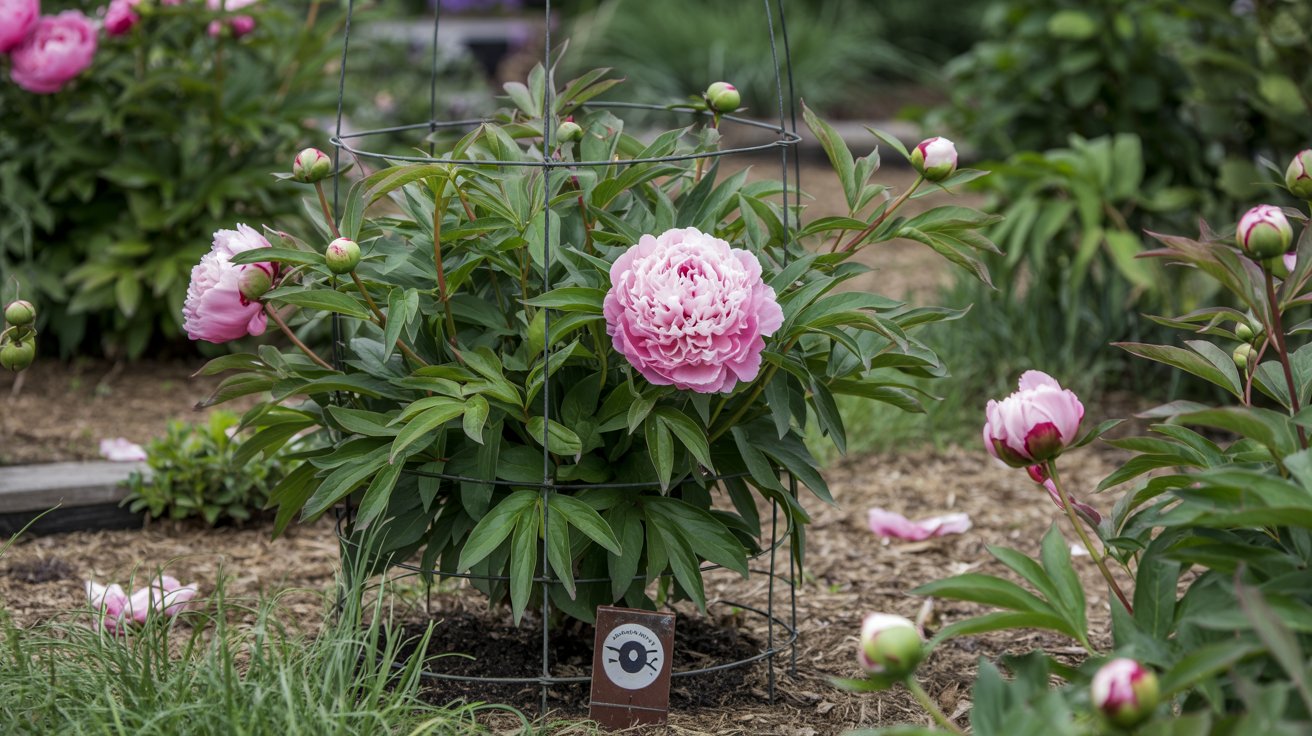
The setup itself comes down to three things: planting depth, fall timing, and matching variety to your climate.
Most gardeners who struggle with peonies planted too deep or in partial shade. Fix those two mistakes, and the plant practically cares for itself.
For a broader look at spring planting timing, regional guides can help you nail down your exact window.
This guide covers all three peony forms - herbaceous, Itoh, and tree - with a practical care routine you can repeat year after year.
Peonies are long-lived perennials that reward precise planting depth, a fall planting schedule, and a full-sun site with well-drained soil. Combine early, mid, and late cultivars to extend the bloom window across several weeks each spring.
Peonies are hardy, long-lived perennials grown for their large, fragrant spring blooms. Herbaceous types die back each winter, while tree peonies keep a woody framework year-round. Itoh hybrids blend the best traits of both forms and tolerate heat better than classic herbaceous varieties.
Planting and Establishment
Getting peonies into the ground correctly is the single most important task you'll do for these plants. Everything else - watering, fertilizing, cutting back - is secondary to planting at the right depth, in the right spot, at the right time of year.
Remember it later
Planning to try this recipe soon? Save it for a quick find later!
Fall is the preferred planting window. According to K-State Extension peony guidance, fall planting gives roots several weeks to anchor before the ground freezes, which leads to stronger first-year growth.
Container-grown peonies can go in during spring if fall planting isn't possible, though they may take an extra season to hit their stride.
In cold climates, a shallow mulch layer (2–3 inches of straw) over newly planted crowns protects them during the first winter. Remove mulch completely in early spring so emerging shoots aren't blocked.
Tree peonies require a slightly different approach. Plant them with the graft union 3-4 inches below soil so the named variety can develop its own roots over time rather than depending on the rootstock.
Seasonal Care
Once established, peonies need less attention than most perennials. A simple routine - light spring feeding, consistent summer water, fall cleanup - keeps plants healthy and blooming year after year.
According to Purdue University Extension, fertilize sparingly in early spring as shoots emerge. Heavy fertilizer pushes leafy growth at the expense of flowers, so a single application of a low-nitrogen balanced fertilizer (like 5-10-10) is usually enough for a full season.
- Full sun placement: Give plants 6+ hours of direct sun; more sun means more blooms per stem.
- Deadhead spent flowers: Remove blooms as they fade to keep the plant tidy and redirect energy to roots.
- Cut back in fall: Trim herbaceous peonies to within 1-2 inches of the ground after the first frost to reduce disease carryover.
- Water at the base: Aim water at the soil, not the foliage, to minimize botrytis blight risk during humid weather.
- Planting near large trees: Mature tree roots compete directly for water and nutrients, reducing bloom size and frequency.
- Overfeeding with nitrogen: Excess nitrogen produces dense foliage and very few flowers.
- Leaving old stems standing: Decaying stems harbor botrytis spores that re-infect plants the following spring.
- Deep mulching over crowns: A thick mulch layer in summer can mimic deep planting and suppress flowering.
For gardeners in USDA Zones 7 and warmer, where winters are mild, peonies still need a chilling period of 500-700 hours below 40°F to set buds reliably. If you're in Zone 7b or 8, Itoh hybrids and certain tree peony varieties are better adapted to lower chill-hour totals than classic herbaceous types.
If you want to plan blooms across seasons, pairing peonies with fall perennials fills the garden calendar neatly.
Ants on peony buds are harmless — they're feeding on sugary bud secretions and don't damage the plant. Skip the pesticide spray.

Varieties and Bloom Timing
Not all peonies bloom at the same time, and that's an advantage worth using. By planting a mix of early, midseason, and late cultivars, you can stretch the peony season from early May into late June in most zones - sometimes longer.
Combining variety types also broadens your ornamental options. How azalea bloom timing works follows the same stagger principle: select for sequential peak periods rather than one concentrated flush.
Tree peonies and Itoh hybrids, as noted by Purdue horticulture resources, also offer attractive foliage well beyond bloom time - a quality herbaceous types can't match.
| Type | Bloom Season | Zones | Key Trait |
|---|---|---|---|
| Early Herbaceous (e.g., 'Coral Charm') | Early May | 3–8 | First blooms of spring |
| Midseason Herbaceous (e.g., 'Sarah Bernhardt') | Mid May–June | 3–8 | Most common, very fragrant |
| Late Herbaceous (e.g., 'Felix Crousse') | Late June | 3–8 | Extends season by 2–3 weeks |
| Tree Peony (e.g., 'Renkaku') | Late April–May | 4–9 | Woody stems, early color |
| Itoh Hybrid (e.g., 'Bartzella') | Mid–Late May | 4–9 | Heat tolerant, long-blooming |
Itoh hybrids, a cross between herbaceous and tree peonies, are worth a closer look for warmer gardens. Yellow-flowered Itohs like 'Bartzella' and 'Yellow Crown' fill a color gap that herbaceous peonies simply can't reach.
They also produce multiple buds per stem - often 30-50 buds on a mature plant - compared to the single-bud stems typical of herbaceous forms.
Tree peonies behave more like shrubs than perennials. They do not die back in winter, reaching 3-5 feet tall over several years.
They're a natural pairing alongside other ornamental shrubs; if you're building a mixed border, Japanese maple as a companion provides contrasting foliage texture through summer and fall. For smaller spaces where scale matters, browsing compact trees for tight yards can help you plan the surrounding framework before planting.
Established peony clumps rarely need dividing and often resent it. Unless a clump is producing noticeably fewer blooms after many years, leave it undisturbed — peonies planted in the 1800s still bloom today in old homestead gardens.
When buying bare-root divisions, choose roots with 3-5 healthy eyes. Divisions with fewer eyes are slower to bloom; divisions with many more are often older clumps that may take time to re-establish after the disturbance.
Most new plants bloom reliably by their second or third year in the ground. For contrast in your perennial beds, fast-flowering annuals like zinnias can fill gaps while young peonies establish, and fast-growing options like those in our guide to landscape trees can provide backdrop structure for a peony bed.
If you're designing for visual privacy as well, pairing peonies in front of screening shrubs and trees creates a layered border with year-round structure. For a completely different perennial habit as comparison, pothos growing indoors shows how depth and light rules scale from containers to full garden beds, and warm-climate gardeners might also consider how tropical palms anchor a border in frost-free zones where peonies won't overwinter.
Frequently Asked Questions
Most herbaceous peonies bloom May through June. Zones 3–5 see peak bloom in late May; Zones 6–7 typically peak in early-to-mid May, often 2–3 weeks earlier.
Herbaceous peonies die back to the ground each winter. Tree peonies keep woody stems year-round and reach 3–5 feet tall. Itoh hybrids combine both, with herbaceous dieback but tree-peony flower forms and heat tolerance.
Yes. Herbaceous peonies require roughly 500–700 hours below 40°F to set flower buds. Itoh hybrids and tree peonies need fewer chill hours, making them better suited to Zone 7b–8 gardens.
Space herbaceous peonies 3–4 feet apart. That gap improves air circulation, reduces botrytis blight, and gives each clump room to spread over its first 5–10 years without crowding.
Peonies can grow in large containers (20+ gallon) short-term, but their deep root systems and cold-dormancy needs make long-term container growing difficult. Itoh hybrids adapt better than standard herbaceous types.
Pin it for your next how to grow and care for peony project.