Spring planting decisions happen fast, and purple is one color that earns its space in almost every garden situation - borders, containers, pollinator beds, and cutting gardens alike.
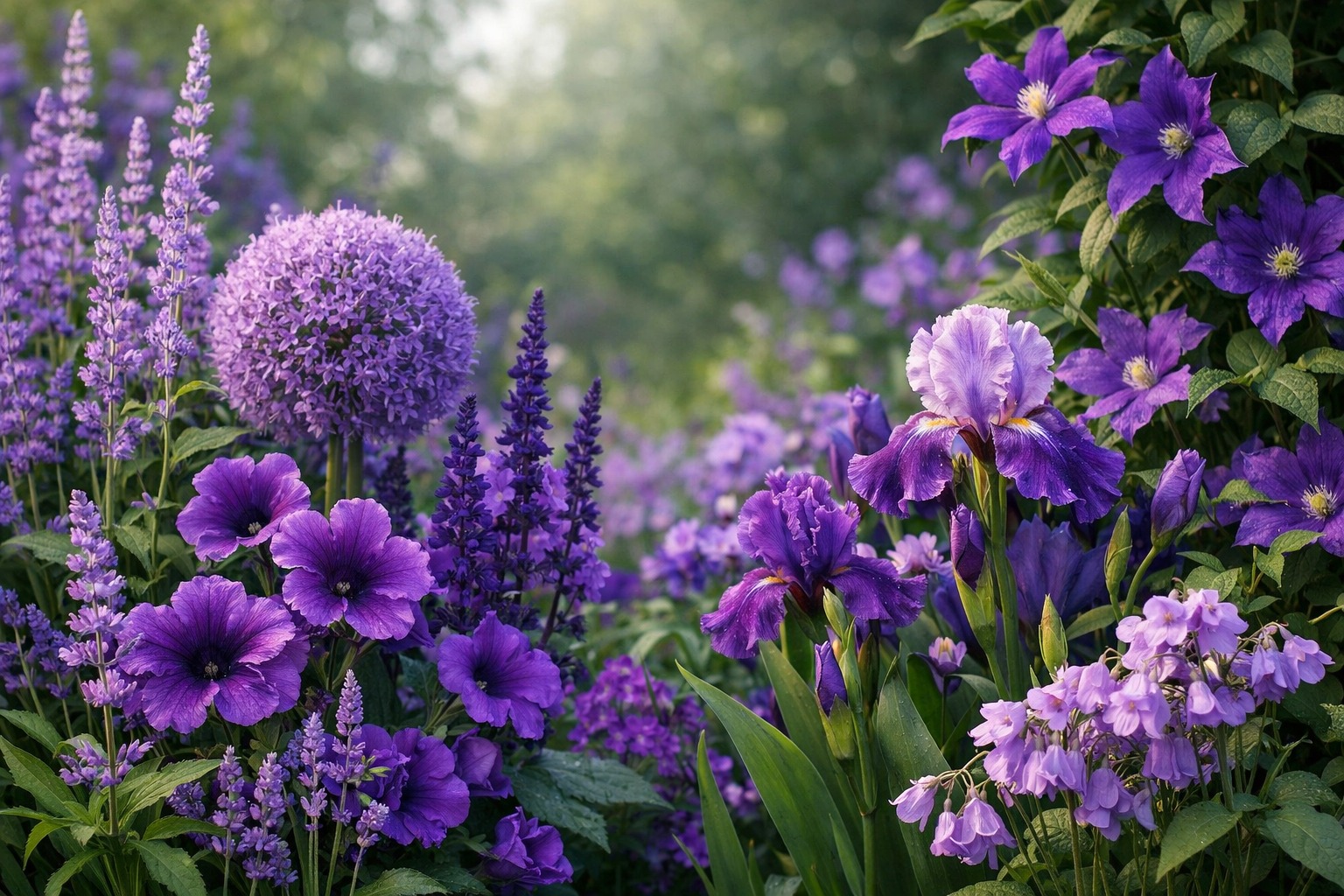
From the silvery lavender of Lavandula angustifolia to the deep violet racemes of wisteria, purple-flowering plants cover more ground, more seasons, and more growing conditions than most gardeners expect.
These 12 purple-flowering plants span spring through fall, covering zones 3-10 with options for full sun, partial shade, containers, and cutting gardens. Selections include bulbs, perennials, annuals, and vines — all widely available and worth growing.
Spring Purple Flowers
Spring delivers some of the most dramatic purple blooms of the year, often before most of the garden wakes up. These three plants hit hardest in April and May, giving structure and color when beds still look bare.
Remember it later
Planning to try this recipe soon? Save it for a quick find later!
1. Bearded Iris
Zone 3-9 Easy
Iris germanica produces ruffled purple standards and falls in mid-spring, standing 18-36 inches tall with strong vertical presence. Few spring perennials match that silhouette in a border.
- Rhizomes: Plant shallowly - the rhizome top should sit at or just above soil level, not buried deep.
- Division: Dig and divide every 3-4 years to prevent crowding and restore bloom vigor.
- Sun: Needs at least 6 hours of direct sun; blooms thin out fast in partial shade.
After bloom, cut flower stalks at the base but leave the foliage — it feeds next year's rhizomes through summer.
2. Allium
Zone 3-8 Easy
Ornamental alliums send up stiff stems topped with perfectly spherical purple flower heads in late spring, ranging from 12 inches to 4 feet depending on species. Allium giganteum hits the tall end; Allium moly stays compact.
You can browse more flowering plant options in our garden silo for bulb companions that extend the season.
- Planting depth: Bury bulbs 3 times as deep as the bulb's diameter - roughly 4-6 inches for larger types like A. giganteum.
- Naturalization: Bulbs multiply slowly and rebloom for years without lifting in zones 3-8.
- Foliage note: Leaves die back before flowers fully open - plant alliums behind low perennials to hide the yellowing.
3. Wisteria
Zone 5-9 Medium
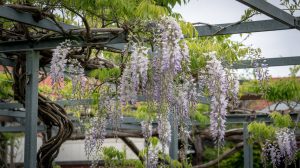
Few spring sights match cascading Wisteria sinensis or W. floribunda in full bloom - fragrant purple racemes draping over a sturdy pergola. The vine reaches 30 feet or more, so structural support is non-negotiable from day one.
- Pruning: Cut back hard twice a year - once after bloom in late spring, once in late winter - or it takes over fast.
- Bloom timing: Grafted plants bloom in 3-5 years; seed-grown plants can take a decade.
- Native option: Wisteria frutescens 'Amethyst Falls' is less aggressive and better suited to smaller gardens.
Summer Purple Flowers
Summer is when the widest range of purple plants overlaps - you can layer early, mid, and late bloomers to keep color going from June through August without a gap.
4. Lavender
Zone 5-9 Easy
Lavandula angustifolia forms compact gray-green mounds topped with long fragrant spikes in early summer, typically peaking in June and July. Growing lavender successfully comes down to two things: sharp drainage and full sun - waterlogged soil kills it faster than cold ever will.
- Harvest timing: Cut spikes just before fully open for the strongest dried fragrance.
- After-bloom cut: Trim back by one-third after flowering to keep plants compact and productive for years.
- Soil pH: Prefers neutral to slightly alkaline soil (pH 6.5-7.5); avoid acidic amended beds.
5. Salvia 'May Night'
Zone 4-8 Easy
Deep violet-mauve flower spikes emerge in late May and hold for 6-10 weeks, making Salvia nemorosa 'May Night' one of the longest-blooming perennials at this height (18-24 inches). Cut spent spikes back to the basal foliage and it often reblooms in late summer.
- Deer resistance: Aromatic foliage is reliably ignored by deer - useful in rural and suburban gardens.
- Drought tolerance: Once established (usually after the first full season), it needs almost no supplemental water.
- Pollinator draw: Bees, especially bumblebees, work these spikes constantly from morning to evening.
Salvia 'May Night' won the Perennial Plant of the Year award in 1997 — it's been a reliable garden standard for nearly three decades for good reason.
6. Clematis 'Jackmanii'
Zone 4-9 Medium
Rich violet-purple flowers 4-6 inches across appear mid-summer on Clematis 'Jackmanii', climbing a trellis or fence to 10-12 feet.
It's a Group 3 clematis, meaning you cut it back hard to 12 inches each late winter - which most gardeners find easier than managing the other pruning groups.
- Root shade: Roots need shade while the top grows in full sun - use a low plant or stone at the base.
- Support: Twines by leaf petiole, so use narrow supports like wire or wooden lattice, not wide boards.
- Bloom window: Flowers on new wood from July through September with deadheading extending the show.
7. Hydrangea macrophylla
Zone 5-9 Medium
Mophead Hydrangea macrophylla produces big round bloom clusters that shift color based on soil chemistry - purple tones appear when soil pH sits around 5.5-6.0 with available aluminum. Getting a true purple means managing both pH and aluminum together, which takes some patience.
Compared to red-flowering shrubs at the same size, hydrangeas offer more bloom mass per plant in summer.
- Soil adjustment: Lower pH with sulfur amendments and add aluminum sulfate at 1 tablespoon per gallon of water, monthly in spring.
- Sun requirement: Morning sun with afternoon shade prevents wilt and preserves bloom color longer.
- Pruning caution: Blooms appear on old wood - prune only right after flowering, never in fall or spring.
8. Phlox paniculata
Zone 4-8 Medium
Garden phlox delivers fragrant clustered purple flowers in mid to late summer, standing 24-36 inches tall with a wide, rounded flower head. 'David' is technically white, but purple cultivars like 'Blue Boy' and 'Amethyst' are widely available and follow the same care.
Unlike pink flowering perennials in this height range, phlox carries real fragrance that's noticeable several feet away.
- Mildew prevention: Space plants at least 18 inches apart and water at soil level - wet foliage in humid climates invites powdery mildew fast.
- Division schedule: Divide clumps every 3-4 years in spring to maintain vigor and airflow.
- Deadheading: Remove spent clusters to prevent self-seeding - seedlings rarely match the parent's color.
9. Verbena bonariensis
Zone 7-10 Easy
Tall, airy stems reach 36-60 inches and carry small violet-purple clusters that float above neighboring plants, giving borders a light and layered look. Verbena bonariensis self-seeds readily in zones 7 and warmer, effectively behaving like a perennial even where it's technically annual.
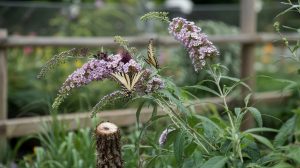
Butterflies - especially swallowtails and painted ladies - treat it as a preferred late-summer nectar stop.
- Cold hardiness: Treat as an annual in zones 4-6; start from seed indoors 8-10 weeks before last frost.
- See-through habit: Plant it in front of or among shorter plants - the open stems don't block anything.
- Self-seeding control: Deadhead a portion of plants if you want to limit spread, or let them go for a naturalized look.
10. Agapanthus
Zone 7-10 Medium
Agapanthus africanus, commonly called Lily-of-the-Nile, sends up 18-36 inch stems topped with rounded umbels of deep violet to sky-blue purple flowers in mid-summer. It's native to South Africa and performs best in climates with mild winters.
Gardeners in zone 6 who want to overwinter tender plants successfully usually move agapanthus containers into an unheated garage once frost threatens.
- Container growing: Agapanthus blooms better when slightly root-bound - resist upsizing the pot every year.
- Winter protection: In zone 7, a thick layer of straw mulch (4-6 inches) over the crown usually protects established clumps.
- Evergreen vs. deciduous: Evergreen types are less cold-hardy; deciduous varieties handle brief dips below freezing better.

Late Summer and Fall Purple Flowers
Once August arrives, options thin out for most colors - but purple has reliable players that carry through to hard frost. These plants also serve as critical nectar sources for migrating pollinators.
11. New England Aster
Zone 3-8 Easy
Symphyotrichum novae-angliae produces daisy-like violet to deep purple flowers from late August through October, just when most perennials are finished. Height varies dramatically by cultivar - 'Purple Dome' stays at 18 inches while straight species can hit 4 feet.
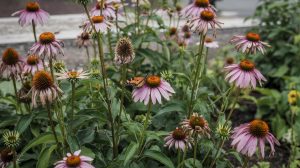
Growing coneflowers alongside asters creates a powerful late-season pollinator pairing that carries from July all the way to frost.
- Pinching: Cut stems back by half in early July to keep plants compact and prevent flopping - stop pinching after July 4.
- Dividing: Divide every 2-3 years in spring; older clumps die out in the center and bloom poorly.
- Wildlife value: A primary late-season nectar source for monarch butterflies during fall migration.
12. Petunia 'Purple Wave'
Annual Easy
Spreading 'Purple Wave' petunias cover ground and container edges fast - a single transplant can spread 2-4 feet in a season, producing deep purple trumpet flowers non-stop from spring through fall frost. They're an annual in all zones, but starting warm-season plants on the same schedule works well - both go out after last frost and run hard all summer.
Compare this to blue-flowering annuals like lobelia, and 'Purple Wave' covers far more horizontal space per plant.
- Feeding: Feed every 2 weeks with a balanced liquid fertilizer through summer - heavy bloomers need consistent nutrients.
- Heat performance: In temperatures above 90°F, blooms may thin; light deadheading and a deep soak helps recover quickly.
- Container use: Works best in wide, shallow containers where the spreading habit has room to spill over the edge.
Petunias are heavy feeders — skip fertilizing for more than 3 weeks in summer and bloom production drops noticeably within 10 days.
Purple Flower Quick Comparison
Use this table to sort plants by your priorities - whether that's zone hardiness, height, or bloom season. Every plant here performs well in full sun unless noted.
| Plant | Zone | Height | Bloom Season | Best Use |
|---|---|---|---|---|
| Bearded Iris | 3-9 | 18-36 in | Mid-spring | Border accent |
| Allium | 3-8 | 12-48 in | Late spring | Naturalized beds |
| Wisteria | 5-9 | Vine to 30 ft | Spring | Pergola, fence |
| Lavender | 5-9 | 12-24 in | Early summer | Paths, cutting |
| Salvia 'May Night' | 4-8 | 18-24 in | Late spring-summer | Border, pollinator |
| Clematis 'Jackmanii' | 4-9 | Vine 10-12 ft | Mid-summer | Trellis, fence |
| Hydrangea macrophylla | 5-9 | 3-6 ft | Summer | Shrub border |
| Garden Phlox | 4-8 | 24-36 in | Mid-late summer | Border, cutting |
| Verbena bonariensis | 7-10 | 36-60 in | Late summer | Pollinator, layering |
| Agapanthus | 7-10 | 18-36 in | Mid-summer | Container, border |
| New England Aster | 3-8 | 12-48 in | Fall | Pollinator, border |
| Petunia 'Purple Wave' | Annual | 6-12 in | Spring-fall | Container, edging |

What Purple Shades Can You Actually Get?
Purple in the garden covers a surprisingly wide spectrum - and light conditions change how each plant reads to the eye. Understanding the range helps you plan combinations that work rather than clash.
Cool, blue-purple tones (like clematis 'Jackmanii' and aster) read as receding colors that make borders feel deeper. Warm, red-purple tones (like bearded iris in many cultivars and some phlox varieties) advance visually and pop against silver or white companions.
Lavender - both the plant and the color - sits in between and bridges both groups.
- Blue-purple (violet): Salvia 'May Night', Clematis 'Jackmanii', Verbena bonariensis - cool, calm, works with yellow contrast plants.
- True purple: Allium, Petunia 'Purple Wave', New England Aster - versatile mid-range hue that pairs with almost anything.
- Red-purple (magenta): Some Phlox and Iris cultivars - pairs best with white, silver, or deep burgundy foliage.
- Lavender (pale purple): Lavandula angustifolia - the softest tone, excellent with soft pink and white companions like white-flowering perennials.
In zones 3-5, the purple palette narrows significantly — stick with allium, bearded iris, salvia, aster, and annuals like petunia, which all handle late frosts and short growing seasons reliably.
Which Purple Flower Fits Your Situation?
With 12 plants across vines, shrubs, bulbs, and annuals, narrowing down to the right one depends on what your garden actually needs right now.
- Need something for a hot, dry border in zone 5+: Salvia 'May Night' or lavender - both tolerate drought once established and need almost no summer water after year one.
- Container on a sunny deck: Petunia 'Purple Wave' or agapanthus (in zone 7-10) - both perform well in pots and deliver non-stop color through summer.
- Want to attract butterflies and bees: Verbena bonariensis for late-season butterflies, salvia for bees all summer - plant both if space allows.
- Covering a fence or pergola fast: Clematis 'Jackmanii' for controlled growth; wisteria if you want maximum drama and have time to manage a vigorous vine.
- Cold zone (3-5) garden with no tender plants: Allium, bearded iris, New England aster, and salvia all reliably overwinter without protection in zone 4.
- Long cutting garden season: Layer lavender (June), phlox (August), and aster (September-October) for three months of purple stems worth bringing inside. You can also look at growing lavender for cutting as a standalone crop.
Frequently Asked Questions
Salvia 'May Night' blooms for 6-10 weeks starting in late May and often reblooms in August after cutting back; Petunia 'Purple Wave' runs non-stop from transplant date through first frost in all zones.
Adjust soil pH to around 5.5-6.0 using sulfur amendments, then apply aluminum sulfate at 1 tablespoon per gallon of water monthly in spring — purple tones appear when both acidic pH and available aluminum are present together.
Verbena bonariensis is especially effective, attracting swallowtails and painted ladies from late July through fall; New England aster serves as a critical nectar source for monarch butterflies during September and October migration.
Plant allium bulbs at a depth equal to three times their diameter — for large species like Allium giganteum, that typically means 5-6 inches deep, while smaller types like A. moly go in at 3-4 inches.
Garden phlox (Phlox paniculata) tolerates partial shade in zones 4-8 and still blooms well with 4-5 hours of direct sun; clematis 'Jackmanii' also accepts light afternoon shade as long as roots stay cool and the top growth receives morning sun.
Pin it for your next purple flowers: 20 stunning varieties project.