Raised beds and in-ground gardens both grow food, but they solve different problems. Raised beds cost more upfront, give you instant soil control, and suit anyone dealing with poor native soil, limited space, or mobility challenges.
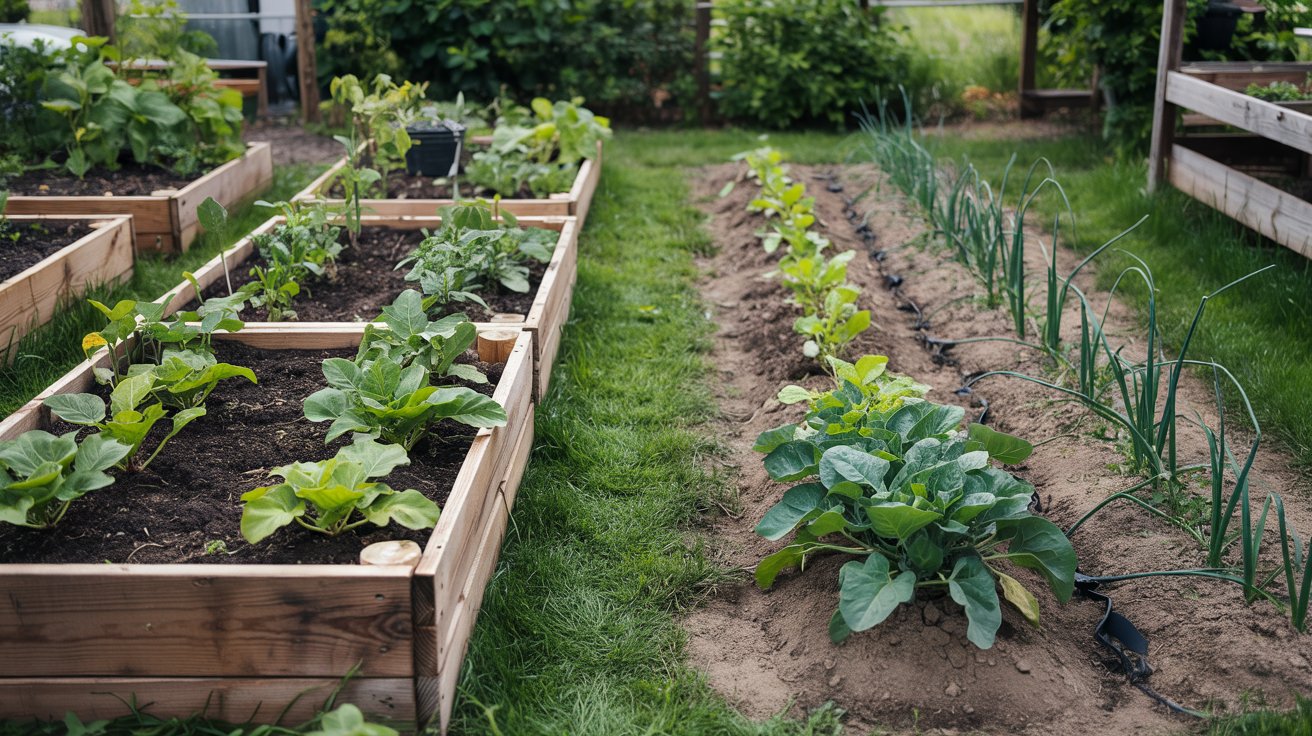
In-ground plots cost almost nothing to start, scale easily, and reward gardeners who already have workable soil.
The choice isn't about which method is "better." It's about which one fits your budget, your body, and your backyard.
We've pulled guidance from university extension programs across several states to give you a straight comparison - no fluff, no filler. Check the space efficiency breakdown if you're also weighing containers.
Raised beds offer soil control, drainage, and accessibility at a higher setup cost. In-ground gardens cost less to start but demand better native soil and more weed management.
Your situation — not a universal rule — determines the right pick.
Direct Verdict: When to Choose Each Method
Raised beds make the most sense when your native soil is rocky, compacted, or contaminated, or when you're gardening on a hard surface like a patio.
Remember it later
Planning to try this recipe soon? Save it for a quick find later!
They also win for anyone with back or knee problems - a bed built 24-30 inches tall lets you garden from a seated position without bending.
In-ground gardening earns its place when your soil is already loamy and well-draining, you want to grow large-scale crops like corn or squash, or you simply can't afford the upfront materials to build and fill a raised bed.
According to UGA Extension research, raised beds warm sooner in spring, drain better, and define planting space clearly - benefits that directly extend your growing season, particularly in community and school settings.
For renters, raised beds are usually the smarter move. You can disassemble and take them when you move.
Reviewing top-rated bed options helps you find portable designs before committing.
- Soil is yours to build from scratch — no clay, rock, or contamination problems
- Lower weed pressure compared to native soil plots
- Adjustable height makes gardening accessible for all mobility levels
- Warms faster in spring, giving you a longer effective season
- Defined edges make spacing and crop rotation easier to track
- Near-zero startup cost when native soil is already decent
- Easier to scale up — just expand the plot edges
- Naturally connected to soil moisture reserves, drying out less in heat
- Better suited for large, sprawling crops like melons, squash, or corn
- No construction skills or lumber purchases required
If you're on a slope, raised beds built with a leveled base solve erosion and runoff problems that in-ground plots can't. Use gravel or hardware cloth at the bottom to prevent waterlogging in lower beds.
Gardeners with good loam and flat ground rarely need a raised bed. But if your backyard is heavy clay or you're working on an urban lot with limited square footage, a well-built raised bed pays back its cost in better harvests within two seasons.
Costs, Setup, and Materials
Building a single 4×8-foot raised bed runs roughly $50-$300 in materials depending on the framing choice - untreated pine is cheapest, cedar lasts longer, and galvanized metal costs the most upfront.
Then you need to fill it: a 4×8 bed at 12 inches deep holds about 32 cubic feet of soil mix.
Soil alone can cost $50-$150 depending on whether you buy bulk fill or bagged mix. Learn what goes into the best fill ratios before ordering so you don't buy more than you need.
| Item | Raised Bed | In-Ground |
|---|---|---|
| Bed framing / tilling | $50–$300 | $0–$50 (tiller rental) |
| Soil / amendments | $50–$200 | $20–$80 |
| Irrigation | $20–$80 | $15–$60 |
| Mulch / weed barrier | $10–$40 | $15–$50 |
| Total (first year) | $130–$620 | $50–$240 |
As Illinois Extension notes in their raised bed infosheet, raised beds carry higher initial costs than simply digging into existing soil - but they offset that with drainage, warmth, and soil quality advantages that in-ground plots can't always match.
Ongoing costs differ too. Raised beds need 1-2 inches of compost added annually as soil settles and nutrients deplete.
In-ground plots still need amendments, but you're improving a larger volume of soil that naturally refreshes from below. You can calculate total bed costs before buying materials to avoid overspending on your first build.
Wood beds need replacing every 5–10 years depending on species. Cedar and redwood last the longest untreated. If you're deciding between materials, comparing cedar vs pressure-treated wood can save you money over the long run.
Metal beds last 20+ years with minimal maintenance, making them cheaper over time despite higher upfront costs. Comparing metal vs wood beds gives you a clear picture of total lifecycle cost before you buy.

Soil, Drainage, and Maintenance Realities
Raised beds give you complete control over your growing medium from day one. A standard fill mix of 60% topsoil, 30% compost, and 10% perlite drains well, holds nutrients, and supports most vegetable crops without any soil testing required upfront.
In-ground gardens hand that control back to nature. If your native soil is heavy clay, water pools at the root zone and rots plants.
If it's sandy, moisture drains too fast and nutrients leach out. Both problems require amendments - the difference is scale.
| Factor | Raised Bed | In-Ground |
|---|---|---|
| Soil quality control | Full — you build from scratch | Limited by native conditions |
| Drainage behavior | Excellent — gravity-assisted | Variable — depends on soil type |
| Watering frequency | More often — dries faster | Less often — deeper reserves |
| Weed pressure | Low — fresh imported soil | High — native seed bank active |
| Annual soil top-up | 1–2 inches compost needed | Light amendment per season |
Utah State University Extension confirms that raised beds simplify care, especially on small or irregular lots where tillage is impractical. Their research also highlights how raised bed design optimizes space in ways in-ground plots simply can't match.
Mulching is your best tool for reducing water loss in raised beds. A 2-inch mulch layer of straw or shredded leaves cuts evaporation significantly and suppresses weeds at the same time.
In-ground beds benefit from mulch too, but their deeper soil reservoir gives them a natural buffer against heat and drought that raised beds lack.
Roots like carrots also behave differently across both systems. Straight, long roots form much more reliably in the loose, stone-free soil of a raised bed than in compacted native ground.
Use-Case Flex: Quick Decision Guide for Your Situation
Most gardeners don't fit neatly into one category. Your situation - whether you're renting, dealing with a slope, or gardening from a wheelchair - should drive the decision more than any general recommendation.
In colder zones (4–6), raised beds warm 1–2 weeks faster than ground soil in spring, giving you a meaningful head start on cool-season crops. In hot southern zones (8–10), that warmth can work against you in summer — shade cloth or deep mulch becomes essential.
| Your Situation | Best Method | Key Reason |
|---|---|---|
| Renting your home | Raised Bed | Portable, no permanent ground change |
| Clay or rocky soil | Raised Bed | Skip soil remediation entirely |
| Mobility or accessibility needs | Raised Bed (tall) | 24–30" height allows seated gardening |
| Sloped yard | Raised Bed | Leveled base controls erosion and runoff |
| Good loam, flat ground | In-Ground | No need to pay for imported soil |
| Large-scale crop production | In-Ground | Easier to expand without building costs |
| Tight urban lot | Raised Bed | Maximizes yield per square foot |
| Tight budget, decent soil | In-Ground | Lowest cost entry point |
Illinois Extension's accessibility-focused resources note that raised bed height and design directly impact how usable a garden is for people with limited mobility. A standard 4-inch-high border means bending to the ground; a 24-inch timber frame changes the experience entirely.
Their broader guidance on accessible garden design also confirms that raised beds built at wheelchair height - roughly 28-30 inches - let seated gardeners reach across a 2-foot-wide bed without strain. Width matters as much as height.
Before building or digging, measure your available space, test your native soil texture, and confirm your water source. Crops like high-yield raised bed vegetables perform best when bed dimensions are planned around mature plant spacing, not just available lumber lengths.
Maintenance and Weather Considerations
Raised beds dry out faster than in-ground plots - that's a consistent finding across extension programs. In hot weather, raised beds may need watering every 1-2 days, while in-ground gardens typically go 3-4 days between waterings thanks to deeper soil moisture reserves.
| Factor | Raised Bed | In-Ground |
|---|---|---|
| Summer watering frequency | Every 1–2 days | Every 3–4 days |
| Spring warm-up | 1–2 weeks earlier | Standard seasonal pace |
| Frost risk | Slightly higher (elevated) | Lower — ground buffers cold |
| Drip irrigation fit | Excellent — contained footprint | Good — needs wider coverage |
| Annual soil refresh | Required — 1–2" compost | Optional — amendments as needed |
The UGA Extension notes that raised bed soil management requires deliberate planning for both irrigation and drainage - the same qualities that make beds drain well in spring also mean they lose moisture faster during dry summer stretches.
Raised beds in full sun on hot days can lose moisture within 24 hours during a heat wave. Install a drip irrigation timer if you travel or can't water daily in summer — hand watering alone is unreliable in sustained heat above 90°F.
Adding compost to your bed soil each spring also improves moisture retention over time, reducing how often you need to water as the organic matter content builds up.
Frequently Asked Questions
A basic raised bed setup runs $130–$300 in the first year; in-ground plots average $50–$120. Raised beds cost 2–3× more to start but require less weed management annually.
Raised beds are ideal for renters — they sit on top of the ground, leave no permanent changes, and can be disassembled and moved when you leave the property.
Yes — in-ground gardening works well when native soil is loamy and well-draining. Heavy clay or rocky ground benefits significantly from switching to raised beds with imported soil mix.
Place bed frames directly over the existing plot, lay cardboard to suppress weeds, then fill with a soil mix. No need to remove native soil — the cardboard smothers it within one season.
Raised beds typically yield more per square foot because you control soil quality and can plant at higher densities — spacing plants 10–20% closer than standard in-ground recommendations.
Pin it for your next raised bed vs in-ground garden project.