
Snake plants are among the most forgiving houseplants you can grow indoors. Sansevieria trifasciata - now reclassified as Dracaena trifasciata - tolerates low light, infrequent watering, and average indoor temperatures without complaint.
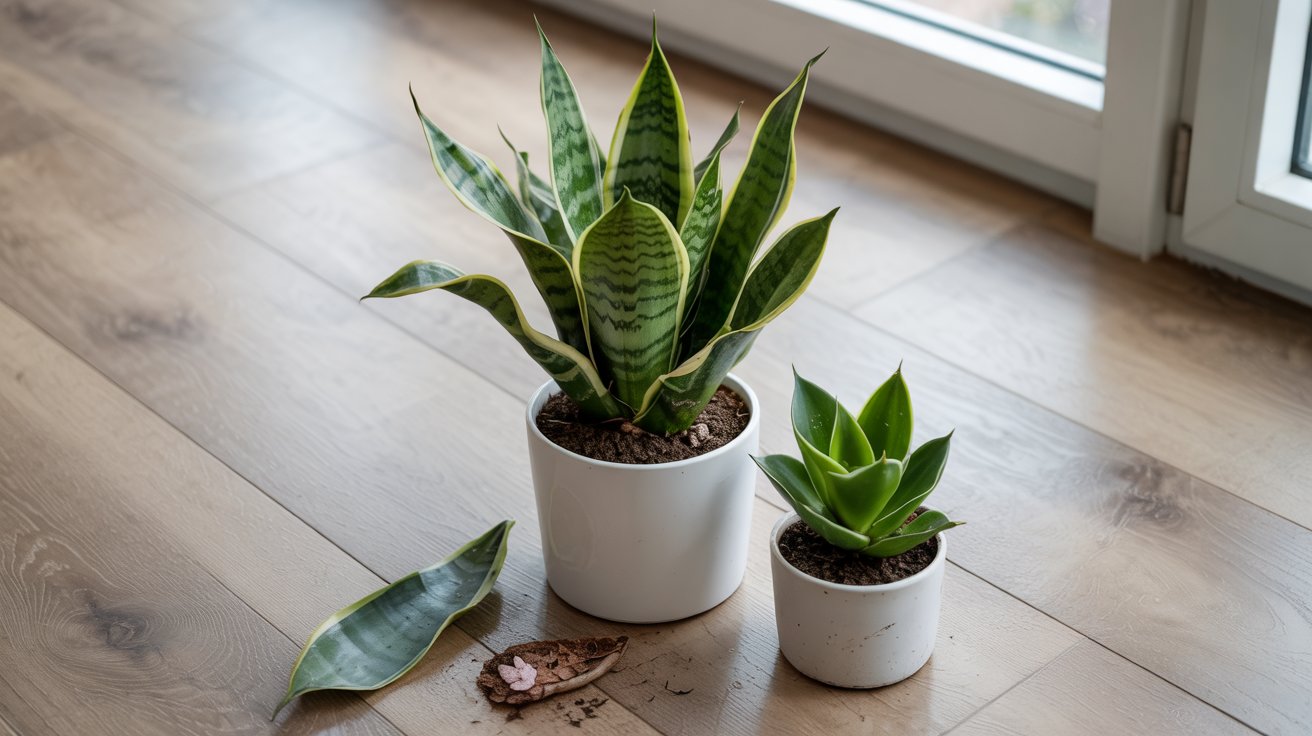
Most people kill them with kindness, specifically by watering too often.
This guide walks through every care decision you'll face: placement, watering cadence, soil type, repotting, and propagation. It also covers a travel-friendly routine, because this plant handles weeks of neglect better than most.
If you want a low-fuss plant that still looks sharp, snake plant delivers - as long as you follow a few clear rules from the start. Pair it with other low-light indoor plants to build a no-drama collection that survives busy seasons.
Snake plant (Dracaena trifasciata) is a drought-tolerant, low-light houseplant that needs well-draining soil and infrequent watering. It propagates easily by leaf cuttings or division, making it a practical starter plant for any skill level.
A striking upright succulent-like houseplant with stiff, sword-shaped leaves banded in silver-green. It tolerates low light and long dry spells, making it ideal for busy households. Propagates reliably from leaf cuttings or offsets.
Snake plant grows outdoors year-round in USDA Zones 9–11. In cooler climates, treat it as a low-effort indoor option that moves outside in summer above 50°F. According to University of Missouri Extension, it adapts well to typical indoor temperatures of 65–70°F and tolerates low humidity.
Light, Placement, and Best Positioning
Snake plant handles an unusually wide light range - from dim hallways to spots a few feet back from a south-facing window. That flexibility is genuine, not marketing, but light level does affect how fast the plant grows and how vivid the leaf variegation looks.
Remember it later
Planning to try this recipe soon? Save it for a quick find later!
In very low light, growth slows to nearly nothing and variegated cultivars may lose some color contrast. The plant survives, but don't expect new leaves more than once or twice a year in a dark corner.
The sweet spot is bright indirect light, about 3-5 feet from an east or west window. According to Iowa State University Extension, mother-in-law's tongue grows in almost any lighting environment, but moderate to warm conditions with indirect light encourage the best results.
| Light Level | Location Example | Growth Rate | Action |
|---|---|---|---|
| Low (under 50 fc) | North window, dim hallway | Very slow | Water even less often; check for etiolation |
| Medium (50–200 fc) | East window, 4 ft back | Moderate | Standard care routine applies |
| Bright indirect (200–500 fc) | West/south window, diffused | Fastest indoor growth | Water slightly more in summer |
| Direct sun | Unshaded south window | Can scorch | Filter with sheer curtain or move back 2 ft |
Direct sun through glass, especially in summer afternoon hours, can scorch the leaf edges and leave bleached or brown streaks that don't recover. A sheer curtain or a 2-foot step back from the glass fixes the problem instantly.
Rotate the pot a quarter-turn every 4-6 weeks so all sides receive even light exposure. Plants parked against a wall indefinitely lean toward the light source, which can topple taller specimens.
For rooms with zero natural light, a standard LED grow light on 12-hour cycles keeps the plant healthy at about 10-12 inches above the foliage. This works well in basements, interior offices, or bathrooms without windows.
The University of Illinois Extension notes that snake plant benefits from indirect light but is sensitive to harsh, direct sun that scorches leaves. If leaf tips are bleaching pale yellow-white, direct sun is the most likely cause — move the plant back before adjusting watering.
Avoid placing snake plant near cold drafts, air-conditioning vents, or exterior doors that open in winter. Temperatures below 50°F slow growth significantly, and a hard freeze will kill the plant outright.
Watering, Soil, and Feeding for Health
Overwatering is the single most common reason snake plants fail. The roots sit in wet soil and rot quickly, often before any visible symptoms appear above the soil line.
The rule is simple: let the soil dry completely between waterings. Press your finger 2 inches into the soil - if you feel any moisture at all, wait.
In summer, that typically means watering every 2-3 weeks. In winter, stretch that to every 4-6 weeks.
| Season | Frequency | Notes |
|---|---|---|
| Spring / Summer | Every 2–3 weeks | Water thoroughly; let excess drain |
| Fall | Every 3–4 weeks | Reduce as light drops |
| Winter | Every 4–6 weeks | Sparse watering prevents leaf shriveling |
When you do water, pour slowly until it drains freely from the bottom. Empty the saucer within 30 minutes - standing water under the pot defeats the purpose of drainage holes.
The Illinois Extension snake plant guide confirms that dry soil between waterings is essential, and that sparse winter watering prevents shriveled leaves.
Soil choice matters as much as cadence. Use a well-draining cactus or succulent mix, or blend standard potting soil with 30-40% perlite.
Heavy, moisture-retaining mixes extend wet periods at the root zone and increase rot risk dramatically.
Pot material affects drying speed. Terracotta pots wick moisture from the soil and dry out 30-50% faster than glazed ceramic or plastic.
For beginners prone to overwatering, terracotta is a practical buffer.
According to University of Missouri Extension, foliage plants like snake plant should never sit in soggy soil. If leaves turn soft and yellow at the base, assume root rot and unpot immediately to inspect the roots.
Feeding is minimal. Apply a balanced liquid fertilizer at half strength once a month during spring and summer only.
Skip fertilizer entirely in fall and winter - feeding a dormant plant encourages weak, floppy growth and adds salts to soil that can burn roots.
Signs of underwatering look different from overwatering: leaves wrinkle slightly along the edges and feel less firm. A good soak restores them within a day or two.
You can also compare these drought signals with aloe care, since both plants show similar stress symptoms under dry conditions.

Propagation: Leaf Cuttings, Division, and Rapid Expansion
Snake plant propagates reliably from leaf cuttings or by dividing offsets at the base. Both methods are beginner-friendly, though each has specific steps that affect success rate.
Division is the fastest method. When pups - the small offshoots growing around the base - reach at least 4 inches tall, you can separate them from the mother plant with a clean knife and pot them individually.
They root quickly because they already have their own root system.
Mark the bottom of each cutting with a small notch or pen mark before you cut. Placing a cutting upside down is the most common reason propagation fails — roots won't emerge from the top end. The University of Maine houseplant guide highlights this orientation rule as critical for successful leaf cutting propagation.
Water propagation lets you watch root development, which is helpful for first-timers. Soil propagation produces roots that are already adapted to dry conditions, so the transition to normal care is smoother.
Expect the process to take patience. New pups on leaf cuttings may take 8-12 weeks to appear even after roots form.
UMaine's propagation manual notes that leaf-cutting and division methods vary by cultivar, which matters here for one specific reason.
Variegated cultivars like 'Laurentii' — with their yellow-edged leaves — do NOT pass the variegation to leaf cuttings. You'll get a plain green plant. To preserve the yellow margins, propagate variegated snake plants only by division of offsets, not by leaf cuttings.
For busy households wanting to expand a collection quickly, division in spring is the most efficient route. One healthy mother plant can reward patient propagators with several new plants each season without any special tools or rooting hormones.
Travel-Friendly Care and Pre-Trip Checklist
Snake plant's drought tolerance makes it genuinely suited for busy people and frequent travelers. Before a trip of 1-3 weeks, a few simple actions set the plant up to handle the gap without issues.
Water thoroughly the day before you leave - not earlier. Move the plant away from any direct sun to slow soil drying.
That single adjustment can extend safe dry time by 3-5 days. According to the Illinois Extension care guide, proper watering intervals are the primary factor in keeping snake plant healthy during extended gaps.
The Missouri Extension foliage guide confirms that average indoor temperatures of 65–70°F and low humidity are ideal holding conditions. If someone checks on your home, ask them specifically NOT to water the snake plant — well-meaning overwatering does far more damage than benign neglect.
- Water fully before leaving: Soak the soil the day of departure; let it drain completely before closing up the house.
- Reduce light exposure: Move 2-3 feet back from windows to slow drying without stressing the plant.
- Skip plant-sitter watering: For trips under 3 weeks, the plant needs nothing - leave a note to that effect.
- Check temperature range: Make sure indoor temps won't drop below 50°F while you're away, especially in shoulder seasons.
Troubleshooting and Maintenance
Most snake plant problems trace back to water and light. Fixing the root cause matters more than treating visible symptoms.
Peace lily watering habits differ sharply - peace lilies droop when thirsty, while snake plants show almost no signal before root rot sets in.
Check the soil before assuming any symptom is drought-related. Overwatered plants show soft, mushy leaf bases and a faint sour smell from the soil.
Underwatered plants look wrinkled and feel firm but slightly papery. Both look superficially similar when leaves begin to yellow - the soil test clarifies which problem you're dealing with.
- Test soil moisture with a finger 2 inches deep before every watering decision.
- Use a pot with drainage holes and empty the saucer within 30 minutes of watering.
- Repot every 2-3 years into the next pot size up to refresh compacted soil.
- Wipe leaves with a damp cloth every few months to remove dust that blocks light absorption.
- Watering on a fixed schedule regardless of soil dryness - this causes most failures.
- Using heavy, moisture-retaining potting mix without perlite amendment.
- Fertilizing in fall and winter when the plant is in a rest period.
- Ignoring brown, mushy base leaves - this signals active root rot that spreads fast.
The Illinois Extension guide confirms overwatering as the primary cause of snake plant failure, while Missouri Extension underscores that root health depends on soil drainage above all else.
For pest issues, mealybugs and spider mites are occasional visitors - wipe them off with a 70% isopropyl alcohol swab and repeat weekly until clear.
If your plant leans noticeably to one side, it's almost always a light issue, not a structural one. Rotate the pot a quarter-turn and it will correct itself over the next 3-4 weeks.
Compare this slow, self-correcting nature to fiddle leaf fig's light sensitivity, which reacts far more dramatically to placement changes. You can also browse our full indoor plant care guides for drip-dry and drought-tolerant species that work well alongside snake plants.
Frequently Asked Questions
Yes. Snake plant is toxic to cats and dogs, causing nausea, vomiting, and diarrhea if ingested. Keep it out of reach of pets that chew on foliage.
Water every 2–3 weeks in summer and every 4–6 weeks in winter. Always check that the top 2 inches of soil are completely dry first.
Yes, but growth slows dramatically and variegated cultivars lose color contrast. A north window or dim interior works for survival, not for fast growth.
A cactus or succulent mix works best, or blend standard potting soil with 30–40% perlite. Heavy, moisture-retaining soils dramatically increase root rot risk.
Cut a leaf into 3–4 inch sections, mark the bottom end, and root in water or moist perlite. Roots typically appear in 4–6 weeks at 65–70°F.
Pin it for your next how to grow and care for snake plant project.