Lavender looks simple from a distance - silver-green mounds, purple spikes, that unmistakable scent. Up close, the differences between species matter enormously.
A plant that sails through a Michigan winter can rot in a Charleston summer, and the variety your neighbor grows in coastal California may never survive your Zone 6 clay bed.
Choosing the right lavender starts with understanding species and zone. This guide covers 12 widely available types - English lavenders, lavandins, Spanish, French, and a few specialty picks - with honest notes on where each one performs and where it fails.
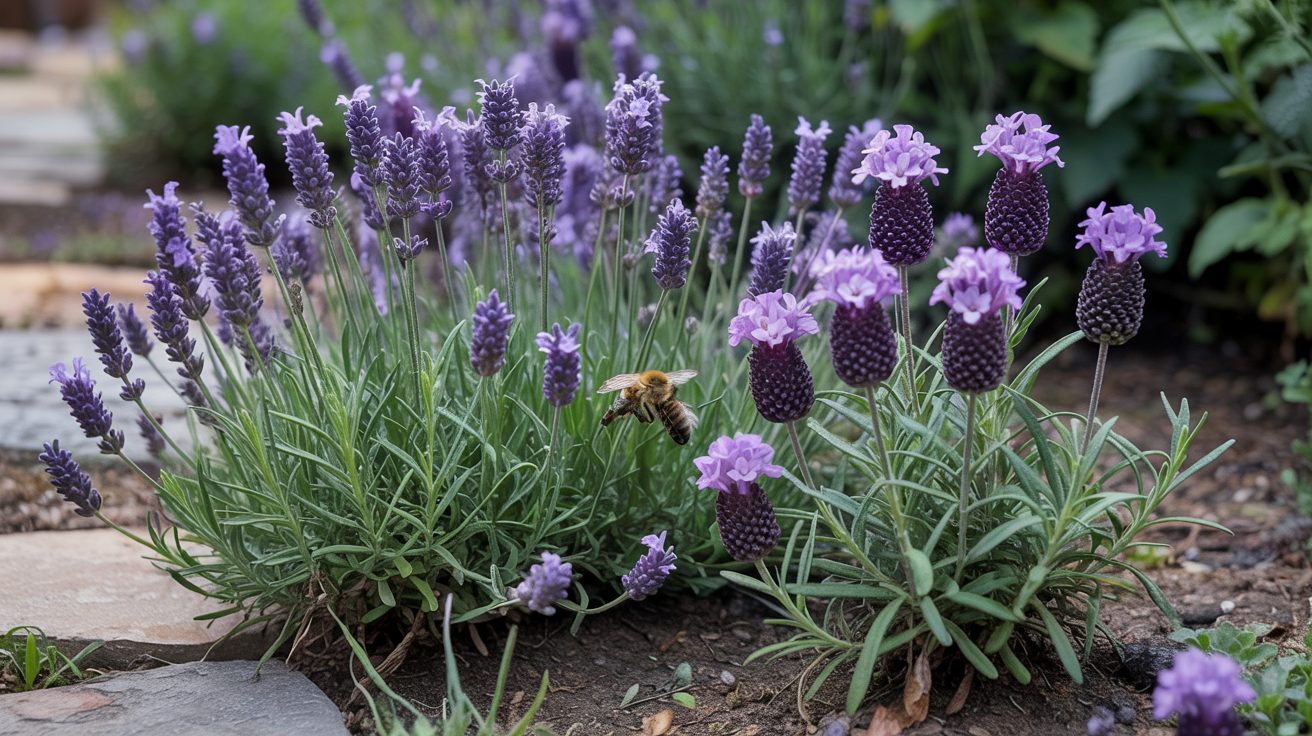
Lavender falls into four main species groups: English lavender (Lavandula angustifolia), lavandin hybrids (L. x intermedia), Spanish/French lavender (L. stoechas), and tender species for warm climates. Cold hardiness, humidity tolerance, and fragrance intensity differ significantly across these groups.
English Lavenders: Cold-Hardy and Compact
Lavandula angustifolia is the species most North American gardeners picture when they think of lavender. It handles Zone 5 winters reliably and stays compact enough for formal borders alongside roses and boxwood.
Remember it later
Planning to try this recipe soon? Save it for a quick find later!
The tradeoff is shorter flower stems and a narrower bloom window than lavandin hybrids.
Lavandula angustifolia 'Hidcote'
Zone 5-8 Easy
'Hidcote' is the go-to for formal edging. Its deep violet spikes sit tight on a dense, rounded mound that stays about 12-18 inches tall without much intervention.
- Habit: Exceptionally compact; rarely sprawls even without pruning.
- Best use: Low hedges, knot gardens, dried flower bundles where rich color matters.
- Pruning response: Bounces back strongly after a hard cut in late summer - cut to within an inch of woody stems.
Lavandula angustifolia 'Munstead'
Zone 5-8 Easy
Where 'Hidcote' grows stiff and formal, 'Munstead' is slightly looser and a few inches taller, reaching 18-24 inches. It has gray-green leaves with strong fragrance and will rebloom after cutting in mild winters.
Both 'Hidcote' and 'Munstead' are widely available at big-box stores and local nurseries across North America.
- Fragrance: Sweet, classic lavender scent - among the strongest in the angustifolia group.
- Rebloom: Cut spent stems back by a third in July; expect a second flush by September in Zones 6-7.
- Spacing: Allow 18 inches between plants for good air circulation.
Lavandula angustifolia 'Royal Velvet'
Zone 5-8 Medium
'Royal Velvet' produces noticeably longer flower stems than most English lavenders - useful when you want to cut bouquets rather than just deadhead. Stems can reach 18 inches, which is competitive with some lavandin hybrids, while the plant stays under 24 inches overall.
- Cut-flower quality: Long stems with dense, deeply colored spikes; dry quickly and hold color well.
- Fragrance intensity: Strong; higher linalool content than 'Hidcote.'
- Compact base: Stays tidy without aggressive pruning, unlike larger lavandins.
Lavandula angustifolia 'Nana Alba'
Zone 5-8 Easy
The white-flowered member of the English lavender group, 'Nana Alba' tops out at 10-16 inches. White lavender blends well with silver-foliaged plants like artemisia and stays clean-looking against dark hedges or mulch.
- Color: Creamy white spikes - softer than stark-white flowers, so it pairs easily in cottage borders.
- Size advantage: Smallest English lavender here; ideal for containers or front-of-border work in tight spaces.
- Pruning: Same approach as other angustifolias - cut after first bloom to encourage tidy regrowth.
All English lavenders share one weakness: wet winter soil kills them faster than cold does. Plant on a slight slope or in raised beds whenever drainage is questionable.
Lavandin Hybrids: Bigger, Bolder, More Fragrant
Lavandula x intermedia hybrids - commonly called lavandins - are crosses between L. angustifolia and L. latifolia. They grow larger, bloom later, and produce more essential oil per stem than English types.
Most garden plants labeled simply "lavender" at big-box stores in Zones 6-9 are lavandins.
Lavandula x intermedia 'Grosso'
Zone 6-9 Medium
Commercial lavender farms in Provence and the Pacific Northwest grow 'Grosso' for oil production - it yields more fragrance per acre than any other cultivar widely available to home gardeners.
The plants grow vigorously to 24-36 inches and need wider spacing (3 feet) to stay healthy.
- Oil content: Highest among home-garden cultivars; sachets and bundles stay fragrant for 2-3 years.
- Stems: Long and sturdy, ideal for drying - harvest when one-third of buds on a spike have opened.
- Annual shaping: Cut back by one-third every fall; never cut into brown woody stems or the plant won't recover.
Lavandula x intermedia 'Provence'
Zone 6-9 Medium
'Provence' is the tallest lavandin in this list, reaching 30-40 inches in good drainage and full sun. Its silvery foliage is more pronounced than 'Grosso,' and it handles heat better than any English lavender.
In Zone 9 summers, it outlasts L. angustifolia by months.
- Heat tolerance: Performs in USDA Zone 9 heat where English types turn woody and die back.
- Bloom season: Flowers July into September - one of the longest bloom windows in the lavandin group.
- Cold limit: Not reliable below Zone 6; loses hardiness that English lavenders handle.
Lavandula x intermedia 'Phenomenal'
Zone 5-9 Easy
The widest hardiness range in the lavandin group - Zone 5 through 9 - earns 'Phenomenal' its name among humidity-prone gardeners in the Southeast. It resists the crown rot and stem dieback that kills most lavandins east of the Appalachians.
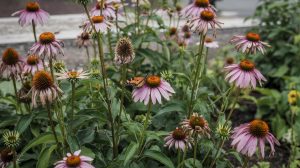
Growing coneflowers alongside 'Phenomenal' gives a long-blooming, drought-tolerant pairing for Zones 5-7 borders.
- Humidity resistance: The strongest of any lavandin; tested extensively in Virginia and North Carolina trial gardens.
- Rebloom: Frequently sends up a second flush - cut stems by one-third after the first bloom peak.
- Habit: Fuller and rounder than most lavandins, making it less leggy at the base.
Lavandula x intermedia 'Ellagance Purple'
Zone 6-9 Easy
'Ellagance Purple' combines lavandin vigor with an English-like sweetness in its scent. It was bred partly for container performance and grows well in large pots, unlike most lavandins.
Stems reach 24-36 inches with large purple spikes that stand tall for cutting without staking.
- Fragrance: Sweeter than 'Grosso' or 'Provence' - closer to an English lavender in character.
- Container use: Handles pot confinement better than most lavandins when given excellent drainage and a container at least 14 inches wide.
- Availability: One of the most commonly stocked lavandins at garden centers across North America.
Lavandins are sterile hybrids — they won't self-seed. Propagate by stem cuttings in late spring if you want more plants. Seeds sold as lavandin cultivars are often mislabeled.
Spanish, French, and Specialty Lavenders
Beyond the English-lavandin axis, there are species that suit specific climates - coastal gardens, frost-free zones, and containers in cold climates where they're brought in each fall. These four are notably different from each other, not just interchangeable tender options.
Lavandula stoechas (Spanish Lavender)
Zone 7-10 Medium
Lavandula stoechas is immediately recognizable by its "rabbit-ear" bracts - purple flags standing upright above each flower head. It blooms several weeks earlier than English lavenders, often starting in April in Zone 8.
Coastal gardeners from the Carolinas to the Pacific Northwest value it for salt spray tolerance few other lavenders match.
- Bloom time: April to June in Zones 8-9 - earlier than any other lavender in this list.
- Coastal use: Handles salt-laden wind and coastal humidity better than lavandins.
- Cold limit: Dies below about 10°F; treat as an annual north of Zone 7 or overwinter in a cool garage.
Lavandula dentata (Tooth-Leaved Lavender)
Zone 8-10 Easy
Lavandula dentata is the most shade-tolerant lavender available - it takes light afternoon shade without sulking, which no other species here will reliably do. Its finely serrated leaf margins give it a textured look quite different from the smooth gray leaves of English types.
In Zones 8-10, it's nearly evergreen and blooms most of the year.
- Shade tolerance: Handles up to 3 hours of afternoon shade - useful under open canopy trees in hot climates.
- Growth habit: Sprawling and looser than English types; space 24-30 inches apart and trim annually.
- Container use: Popular as a patio plant in cold climates - bring in before first frost and give a sunny window.
In Zones 5-7, grow L. dentata, L. multifida, and L. stoechas as annuals or container plants. They won't survive outdoor winters but perform beautifully from spring transplant through first hard frost.
Lavandula multifida (Fernleaf Lavender)
Zone 8-11 Medium
Fernleaf lavender has deeply divided, fern-like leaves unlike anything else in this list - it reads more as a foliage plant from a distance, with lavender-blue spikes rising above the feathery mound. It reseeds freely in warm sites and can pop up between pavers or along gravel paths.
At 12-18 inches, it suits compact drought-tolerant arrangements well.
- Unique texture: Finely divided leaves add contrast in borders dominated by broader foliage plants.
- Reseeding: Sets viable seed easily in Zones 9-11; deadhead to prevent unwanted spread.
- Growing season: Blooms nearly year-round in frost-free zones; use as a summer annual elsewhere.
Lavandula lanata (Woolly Lavender)
Zone 7-9 Medium
Lavandula lanata's dense white wool coating makes it the most silvery plant in the lavender genus - the foliage alone earns its garden spot. That wool isn't decorative; it reflects intense sun and reduces leaf scorch in hot, dry sites where other lavenders bleach out.
Plants in full sun outperform those in any shade by a wide margin.
- Drought tolerance: Once established (about 1 full season), it needs water only once every 2-3 weeks in summer.
- Leaf texture: Thick white wool distinguishes it visually from every other lavender; excellent foliage contrast plant.
- Cold hardiness: Reliable in Zone 7 with good drainage; iffy in Zone 6 even with mulch protection.
Side-by-Side Comparison
Choosing between lavender types often comes down to three numbers: zone hardiness, final height, and bloom time. This table puts all 12 varieties in one place for quick comparison.
| Variety | Zone | Height | Best Use |
|---|---|---|---|
| 'Hidcote' | 5-8 | 12-18 in | Formal edging, dried flowers |
| 'Munstead' | 5-8 | 18-24 in | Cottage borders, rebloom |
| 'Royal Velvet' | 5-8 | 18-24 in | Cut flowers, bouquets |
| 'Nana Alba' | 5-8 | 10-16 in | Containers, white borders |
| 'Grosso' | 6-9 | 24-36 in | Oil, sachets, large hedges |
| 'Provence' | 6-9 | 30-40 in | Heat tolerance, long bloom |
| 'Phenomenal' | 5-9 | 24-30 in | Humid climates, rebloom |
| 'Ellagance Purple' | 6-9 | 24-36 in | Containers, cutting |
| L. stoechas | 7-10 | 12-20 in | Coastal gardens, early bloom |
| L. dentata | 8-10 | 18-30 in | Shade tolerance, pots |
| L. multifida | 8-11 | 12-18 in | Foliage texture, warm climates |
| L. lanata | 7-9 | 18-24 in | Dry sites, silver foliage |
Getting Lavender to Actually Survive: Soil and Drainage
More lavender dies from soil problems than from cold. Drainage is non-negotiable across every species here.
Even 'Phenomenal' - bred for stress tolerance - will rot in compacted clay that holds water through winter.
Before planting, it's worth knowing what soil pH does to root health - lavender wants 6.5 to 7.5, slightly alkaline. Below 6.0, leaves yellow and growth stalls.
- Clay soil: Amend with coarse grit (30% by volume) or build a raised bed at least 10 inches above native grade.
- Sandy or gravelly soil: Ideal as-is - add no compost, which retains too much moisture around the crown.
- Raised beds: The single best fix for poor drainage; even 6-8 inches of elevation dramatically reduces crown rot risk.
- Mulch: Use pea gravel or decomposed granite, not bark - organic mulch holds moisture against the crown through winter.
- pH adjustment: Add ground limestone at 5 lbs per 100 sq ft to raise pH in acidic beds before planting.
If water pools around your lavender bed for more than 30 minutes after rain, the plants will decline within 1-2 seasons regardless of variety. Fix drainage first, then choose your cultivar.
Spacing also affects air circulation, which matters most in humid climates. Lavandins need 3 feet between plants; English lavenders can go 18-24 inches apart.
Crowded plants trap moisture between stems and invite fungal dieback from the center out.
Which Lavender Fits Your Situation?
The comparison table handles zones and sizes, but the right pick often comes down to a specific garden problem. Use these scenarios to narrow your shortlist.
The options below reference warm-climate garden plants broadly but apply specifically to lavender selection.
- You're in Zone 5 and want fragrance: Start with 'Munstead' or 'Hidcote' - both are proven at -20°F with good drainage. For more fragrance, 'Phenomenal' is the lavandin that survives Zone 5 winters.
- You live in the humid Southeast (Zones 7-8): 'Phenomenal' is the standout choice. L. stoechas works for coastal areas with early spring color, but skip most English lavenders - they rot in summer humidity.
- You want to cut and dry flowers: 'Grosso' for maximum fragrance, 'Royal Velvet' if you want English-style scent with longer stems, 'Ellagance Purple' for container-to-vase flexibility.
- You garden in a container on a balcony: 'Nana Alba' or 'Ellagance Purple' in a 14-inch pot with drainage holes; bring inside when temps drop below 10°F for English types or 20°F for lavandins.
- You're in Zone 9-10 with coastal exposure: L. stoechas handles salt spray and blooms earliest. L. dentata works for partially shaded spots under open canopy.
- You want a foliage plant, not just flowers: L. lanata for silver-white woolly texture, L. multifida for delicate fern-like leaves - both earn their keep even between bloom cycles.
Frequently Asked Questions
The four main groups are Lavandula angustifolia (English lavender, hardy to Zone 5), L. x intermedia lavandin hybrids (Zones 5-9 depending on cultivar), L. stoechas (Spanish lavender, Zones 7-10), and tender species like L. dentata and L. multifida suited to Zones 8-11.
English lavender (L. angustifolia) is hardier — reliable to Zone 5 — while French/Spanish L. stoechas blooms earlier and tolerates coastal conditions but dies below about 10°F. Neither is universally better; zone and use case determine which performs.
'Phenomenal' (L. x intermedia) is the most humidity-resistant lavender available, tested successfully in Virginia and North Carolina trial gardens across Zones 5-9. Most other lavandins and English lavenders develop crown rot in consistently humid Southeast summers.
English lavenders need 18-24 inches between plants; lavandin hybrids like 'Grosso' and 'Provence' need at least 36 inches. Tighter spacing traps humidity between stems and accelerates fungal dieback, especially in Zones 6-8.
English lavenders like 'Nana Alba' and 'Hidcote' overwinter in containers down to Zone 5 if kept in a cool but frost-free space; tender types like L. dentata need to come indoors before temps hit 25°F and require a south-facing window to survive winter.
Pin it for your next types of lavender: best varieties and growing tips project.