Succulents occupy more windowsills, rock gardens, and container arrangements than almost any other plant group - yet a surprising number of them slowly fail from the same two mistakes: overwatering and wrong light.
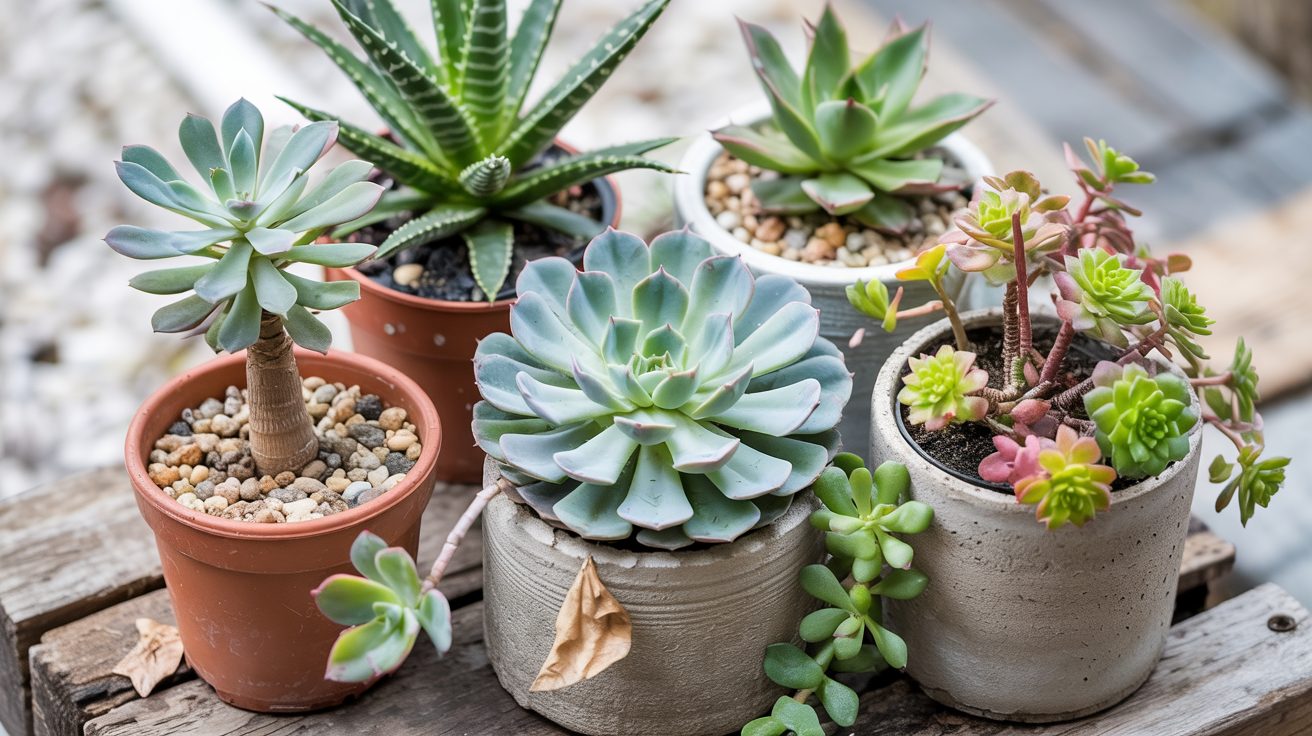
Choosing the right variety for your conditions matters far more than any care trick.
This guide covers 12 reliably performing succulents across indoor and outdoor settings, organized by hardiness and use case. From frost-proof Sempervivum in zone 3 to tender indoor Haworthia, each entry includes zone, size, and specific growing notes.
How to Read These Picks?
Every variety below is widely available at nurseries or online. We've sorted them into two groups: cold-hardy outdoor succulents (zone 7 and below) and tender varieties better suited to containers or warm climates.
Remember it later
Planning to try this recipe soon? Save it for a quick find later!
If you're pairing succulents with other low-water garden plants in a mixed border, knowing the zone rating upfront saves a lot of replanting grief.
- Zone rating: The coldest USDA zone where the plant survives winter in the ground without protection.
- Indoor note: Tender varieties (zone 9-11) grow perfectly well indoors in colder zones when placed in a south-facing window with 5+ hours of direct light.
- Height: Mature size in typical container or garden conditions, not greenhouse-pushed specimens.
Fast-draining soil is non-negotiable. Mix standard potting soil 50/50 with coarse perlite or poultry grit for containers. In-ground beds need slope or raised elevation to prevent waterlogging.
Cold-Hardy Succulents for Outdoor Gardens
These varieties survive hard winters in the ground, making them genuinely low-effort once established. Most tolerate zone 3-7 without mulching or digging.
Sedum spurium 'Dragon's Blood'
Zone 3–9 Easy
Sedum spurium 'Dragon's Blood' turns deep crimson in full sun, staying near-evergreen in mild winters and spreading steadily to fill 12-18 inches per plant. It works as a living mulch between stepping stones or along dry slopes.
- Spread: Covers ground fast - expect 12 inches of spread in one season under good sun.
- Color shift: Foliage intensifies to near-burgundy by late summer; pink flowers appear August-September.
- Drought: Once rooted (4-6 weeks), water only during prolonged dry spells of 3+ weeks.
Sempervivum tectorum (Hens and Chicks)
Zone 3–8 Easy
Sempervivum tectorum is the standard by which outdoor cold-hardiness is measured in succulents. The central "hen" rosette steadily produces "chick" offsets, which you can separate and replant every spring.
- Frost tolerance: Survives temps well below 0°F - no protection needed in zones 3-5.
- After bloom: The central hen dies after flowering; remove it and let chicks fill the gap.
- Soil: Tolerates brief waterlogging when dormant in winter better than most succulents.
Sempervivum and Dragon's Blood Sedum are two of the few succulents that perform reliably in zones 3–5 without container overwintering. Pair them in rock gardens for year-round structure.
Opuntia (Prickly Pear) - Smaller Cultivars
Zone 5–10 Easy
Smaller garden cultivars of Opuntia bring something the other cold-hardy options don't: edible fruit and flowers that attract pollinators. They handle light frost and thrive in arid, wildlife-friendly landscapes.
- Fruit: Pads fruit reliably in zones 7+ with enough summer heat; edible raw or made into jelly.
- Handling: Use tongs and thick leather gloves - the small glochid spines detach and embed in skin easily.
- Size: Compact cultivars stay 1-3 feet tall and wide, manageable in a raised bed or xeriscape border.
Agave americana - Dwarf Forms
Zone 7–11 Medium
Dwarf and variegated forms of Agave americana give you architectural structure without a 6-foot footprint. The single-bloom lifecycle means each rosette dies after flowering - but it may take 15-30 years to get there, and it produces offsets beforehand.
- Spines: Marginal teeth and terminal spines are sharp enough to injure; plant away from paths and play areas.
- Light frost: Established plants in zone 7 handle brief dips to 15°F when the soil is dry.
- Size advantage: 'Marginata' and similar dwarf forms stay 2-3 feet tall versus the species' 6+ feet.
Tender Succulents for Containers and Warm Climates
Zones 8-11 growers can keep these outdoors year-round. Everywhere else, grow them in containers and bring them in before first frost - typically when overnight temps drop below 35°F.
Many of the best-looking arrangement plants fall here. Unlike cold-hardy options where you prioritize winter performance, tender succulents reward you with more dramatic color and form.
Echeveria 'Lola'
Zone 8–11 Easy
Echeveria 'Lola' produces tight, powdery rosettes in pastel pink and lavender that resist the stretching (etiolation) common to rosette succulents in low light - as long as it gets 6+ hours of bright light daily.
- Frost limit: Tolerates brief dips to ~20°F if soil is completely dry; any moisture during a freeze is fatal.
- Offsets: Produces pups at the base that you can separate and pot up in spring.
- Size: Stays compact at 3-6 inches - excellent in shallow clay dishes or hypertufa troughs.
Crassula ovata (Jade Plant)
Zone 10–11 Easy
Few succulents develop into a true woody shrub the way Crassula ovata does. Indoors in a sunny window, a jade plant can reach 3-4 feet over several years and become a living focal point in a room.
- Light warning: In less than 4 hours of direct sun, stems grow long and weak within weeks - move the pot before this starts.
- Watering: Water thoroughly, then wait until the top 2 inches of soil are bone dry - typically every 10-14 days indoors in winter.
- Longevity: With repotting every 2-3 years, a jade plant can outlive its owner.
Graptopetalum paraguayense (Ghost Plant)
Zone 8–11 Easy
The pale, scalloped rosettes of Graptopetalum paraguayense trail naturally over pot edges, making this the best pick for hanging baskets among all the varieties here. Stems can reach 12+ inches and root wherever they touch soil.
- Leggy in low light: Stems elongate fast without strong sun - position in a south or west window minimum.
- Root rot resistance: More forgiving of occasional overwatering than most rosette succulents.
- Propagation: Leaves root effortlessly - lay fallen leaves on dry soil and mist lightly once a week.
Aeonium arboreum 'Zwartkop' (Black Rose Aeonium)
Zone 9–11 Medium
No other succulent on this list matches the near-black, wine-dark rosettes of Aeonium arboreum 'Zwartkop' on upright, branching stems. At 2-4 feet tall, it reads as a statement plant rather than a filler.
- Summer dormancy: Unlike most succulents, it slows in hot, dry summers and resumes growth in fall - water less July through August even if it looks stressed.
- Best sun: Morning sun with afternoon shade in zones 9-10 prevents scorching while keeping color dark.
- Tender: More frost-sensitive than hens-and-chicks; protect below 28°F.
Aloe vera
Zone 9–11 Easy
Aloe vera fills a dual role most succulents don't: ornamental plant and practical first-aid tool. The gel inside the leaves is genuinely useful on minor burns.
Full aloe vera care covers propagation and harvesting in detail.
- Cold snap: Handles brief temps to ~25°F when soil is dry; a hard freeze collapses the leaves permanently.
- Pups: Produces offsets freely - a mature plant fills a 12-inch pot with offsets within 2 years.
- Indoor watering: Once every 3 weeks in winter; every 10 days in summer under direct sun.
Kalanchoe tomentosa (Panda Plant)
Zone 9–11 Easy
The dense, silver-gray fuzz covering Kalanchoe tomentosa leaves reduces moisture loss and physically deters some pest insects - an unusual built-in defense. Brown marginal spots complete the panda coloring.
- Touch caution: The trichomes (hairs) can cause mild skin irritation in sensitive individuals; handle with light gloves when repotting.
- Light: Morning sun with bright indirect afternoon light is ideal indoors; avoid deep shade.
- Slow growth: Reaches 8-12 inches over 2-3 years - a patient plant for small shelf displays.
Haworthia attenuata (Zebra Haworthia)
Zone 10–11 Easy
For windowsills that get less than 4 hours of direct sun, Haworthia attenuata is the most tolerant option on this entire list. The raised white tubercles on triangular leaves look architectural even in a 3-inch pot.
- Light floor: Survives in bright indirect light that would make most succulents etiolate and collapse.
- Growth rate: Very slow - expect to repot every 3-4 years only.
- Watering: Every 2-3 weeks in summer; once a month or less in winter. Err dry always.
Pachyphytum oviferum (Moonstones)
Zone 9–11 Medium
The plump, egg-shaped leaves of Pachyphytum oviferum look almost artificial - a powdery lavender-gray with a faint pink blush. Clusters of rosettes develop over a few seasons into a small, densely packed mound.
- Powder coat: The farina (waxy coating) on leaves protects against sunburn - avoid touching or washing it off.
- Sun preference: Morning sun with afternoon shade prevents bleaching while keeping the pink tones vivid.
- Watering: Every 7-10 days in summer when in active growth; cut to every 3 weeks in winter.
Tender succulents moved outdoors for summer need a 1–2 week hardening-off period in dappled shade before full sun exposure. Direct sun after a winter indoors bleaches or scorches leaves within days.
Side-by-Side Comparison
Choosing between varieties often comes down to zone, available light, and how much height you need. This table covers the six most frequently compared picks.
| Variety | Zone | Height | Light | Best Use |
|---|---|---|---|---|
| Sempervivum tectorum | 3–8 | 1–4 in | Full sun–part shade | Cold-climate rock garden |
| Sedum spurium 'Dragon's Blood' | 3–9 | 2–4 in | Full sun | Groundcover, slopes |
| Echeveria 'Lola' | 8–11 | 3–6 in | 6+ hrs bright | Containers, arrangements |
| Crassula ovata | 10–11 | 2–4 ft | Full sun–bright indirect | Long-term indoor specimen |
| Haworthia attenuata | 10–11 | 2–5 in | Bright indirect | Low-light windowsill |
| Aeonium 'Zwartkop' | 9–11 | 2–4 ft | Full sun–morning sun | Statement container |
What Kills Succulents (and How to Avoid It)?
Most succulent deaths trace back to soil that holds moisture too long, not to neglect. Overwatering is the primary killer - but the root cause is usually wrong soil, not too-frequent watering.
Shade-loving plants like ferns need consistently moist, rich soil - the exact opposite of succulent requirements. Unlike shade ferns, succulents suffer in organically rich, moisture-retentive mixes.
- Wrong soil: Standard potting mix alone holds too much moisture. Add 40-50% perlite or coarse grit to every succulent container.
- No drainage hole: Any pot without a drainage hole is a slow death trap - water accumulates at the bottom even if the top looks dry.
- Too-dark placement: Most succulents need 4-6 hours of direct sun indoors. North-facing windows don't deliver this in winter.
- Cold + wet combination: Even frost-hardy varieties like Sempervivum rot if cold and wet simultaneously - ensure winter drainage.
Lift container succulents and feel the pot weight before watering. A lightweight pot = dry roots. A heavy pot = still moisture present. This method outperforms finger-poking the soil surface by far.
Propagating Succulents from Offsets and Leaves
Most varieties on this list reproduce freely with minimal effort. Knowing which propagation method works for each type saves money and fills gaps in arrangements fast.
Rosette-forming plants like Echeveria and Graptopetalum drop leaves that root on their own. Clumping types like Sempervivum and Aloe produce offsets (pups) you can physically separate.
Hydrangeas and hostas follow entirely different propagation rules - unlike hydrangea cuttings, which need rooting hormone, most succulent leaves root without any treatment.
- Leaf propagation (Echeveria, Graptopetalum, Pachyphytum): Twist leaves cleanly from the stem, lay on dry cactus mix, and mist lightly every 2-3 days. Roots appear in 2-4 weeks.
- Offset division (Sempervivum, Aloe, Haworthia): Wait until pups are at least one-third the size of the mother plant, then twist or cut free and pot in dry mix. Don't water for 5-7 days to let cut ends callous.
- Stem cuttings (Crassula, Aeonium, Sedum): Cut 3-5 inch stems, allow cut end to dry for 24-48 hours, then plant in barely moist soil. Roots establish in 3-6 weeks.
Which Succulent Should You Pick?
The right variety depends on two questions: what's your coldest winter temp, and where exactly will the plant live. Here's a fast decision guide.
Before buying anything, compare cold tolerance across your other landscape plants - succulents often fail when planted alongside species with incompatible watering needs.
- Zone 3-5, full sun outdoor bed: Sempervivum tectorum or Sedum spurium 'Dragon's Blood' - both survive hard winters without any help.
- Zone 5-7, rock garden or slope: Add smaller Opuntia cultivars alongside Sedum for seasonal interest and pollinator value.
- Zone 8-9, outdoor containers: Echeveria 'Lola' and Graptopetalum paraguayense both handle mild frost if kept dry and drain freely.
- Indoor, bright south window (any zone): Jade plant for long-term size, Haworthia for small shelves, Aloe vera for dual ornamental and practical use.
- Indoor, lower light (north or east window): Haworthia attenuata is your only reliable option from this list - everything else needs stronger light.
- Statement container or patio pot: Aeonium 'Zwartkop' for drama, Agave dwarf forms for architectural permanence in zones 7-11.
Frequently Asked Questions
Haworthia attenuata tolerates the lowest indoor light of any common succulent, surviving in bright indirect conditions that defeat most rosette types. Jade plant (Crassula ovata) is equally forgiving and rewards a south-facing window with decades of growth.
Sempervivum tectorum and Sedum spurium 'Dragon's Blood' both survive USDA zone 3 winters, tolerating temps well below 0°F in well-drained soil. Smaller Opuntia cultivars are frost-hardy to zone 5, handling brief single-digit temperatures without protection.
Indoors in winter, most succulents need water every 3 weeks; in summer under direct sun, every 7–10 days is typical. Always wait until the top 2 inches of soil are completely dry before watering again.
Mixed succulent arrangements work well when all plants share similar drought tolerance — avoid pairing succulents with moisture-loving plants like ferns or impatiens in the same container, as their watering needs are incompatible.
Lower leaf drop on Echeveria, Graptopetalum, and similar rosette succulents is normal as the plant directs energy upward — it only signals a problem when accompanied by mushy stems, which indicates root rot from overwatering.
Pin it for your next types of succulents: best varieties and growing tips project.