Most vegetable gardeners assume they need a sun-drenched plot to grow anything worth eating. That assumption leaves a lot of productive space wasted - patios shaded by fences, beds under deciduous trees, north-facing strips along walls.
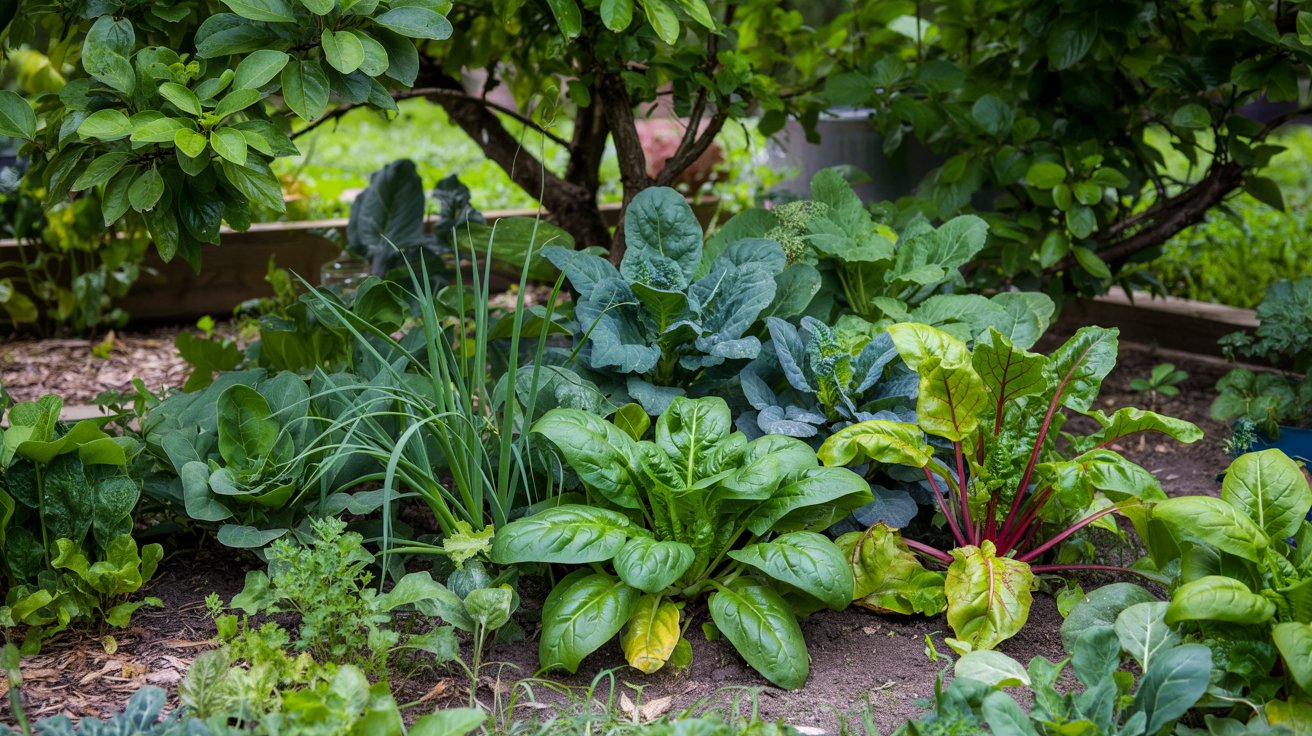
Shade in the garden isn't a single condition. University of Minnesota Extension defines part shade as 2-4 hours of direct sun daily, while full shade means less than 2 hours.
Most vegetables sit somewhere in the middle, and the ones on this list need roughly 3-6 hours to deliver a harvest.
Leafy greens are the backbone of any shade planting plan. University of Illinois Extension confirms that spinach, arugula, kale, Swiss chard, and head lettuce all tolerate around 4 hours of sun - enough to turn a dim corner into a steady salad patch.
This guide runs through two quick-reference tables - one for leafy greens, one for root crops and other vegetables - then covers shade-bed setup, seasonal timing, and common questions. Skip ahead to whatever you need most.
Many leafy greens and root crops produce well in partial shade with just 3–6 hours of daily sun. Spinach, lettuce, arugula, Swiss chard, kale, beets, and radishes all belong in a shade-first garden plan — especially in warmer regions where afternoon shadow prevents bolting.
Leafy Greens That Tolerate Shade
Leafy greens are the most forgiving vegetables when direct sun is limited. They evolved as understory plants in many regions, so reduced light slows their growth slightly but rarely ruins a crop.
Remember it later
Planning to try this recipe soon? Save it for a quick find later!
Oregon State University Extension notes that lettuce actually benefits from shade in summer, and that spinach and arugula are among the best-adapted vegetables for partial shade conditions - a fact worth bookmarking if you're planning a warm-season bed.
You can read their late-planting guidance for shade-tolerant greens directly.
Use the table below as a quick planting reference. Days to harvest are approximate and vary by variety and temperature.
Part Shade: 3–4 hrs sun
| Vegetable | Minimum Sun | Days to Harvest | Shade Notes |
|---|---|---|---|
| Lettuce | 3–4 hrs | 45–60 days | Shade prevents bolting in summer heat |
| Spinach | 3–4 hrs | 40–50 days | Bolts quickly in full sun; shade extends season |
| Arugula | 3 hrs | 30–40 days | Fastest to harvest; tolerates deep part shade |
| Swiss Chard | 4 hrs | 50–60 days | Steady producer; handles morning shade well |
| Kale | 4 hrs | 55–75 days | Grows slower in shade but flavor improves |
| Mâche (Corn Salad) | 3 hrs | 45–60 days | Cold-hardy; ideal for shaded fall beds |
| Mustard Greens | 3–4 hrs | 30–45 days | Shade reduces bitterness in warm months |
If you want detailed growing steps for one of these, our guide on growing lettuce from seed to harvest covers spacing, watering, and cut-and-come-again technique.
Plant fast-maturing arugula between slower kale starts. You'll harvest arugula in 30–40 days while kale fills in, squeezing two crops from one shaded bed slot.
Morning sun with afternoon shade is the sweet spot for every vegetable in this table. Eastern exposures - against a west-facing fence or under a high deciduous canopy - deliver exactly that pattern.
Other Shade-Tolerant Vegetables
Root crops and a few other vegetables round out the shade garden's potential. They won't match the output of a full-sun bed, but they'll produce reliably in 4-5 hours of direct light.
Colorado State University Extension's shade gardening resources confirm that lettuce, spinach, and arugula lead the shade list, but also point to beets and radishes as dependable options for partial sun. Their shade crop guidance is a useful cross-reference for high-altitude or cooler-climate gardens specifically.
Part Shade: 4–5 hrs sun
| Vegetable | Minimum Sun | Days to Harvest | Shade Notes |
|---|---|---|---|
| Radish | 4 hrs | 22–30 days | Fastest root crop; bolts in heat so shade helps |
| Beets | 4–5 hrs | 50–70 days | Roots develop slower; greens still harvestable earlier |
| Peas | 4–5 hrs | 60–70 days | Prefer cool conditions; shade extends spring window |
| Scallions | 3–4 hrs | 60–80 days | Reliable and low-maintenance in dim corners |
| Cilantro | 3–4 hrs | 45–70 days | Shade slows bolting significantly in warm climates |
| Parsley | 3–4 hrs | 70–90 days | Slow to establish but productive once growing |
Beets deserve a closer look. Baby beet greens are harvestable at 30 days even in shadier spots, so you can thin the row early for salad greens while waiting on root development.
If you're pairing shade vegetables with companion herbs or flowers, the companion planting combinations by vegetable resource has practical pairing ideas for small beds.
Root crops need consistent moisture in shade because soil under a canopy dries unevenly. Water at the base, not overhead, and check soil moisture every 2 days during dry spells.
Avoid placing tomatoes, peppers, squash, or cucumbers in shaded spots. Those crops need a minimum of 6-8 hours of full sun to flower and set fruit - shade will produce leafy plants with no harvest.

Setting Up a Shade Garden Bed
A few deliberate setup steps separate a productive shade bed from one that just limps along. The sequence below works equally well for in-ground beds and containers on a shaded patio.
If you're working with raised beds, our guide to vegetable varieties suited for raised beds covers depth and soil mix recommendations that apply here too.
Containers offer one advantage over fixed beds: mobility. A pot of lettuce or spinach can follow the sun across a patio as seasons shift, giving plants extra hours of direct light in spring and autumn when the sun angle is lower.
For plants at the other extreme - spots that get no shade at all - check what needs 6-plus hours of direct sun to understand the contrast and plan each zone of your yard accordingly.
Seasonal Timing for Shade Crops
Shade tolerance and season tolerance often overlap - and that overlap is the most useful insight for planning a productive calendar.
Cool-season crops like spinach, arugula, and radishes actually perform better with some shade during the warmer months.
A shaded bed in May and June keeps soil temperatures 5-10°F cooler than a fully exposed one, which directly delays bolting and extends your harvest window by 2-4 weeks.
In USDA zones 7–10, afternoon shade from late spring onward is almost mandatory for spinach and lettuce to survive past May. Gardeners in zones 3–5 can use shadier spots in midsummer and still harvest reliably because ambient temperatures stay lower. Adjust your planting calendar to match your zone — our seasonal vegetable planting calendar has zone-specific windows for most crops on this list.
Spring is the most reliable planting window for shade beds in most regions. Start seeds or transplants 4-6 weeks before the last frost date, when the sun is lower in the sky and partial shade is less restrictive.
Fall plantings in shaded spots often outperform spring ones. Shorter days mean lower light everywhere, so the gap between a sunny bed and a shaded one narrows.
Mâche, kale, and Swiss chard are particularly well-suited to autumn shade growing.
Microclimate tricks extend both ends of the season. A cold frame over a shaded bed traps heat without adding sun, keeping soil workable 3-4 weeks longer in autumn.
South-facing walls radiate stored heat overnight, warming roots even when the canopy blocks daytime light.
Hostas and other low-light perennials for shady spots can serve as living windbreaks alongside a shade vegetable bed, reducing frost damage without competing for the limited sun.
Similarly, tall companion plants like sunflowers can be positioned to cast intentional shade - useful context if you're growing sunflowers alongside a summer salad bed.
One more seasonal note: beet greens harvested in fall from a shaded bed are noticeably sweeter than summer-grown ones. Cold temperatures trigger sugar conversion in the leaves, and the shade slows the whole process down enough to catch them at peak flavor.
The result-driven approach here - matching crop type, light level, and season together - is what separates a productive shade bed from a struggling one. Plants like shade-adapted hostas that fill gaps year-round show that low-light spaces can be as productive as sunny ones with the right plant selection.
And if water is a secondary concern in your yard, knowing which plants handle dry conditions well helps you plan beds that need less intervention overall.
Frequently Asked Questions
Lettuce, spinach, arugula, Swiss chard, kale, radishes, and beets all perform well with just 3–5 hours of direct sun daily.
Yes, in most climates. Afternoon shade keeps soil 5–10°F cooler and delays bolting, extending your lettuce harvest by 2–4 weeks compared to a full-sun bed.
Arugula, cilantro, and mâche handle heat-plus-shade best. In zones 7–10, afternoon shade is nearly essential for spinach and lettuce to survive past May.
Beets need 4–5 hours of sun but still develop edible roots in partial shade. Baby beet greens can be harvested as early as 30 days even in lower-light spots.
Use block planting at 4–6 inch spacing, add light-colored mulch or pale surfaces to reflect ambient light, and harvest outer leaves continuously rather than waiting for full heads.
Pin it for your next best vegetables to grow in shade project.