Most gardens go quiet by November, but a surprising number of plants are just getting started. Winter-flowering varieties cover an enormous range - from ground-hugging bulbs that push up through frozen soil to fragrant shrubs that perfume the air in January.
The list below covers 12 reliable performers, organized by growth form, with specific varieties, zone ranges, and placement advice for each.
These 12 plants deliver genuine winter flowers or persistent color between November and March. Selections span zones 3–11, covering bulbs, perennials, shrubs, and container specimens.
Each entry includes a named variety, USDA zone, and best-use context so you can match plants to your specific site.
Winter-Blooming Shrubs
Shrubs form the backbone of winter color because they add height, structure, and often fragrance when everything else has died back. These five hold their own from late November through March with minimal intervention.
Remember it later
Planning to try this recipe soon? Save it for a quick find later!
Witch Hazel 'Arnold Promise'
Zone 5–8 Easy
Hamamelis x intermedia 'Arnold Promise' earns its place at the top of any winter planting list. It opens fragrant golden strap petals - often in January - on bare stems that read beautifully against a dark fence or evergreen background.
- Size: Upright habit reaches 10-15 ft at maturity; allow room and avoid crowding.
- Bloom time: January-March in zones 5-7; occasionally December in zone 8.
- Stem interest: Strong branching structure provides silhouette value even before flowers open.
Plant witch hazel where afternoon light can backlight the petals. That translucent gold color is far more dramatic when lit from behind.
Camellia japonica 'Yuletide'
Zone 7–9 Medium
'Yuletide' produces large single red flowers with prominent yellow stamens from mid-November well into February, making it one of the most reliable flowering evergreen shrubs for mild-winter gardens. Glossy foliage means it earns its space year-round, not just in bloom.
- Placement: Morning sun with afternoon shade prevents petal scorch in zones 8-9.
- Pruning: Cut immediately after bloom finishes - summer pruning removes the next season's buds.
- Size: Reaches 6-10 ft; responds well to shaping as a wall-trained specimen.
Winter Jasmine 'Ambiance'
Zone 6–9 Easy
Jasminum x media 'Ambiance' produces bright yellow flowers on bare green stems from late January through March. The arching 6-10 ft canes need something to lean against - walls, pergolas, and chain-link fences all work well.
- Vigour: Fast-growing; cut back hard after bloom every 2-3 years to prevent a woody tangle.
- Scent: Less fragrant than summer jasmine - value it for visual impact, not perfume.
- Cold tolerance: Stems survive to zone 6 but protect roots with mulch in the first winter.
Mahonia 'Charity'
Zone 6–9 Easy
Few shrubs perform as well in dry shade conditions as Mahonia 'Charity.' Its spiky evergreen foliage is deer-resistant, and long yellow flower racemes appear in December and January with a sweet, lily-of-the-valley scent.
- Shade tolerance: Grows in deep shade; flowers are fewer but the foliage remains dense.
- Soil: Tolerates dry, compacted ground once established - good under large trees.
- Height: Reaches 4-6 ft; remove the oldest stems at ground level every few years.
Winter Honeysuckle
Zone 4–8 Easy
Lonicera fragrantissima is arguably the most fragrant plant on this list, producing small cream tubular flowers on bare stems in February and March. A single established shrub can perfume a 20-foot radius on a still winter day.
- Form: Arching deciduous habit reaches 6-10 ft; less formal than camellia or mahonia.
- Tolerance: Accepts poor soils, compacted sites, and full shade - very forgiving.
- Cut stems: Bring stems indoors in January to force early blooms in a vase.
Winter honeysuckle can sucker freely in rich, moist soil. In small gardens, give it a harder annual cut after bloom to keep the size in check.
Winter-Blooming Perennials
Perennials in this category either hold evergreen foliage through winter or emerge early enough to catch the last cold weeks of the season. They work best layered under taller shrubs or massed in sheltered beds.
Hellebore 'Ice N' Roses' Series
Zone 4–8 Easy
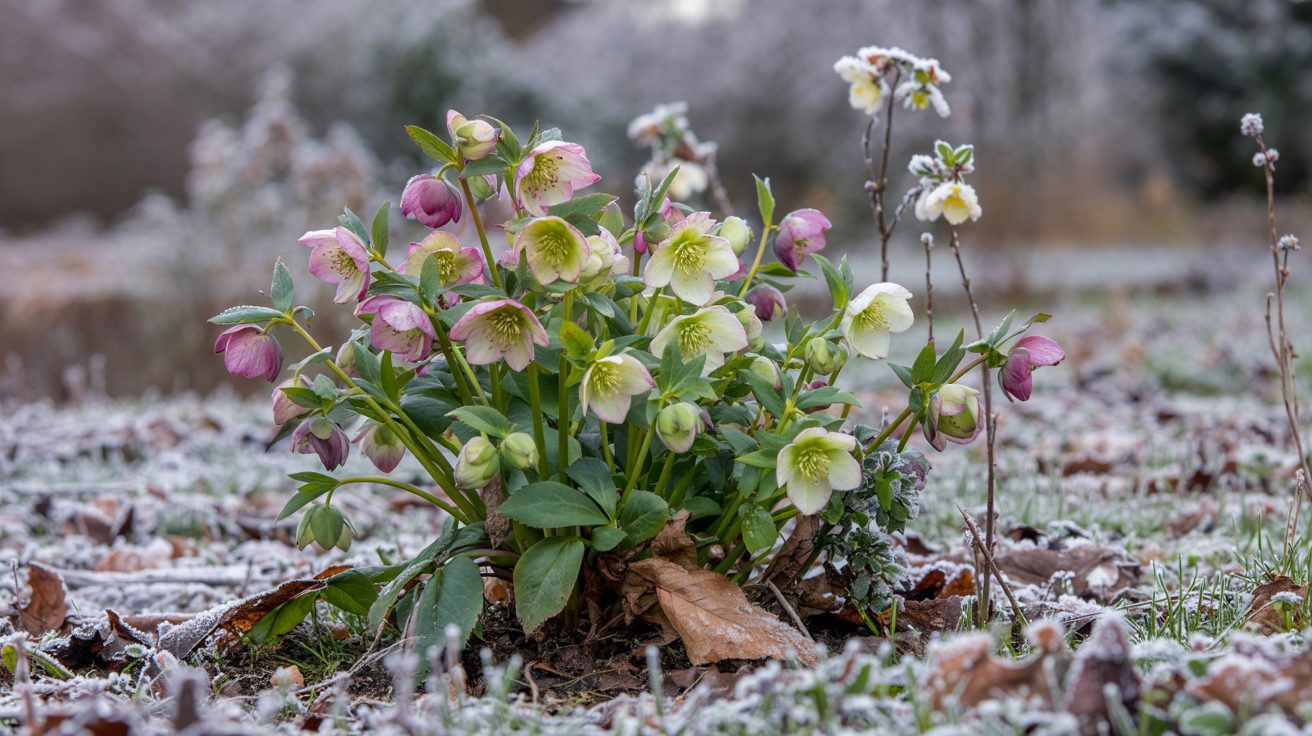
Among all the winter perennial options, the 'Ice N' Roses' series of Helleborus x hybridus stands out for double flowers that hold color through light snow without going mushy.
Compact 12-18" clumps fit neatly under deciduous trees where they get full winter sun before the canopy leafs out.
- Disease resistance: Better black spot resistance than older named varieties; good drainage helps further.
- Flowers: Double blooms in cream, pink, and deep plum; flowers face outward rather than nodding down.
- Repeat bloom: Flowers persist for 8-12 weeks; remove tatty foliage in December to showcase new blooms.
Winter Heath 'Springwood White'
Zone 5–8 Easy
Erica carnea 'Springwood White' is a low evergreen mat that covers itself with tiny bell-shaped white flowers from February through April. It's one of the few white winter flowers that tolerates alkaline soil - most heathers demand acid conditions.
- Spread: Individual plants spread 18-24 inches; plant 3 per square meter for solid coverage.
- Height: Stays 6-12 inches, making it ideal as a ground cover under bare-stemmed shrubs.
- After bloom: Shear lightly after flowering to keep the mat dense and prevent woody centres.
Alpine Cyclamen
Zone 5–9 Medium
Cyclamen hederifolium blooms in autumn and holds marbled, arrow-shaped leaves through winter, making it useful well beyond its bloom window. Tubers planted in September establish quickly and, once comfortable, spread via self-seeding to form patches under trees.
- Dormancy: Tubers go fully dormant in summer - mark the spot so you don't dig into them.
- Soil: Needs sharp drainage; leaf mold mixed with grit suits them well.
- Naturalizing: Leave seed heads intact - seedlings take 3-4 years to bloom but require no intervention.
In zones 5–6, plant cyclamen tubers under a thick layer of dry leaves for winter insulation. Without it, a hard freeze after a mild spell can heave tubers out of the ground.

Winter-Blooming Bulbs
Bulbs are the fastest way to add early-season color to an established garden. Plant in autumn, forget them over winter, and they reward you with blooms before any other plants stir.
Both options below naturalize reliably without annual replanting.
Snowdrop 'Flore Pleno'
Zone 3–8 Easy
The double form of Galanthus nivalis, sold as 'Flore Pleno,' produces tightly packed petals that look fuller and heavier than the species - more architectural at close range.
These small bulbs, only 6-8 inches tall, push through frozen ground and bloom even under a light snow cover.
- Timing: Blooms January-February in zones 5-7; as early as December in zone 8.
- Naturalizing: Divide clumps "in the green" (immediately after bloom, while leaves are still present) for fastest spread.
- Pairing: Plant directly over hellebores - the snowdrops emerge, bloom, and fade before hellebore leaves expand.
Winter Interest: Berries and Foliage
Not every winter plant earns its place through flowers. Persistent berries and distinctive foliage carry a garden through the coldest weeks, especially in zones where temperatures make reliable bloom unpredictable.
These two plants deliver visual weight from December through February.
Ilex × 'Winter Red' Holly
Zone 6–9 Easy
'Winter Red' is a female holly cultivar that supports native wildlife through winter with dense clusters of bright red berries that birds eat only after other food runs out - meaning the display lasts for months.
Berries set reliably only when a male holly pollinates nearby.
- Pollinator: Plant one male holly (any Ilex that blooms simultaneously) within 50 feet.
- Size: Reaches 8-12 ft; tolerates wet soils better than most broadleaf evergreens.
- Foliage: Glossy leaves resist winter burn better than older Ilex opaca varieties.
Olive 'Swan Hill'
Zone 8–11 Medium
'Swan Hill' is a fruitless Olea europaea selection grown primarily for its silver-green foliage and clean container habit in mild climates.
In zones 8-11, small inconspicuous flowers appear in late winter; in colder zones, overwintering container plants indoors keeps the foliage as a structural focal point through the dark months.
- Container use: Keep in a large terracotta pot; move inside when temperatures drop below 15°F.
- Watering: In winter, water every 10-14 days - far less than summer. Overwatering is the most common failure.
- Light: Needs full sun; a south-facing window works indoors but supplemental grow light prevents legginess.

Annual Winter Color
Hardy annuals and short-lived perennials used as annuals fill containers and front-of-border gaps through the cold months. They're replaceable if a hard freeze takes them, and the best selections keep blooming at temperatures as low as 20°F.
Pansy 'Winter Viability' Series
Zone 6–9 Easy
Viola x wittrockiana pansies from the 'Winter Viability' series were bred specifically for cold-season performance - not repurposed from spring lines. Compact 6-9" mounds produce continuous flushes of bloom when temperatures stay between 20°F and 55°F.
- Deadheading: Remove spent flowers weekly; deadheading pansies doubles the number of blooms compared to untouched plants.
- Feeding: Apply a half-strength balanced liquid fertilizer every 3 weeks during warm spells to extend the flush.
- After a hard freeze: Plants that look killed by a hard freeze often recover - wait two weeks before pulling them.
Pansies planted in October establish roots before the ground freezes, making them far more cold-tolerant than ones planted in January. Soil temperature at planting matters more than air temperature.
How These Plants Compare Side by Side?
Choosing between these varieties often comes down to zone, sun, and whether you need height or ground coverage. This table compresses the key decisions into a single view.
| Plant | Zone | Height | Sun | Best Use |
|---|---|---|---|---|
| Witch Hazel 'Arnold Promise' | 5–8 | 10–15 ft | Full sun / part shade | Specimen, winter fragrance |
| Hellebore 'Ice N' Roses' | 4–8 | 12–18 in | Partial shade | Under trees, front border |
| Camellia 'Yuletide' | 7–9 | 6–10 ft | Morning sun | Wall training, hedge |
| Snowdrop 'Flore Pleno' | 3–8 | 6–8 in | Partial / full shade | Naturalizing, under shrubs |
| Winter Heath 'Springwood White' | 5–8 | 6–12 in | Full sun / part shade | Ground cover, containers |
| Pansy 'Winter Viability' | 6–9 | 6–9 in | Full sun / part shade | Containers, mass bedding |
Making the Most of Winter Microclimates
Even the hardiest winter plants perform better in a sheltered spot. A south- or west-facing wall raises the local temperature by 5-10°F compared to open ground - enough to push a marginal plant from unreliable to consistent.
Understanding your garden's microclimates is the single biggest factor in winter bloom success.
Before planting, spend a January morning mapping where frost lingers longest and where the soil thaws first. Those warm pockets - near walls, under canopy edges, at the base of slopes - are where your most tender winter plants belong.
- Walls and fences: South-facing masonry stores daytime heat and radiates it overnight, protecting buds from sharp temperature drops.
- Slope drainage: Cold air drains downhill. Low-lying beds collect frost; raised beds and sloped sites stay warmer.
- Canopy cover: Light overhead cover from deciduous trees reduces frost damage without blocking winter sun significantly.
- Mulching: A 3-inch layer of bark mulch over bulb beds insulates roots and reduces freeze-thaw heaving.
Camellia 'Yuletide' planted against a warm wall in zone 7 often blooms two to three weeks earlier than one in open ground. For plants that bridge autumn into winter, that timing overlap can give you continuous color from October through February.
Which Plant Fits Your Situation?
Matching the right plant to your site saves time and money. Use these scenarios to narrow your choice before buying.
- Cold zone (3-5), reliable color: Snowdrop 'Flore Pleno' and hellebore 'Ice N' Roses' are your safest bets - both survive zone 4 winters without protection.
- Fragrance is the priority: Witch hazel 'Arnold Promise' and winter honeysuckle produce the strongest scent; plant near a path or door you use regularly.
- Small space or containers: Pansies, winter heath, and alpine cyclamen all stay under 12 inches and combine well in a single large pot.
- Deer pressure: Mahonia 'Charity' is the most reliably deer-resistant option on this list; its spiky foliage deters browsing even in heavy-pressure areas.
- Mild climate (zone 8-9), maximum impact: Layer camellia 'Yuletide' at the back, mahonia 'Charity' in the middle, and pansy 'Winter Viability' at the front for overlapping bloom from November through March.
- Wildlife value: 'Winter Red' holly provides berries that sustain birds through deep winter; pair it with witch hazel for both food and pollinator forage.
For gardens where you're also planning warm-season succession, note which winter plants die back fully - those spots free up by April for summer annuals without any digging.
Plant at least one fragrant winter plant within 10 feet of an entrance you use daily. Winter fragrance from witch hazel or honeysuckle on a cold morning is disproportionately rewarding for minimal effort.

Combining Winter Plants for Continuous Color
A single winter plant gives you a moment of color. A layered planting gives you four months of it.
The goal is overlapping bloom times and varied heights so something is always happening between November and March.
A practical three-layer scheme starts with a tall fragrant shrub - witch hazel or winter honeysuckle - at the back. Mid-ground goes to hellebores or mahonia at 1-4 ft.
The front edge carries snowdrops, winter heath, or pansies at under 12 inches. Add 'Winter Red' holly to one end for berry color and structure that lasts even when nothing is in bloom.
For gardeners who already grow climbing or wall-trained roses, winter jasmine fills the same structural role on a pergola or wall during the off-season.
Frequently Asked Questions
Reliable winter bloomers include hellebores (zones 4–8), camellia 'Yuletide' (zones 7–9), witch hazel 'Arnold Promise' (zones 5–8), and snowdrops (zones 3–8), all of which flower between November and March in at least part of their zone range.
Witch hazel 'Arnold Promise' opens golden flowers in January in zones 5–8, while pansy 'Winter Viability' series blooms at temperatures down to 20°F and keeps flowering in containers or beds through the month.
Mahonia 'Charity' is the strongest deer-resistant choice, with spiky foliage that discourages browsing in zones 6–9; hellebores are also rarely touched because their leaves and roots are toxic to deer.
Yes — Galanthus nivalis produces a mild antifreeze compound in its tissues and can push through light snow cover, typically blooming January through February in zones 5–7 without any protection.
Pin it for your next winter flowering plants: best varieties and growing tips project.