Artificial turf costs more upfront than most people expect - and less over time than most people realize. Before you call a contractor or order rolls online, you need hard numbers to work with, not vague ranges that span thousands of dollars.
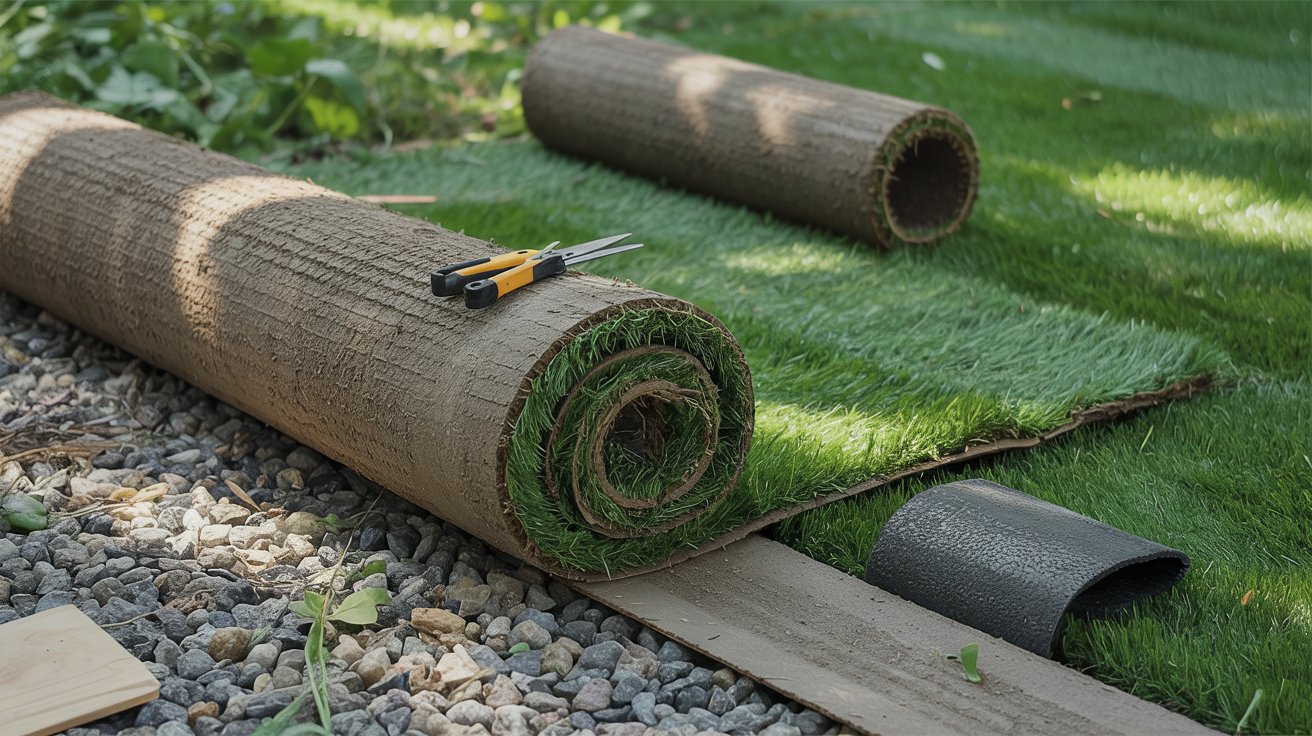
The installed price commonly falls between $5 and $20 per square foot, but that spread covers everything from basic backyard grass to premium pet turf with full drainage systems.
Where your project lands depends on turf quality, base conditions, and whether you hire out or do it yourself.
A UC Berkeley turf analysis puts synthetic turf at roughly $8.88 per sq ft versus $4.24 per sq ft for natural grass - but that gap narrows fast when you factor in irrigation, fertilizer, and annual lawn maintenance costs over a decade.
This guide breaks down every cost layer - materials, labor, base prep, drainage, and hidden line items - so you can build a realistic budget before anyone sets foot in your yard.
Artificial turf installed cost ranges from $5–$20 per sq ft, combining materials, base prep, and labor. DIY material-only costs run $2–$8 per sq ft.
Total project cost for a typical 500 sq ft yard falls between $2,500 and $10,000 installed.
At a Glance: Price Snapshot
Most homeowners budgeting for artificial turf face the same problem: contractor quotes arrive before they understand what the numbers mean. Getting anchored on realistic figures first puts you in a much stronger position.
Remember it later
Planning to try this recipe soon? Save it for a quick find later!
According to JC Turf's cost guide, a full installed project - including materials, base aggregate, and labor - typically spans $5 to $20 per square foot. A 500 sq ft backyard could therefore run anywhere from $2,500 to $10,000.
The lower end of that range usually means basic-grade turf with minimal site prep on flat, well-drained ground. Premium turf with drainage improvements, thick infill, and complex shapes pushes toward $20 and beyond.
For comparison, if you're weighing options, it helps to compare grass types side by side before committing to synthetic. The upfront premium can pay off, but only if your project is sized and scoped correctly from the start.
Installed vs DIY: Cost Breakdown
The biggest lever in any artificial turf project is labor. Professional installation adds $6-$14 per sq ft on top of materials - a cost that disappears if you do the work yourself, though the prep work is more demanding than most DIYers expect.
Materials alone typically run $2-$8 per sq ft, depending on pile height, blade shape, and backing quality. Add professional base work and installation, and the full installed price lands around $8-$22 per sq ft, per data from both JC Turf and Bob Vila's cost breakdown.
| Cost Component | DIY Cost | Professional Cost |
|---|---|---|
| Turf Material (per sq ft) | $2–$8 | $2–$8 (same) |
| Base Aggregate (crushed rock, sand) | $0.50–$1.50 | $1–$3 |
| Weed Barrier | $0.10–$0.30 | $0.20–$0.50 |
| Infill (crumb rubber, sand, or organic) | $0.50–$2 | $1–$3 |
| Edging and Nails | $0.20–$0.75 | $0.50–$1.50 |
| Labor and Equipment | $0 | $3–$9 |
| Old Sod Removal | $0 (DIY time) | $1–$2.50 |
| Total Estimated Range | $3.30–$12.55 | $8–$22 |
DIY saves the most on labor, but you'll still need to rent a plate compactor and sod cutter - typically $100-$300 per day combined. Factor that into your savings estimate.
Base prep is where DIY projects most often go wrong. Skimping on compacted aggregate leads to uneven surfaces and drainage problems that are expensive to fix after turf is laid.
If your yard has clay soil or poor drainage, professional base work is often worth the cost. You can see how similar site prep decisions affect budget on a gravel patio project as well.
- Flat, well-drained yard: DIY is a realistic option - base prep is straightforward and compaction is manageable with a rented plate compactor.
- Sloped or clay-heavy soil: Professional grading and drainage work adds $2-$5 per sq ft but prevents long-term failure.
- Irregular shapes or seaming: Complex layouts require precise cuts and seam sealing - visible seams are a common DIY mistake that's hard to fix.
- Large areas over 1,000 sq ft: Material waste increases with complex shapes; budget 10-15% extra for cuts and overlaps.
If you're still deciding between synthetic turf and seeding, checking the real cost difference between sod and seed gives useful context on what natural lawn establishment actually costs.
Regional Ranges and What Drives Price
Where you live shifts the quote you'll receive by as much as 40%. Labor markets, material shipping costs, and local permit requirements all factor in - and so does whether your region has a booming turf industry or just a handful of installers.
According to HomeGuide's pricing data, mid-range installed projects typically land in the $10-$25 per sq ft range, with coastal California and the Southwest on the higher end due to demand and labor costs.
Beyond region, turf pile height is one of the biggest price drivers. Short-pile turf (30mm) used for putting greens or utility areas costs less than tall landscape turf (40-50mm) with a realistic field-grass appearance.
Drainage infrastructure is the other major variable. Yards with poor natural drainage need a perforated sub-base or French drain - adding $2-$6 per sq ft to the project.
It's not optional if standing water is a problem; skipping it voids most turf warranties.
Turf with a blade structure similar to ryegrass or fescue costs more than uniform monofilament styles because the manufacturing process is more complex. Expect to pay a premium of $1-$3 per sq ft for realistic multi-blade products.
Hidden Costs and Maintenance to Plan For
The quoted price per square foot rarely captures everything. Several line items get added at the contract stage - or show up as surprises after work begins - and knowing them ahead of time protects your budget.
Labor for installation runs $3-$9 per sq ft depending on site prep complexity and turf type, per Bob Vila's installation cost data. That range widens significantly if your yard needs regrading or old concrete removal.
- Get a line-item quote that separates materials, base prep, drainage, and labor - so you can compare bids accurately.
- Budget 10-15% above the quote for unexpected site prep issues like buried debris or drainage problems.
- Ask specifically about infill type - organic infill (cork, walnut shell) costs $2-$4/sq ft more than crumb rubber but stays cooler underfoot.
- Request a warranty that covers both the turf product and the installation workmanship separately.
- Don't accept a single per-sq-ft quote without a breakdown - hidden prep costs often lurk in that number.
- Don't skip edging materials - without bender board or steel edging, turf edges lift within 1-2 seasons.
- Don't assume zero maintenance costs - turf needs rinsing, occasional re-infilling, and seam checks every year.
- Don't ignore heat buildup - dark-colored turf in full sun can reach 150-180°F, which matters for pets and children.
Ongoing maintenance is cheaper than natural grass, but not free. Plan for $50-$200 per year in basic upkeep - rinsing, debris removal, and occasional infill top-ups.
That's a fraction of what mowing, fertilizing, and watering natural lawn costs annually. If you want to see what professional lawn care runs on natural grass, the annual lawn care schedule cost breakdown is useful context.
Permit requirements catch many homeowners off guard. Some municipalities require permits for turf installations over a certain square footage, particularly if drainage modifications are involved.
Check with your local building department before signing a contract.
Upgrade Paths, Features, and ROI
Not every yard needs the same turf. Entry-level products at $2-$4 per sq ft work fine for low-traffic utility areas.
Mid-range turf at $4-$6 per sq ft handles most residential lawns well. Premium turf at $6-$8 or more per sq ft is worth it for putting greens, pet areas, or high-visibility front yards.
Underlayment upgrades add $0.50-$2 per sq ft but pay back in cushion, drainage speed, and turf longevity. For play zones or pet runs, a shock-absorbing foam pad under the turf reduces injury risk and keeps the surface cooler.
In drought-prone regions, artificial turf can eliminate 50–70 gallons of water per sq ft per year in irrigation savings. On a 500 sq ft lawn, that's 25,000–35,000 gallons annually — a meaningful offset against the higher upfront cost.
Putting greens are the highest-cost specialty application, typically running $15-$35 per sq ft installed due to the precise grading and short-pile turf required. Pet turf with antimicrobial infill and high-flow drainage sits in the $12-$22 range installed.
On the long-term cost side, resurfacing and disposal of worn synthetic turf is a real expense that few homeowners think about at install time.
The STMA synthetic turf guide notes that disposal and resurfacing can run $6.50-$7.80 per sq ft at end of life, which should factor into your 20-year cost projection.
In hot climates (USDA Zones 8–11), heat retention is a genuine upgrade consideration. Cooling infill products like HydroMax or silica sand blends reduce surface temps by 30–50°F compared to standard crumb rubber infill — and cost $1–$3 per sq ft more.
If you're weighing turf as part of a larger backyard project, it's worth checking what a pergola installation costs alongside turf - many contractors bundle outdoor surface and structure work for a small discount.
Also compare the total cost of laying sod before making a final decision, since sod remains significantly cheaper upfront for large open areas.
For a broader look at what affects your outdoor budget on the lawn side, the lawn care cost factors overview covers irrigation, fertilization, and seasonal service pricing in one place.
And if you're still on natural grass and budgeting care costs, the cost to fertilize a lawn breaks down product and service pricing clearly.
Frequently Asked Questions
National installed cost typically runs $10–$25 per sq ft, per HomeGuide pricing data, varying by region, turf grade, and site prep complexity.
Yes, over 10–15 years. Artificial turf eliminates mowing, irrigation, and fertilizer costs that typically run $500–$1,500 per year for a mid-size natural lawn.
Pile height, blade type, infill material, drainage requirements, and local labor rates are the biggest drivers — each can shift the final price by $2–$6 per sq ft.
Yes, on flat, well-drained yards. DIY saves $3–$9 per sq ft in labor, but you'll need to rent a plate compactor and sod cutter, costing $100–$300 per day.
Quality turf lasts 15–25 years with basic upkeep: rinse monthly, re-apply infill every 2–3 years, and inspect seams annually — total yearly cost around $50–$200.
Pin it for your next how much does artificial turf cost? project.