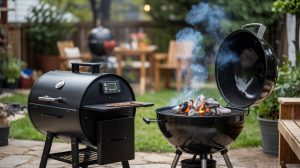
Spring is the worst time to second-guess a grill purchase. You either end up with a bag of charcoal and no lighter fluid, or a gas grill still in the box while everyone waits for burgers.
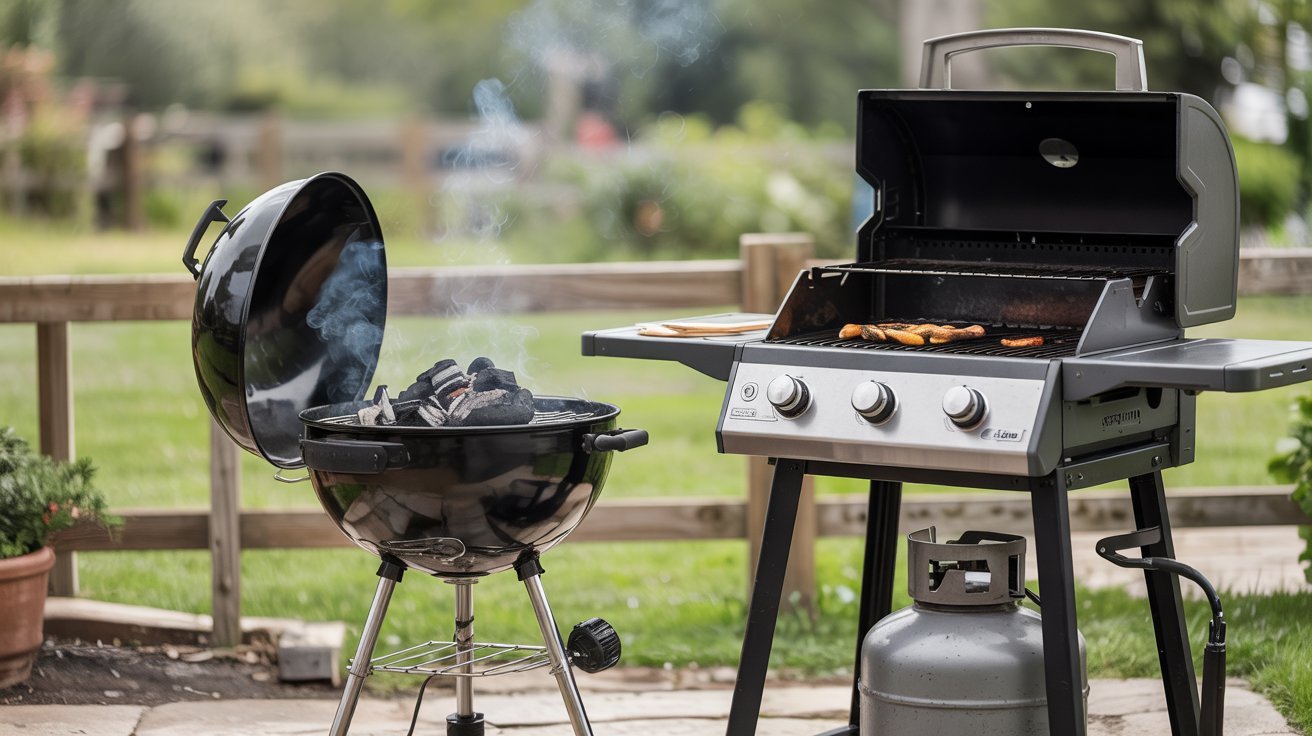
Making this call now - before the season ramps up - means you grill with confidence all summer instead of wishing you'd chosen differently.
Gas grills win on speed, convenience, and predictable heat. Charcoal grills win on flavor depth and lower entry cost.
Neither is universally better. The right answer depends on how often you cook, what you're cooking, and how much setup friction you'll tolerate on a Tuesday night.
We'll compare both across the dimensions that actually matter: upfront and long-term cost, durability, flavor, heat control, and safety. We'll also cover hybrid setups for cooks who want smoky flavor without committing to a full charcoal routine.
University of Illinois Extension notes that charcoal's smoky flavor is a real chemical difference - not just perception - worth factoring into your decision.
Gas grills offer faster startup, easier heat control, and lower long-term fuel cost per session. Charcoal grills deliver deeper smoky flavor and cost less upfront.
Hybrid setups bridge both. Match your choice to your cooking priorities.
Buy before Memorial Day weekend. Demand spikes, stock thins, and popular mid-range models sell out fast at most retailers. Ordering online in April gives you time to assemble and test before your first cookout.
Cost, Durability, and Long-Term Value
Upfront price varies enormously on both sides. A basic kettle charcoal grill runs $30-$100, while entry-level gas grills start around $150 and climb past $2,000 for built-in or stainless models.
Remember it later
Planning to try this recipe soon? Save it for a quick find later!
That gap closes quickly once you factor in fuel and maintenance over several seasons.
Charcoal costs roughly $1-$2 per cooking session for standard briquettes, but quality lump charcoal can push that higher. Propane averages about $0.80-$1.50 per session for typical grilling, and natural gas runs even cheaper if you're hooked into a home line.
Over a full summer of weekly grilling, the difference is modest - but it compounds over years.
Durability depends more on materials and care than fuel type. Porcelain-coated steel grates on either type chip and rust if you skip seasoning.
Cast iron grates last longest but need consistent oiling. Stainless steel burners on gas grills corrode in coastal climates unless you buy 304-grade stainless.
Charcoal bowls are simple steel - fewer parts to fail, but the ash accelerates corrosion if left wet. According to long-term durability research, consistent cleaning extends grill life by several years regardless of type.
If you're planning a full outdoor kitchen build cost, a built-in gas grill amortizes better than a freestanding charcoal unit over a decade.
| Factor | Charcoal | Gas |
|---|---|---|
| Entry price | $30–$200 | $150–$2,000+ |
| Fuel cost per session | $1–$3 | $0.80–$1.50 |
| Average lifespan | 5–15 years | 5–15 years |
| Main failure point | Bowl rust/ash corrosion | Burner tubes, igniter |
| Repair cost | Low (simple parts) | Medium (burners, valves) |
If you're comparing gas-powered yard tools for efficiency context, the same fuel-cost logic applies when you choose a lawn mower type - upfront vs. operating cost trade-offs follow similar patterns.
Taste, Flavor, and Cooking Versatility
Flavor is where charcoal earns its reputation. Burning charcoal produces combustion byproducts - phenols, carbonyls, and organic compounds - that deposit on food and create that distinctive smoky crust.
Gas burns cleaner, which is efficient but produces less of that flavor complexity.
That said, gas grills have a real advantage in heat consistency. You dial in 450°F and it stays there.
Charcoal requires managing vents, coal arrangement, and timing - a skill gap that frustrates new cooks and takes practice to close. Illinois Extension confirms that gas heat uniformity benefits cooks who need repeatable results.
For indirect cooking - think whole chickens, ribs, or brisket - charcoal offers more flexibility in coal arrangement. You bank coals to one side and create a two-zone fire easily.
Gas grills achieve this too by turning off one burner, but the temperature differential is less dramatic.
Wood chips extend flavor options on both types. On gas, place a smoker box directly over a burner on high heat until chips smolder, then dial back.
On charcoal, scatter chips over coals just before adding food. Neither replaces a dedicated smoker, but both add real smoke character to longer cooks.
If you want to compare another smoke-forward option, our guide on pellet vs charcoal grilling breaks down how automated pellet smokers stack up against traditional charcoal for long cooks.
| Cooking Task | Charcoal | Gas |
|---|---|---|
| Weeknight burgers | Slower setup | Fast, easy |
| Steakhouse sear | Higher temps | Capable |
| Low-and-slow ribs | Better smoke | Moderate |
| Rotisserie | Possible | Built-in option |
| Weeknight fish/veg | Overkill | Ideal |
For cooks building a dedicated outdoor setup, check our picks for top-rated charcoal grills if flavor is your priority and you want a shortlist of tested models.

Flexible Solutions and Hybrid Approaches
A hybrid grill runs gas burners but includes a charcoal tray or insert that slots into the firebox alongside or in place of one burner section. You get gas-speed startup and then add charcoal or wood chunks for smoke without managing a full coal bed.
Brands like Char-Griller and Napoleon both make mainstream hybrid models in the $300-$700 range.
For small patios or apartment balconies, a portable charcoal option - a Weber Smokey Joe or a ceramic kamado junior - costs under $200 and delivers full charcoal flavor without the footprint of a full kettle or gas cart.
Apartment and condo dwellers in many HOA communities are prohibited from using charcoal on balconies due to fire codes. Gas or electric grills are typically permitted. Check your HOA rules before buying.
Illinois Extension points out that smoky flavor complexity comes from actual combustion compounds - which means even a charcoal insert in a hybrid adds measurable flavor vs. gas alone.
| Setup | Best For | Approx. Cost |
|---|---|---|
| Gas + charcoal tray insert | Frequent cooks wanting both | $300–$700 |
| Portable charcoal (kettle) | Small spaces, occasional use | $30–$120 |
| Kamado ceramic | Serious flavor, long cooks | $300–$1,200 |
| Gas with smoker box | Gas owners adding smoke | $15–$40 add-on |
If you're thinking bigger - building out a full outdoor station with multiple cooking zones - our DIY outdoor kitchen guide covers how to plan for both gas and charcoal zones in a single build.
For fire-adjacent outdoor gear, if you're also choosing between fuel types for ambient heat, comparing propane vs natural gas fire pits follows similar convenience trade-offs as the grill debate.
You can also browse fire pit options that pair well with a grill setup for full outdoor entertaining.
Safety, Maintenance, and Common Pitfalls
Both grill types demand basic safety habits - but the failure modes differ. Gas grills can leak propane if hoses crack or fittings loosen.
Check connections with soapy water before each season; bubbles indicate a leak. Charcoal grills produce carbon monoxide, so never use them indoors or in garages, even with a door open.
The USDA recommends using a meat thermometer every cook - burgers should reach 160°F internally, poultry 165°F - regardless of grill type.
- Empty ash after each use - wet ash corrodes the bowl floor rapidly and blocks airflow on the next cook.
- Brush grates while hot - residue releases easier at temperature; do it right after pulling food.
- Store propane tanks upright outdoors - never in enclosed spaces or vehicle trunks.
- Check burner tubes seasonally - spiders nest inside gas burner tubes and cause uneven flames or flashback.
- Don't douse coals with water - it warps the bowl and creates steam burns; let them cool fully or use a coal scuttle.
- Don't use lighter fluid on lit coals - flare-ups from fluid are unpredictable and dangerous.
- Don't leave a gas grill uncovered year-round - UV and moisture degrade igniter components and burner caps.
- Don't grill on a wooden deck without a mat - both charcoal sparks and gas flare-ups can char decking.
Charcoal coals stay hot enough to cause burns for 24–48 hours after cooking. Never bag ash in plastic — residual heat melts it and can ignite trash. Use a metal ash bucket with a lid.
For decisions about other outdoor spaces beyond the grill, our guide on above-ground vs inground pool options applies the same cost-vs-convenience framework to another major backyard investment. And if fire pit costs factor into your outdoor budget, see our breakdown of fire pit installation costs for what to expect.
For a broader look at outdoor cooking and entertaining setups, our grilling and outdoor entertaining coverage has more comparisons and buying guides.

Frequently Asked Questions
Neither is clearly healthier. Both produce heterocyclic amines at high heat. Charcoal produces more particulate smoke exposure; gas burns cleaner but neither type eliminates HCA formation on meat.
Yes — a $15–$40 smoker box filled with wood chips placed over a lit burner produces real smoke. It won't match charcoal intensity, but it adds noticeable flavor on 20-plus-minute cooks.
Both average 5–15 years. Charcoal kettles have fewer failure points; gas grills need burner tube and igniter replacements every 3–5 years but can outlast charcoal bowls with consistent cleaning.
Grilling weekly from May through September — about 22 sessions — costs roughly $44–$66 in charcoal vs. $18–$33 in propane. Charcoal runs about $25–$40 more annually at average use.
Yes, if you grill at least weekly. Hybrid models in the $300–$700 range let you run gas for speed and switch to charcoal or wood chunks for weekend cooks without owning two separate grills.
Pin it for your next charcoal vs gas grill project.