Most homeowners get their first outdoor kitchen quote and immediately wonder what they missed. The numbers jump from $5,000 to $50,000 without much explanation, and that gap reflects real differences in scope, materials, and local labor - not contractor guesswork.
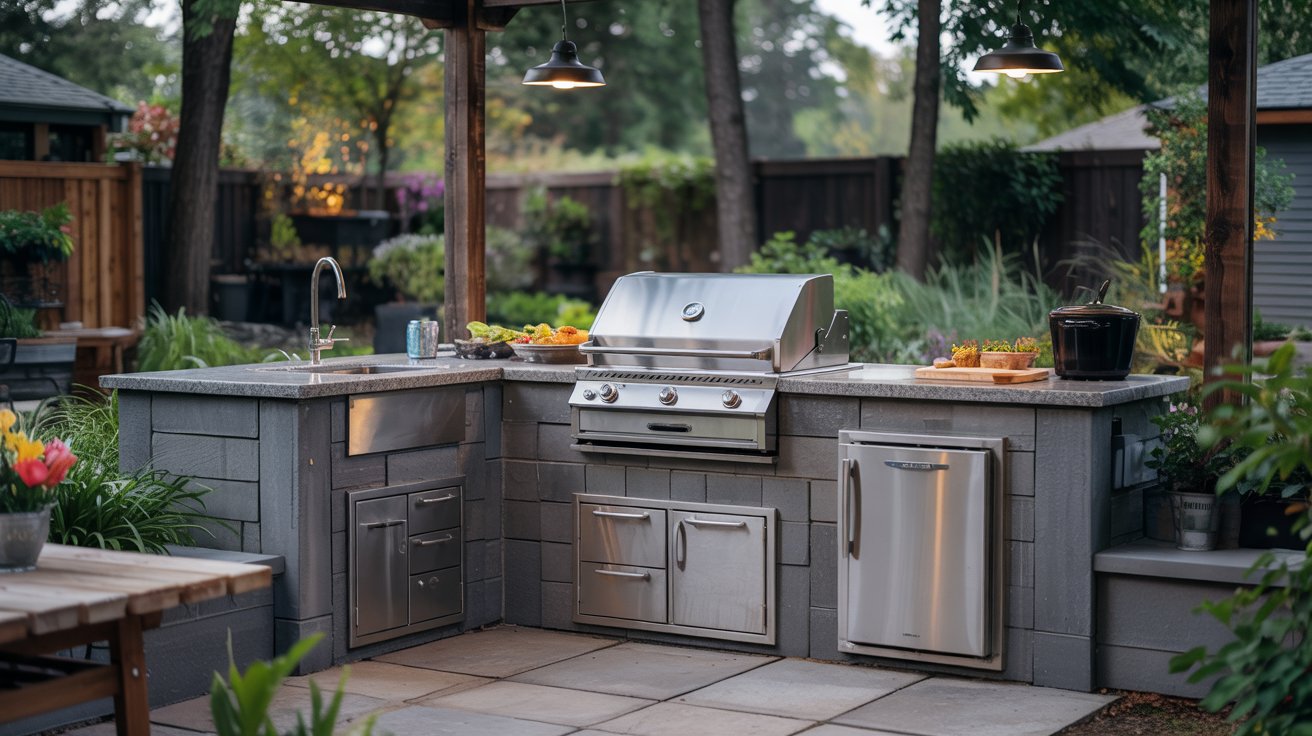
A basic setup with a single grill island and a couple of burners sits at the low end. A full outdoor kitchen with a built-in refrigerator, kegerator, pizza oven, and covered pergola sits at the high end.
Understanding which tier fits your yard - and your budget - comes down to knowing what actually drives the cost. We'll break that down by tier, by component, and by region so you can walk into any contractor conversation with realistic numbers.
If you're also weighing other big backyard investments, you can estimate your full backyard budget before committing to any single project.
Outdoor kitchen costs range from $5,000 for a basic setup to well over $50,000 for a fully outfitted luxury build. The biggest cost drivers are appliance quality, cabinetry materials, and utility runs.
Region and season affect both pricing and availability of contractors.
Outdoor Kitchen Cost at a Glance
The national average for a mid-range outdoor kitchen lands between $15,000 and $35,000, but that number moves fast depending on where you live and what you want on the counter.
Remember it later
Planning to try this recipe soon? Save it for a quick find later!
A cost guide covering regional remodeling projects shows that high-end outdoor kitchens routinely hit $45,000-$95,000 once you factor in premium appliances, custom cabinetry, and professional utility installation.
Three components drive the bulk of your budget: the grill island structure, the appliances, and the utility connections. Everything else - lighting, tile work, a bar counter - adds on top.
The NKBA outdoor kitchen profile reinforces that appliance quality and material choices - not square footage alone - are what separate budget from luxury builds. Choosing a $2,000 grill over a $600 model adds more to your total than doubling the counter space.
Labor accounts for roughly 25-35% of your total in most markets. That share climbs in high-cost metro areas and drops in rural regions where contractor rates are lower.
These ranges assume an existing patio or deck. If you need a new concrete slab or foundation, add $3,000–$8,000 before any kitchen components go in. Site prep is the most commonly overlooked line item in early estimates.
For context, an outdoor kitchen costs significantly more than a fire pit installation but offers a much wider return on investment through added usable living space and home value.
Cost by Tier: Budget, Mid, and High-End
Tier boundaries aren't arbitrary. Each jump in price reflects a real change in materials, appliances, and what a contractor needs to do to the site.
Knowing where each tier starts and stops helps you avoid pricing yourself into a scope that doesn't match your actual goals.
| Tier | Typical Range | What's Included | What's Usually Missing |
|---|---|---|---|
| Budget | $5,000–$15,000 | Basic grill island, 2-burner setup, tile or concrete countertop | Running utilities, refrigeration, weatherproof cabinetry |
| Mid-Range | $15,000–$35,000 | Built-in grill, gas line, under-counter fridge, stone counters | Pizza oven, sink, premium appliances |
| High-End | $35,000–$95,000+ | Full appliance suite, custom cabinetry, pergola, bar seating | Nothing — scope is essentially complete |
Budget builds work well when you already own a quality charcoal or gas grill and just want a permanent island structure around it. Mid-range builds are where most homeowners land once they add a gas connection and real countertop materials.
The high-end tier isn't just about more appliances - it reflects custom construction, professional-grade equipment, and often significant electrical and plumbing work.
Regional cost guides consistently show that luxury outdoor kitchens in premium markets routinely exceed $95,000 when a full pergola structure and outdoor sound system are included.
- Set a firm tier budget first - decide on budget, mid, or high-end before selecting individual appliances to avoid scope creep.
- Price the grill island structure separately - get that quote locked before adding appliances so you know your baseline.
- Plan utility runs early - get gas and electrical routed before the island is built, not after.
- Get three contractor quotes - outdoor kitchen pricing varies widely between contractors in the same market.
- Don't price appliances before the structure - picking a $4,000 grill before knowing what the island costs leads to budget shock.
- Don't skip the slab assessment - assuming your existing patio can support a full kitchen without checking load capacity is a costly mistake.
- Don't mix tiers mid-project - starting with budget cabinetry and adding high-end appliances creates mismatched durability and resale value.
- Don't ignore permit requirements - unpermitted gas lines and electrical work create problems at resale and with insurers.
Upgrading a single major element - say, swapping tile countertops for quartzite - can shift a budget build into mid-range pricing on its own. The NKBA data makes clear that appliance and material upgrades are the primary levers consumers use to move between tiers.
If a full outdoor kitchen feels like too large a commitment right now, a DIY outdoor kitchen is a realistic way to land a functional setup at the low end of the budget tier.

Factors That Drive Outdoor Kitchen Costs
Once you know your tier, the next step is understanding what can push you toward the top of that range. Several line items surprise homeowners who get their first detailed quote.
- Appliances: A built-in grill runs $600-$5,000+. Adding a smoker, side burner, pizza oven, or kegerator stacks costs quickly - each appliance can add $500-$4,000 to the total.
- Countertop material: Concrete and tile sit at the low end ($25-$60/sq ft installed). Granite and quartzite run $75-$150/sq ft. Porcelain slab counters can reach $200/sq ft installed.
- Cabinetry: Stainless steel cabinets are the most weather-resistant and the most expensive, running $800-$2,500 per linear foot. Polymer and concrete block structures are cheaper but limit customization.
- Utility connections: Running a new gas line from the house costs $500-$2,000 depending on distance. Adding a water line for a sink runs $300-$1,500. Dedicated electrical circuits add another $200-$800.
- Foundation and site prep: A new concrete pad for a large outdoor kitchen runs $3,000-$8,000. Sloped or soft ground adds grading costs on top.
- Weatherproofing and roofing: A pergola or covered structure over the kitchen adds $3,000-$15,000 and extends the usable season significantly in rain-prone climates.
According to OSU Extension planning resources, utility runs and permits are among the most underestimated costs in outdoor kitchen projects. Gas line permits alone can add $200-$600 in fees before any work begins.
Running a gas line without a permit is a serious liability. Most municipalities require an inspection before you can use the line, and unpermitted work can void your homeowner's insurance coverage. Budget $200–$600 for permits and schedule the inspection before the island is built around the connection.
For homeowners comparing major outdoor investments, it helps to know how an outdoor kitchen budget stacks up against what a pool actually costs - both projects share the same utility-run and permitting considerations.
How Region and Season Affect Your Final Price?
The same outdoor kitchen that costs $22,000 in Tulsa could run $35,000 in San Francisco or $18,000 in rural Alabama. Labor rates drive most of that gap, with high-cost coastal markets adding 30-50% to contractor quotes compared to the national average.
Climate also shapes scope. Homeowners in the Pacific Northwest need weatherproof cabinetry rated for high humidity, while those in the Sun Belt may skip a roof structure entirely.
Adding weatherproofing features in rain-heavy regions can add $4,000-$8,000 to a mid-range build.
In Northern states, outdoor kitchen season runs roughly May through September. In USDA zones 8–10 (the South, Southwest, and Pacific Coast), kitchens are usable 9–12 months a year. That extended use window justifies higher upfront investment in warmer regions and is a key reason high-end builds are more common in those markets.
Timing your installation off-peak can save real money. Most contractors are 25-35% less booked between October and February, which often translates to better pricing and faster scheduling.
Material lead times for custom cabinetry also shorten outside of spring and summer.
Regional project coverage from OSUIT construction programs shows how scope and local labor markets combine to make two identical-looking kitchens cost very different amounts.
Getting at least three local bids - not national online estimates - is the only reliable way to price your specific project.
If you're deciding between an outdoor kitchen and other large backyard upgrades, comparing it to hot tub installation costs or reviewing pool type differences can help you allocate your outdoor budget across projects.
And once the kitchen is in, pairing it with well-chosen outdoor dining furniture or a propane vs. natural gas fire pit completes the space without a second major construction project.
For the full picture on what outdoor living upgrades deliver in terms of daily use and home value, the outdoor living planning hub covers budgeting frameworks across multiple project types.
Frequently Asked Questions
Most homeowners spend $15,000–$35,000 on a mid-range outdoor kitchen with a built-in grill, gas line, and stone countertops. Budget builds start near $5,000 without utilities.
Yes. NKBA data shows outdoor kitchens consistently rank among the top ROI outdoor upgrades, with well-built setups recouping 50–80% of cost at resale in most markets.
Running a new gas line from the house typically costs $500–$2,000, depending on distance and local permit fees, which add another $200–$600.
A basic DIY build using a concrete block frame, tile countertop, and freestanding grill insert can come in under $5,000, but durability and resale value will be limited compared to professional builds.
October through February is the off-peak window for most contractors. Booking during this period can reduce labor costs by 25–35% and shorten lead times on custom materials.
Pin it for your next how much does an outdoor kitchen cost? project.