Choosing between a pellet grill and a charcoal grill is less about which is "better" and more about which fits how you actually cook.
Both produce genuinely good food, but they reward different habits, budgets, and priorities in ways that matter before you spend several hundred dollars.
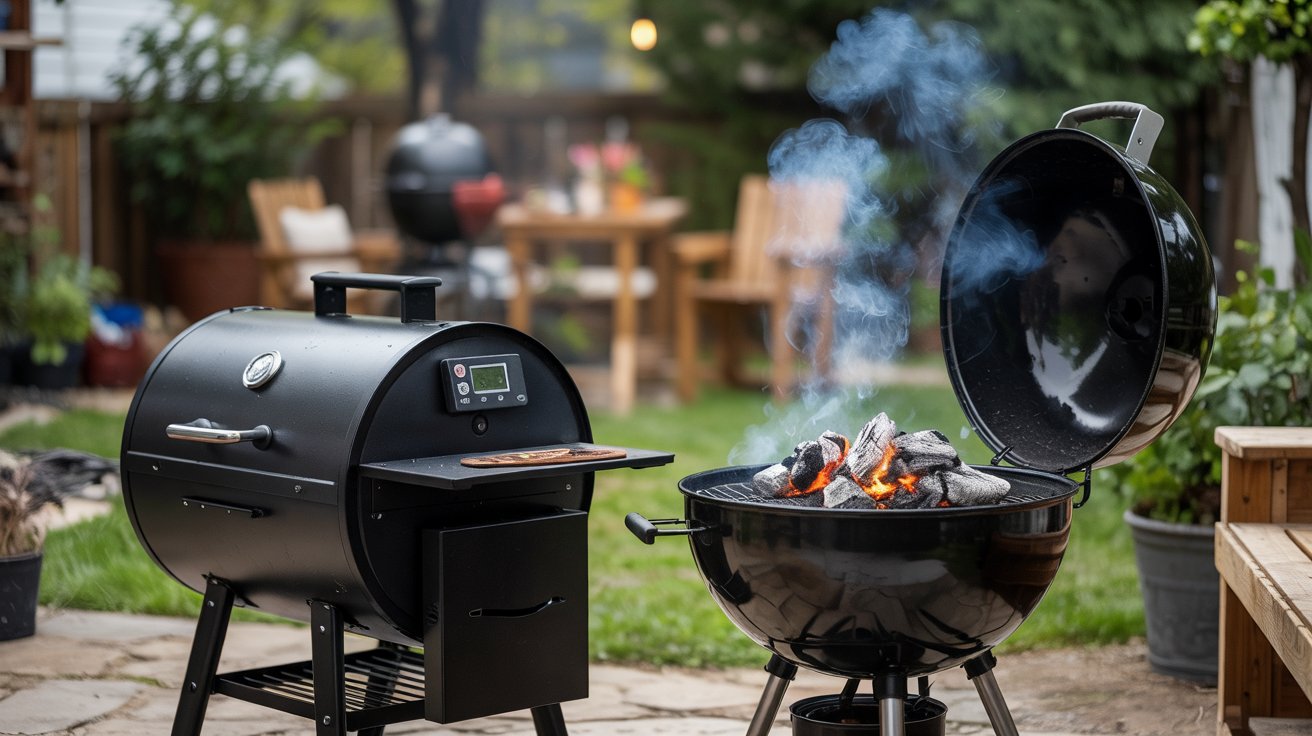
Pellet grills run on compressed wood pellets and use a digital controller to hold temperature within a few degrees - useful when you're cooking a brisket for 12 hours and don't want to babysit it. Charcoal grills are simpler machines: fuel, fire, grate.
The flavor difference is real but often overstated. Pellet grills deliver a mild, clean smoke from hardwood pellets.
Charcoal - especially lump charcoal - produces a more intense, combustion-forward flavor that many pitmasters consider non-negotiable. For weekend grilling decisions, that flavor gap drives a lot of buyer regret either way.
If your priority is hands-off cooking with consistent results, a pellet grill covers most bases. If you want the highest possible sear temperatures and that classic char, charcoal wins without much argument.
A pellet grill wins on consistency, low-and-slow smoking, and convenience. A charcoal grill wins on searing heat, traditional flavor, and lower upfront cost.
Your cooking style — not brand loyalty — should decide this.
Flavor, Heat, and Flexibility
Flavor is where this debate gets personal. Charcoal combustion produces compounds - including trace amounts of smoke particulate and volatile organic carbons - that embed into meat surfaces in a way pellet smoke simply doesn't replicate at the same intensity.
Remember it later
Planning to try this recipe soon? Save it for a quick find later!
Traeger's own comparison frames pellet grills as delivering consistent wood-fired flavor, and that's fair - it's just a different, milder profile than charcoal.
On temperature, the gap matters most for steaks and burgers. A well-loaded charcoal chimney can push grate temperatures to 700°F or higher.
Most pellet grills top out around 500°F, which produces a decent sear but won't match the crust you get from true high-heat charcoal.
For smoking - ribs, pork shoulder, brisket - pellet grills are genuinely hard to beat. Holding 225°F for 8-12 hours is effortless with a digital controller.
On charcoal, achieving that same consistency requires managing vents and adding fuel, sometimes every 45-60 minutes, which takes skill and attention.
| Cooking Task | Pellet Grill | Charcoal Grill |
|---|---|---|
| Low & slow smoking (225°F) | Excellent — set and monitor | Good — requires vent management |
| High-heat searing (600°F+) | Moderate — limited by max temp | Excellent — direct coal contact |
| Roasting chicken (350°F) | Excellent — stable indirect heat | Good — needs two-zone setup |
| Weeknight burgers | Convenient — quick preheat | Fast — 15-min charcoal start |
| Flavor complexity | Mild wood smoke | Bold, traditional char |
Pellet grills also handle roasting and baking credibly - you can cook a whole chicken at 375°F or even finish a pizza without changing any setup.
Charcoal grills require a two-zone fire for anything that needs indirect heat, which means more setup but also more hands-on control.
If you're comparing specific models, a top-rated charcoal grill like the Weber Kettle or PK360 will out-sear a comparably priced pellet grill every time. The Traeger Pro 575, by contrast, will out-smoke a standard kettle with far less effort.
- Hands-free temperature control for long smokes
- No fuel management mid-cook — digital controller does the work
- Wide cooking versatility: smoke, roast, bake, and grill
- Consistent results for beginners and experienced cooks alike
- Higher maximum temperatures for superior searing
- Deeper, more complex smoke flavor most pitmasters prefer
- Simpler design — fewer components to maintain or replace
- Lower entry price and widely available fuel
Flexibility also depends on what pellet grill basics you're comfortable managing. Pellet auger systems feed fuel automatically, which is convenient - but an auger jam mid-cook is a real failure point that a charcoal grill simply doesn't have.
Cost and Value Over Time
Upfront cost separates these two grill types immediately. A quality charcoal kettle - Weber 22-inch, for example - runs $150-$250.
Entry-level pellet grills start around $400 and climb past $2,000 for flagship models with Wi-Fi controllers and large cook surfaces.
Ongoing fuel costs are closer than most buyers expect. According to fuel cost comparisons for long cooks, a 12-hour smoke on a pellet grill consumes roughly 2-3 pounds of pellets per hour at low temps, costing $3-$6 per cook.
A comparable charcoal cook uses $2-$5 in lump charcoal, depending on brand and coal quality.
Over a full grilling season, that difference is small. What matters more is the cost of replacement parts on pellet grills: auger motors, fire pots, and digital controllers can each cost $50-$150 when they fail.
Charcoal grills have almost no moving parts - a replacement grate or ash catcher is the extent of it.
Lifespan plays into value too. A well-maintained charcoal grill - especially a cast-iron or heavy-gauge steel model - can last 10-20 years with minimal care.
Pellet grills typically last 5-10 years before electronic components or the cooking chamber shows significant wear.
If you're building out an entire outdoor kitchen budget, a pellet grill's higher sticker price fits naturally into a larger setup where convenience features justify the spend.
For buyers who grill occasionally or want a no-fuss unit, a $200 charcoal grill pays for itself in the first season and keeps on working.
Wood pellet pricing also varies by wood species and brand. Traeger's value framing positions pellets as cost-competitive with charcoal, which holds true at modest cook frequencies.
Heavy weekend use tips the long-term math toward charcoal's favor.
Safety, Maintenance, and Practical Tips
Both grill types carry real safety considerations, and the USDA food safety guidelines for grilling apply equally to pellet and charcoal cooks - use a meat thermometer, keep raw and cooked food separated, and never partially cook meat to finish later.
Pellet grills have unique risks beyond basic food safety. In 2018, the CPSC recalled Traeger grills due to fire hazards linked to pellet ignition failures and grease management issues - a reminder that pellet grill maintenance isn't optional.
Never leave wet or clumped pellets in the hopper. Moisture causes auger jams and incomplete ignition, which can lead to pellet buildup and dangerous flare-ups when the fire pot overloads. Empty the hopper after each long cook.
| Task | Pellet Grill | Charcoal Grill |
|---|---|---|
| After every cook | Brush grates, empty grease trap | Dump ash, brush grates |
| Every 3–5 cooks | Vacuum fire pot, check auger | Inspect grate for rust |
| Monthly | Degrease interior, check seals | Check vent hardware |
| Seasonally | Inspect wiring, test controller | Light re-season if cast iron |
Charcoal grills require less routine maintenance overall, but ash management matters. Wet ash left in the bowl corrodes steel floors faster than almost anything else - dump and dry after every session.
For pellet grills, always keep the grill on a stable, level surface underfoot to prevent tip-over and ensure the auger feeds evenly. Never use a pellet grill in an enclosed space - the combustion exhaust needs open-air ventilation.
Store unused wood pellets in an airtight container, not the bag they came in. Humidity is the fastest way to ruin a 20-lb bag — swollen pellets crack the auger and clog the feed system entirely.
Best Use Scenarios and Flex Strategy
The real question isn't which grill is technically superior - it's which one matches your Saturday. Knowing your cooking frequency and food priorities makes this decision straightforward.
For families who grill 2-3 nights per week, the set-and-forget advantage of a pellet grill is hard to argue against. Load the hopper, set 375°F, and go watch the kids for an hour while dinner cooks itself.
That's a genuine lifestyle benefit, not just a marketing claim.
Go pellet. Set a Traeger Pro 575 or similar to 350-375°F and cook chicken thighs, salmon, or pork tenderloin without monitoring. Use wood pellets like apple or cherry for mild flavor that suits weeknight meals without overpowering. Pair with the pellet grill basics to dial in doneness by temperature, not guesswork.
Go charcoal. A Weber 22-inch kettle or PK360 loaded with lump charcoal reaches searing temps in 15-20 minutes. Use a two-zone fire for steaks - sear over direct heat at 650°F, then rest on the indirect side. This method produces the Maillard crust that pellet grills struggle to match. Check USDA doneness temps to finish safely.
Own one, adapt the other. If you already have a charcoal grill, add a cast-iron sear grate and wood chunk packets to get closer to pellet-style smoke. If you own a pellet grill, use a long-run investment lens - a $150 charcoal kettle alongside your pellet grill gives you full range of cooking styles without replacing anything.
If you're starting fresh and can only choose one, the steps below clarify the decision quickly.
You don't have to choose forever. Many serious grillers own both: a pellet grill for weekday smoking and a charcoal kettle for weekend searing. The total investment can stay under $700 if you shop entry-level on both sides.

Frequently Asked Questions
No. Pellet grills produce mild, clean wood smoke. Charcoal generates more intense combustion-driven flavor. The gap is most noticeable on steaks and burgers cooked at high heat.
Not quite. Most pellet grills cap around 500°F, while charcoal easily hits 650–700°F. Some pellet grills add a direct-flame sear zone, which narrows the gap slightly.
Fuel costs are similar — roughly $3–$6 per long cook for either type. The bigger gap is upfront: quality pellet grills start at $400 vs $150 for a solid charcoal kettle.
Vacuum the fire pot every 3–5 cooks and degrease the interior monthly. Grease buildup in the drip tray is the leading cause of pellet grill flare-ups and fire hazards.
For hands-off smoking, yes. A Traeger Pro 575 (~$500) outperforms a Weber kettle on long cooks. For searing and simplicity, the Weber wins at a fraction of the price. See more in our charcoal grill comparison and review the grill type tradeoffs before buying.
Pin it for your next pellet grill vs charcoal grill project.