
Adding a gas fire pit to your backyard sounds simple until you realize the fuel choice locks in a whole set of constraints - from where the pit can sit to what you'll spend every season.
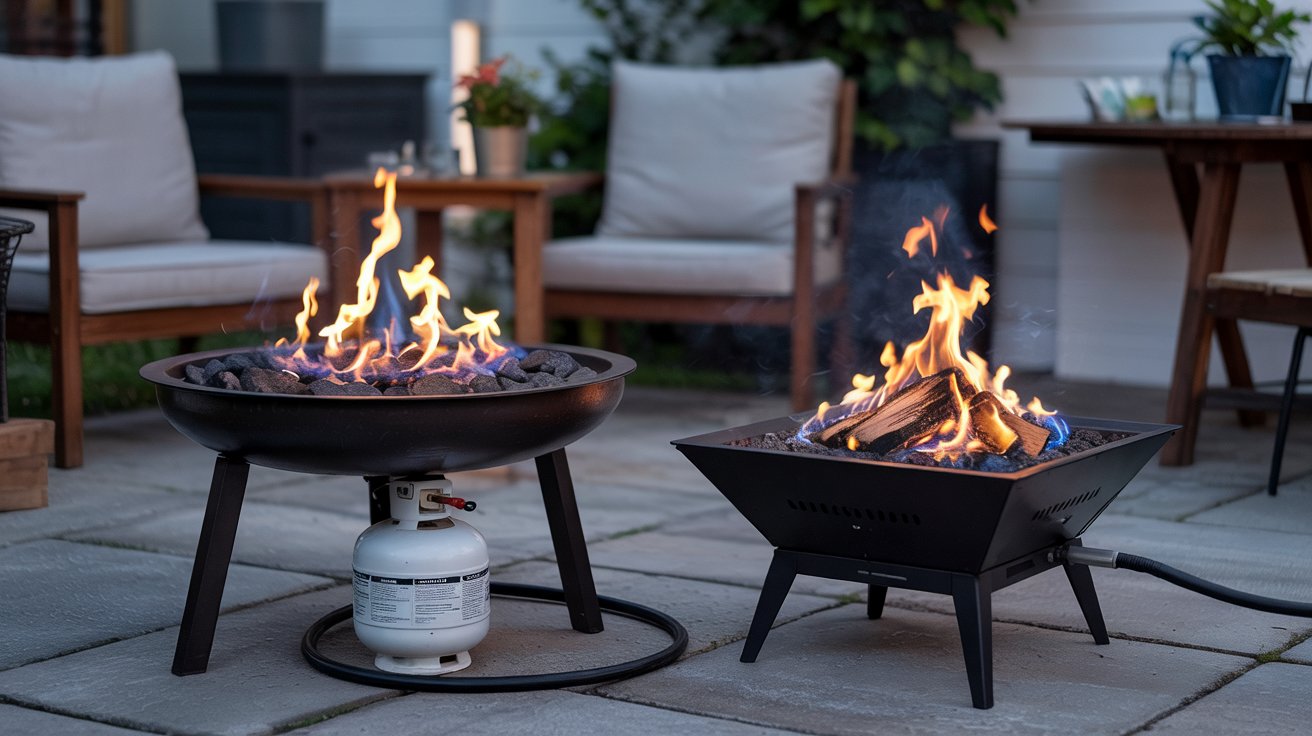
Propane and natural gas both produce clean, controllable flames, but they behave differently in real installations.
Propane stores as a pressurized liquid in portable tanks and delivers 91,500 BTU per gallon. Natural gas flows through a fixed utility line at roughly 1,000 BTU per cubic foot, meaning the two fuels aren't interchangeable without a conversion kit.
The wrong choice costs money - either in a gas line you didn't need or in propane refills that add up faster than expected. Most homeowners who regret their decision skipped one question: do I already have a gas line nearby?
This guide covers energy content, operating costs, installation realities, and a clear verdict for the most common situations. If you're still weighing broader backyard heating options, the context here will sharpen that decision too.
Propane fire pits offer portability and low upfront effort, while natural gas installations trade a higher setup cost for lower long-term fuel expense and uninterrupted flow.
Your existing gas infrastructure — or lack of it — is the single biggest factor in which fuel wins for you.
Bottom Line Verdict
Propane wins on flexibility. You can place a propane fire pit anywhere in the yard, move it to a new home, and start burning the same afternoon you unbox it.
Remember it later
Planning to try this recipe soon? Save it for a quick find later!
Natural gas wins on long-term convenience - once the line is in, you never haul a tank or worry about running out mid-evening.
The energy gap matters for operating costs. propane energy data confirms propane delivers 91,500 BTU per gallon, while DOE energy basics show natural gas yields roughly 1,000 BTU per cubic foot (about 100,000 BTU per therm).
At typical retail prices, propane often costs more per equivalent BTU - a gap that grows with heavy use.
Before picking a side, match your situation to one of these use cases:
- Renters or frequent movers: Propane is the clear answer - no permanent installation, no leaving infrastructure behind.
- Existing gas service nearby: Natural gas pays off within a few seasons once the line is run.
- Remote yard placement: Propane avoids the cost of trenching a long gas line across your property.
- High-frequency use (3+ nights per week): Natural gas eliminates refill logistics and reduces per-hour fuel cost.
- Occasional entertaining: Propane's lower upfront cost makes more sense if the pit runs fewer than 50 hours a year.
Neither fuel is universally better. The verdict depends entirely on what's already at your house and how you plan to use the pit.
Fuel Basics and Efficiency
Understanding the raw numbers prevents surprises on your utility bill. Propane and natural gas both burn cleanly, but their energy density and pricing structures are completely different - and you can't compare them dollar-for-dollar without converting to a common unit.
Natural gas is sold by the therm (100 cubic feet), which contains roughly 100,000 BTU. Propane is sold by the gallon at 91,500 BTU each.
According to UMD extension energy data, natural gas typically runs $1.00-$1.50 per therm in many U.S. regions, while propane averages $2.50-$4.00 per gallon - making propane two to four times more expensive per BTU at current prices.
A typical 60,000 BTU fire pit running for one hour burns roughly 0.65 gallons of propane or about 0.6 therms of natural gas. At average prices, that's $1.60-$2.60 per hour on propane versus $0.60-$0.90 per hour on natural gas.
| Metric | Propane | Natural Gas |
|---|---|---|
| Energy content | 91,500 BTU/gallon | ~100,000 BTU/therm |
| Avg. price (U.S.) | $2.50–$4.00/gal | $1.00–$1.50/therm |
| Cost per 100,000 BTU | ~$2.75–$4.37 | ~$1.00–$1.50 |
| 60K BTU pit: 1 hr run cost | $1.60–$2.60 | $0.60–$0.90 |
| Sold by | Gallon (tank) | Therm/CCF (utility) |
Prices shift with region and season. Propane tends to spike in winter when heating demand is high, which matters if you run your fire pit year-round.
Natural gas rates are generally more stable, though they vary by utility.
Propane prices vary by as much as $1.50 per gallon between rural and urban markets. If you're in a rural area without natural gas service, propane may be your only realistic option regardless of cost.
If you're comparing the full cost of a fire pit setup - including the unit itself - our breakdown of fire pit installation costs covers what to budget before you buy.

Pros and Cons by Fuel
Both fuels have genuine strengths, and both have friction points that catch homeowners off guard. The list below covers the real-world tradeoffs that matter most for a fire pit specifically - not just general fuel comparisons.
- Portable placement: Move the pit anywhere on a patio or deck without trenching or permits.
- No gas line required: Works in homes without natural gas service or in detached outdoor areas.
- Immediate setup: Buy the pit, attach the tank, and light it the same day.
- Higher pressure output: Propane maintains consistent flame pressure even in cold weather, unlike natural gas which can fluctuate.
- Renter-friendly: No permanent modification to the property required.
- Lower fuel cost: Natural gas runs 60–70% cheaper per BTU at most U.S. price points.
- No refills: Continuous supply from the utility line eliminates mid-fire tank depletion.
- Cleaner long-term logistics: No tanks to store, swap, or haul — ideal for permanent fire pit setups.
- Lower pressure, gentler flame: Natural gas burns at lower pressure, which some find easier to control for ambiance.
- Better value for frequent users: Savings accumulate fast if you run the pit more than 100 hours annually.
Safety is a real consideration with either fuel. The USFA outdoor fire guidelines recommend keeping all gas fire features at least 10 feet from structures and never leaving them unattended.
Both fuels require open-air placement - never use a gas fire pit in an enclosed space.
The CPSC fire pit safety alert underscores why sticking to rated gas fuels matters - liquid-burning fire pits have caused deaths and serious injuries, a risk you eliminate by choosing a certified propane or natural gas unit.
Never swap a propane burner onto a natural gas line without a proper conversion kit — the orifice sizes differ, and an incorrect fit creates a dangerous gas leak or incomplete combustion. Always verify the pit is rated for your fuel type before connecting.
Curious how gas fire pits stack up against charcoal or pellet alternatives for overall outdoor cooking setups?
Our gas vs charcoal comparison covers the same fuel logic applied to grills, and the pellet grill tradeoffs are worth reading if you're building out a full outdoor cooking area.
Costs and Installation Considerations
The unit price gap between propane and natural gas fire pits is small - most models in either fuel type run $300-$2,500 depending on size and materials. The real cost difference is in what happens before you light the first flame.
A propane pit needs only the unit and a standard 20 lb. tank ($30-$50 filled). A natural gas pit requires a licensed plumber or gas fitter to run a dedicated line, which typically costs $300-$1,500 depending on distance from your meter and local labor rates.
If trenching is needed across a yard, costs can push to $2,000 or more.
Operating cost data from UMD energy resources supports a straightforward break-even math: if you use a 60,000 BTU pit for 150 hours per year, you'd spend roughly $240-$390 on propane versus $90-$135 on natural gas.
The $300-$800 gas line cost typically pays back within two to four seasons for regular users.
Permits are often required for permanent gas line connections. Check with your local building department - most jurisdictions require a gas permit and inspection for any new fixed gas appliance.
Propane setups below a certain BTU threshold frequently fall under the permit threshold, though that varies by municipality.
Ask your gas utility if they offer a free line extension estimate before hiring a plumber. Some utilities run short gas line extensions at reduced cost as part of new appliance hookup programs.
If your outdoor project extends beyond a fire pit, the same installation logic applies to other permanent features. Our guides on pool type decisions, pool budget planning, and hot tub cost estimates can help you map total outdoor spend.
For outdoor kitchens with built-in gas connections, the DIY outdoor kitchen guide covers shared gas line planning in detail. And if you're rethinking the whole yard while you're at it, the grass type comparison is worth a look alongside your fire pit plans.

Frequently Asked Questions
Not without a conversion kit. Propane and natural gas use different orifice sizes, so connecting the wrong fuel creates dangerous incomplete combustion or gas leaks. Many manufacturers sell conversion kits for around $20–$50.
Yes, typically 60–70% cheaper per BTU. At average U.S. prices, running a 60,000 BTU pit for one hour costs $0.60–$0.90 on natural gas versus $1.60–$2.60 on propane.
A standard 20 lb. tank (about 4.7 gallons) lasts roughly 4–10 hours depending on BTU output. A 60,000 BTU pit burns through a full tank in approximately 4–5 hours at full flame.
Almost always for natural gas — a fixed gas line requires a permit and inspection in most U.S. jurisdictions. Propane pits below certain BTU thresholds may not require one, but always confirm with your local building department.
Most residential fire pits (40,000–100,000 BTU) require a ½-inch gas line. Longer runs from the meter lose pressure, so runs over 30 feet may need a ¾-inch line — confirm sizing with a licensed gas fitter per outdoor fire safety standards.
Pin it for your next propane vs natural gas fire pit project.