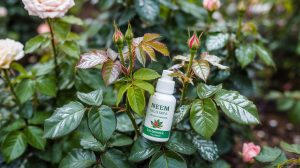
Japanese beetles don't give you much warning. One morning your rose canes look fine; by afternoon the leaves are skeletonized down to the veins.
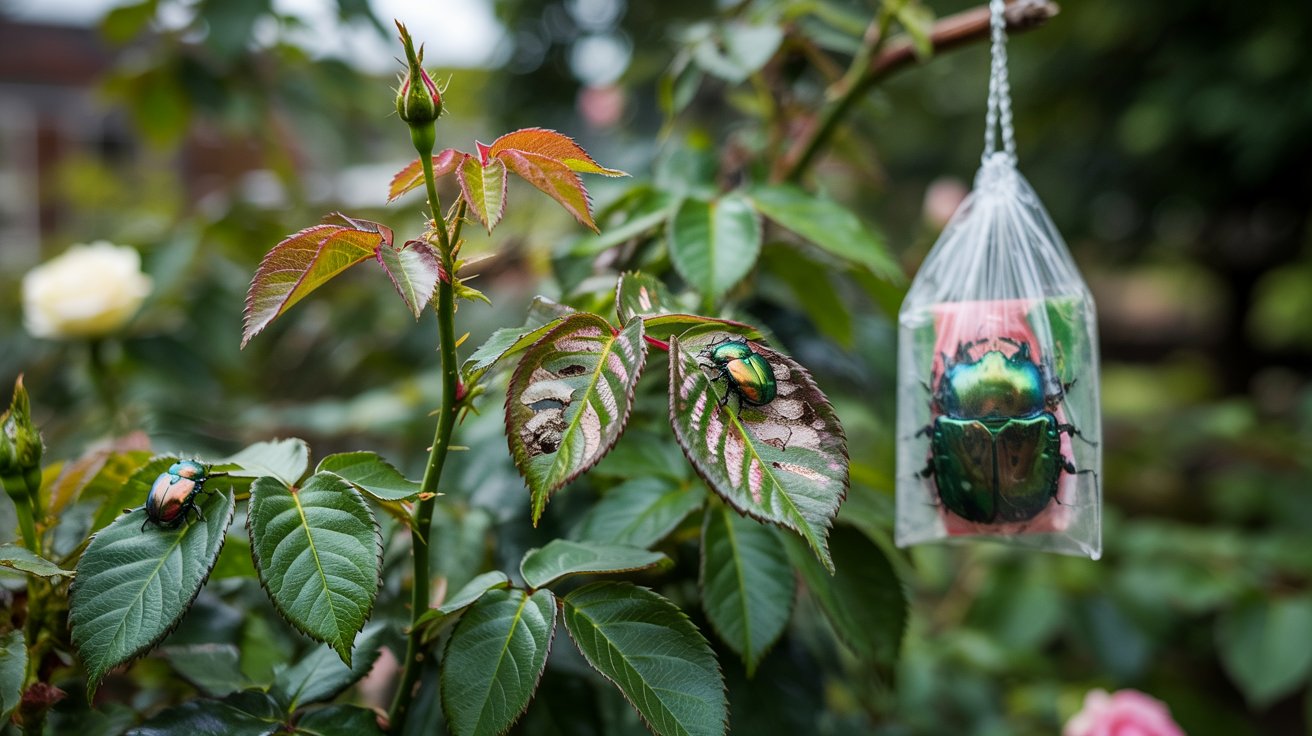
Popillia japonica feeds in groups, and once a few land on a plant they release aggregation pheromones that pull in dozens more.
Peak adult activity runs from late June through August across most of the eastern and midwestern US, so the window to act is short.
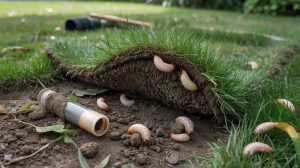
The good news is that control works on two fronts at once: knocking back the adults you see now and suppressing the grubs underground so next year's population is smaller before it even emerges.
This article covers a prioritized six-step plan for immediate adult control, a side-by-side breakdown of every major tool - from grub elimination methods to beetle traps - and a seasonal calendar that tells you exactly when to act on each layer of defense.
Japanese beetles skeletonize leaves fast and reproduce underground as lawn grubs. A multi-pronged approach — hand-picking adults, applying milky spore or nematodes for grub suppression, and using targeted sprays — offers the most durable relief.
Avoid relying on traps alone.
A Direct, Prioritized Six-Step Action Plan
Japanese beetle damage compounds fast because adults feed in clusters and larvae weaken turf simultaneously. Acting in a set sequence - adults first, soil biology second, plant choices third - prevents you from wasting money on tools that address symptoms without fixing the source.
Remember it later
Planning to try this recipe soon? Save it for a quick find later!
Start with what you can do today, then layer in longer-term solutions over the coming weeks.
Check infested plants at dusk as well as dawn — beetles cluster overnight too. A single two-minute hand-picking session can remove 20–30 adults before they trigger aggregation pheromone release at first light.
If you grow Japanese maples, know they sit in a moderate-preference category - not a top target, but worth monitoring when beetle populations are high nearby.
Comparing Traps, Grub Controls, and Chemical Options
No single product solves a Japanese beetle problem on its own. Traps address adults in flight, grub treatments work underground months before adults emerge, and sprays handle the damage happening right now on your plants.
The table below lays out each major tool, when it applies, and what you should realistically expect from it.
| Method | Target Stage | Timing | Effectiveness | Key Caution |
|---|---|---|---|---|
| Hand-picking + soapy bucket | Adult | Jun–Aug (morning) | High for small infestations | Labor-intensive; must be consistent |
| Pyrethrin spray | Adult | Jun–Aug | Moderate; short residual | Toxic to bees; spray at dusk |
| Imidacloprid (systemic) | Adult (feeding) | Spring (before bloom) | High on foliage; season-long | Never apply to flowering plants |
| Pheromone traps | Adult | Jun–Aug | Low to moderate | Can increase local beetle density |
| Milky spore (Bacillus popilliae) | Grub (larval) | Late summer or fall | High; builds over 2–4 years | Works best where soil stays above 65°F |
| Heterorhabditis nematodes | Grub (larval) | Aug–Sep (moist soil) | Moderate to high | Must be applied to moist soil; avoid freezing temps |
| Carbaryl (Sevin) | Adult | Jun–Aug | High; fast knockdown | Broad-spectrum; harmful to beneficial insects |
Research from UC ANR's IPM program confirms that both milky spore and Heterorhabditis nematodes are effective biological grub controls - with the important distinction that nematodes provide faster but shorter-lived results, while milky spore builds a persistent soil reservoir over several seasons.
Plant selection also plays a quiet but powerful role in this equation. Iowa State University Extension notes that less-preferred plant species experience significantly less feeding pressure even in high-beetle years, making landscaping choices a genuine long-term control tool alongside sprays and soil treatments.
If slugs or aphids share your pest roster, the same cultural practices that reduce beetle damage - clearing debris, improving drainage, and avoiding nitrogen overload - also help limit slug and snail activity in garden beds.
For a broader look at how Japanese beetles fit into lawn pest cycles, our guide to common turf and garden pests covers the overlap between surface feeders and underground larvae in connected pest systems.
Seasonal Timing and Long-Term Prevention
The calendar largely dictates which tools are worth deploying. Using a grub treatment in June, for example, misses most larvae - they've already pupated into adults.
Hitting the same soil in August catches newly hatched grubs while they're still small and feeding near the surface.
Here's how a full 12-month cycle looks in practice for most US gardeners in zones 5-8:
- January-March: Plan plant replacements. Research which invasive species are worth removing from your landscape to reduce overall pest habitat.
- April-May: Apply imidacloprid soil drench now if protecting non-blooming trees or shrubs - before adults emerge and well before any flowering begins.
- June-August: Peak adult feeding. Hand-pick daily, deploy contact sprays as needed, and keep traps far from valued plants. This is also the right window to start summer garden maintenance tasks that reduce beetle-friendly conditions, like clearing excess mulch and cutting back overgrown groundcovers.
- August-September: Best window for grub treatment. Apply milky spore or nematodes to moist turf now while grubs are small and near the surface.
- October-December: Grubs move deeper as soil cools. Focus on soil health - aerate, overseed thin patches, and limit supplemental watering, which discourages female beetles from laying eggs in turf next season.
According to the Missouri Department of Conservation, milky spore is a long-term commitment — it can take 2 to 4 years to build sufficient soil concentration for reliable grub suppression. In zones 6 and warmer, it's worth starting it the same year you first notice heavy adult activity.
Entomopathogenic nematodes from UC ANR's IPM resources can supplement milky spore in the short term, providing grub knockdown in the first season while the bacterial soil population is still establishing.
Keep soil moist for at least two weeks after nematode application - they need moisture to move through the root zone and reach feeding grubs.
One underrated prevention strategy: moles in your lawn may actually be tracking a grub infestation. If you're already working to stop mole damage in your yard, treating grubs removes the food source that's drawing them in - solving two problems at once.
Similarly, managing aphid pressure on the same shrubs Japanese beetles prefer keeps those plants from being hit by two stressors simultaneously during peak summer.
Frequently Asked Questions
Boxwood, yew, holly, red maple, and most ornamental grasses are far less preferred by Japanese beetles than roses, lindens, or crabapples.
Traps attract more beetles than they capture, often increasing local beetle density. Position them at least 30 feet from valued plants if you use them at all.
Milky spore typically takes 2 to 4 years to build a soil concentration strong enough for reliable grub suppression, though it persists for 10+ years once established.
Yes. Heterorhabditis nematodes applied to moist soil in August or September can deliver measurable grub reduction in the first season, unlike milky spore which builds over years.
Spray at dusk during peak feeding from late June through August. Pyrethrin breaks down within 1–2 days, so repeat every 5–7 days when beetle pressure is high.
Pin it for your next how to get rid of japanese beetles project.