As soon as the soil thaws and grass blades start pushing through, the window for smart spring lawn care opens fast. Miss it by two weeks and you're chasing weeds instead of preventing them.
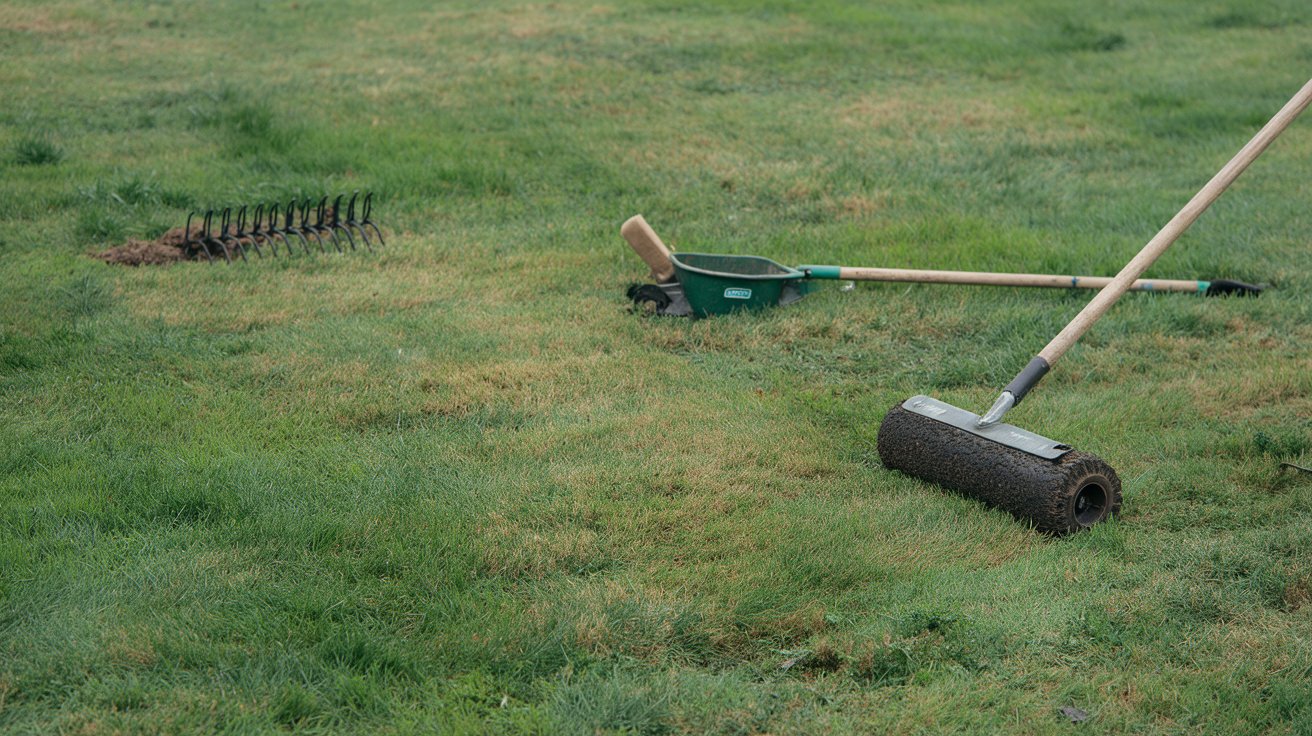
Get ahead of it with the right tasks at the right time, and your lawn rewards you with thicker, greener growth through summer.
This guide organizes every key spring task around three zone groups: cool-season turf in the North, transition-zone lawns in the Mid-Atlantic and Midwest, and warm-season turf across the South. Each group follows a different spring calendar driven by soil temperature, not just the calendar date.
We cover the four core tasks - mowing, fertilizing, pre-emergent herbicide application, and seeding - with timing windows tied to your zone. University seasonal lawn planning resources back every recommendation here, starting with the Minnesota Extension lawn calendar for cool-season timing.
Use the zone-by-zone table in Section 2 as your master checklist, then flip to Section 3 for the specific tasks that apply to your grass type. Section 5 shows you how to fine-tune everything for your exact zip code.
Spring lawn care success depends on matching tasks to your zone group and soil temperature. Cool-season lawns in the North start in March–April, transition zones work through March–May, and warm-season southern lawns wait until April–June.
Core tasks include mowing, fertilizing, pre-emergent, and seeding on zone-timed schedules.
Zone-by-Zone Spring Schedule
Spring lawn care doesn't follow a single national calendar. A homeowner in Minnesota and one in Georgia are working with completely different soil-temperature curves, grass species, and weed-pressure windows.
Remember it later
Planning to try this recipe soon? Save it for a quick find later!
Grouping by zone makes the timing concrete.
The three zone groups map roughly to USDA hardiness zones: Cool-Season North (Zones 3-6) grows Kentucky bluegrass, tall fescue, and ryegrass; the Transition Zone (Zones 6-7) can support both cool- and warm-season grasses; and the Warm-Season South (Zones 7-10) grows bermudagrass, zoysia, and centipede.
Ohio State University Extension's spring lawn care timing guide confirms that fertilizer and pre-emergent application windows differ by as much as six weeks across these groups.
The table below lays out the full early, mid, and late spring task windows for each zone group. Use it as your master checklist reference.
| Zone Group | Early Spring | Mid Spring | Late Spring |
|---|---|---|---|
| Cool-Season North (Zones 3–6) | Rake debris; mow at 3–3.5 in. when soil hits 40°F; no fertilizer yet | Apply pre-emergent when soil reaches 50°F; light fertilizer (0.5 lb N) if needed | Core aerate if compacted; overseed thin spots; fertilize lightly before heat arrives |
| Transition Zone (Zones 6–7) | Scalp cool-season grass lightly; apply pre-emergent by late March | Fertilize cool-season turf (1 lb N); mow warm-season areas once green-up begins | Shift watering schedule; post-emergent broadleaf weed control; avoid seeding warm-season types now |
| Warm-Season South (Zones 7–10) | Hold off — wait for soil to hit 55–65°F before any action | Apply pre-emergent before soil hits 55°F; fertilize bermuda/zoysia once fully green | Full fertilizer schedule begins; raise mowing height to 1–2 in.; water deeply once per week |
Pre-emergent timing is the task most homeowners get wrong. Apply before soil reaches 55°F to block crabgrass germination - once that threshold passes, the window closes and you'll need post-emergent products instead.
A soil thermometer costs under $15 and removes all guesswork.
Fertilizer timing splits cleanly by zone. Cool-season lawns respond best to a light spring feeding (0.5-1 lb nitrogen per 1,000 sq ft) and a heavier fall application.
Warm-season lawns are the opposite - they need their primary nitrogen in late spring and summer, not in cool soil. Pushing nitrogen too early on dormant warm-season turf encourages weeds without strengthening grass.
Applying fertilizer to cool-season grass during a late-April heat spike can burn roots and trigger disease. If temps jump above 80°F unexpectedly, skip or delay that spring feeding and wait for cooler conditions.
You can build a full-year lawn schedule once you've locked in these spring windows - they anchor the timing for everything that follows through summer and fall.
Zone-Specific Tasks by Group
The table gives you the when; this section gives you the what. Each group has distinct mowing heights, aeration windows, and weed-control approaches that don't translate across zones.
University of Connecticut Extension's spring lawn care guidance emphasizes matching every task to grass type and regional timing.
These checklists are sequential - work top to bottom as spring progresses in your zone.
Fall is the preferred overseeding season for cool-season grasses across all zones. If your fall yard prep included overseeding, spring is mainly about protecting those new seedlings - hold pre-emergent and mow high until new grass is well established.

Process: Start, Then Fine-Tune by Zone
Knowing the tasks is half the job. Executing them in the right sequence keeps you from undoing your own work - applying pre-emergent after you've seeded, for example, blocks germination of both weed seed and grass seed.
Illinois Extension's spring lawn care corner outlines the same sequencing logic for transition-zone lawns.
Follow these steps in order, adjusting the calendar dates for your zone group based on the table in Section 2.
Once your spring tasks are dialed in, keeping your lawn healthy through heat becomes much easier because you've built the right foundation.
Personalize Your Zone Plan
The zone groups in this guide are a starting framework. Your actual lawn may behave a week or two earlier or later depending on elevation, slope, sun exposure, and local urban heat.
A south-facing slope in Zone 6 warms faster than a shaded north-facing yard in the same zip code.
University of Maryland Extension's lawn management guide recommends a soil test every 2-3 years as the foundation of any customized plan.
Your county cooperative extension office processes tests for $10-$20 and tells you exactly what pH adjustment or nutrient your specific soil needs - information no generic checklist can provide.
USDA zones are based on minimum winter temperatures, not summer heat or rainfall. If you're in a high-rainfall zone or on clay soil, adjust watering and aeration timing accordingly. Check your exact hardiness zone before locking in dates.
Three levers let you fine-tune the plan for your specific conditions:
- Soil test results: If pH is below 6.0, lime application in early spring bumps pH and makes fertilizer work harder. High phosphorus readings mean you can skip that nutrient entirely.
- Sun exposure: Shaded lawns need less water, less fertilizer, and higher mowing heights than full-sun areas - treat them as a separate zone within your own yard.
- Water access: If you rely on rainfall, skip fertilizer during dry stretches. Nitrogen without moisture scorches roots and wastes money.
Your local cooperative extension office is the best single source for zip-code-level timing adjustments. Most have a free hotline or online chat during spring.
Pair their local data with the zone-group framework here and you'll have a plan more accurate than anything sold in a bag at the hardware store.
For context on what's happening in your garden at the same time, the spring garden prep steps dovetail with these lawn tasks, especially around soil testing and amendment timing.
If you're planning what to plant alongside your lawn refresh, March planting options offer a useful starting point for beds and borders.
Set a phone reminder for the first week of March to check soil temperature daily. By the time most people think about lawn care, the pre-emergent window is already closing in Zones 7–8.
If you want to lock in your fall results early, winterizing your yard properly last season made everything you're doing now more effective.
And for those planning early-season plantings in colder zones, January planting ideas and February starting tasks can help you layer lawn and garden work on the same timeline.
Frequently Asked Questions
Cool-season lawns get a light feeding (0.5 lb N) in mid-spring after active growth begins. Warm-season lawns wait until fully green, typically late April to June depending on zone.
Apply pre-emergent before soil hits 55°F. In Zones 7–8 that often means February or early March; Zones 5–6 target late March to mid-April. Use a soil thermometer, not the calendar.
Look up your USDA hardiness zone by zip code, then identify your grass type — cool-season (fescue, bluegrass) or warm-season (bermuda, zoysia). Those two facts set your entire spring schedule.
Fall is strongly preferred for cool-season grasses in Zones 3–6 — soil stays warm and competition is lower. Spring overseeding works for patching, but pre-emergent use must be skipped in seeded areas.
Water aerated areas lightly every 2–3 days for the first two weeks to keep the soil surface moist. Once new growth fills in, shift to deep weekly watering of about 1 inch total.
Pin it for your next spring lawn care checklist by zone project.