October arrives with a sharp shift in garden energy. Warm-season beds are winding down, soil temperatures are still workable, and a whole new planting window is opening up.
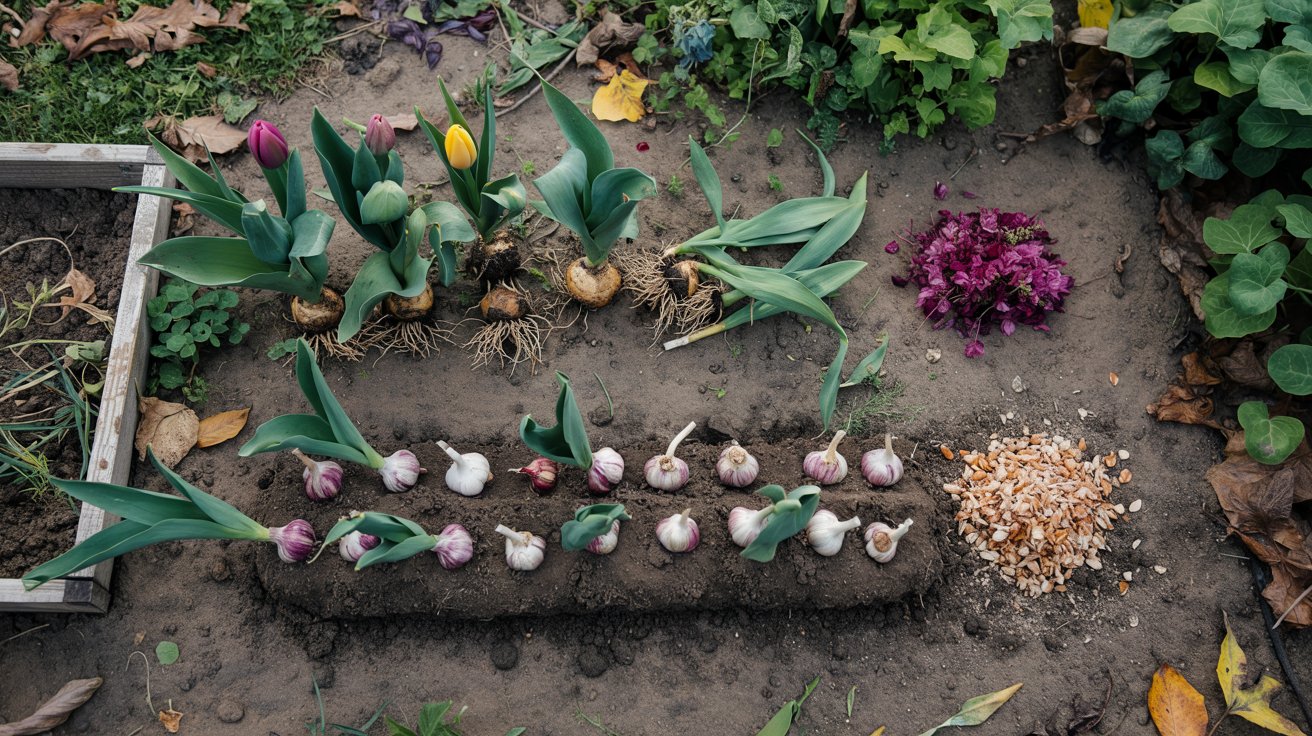
This is the month to act on garlic, fall bulbs, and cool-season crops before your first hard frost locks the ground. Miss October and you miss spring tulips, summer garlic, and winter greens all at once.
A lot of gardeners assume October means putting the garden to bed. It actually means planting a different garden - one that works quietly through cold months and pays off from April onward.
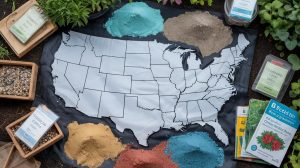
Zone awareness matters more in October than almost any other month. A gardener in Zone 7 still has six weeks of growing weather; a Zone 5 gardener may have two.
Our September planting head start covers the transition leading into this month, but October has its own distinct priorities.
This guide gives you a concrete plan: which vegetables to sow now, which bulbs to drop in before the ground freezes, how to time garlic to your first frost date, and which cover crops protect your soil through winter.
October is prime time for garlic planting, fall bulbs, cool-season vegetables, and cover crops. Plant bulbs and garlic before the ground freezes hard, sow greens while soil stays above 40°F, and check your first frost date to calibrate every decision this month.
Vegetables to Plant in October
Cool-season crops are built for this weather. Soil still holds enough warmth to germinate seeds, and the dropping air temperature actually sweetens greens like spinach and arugula by triggering sugar production in the leaves.
Remember it later
Planning to try this recipe soon? Save it for a quick find later!
Direct-sow fast-maturing varieties first: radishes mature in 25-30 days, arugula in 35-40 days, and baby spinach in as few as 25 days. Carrots and beets need 60-70 days, so sow those only if you have 8+ weeks before your last workable ground date.
Mild-climate gardeners in Zones 8-10 can also direct-sow beets and carrots now for a late winter harvest. Check a full monthly vegetable planting guide to see how October fits into a year-round growing plan.
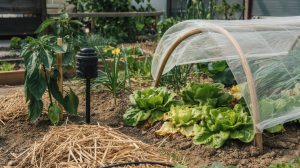
- Zones 3-5: Focus on fast crops only - radishes, arugula, spinach - and use row cover from day one.
- Zones 6-7: Full range of cool greens, brassica transplants, and onion sets are all viable through mid-October.
- Zones 8-10: Direct-sow carrots, beets, peas, and even broccoli transplants for winter harvests.
Flowers and Bulbs to Plant in October
Fall bulb planting is one of those tasks where timing is nearly everything. University of Minnesota Extension identifies late September to early October as the ideal window to get spring-blooming bulbs into the ground before hard frost.
The goal is to let bulbs establish roots before the soil freezes, but not warm enough that they break dormancy and send up premature foliage. A soil temperature around 40-50°F at planting depth is the sweet spot.
In Zones 3-6, daffodils and hyacinths are reliably hardy without any extra protection. Tulips in those zones benefit from chilling periods of at least 12-14 weeks, which fall planting naturally provides.
Zone 7 and warmer gardeners may need to pre-chill tulip bulbs in the refrigerator for 6-8 weeks before planting.
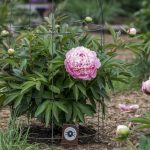
For perennial flowers, October is also a good window to plant bare-root peonies and fall-divided hostas. Both establish root systems over winter and come up stronger the following spring than container-grown plants set out in spring.
Garlic Planting Guide (Fall)
Garlic is the most time-sensitive October task. Plant it too early and it sends up excessive top growth before winter; plant too late and it doesn't establish enough roots to survive a hard freeze.
University of Minnesota Extension recommends planting garlic one to two weeks after the first killing frost, which typically falls in October for most of the northern U.S.
Hardneck varieties like Rocambole and Purple Stripe handle cold better and offer more complex flavor. Softneck types like Artichoke and Silverskin store longer - up to 9 months - and suit milder winters in Zones 7-9.
Choose seed garlic from a reputable nursery or local farm rather than grocery-store bulbs, which are often treated to suppress sprouting.
If you're working a new bed this fall, check our guide on winterizing your garden beds before amending soil for garlic - those prep steps overlap cleanly.
You can also use the companion planting chart to pair garlic with other crops strategically in the same bed.
Garlic planted in soil with standing water or poor drainage will rot over winter before ever establishing. If your bed stays wet after heavy rain, build a raised row or move garlic to a raised bed entirely — waterlogging is the number one garlic failure cause.
Cover Crops and Zone-Sensitive Timing
Cover crops are the garden's insurance policy. Sow them now and they protect bare soil from erosion, fix nitrogen, and break up compaction - all before you need those beds again in spring.
Winter rye is the most cold-tolerant option and can be sown as late as 6 weeks before a killing frost in Zones 4-7. Crimson clover and hairy vetch fix nitrogen and work well in Zones 6-9, but need to go in earlier - ideally by early October - to establish before hard cold.
Oats and barley are "winter-kill" crops that die in place and leave a mat of organic matter to till in spring without active termination.
According to Penn State Extension cover crop dates, October is the primary sowing window across most mid-Atlantic and Midwestern regions. Zones 3–4 should target the first two weeks of October; Zones 7–8 can push sowing to early November without losing stand establishment.
To terminate cover crops in spring, mow or crimp them at flowering stage - before they set seed - then wait two weeks before tilling or transplanting. This timing prevents them from re-seeding and gives the biomass time to start breaking down.
Pair cover crops with your zone research using our USDA zone identification tool to confirm your first frost window before sowing. For planning what comes next after cover crop termination, the April planting calendar shows exactly what follows in spring beds.
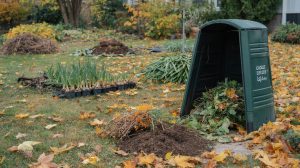
If beds will sit empty all winter without a cover crop, at minimum spread 3-4 inches of compost over the surface.
Bare soil loses structure fast over freeze-thaw cycles, and a spring planting calendar built around January planning goals or February seed-starting depends on healthy, structured soil waiting for you.
Frequently Asked Questions
Zones 3–5 should focus on fast greens and garlic only. Zones 6–7 can add brassica transplants and onion sets. Zones 8–10 have a full cool-season planting window including carrots, peas, and beets.
Plant spring-blooming bulbs when soil temperature drops to 40–50°F — typically late September through October. Bulbs need 12–14 weeks of cold to bloom properly in spring.
Winter rye is the most reliable — it germinates in cold soil and tolerates hard frost. Hairy vetch and crimson clover fix nitrogen but need to go in by early October in Zones 5–6.
Garlic needs 4–6 weeks of root establishment before the ground freezes hard. In most of the northern U.S., that means planting no later than late October; Zone 7–8 gardeners can push into November.
Radishes (25–30 days to harvest), arugula (35 days), and baby spinach (25 days) are your best bets. All three germinate in cool soil and mature fast enough to harvest before a hard freeze in most zones.
Pin it for your next what to plant in october (vegetables flowers herbs) project.