Most yards need about six weeks of focused attention between the first cool nights and the first hard freeze - and how you spend that time matters more than how much of it you spend. Skip the right tasks and you protect overwintering wildlife.
Rush the wrong ones and you set up a harder spring.
A practical fall yard cleanup isn't about doing everything at once. It's about sequencing lawn, bed, and tool work so each task supports the next.
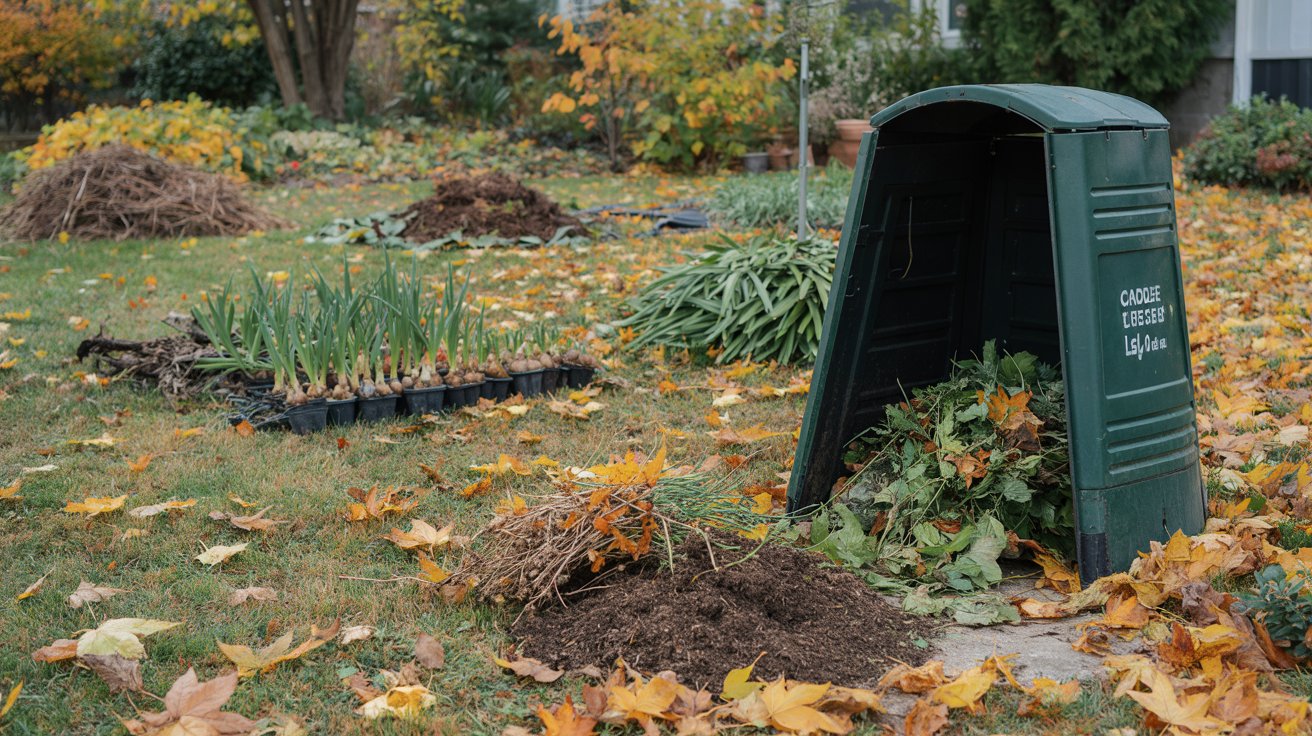
Leaving some seed heads standing and a loose layer of leaves under shrubs actually helps yard health through winter more than stripping everything bare. Native bees overwinter in hollow stems, and ground beetles shelter under leaf litter - both keep pest pressure lower come spring.
This guide walks through a realistic six-week plan, a region-aware timing section, and a winterization checklist you can finish in an afternoon. If you've already handled your summer garden tasks, you're starting from a strong position.
A 6-week fall yard cleanup covers lawn mowing adjustments, leaf management, bed prep, wildlife-friendly pruning holds, and full tool winterization — sequenced so early tasks protect later ones. Regional timing shifts by 2–4 weeks depending on climate.
University of Illinois Extension fall garden guidance recommends leaving ornamental grasses and seed heads standing through winter to shelter beneficial insects and provide food for birds.
The 6-Week Fall Cleanup Workflow
Breaking cleanup into weekly zones prevents the all-day Saturday scramble that leaves half the work undone. Each week targets a specific area so you're never doubling back.
Remember it later
Planning to try this recipe soon? Save it for a quick find later!
Leaf management is the throughline - it affects every zone from lawn to beds to compost pile. Instead of bagging and hauling, mulch leaves in place with a mower wherever grass exists, and move excess to beds as a 2-3 inch insulating layer.
According to Cornell's fall cleanup Q&A, shredded leaves decompose faster than whole ones and add measurable organic matter to soil within a single season.
Tasks by Area and Timing
Not every task belongs in the same week - and some shouldn't happen until late October or even November depending on your zone.
This table shows what to do, where, and when, so you can build your own schedule around actual weather rather than a calendar date.
Timing windows here reflect a typical temperate-zone fall. Your local hardiness zone details will shift some windows by a week or two in either direction.
MSU Extension's winter prep checklist highlights that soil temperature - not air temperature - drives the best timing for fertilization and mulching.
| Area | Task | Timing Window | Action |
|---|---|---|---|
| Lawn | Lower mow height | Early Oct | Reduce to 2–2.5 in. over 2 cuts |
| Lawn | Leaf mulching | Early–Mid Oct | Shred in place; rake excess to beds |
| Lawn | Fall fertilization | Mid–Late Oct | Apply when soil is 50–55°F |
| Garden Beds | Annual removal | After first frost | Pull diseased plants; compost healthy ones |
| Garden Beds | Perennial cutback | Late Oct–Nov | Leave seed heads; cut only collapsed stems |
| Garden Beds | Mulch layer | Before hard freeze | 2–3 in. shredded leaves or compost |
| Trees/Shrubs | Dead branch removal | After leaf drop | Remove crossing/dead wood only |
| Trees/Shrubs | Spring bloomer pruning | Skip until spring | Buds set — wait until after bloom |
| Tools | Hose storage | Before first freeze | Drain, coil, store indoors |
| Tools | Mower winterization | After final mow | Drain or stabilize fuel; clean deck |
Fall fertilization timing is one of the most misunderstood tasks. Rutgers Extension lawn care guidance confirms that applying fertilizer when soil drops below 50°F wastes product - roots stop active uptake at that point, and nitrogen can leach into groundwater instead.
If you're also planting cool-season crops or bulbs, check our guide on October planting options to layer those tasks into the same schedule efficiently.

Seasonal Tweaks by Region
A yard in coastal Oregon and a yard in central Illinois share almost no overlap in fall timing. Coastal climates stay mild enough that leaf drop can stretch into December, while continental zones see hard freezes by late October.
Your six-week window shifts accordingly.
Arid regions in the Southwest often skip leaf management entirely - deciduous cover is limited - and focus fall energy on irrigation system blowouts and soil amendment before the ground hardens.
Humid Southeast yards face a different problem: warm, wet falls encourage fungal disease if cut plant material sits too long on the soil surface.
USU Extension's October yard checklist notes that intermountain and high-elevation yards may need to complete all outdoor tasks by mid-October — two to three weeks ahead of lower-elevation schedules.
Here's how to adapt the six-week plan by broad region:
- Pacific Northwest (Zones 8-9): Start cleanup in late October. Leaf drop often peaks in November. Hold off on mulching beds until heavy rains ease - wet layers mat and block air circulation.
- Midwest/Northeast (Zones 5-6): Begin by early October. Hard freeze can arrive by late October in Zone 5. Prioritize irrigation shutdown and mow-height adjustment in Week 1.
- Southeast (Zones 7-8): Start mid-October. Warm soil stays active longer, making late-October fertilization effective. Watch for fungal issues in beds - remove spent annuals promptly.
- Mountain West/High Plains (Zones 4-5): Compress the plan to four weeks, beginning late September. Protect tender perennials and newly planted bulbs with a thicker mulch layer - 3-4 inches - before the first hard freeze.
- Southwest/Arid West (Zones 7-10): Focus on irrigation winterization and compost application. Many ornamentals stay semi-evergreen, so selective pruning matters more than wholesale cutback.
Wildlife habitat considerations also shift by region. In the Southeast and Pacific Northwest, mild winters mean insects are more active later - hold off cutting hollow-stemmed perennials until late February or March wherever ground temperatures stay above freezing most nights.
Pair fall cleanup timing with your spring garden prep plan so you're not undoing late-fall work too early.
Winterize Your Yard and Tools
Cleanup and winterization overlap, but they're not the same job. Cleanup removes, organizes, and protects.
Winterization focuses specifically on preventing damage from freezing temperatures, moisture, and prolonged dormancy stress on plants and equipment.
A single focused afternoon covers most of it for a typical quarter-acre yard. Larger properties may need two sessions - one for beds and lawn, one for tools and irrigation.
Use this full yard winterization guide if you have more complex irrigation or raised bed systems to address.
If you've already grown vegetables this year, pull spent plants fully and plan your February seed starts while bed layout is fresh in your mind. If you grew pumpkins, our guide on growing pumpkins covers what to do with spent vines and seeds.
For those planning ahead to the coldest months, our January planting guide covers cool-season indoor starts that pair well with a clean, prepped garden space. Looking ahead further, our spring lawn recovery steps are much easier when fall winterization is done right.

Frequently Asked Questions
Start when nighttime temps consistently drop below 50°F, typically early October in Zones 5–6 and late October in Zones 7–8. High-elevation yards may need to begin in late September.
Mulch thin layers directly into the lawn — shredded leaves add organic matter and disappear by spring. Rake only when leaf cover exceeds what a mower can shred in one pass without matting.
Yes, but timing matters. Apply when soil temperature is between 50–55°F. Below 50°F, roots stop uptake and nitrogen leaches into groundwater instead of feeding turf.
Yes. Coneflowers, black-eyed Susans, and ornamental grasses provide seeds for birds and shelter hollow stems for native bees. Leave them standing until late February or early March.
In Zone 6 and colder, compressed air blowout is required to clear water from lateral lines. Turn off the outdoor shutoff valve before the first freeze and disconnect all surface hoses.
Pin it for your next fall yard cleanup checklist project.