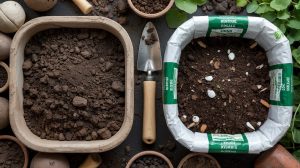
Potting soil is the single most important supply decision you make for container gardening. The wrong mix compacts into a dense brick, starves roots of oxygen, and turns a healthy plant into a struggling one within weeks.
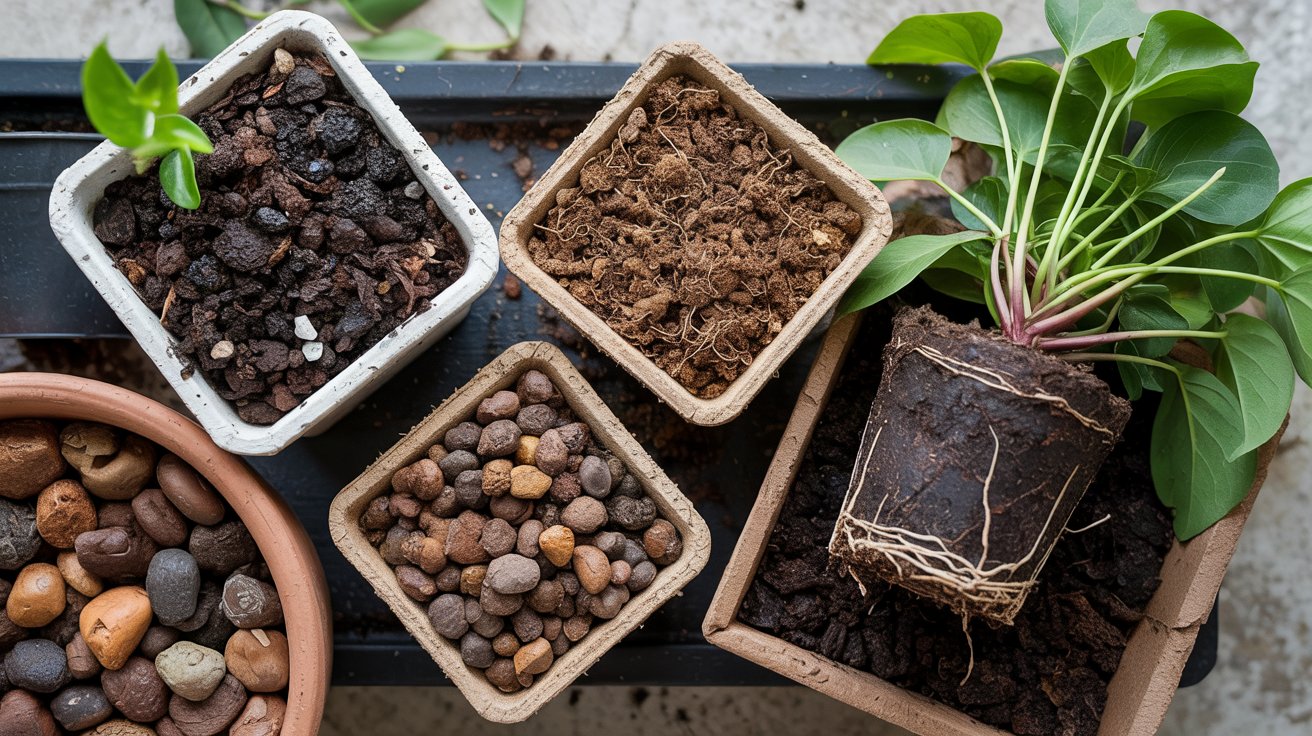
Container plants can't send roots searching for better soil. Whatever you pack into that pot is their entire world.
Not all bags labeled "potting mix" are equal. Some contain heavy garden soil that suffocates roots in pots.
Others are so light and bark-heavy that water pours straight through without wetting the root zone at all.
We tested and compared more than a dozen commercial mixes for drainage, texture, moisture retention, and ingredient quality. This guide covers what we found and what soil type works best in pots, window boxes, hanging baskets, and raised planters.
Whether you're growing tomatoes in five-gallon buckets or herbs on a balcony, the right potting soil makes a measurable difference in how fast plants establish, how often you water, and how big your harvest gets.
The best potting soil for containers drains fast, holds enough moisture between waterings, and stays loose after repeated wetting. Look for mixes with perlite, coir, or bark as primary ingredients.
Avoid bags that list "topsoil" or "garden soil" first.
Why Potting Soil Is Different from Garden Soil?
Garden soil and potting mix do completely different jobs. Garden soil is formulated to integrate with existing ground, where earthworms, microbes, and deep drainage handle aeration naturally.
Remember it later
Planning to try this recipe soon? Save it for a quick find later!
In a pot, those systems don't exist.
When you pack garden soil into a container, it compacts under its own weight within a few waterings. Roots hit a dense layer, water pools at the bottom, and root rot follows fast.
Good potting mix is engineered to stay loose in a confined space. It uses lightweight ingredients like perlite, vermiculite, or pine bark to maintain air pockets even after months of watering and settling.
If you're comparing specific products, our topsoil vs. garden soil breakdown explains the structural differences in detail.
Never fill containers with straight garden soil or topsoil. Even high-quality topsoil compacts in pots and blocks the drainage holes. It also introduces weed seeds and soil-borne pathogens that are hard to control in a small container.
Potting mixes are also designed with a higher porosity ratio - typically 30-50% air space by volume when freshly mixed. That air space is what keeps roots from drowning after a heavy rain or an overzealous watering session.
What to Look for on the Bag?
The ingredient list on a bag of potting mix tells you almost everything. Ingredients are listed by volume, so whatever appears first dominates the mix.
Understanding those first three ingredients is enough to judge most bags.
- Perlite: White volcanic glass granules that hold air pockets and prevent compaction. Any quality mix should contain at least 15-20% perlite by volume.
- Coconut coir: Fibrous coconut husk material that holds moisture without getting waterlogged. It's a more sustainable alternative to peat moss and holds up better in warm climates.
- Peat moss: Traditional moisture-retaining base material, slightly acidic (pH 3.5-4.5 on its own). Works well but decomposes faster than coir and is harder to re-wet once it dries out completely.
- Pine bark fines: Shredded bark that improves drainage and adds long-lasting structure. Common in mixes designed for outdoor containers and raised beds.
- Vermiculite: Expanded mineral that retains moisture and nutrients. Useful in seed-starting mixes but can retain too much water in large containers.
- Compost or worm castings: Adds baseline nutrients and microbial life. Good to see on the label, but not as a primary ingredient - too much compost alone compacts over time.
Avoid mixes where "composted forest products" or "humus" appears as the only base ingredient. These are low-cost fillers that break down quickly and compact badly.

The Best Potting Mixes by Plant Type
Different containers and crops have different needs. A general-purpose mix works for most ornamentals, but vegetables, succulents, and orchids each need specific adjustments in drainage, nutrient load, and moisture retention.
Matching the mix to the plant prevents most common container problems before they start. Our guide on understanding soil properties covers the science behind these differences if you want to go deeper.
| Plant Type | Best Base Mix | Key Amendment |
|---|---|---|
| Vegetables & tomatoes | Premium potting mix | Add 20% perlite + slow-release fertilizer |
| Herbs (basil, parsley) | General potting mix | Ensure pH 6.0–7.0, good drainage |
| Succulents & cacti | Cactus/succulent mix | 50%+ coarse perlite or grit |
| Orchids | Bark-based orchid mix | No peat — needs fast air exchange |
| Tropical houseplants | Premium mix with coir | Add worm castings for slow nutrition |
| Annuals & flowers | Any quality potting mix | Moisture-retaining crystals in hanging baskets |
Vegetable containers need the most attention. Heavy feeders like tomatoes and peppers deplete nutrients within 4-6 weeks, so starting with a mix that includes a slow-release fertilizer charge saves a lot of supplemental feeding later.
For tomatoes in five-gallon buckets, blend a quality potting mix with 25% perlite and one tablespoon of granular slow-release fertilizer per gallon of mix. This single upgrade noticeably improves fruit set compared to straight-from-bag mixes.
Top Potting Soil Picks We Tested
We put twelve bags through a basic drainage test, a squeeze test after wetting and drying three times, and a 60-day grow-out with impatiens and cherry tomatoes. These four earned consistent high marks across all three tests.
Price per cubic foot varied from $0.80 to $2.40 depending on the brand and bag size. Buying in larger bags (2 cubic feet) typically cut the per-quart cost by 30-40%.
FoxFarm Ocean Forest Top Performer
FoxFarm Ocean Forest is a well-balanced premium mix with aged forest products, crab meal, bat guano, earthworm castings, and perlite. It tests at pH 6.3-6.8 out of the bag, which suits most vegetables and flowering annuals.
Plants in Ocean Forest established noticeably faster in our grow-out - tomato seedlings showed first true leaves two days earlier than the same seedlings in the budget comparison mix.
It does cost more, roughly $18-22 for a 1.5 cubic foot bag, but most container gardeners report skipping fertilizer for the first 30-45 days.
Miracle-Gro Moisture Control Best for Busy Gardeners
This mix contains slow-release synthetic fertilizer plus water-retaining particles that absorb up to 33% more water than a standard mix. It's the right call if you're growing in a hot, exposed spot and can't water every day.
The moisture-retention additives do make it hold water longer than pure perlite-based mixes. In cool weather or low-light conditions, you can overwater without realizing it, so ease off the watering schedule compared to what you'd use with a faster-draining mix.
Espoma Organic Potting Mix Best Organic
Espoma uses sphagnum peat moss, perlite, and earthworm castings with no synthetic fertilizers. pH runs around 6.0-7.0 out of the bag, and the texture stays loose even after two months in a 10-inch pot.
It's a solid everyday mix for herbs, ornamentals, and any gardener who prefers to feed with organic liquid fertilizers on their own schedule. We found it slightly less moisture-retentive than Miracle-Gro Moisture Control, meaning you'll water a day sooner in summer heat.
Promix BX Best for High-Volume Use
Promix BX is a peat-based professional growing medium used widely in commercial greenhouses. It contains mycorrhizal fungi (Rhizophagus irregularis) added to help root establishment, along with limestone to buffer pH.
It comes in large compressed bales, making it economical if you're filling more than 20 large containers per season.
On its own, Promix BX is low in nutrients - it's designed as a base medium you feed actively. That's an advantage if you want full control over nutrition, but a disadvantage if you prefer a plant-and-mostly-forget approach.
How to Amend Potting Mix for Better Results?
Even a good bagged mix benefits from simple amendments. The goal is to adjust drainage, moisture retention, or nutrient content to match your specific conditions.
You can build a well-draining mix for raised beds using the same principles.
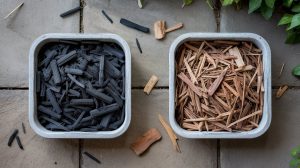
One amendment worth mentioning: biochar. Adding 5-10% biochar by volume to any potting mix improves water retention in hot climates and increases cation exchange capacity, meaning nutrients don't leach out as quickly with repeated watering.
According to research from the University of Maryland Extension, biochar can reduce irrigation frequency in containers by up to 20% in summer conditions.
How to Refresh Old Potting Mix?
Potting mix doesn't stay fresh forever. After one or two growing seasons, the organic material breaks down, perlite floats to the surface or compacts, and the mix loses its structure.
You'll notice it pulling away from the container sides when dry.
The good news is that old mix isn't garbage - it just needs rejuvenating. For large containers that are too heavy to fully empty, a top-dressing method works well.
Remove the top 3-4 inches of old mix, loosen the lower layer with a hand fork, and replace with fresh mix blended with compost. Adding a layer of mulch on top also helps regulate moisture.
Learn how mulching reduces moisture loss in containers and garden beds alike.
If the old mix smells sour or shows white mold, don't reuse it in containers. Work it into a garden bed or add it to a compost pile instead.
Diseased mix should go in the trash, not back into a pot where it can re-infect new plants. Understanding proper composting methods helps you safely break down contaminated material.
pH and Fertilizer: Getting Nutrition Right
Potting mix pH controls which nutrients plant roots can actually absorb. Even if nutrients are physically present in the mix, a pH that's too high or too low locks them out at the cellular level.
Most vegetables and herbs want a pH between 5.8 and 6.5.
Container plants need more frequent feeding than in-ground plants because every watering leaches nutrients out through the drainage holes. A plant in a 10-inch pot loses measurable nitrogen within 2-3 weeks of active watering, according to Clemson Extension's home garden resources.
- Slow-release granules: Work into the mix at planting. A good granular fertilizer feeds for 3-6 months and reduces how often you need to supplement.
- Liquid fertilizer: Fast-acting, applied every 7-14 days during active growth. Best for heavy feeders like tomatoes and peppers after the initial slow-release charge runs out.
- Worm castings top-dress: Work 1-2 tablespoons per pot into the top inch of soil once a month. Low-burn, steady release, and improves microbial activity at the same time.
Don't over-fertilize based on the idea that more nutrients mean faster growth. Excess nitrogen in a container causes salt buildup - you'll see white crusty deposits on the pot rim and leaf edges that look burned.
Flush the container with plain water every 4-6 weeks to clear accumulated salts.
Most bagged potting mixes include a starter fertilizer charge that lasts 4–6 weeks. Avoid adding more fertilizer during this window — you'll push vegetative growth at the expense of flowers and fruit set.
Common Potting Soil Mistakes
Most container plant failures trace back to a small set of repeatable errors. Knowing them upfront saves a frustrating season of troubleshooting.
Our full container soil and composting resource covers the broader principles behind healthy growing media.
- Pre-moisten dry potting mix before filling containers - dry peat and coir repel water until saturated
- Use pot size-appropriate mix - fine seed-starting mix for trays, coarser mix for large outdoor containers
- Refresh or replace potting mix every 1-2 seasons for actively used containers
- Check drainage holes before planting - blocked holes cause root rot regardless of mix quality
- Filling containers with straight garden soil, topsoil, or compost alone
- Reusing mix that shows signs of disease, persistent mold, or foul odor
- Packing mix too tightly - compressing destroys the air pockets that roots depend on
- Placing gravel or rocks in the bottom of a pot - this actually raises the water table inside the container
The gravel-in-the-bottom myth is worth emphasizing. Many gardeners add a drainage layer of rocks believing it helps water exit faster.
Research from Purdue University Extension shows this actually creates a perched water table - water stops moving down at the gravel interface and pools above it, right where roots sit. Skip the gravel and just use a well-draining mix with large drainage holes.
Another common error: choosing a mix based on price alone. A $4 bag that compacts in six weeks costs more in failed plants and wasted time than a $12 bag that performs all season.
Buy the best mix your budget allows, then stretch it by blending with perlite if needed.

Buying and Storing Potting Soil
Timing your purchase matters. Bags of potting mix sold late in the season have often sat in outdoor garden center stacks through heat and rain, causing the organic material to break down and the mix to compact inside the bag.
Buy early in spring for the freshest product.
When buying, squeeze the bag. It should feel spongy and springy, not hard or settled.
If you press and it doesn't spring back, the mix has already begun to break down. Check that there are no signs of moisture infiltration or mold through the bag seams.
- Store opened bags sealed: Fold the top down and clip it, or transfer the contents to an airtight storage bin. Open bags left in a shed grow fungus gnats and lose moisture regulation.
- Keep off bare ground: Store bags on a pallet or shelf, not directly on a garage floor or soil. Ground moisture wicks up through the bag and starts decomposition.
- Shelf life: An unopened bag stays usable for about 1-2 years. After that, the perlite is still fine but the organic components lose structure and nutrient value.
- Label old stock: Mark the purchase date on the bag with a marker. It prevents the guesswork of figuring out whether that half-used bag from last spring is still good.
For large-scale container operations, buying in 3.8 cubic foot compressed bales like Promix cuts cost per gallon of finished mix significantly. You can also find perlite and coir in bulk online, which makes building a custom mix cost-competitive with premium bagged products.
You can find information about choosing mulch materials using similar bulk-buying strategies for other garden supplies.
If you're scaling up to raised beds and want to compare what changes between deep-bed and container growing, our resource on quality composting equipment pairs well with any high-volume growing setup.
Frequently Asked Questions
No. Garden soil compacts in pots, blocks oxygen to roots, and introduces weeds. Use a mix specifically formulated for containers with perlite as a key ingredient.
Replace or refresh potting mix every 1–2 years for actively planted containers. Mix that has been through two full seasons loses its porous structure and drains poorly.
Use a premium mix like FoxFarm Ocean Forest amended with 20–25% extra perlite plus a slow-release fertilizer at 1 tablespoon per gallon. Tomatoes need pH 6.0–6.8.
Completely dry peat-based mix becomes hydrophobic and repels water. Pre-soak the mix before planting, or set the pot in a tray of water for 20 minutes to re-saturate it from the bottom.
Perlite drains faster and is better for most vegetables and outdoor containers. Vermiculite retains more moisture and is better suited to seed-starting trays and moisture-sensitive young transplants.
Pin it for your next best potting soil for containers project.