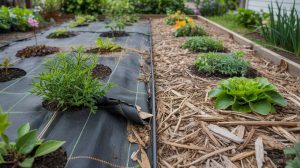
Most bags of premade raised-bed soil look the same on the shelf. Bold claims about "garden-ready" and "premium blend" stack up fast, but the actual ingredients - and how they'll perform after a few waterfalls of rain - vary a lot between products.
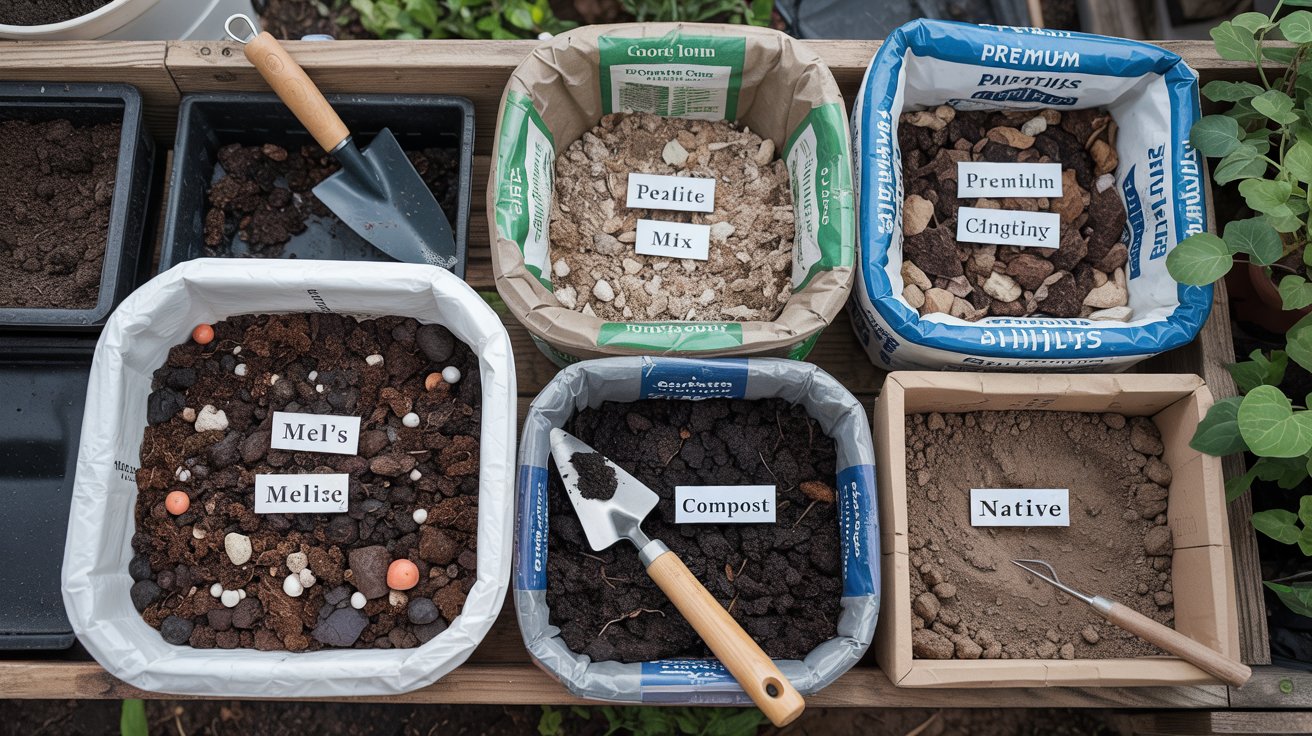
Picking the wrong mix costs you more than money. Poor drainage drowns roots.
Low organic matter leaves plants hungry by midsummer. A pH that drifts too far in either direction locks out nutrients no matter how much fertilizer you add.
This guide cuts through the label noise. We'll show you the performance criteria that actually matter, a short list of mix types mapped to specific use cases, and a regional soil breakdown you can use right now.
By the end, you'll have a concrete checklist, a simple cost framework for any bed size, and enough background to spot a weak mix before you haul it home.
The best soil for raised beds combines good drainage, moisture retention, and high organic matter. Premade bags range from basic all-purpose blends to OMRI-certified organic mixes.
Match bag type to your use case, check the ingredient list, and budget by bed volume — not bag count.
Key Criteria for Bagged Raised Bed Mixes
Not every bag on the garden-center pallet deserves a spot in your bed.
Remember it later
Planning to try this recipe soon? Save it for a quick find later!
UMN Extension recommends that a quality raised-bed medium include a substantial share of native soil - roughly one-third - to support texture, nutrient exchange, and microbial activity that pure compost alone can't provide.
Start with texture. A good mix feels loose and crumbly, not dense or sticky.
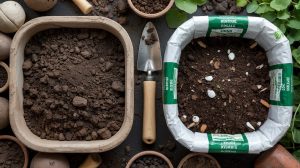
It should contain a mineral soil component (like sandy loam or a topsoil base) blended with coarse organic matter such as aged compost or bark fines.
Drainage and moisture retention aren't opposites - they're a balance. Perlite or coarse sand opens pore space so water moves through.
Compost holds just enough moisture at the root zone without staying waterlogged. Any bag that skips both will either drain too fast or suffocate roots.
- Organic matter content: Look for at least 25-30% by volume. Compost, aged bark, or worm castings count. Fillers like sawdust or wood chips do not.
- pH stability: A target range of 6.0-7.0 suits most vegetables and flowers. Bags should list a tested pH; avoid anything outside that range unless you're growing acid-lovers.
- OMRI certification: If you're growing food without synthetic inputs, look for the OMRI Listed seal. It confirms every ingredient meets organic production standards.
- Beneficial biology: Some premium mixes include mycorrhizal fungi or biochar. These aren't gimmicks - mycorrhizae measurably improve phosphorus uptake in new beds with no existing soil ecosystem.
OSU Extension describes the ideal raised-bed medium as light, well-drained, and enriched with composted organic matter - while still incorporating native soil for structure.
Understanding how these factors interact helps you compare the difference between topsoil and garden soil before you buy. Pure topsoil bags miss drainage.
Pure compost bags miss mineral structure. The best premade mixes split the difference deliberately.
Squeeze a handful of moist mix and release it. It should hold a loose clump but crumble with a light tap. If it stays packed or falls apart completely, drainage or structure is off.
Top Bagged Mixes by Use Case
Premade raised-bed mixes fall into two broad categories at most retailers. All-purpose blends target a wide range of vegetables and ornamentals.
Organic or OMRI-certified mixes carry stricter ingredient standards and suit food gardens where synthetic inputs aren't welcome.
UD Extension highlights how organic matter directly affects both drainage performance and yield - the main reasons bagged mixes exist at all. Choosing between these two categories comes down to what you're growing and how you want to manage the bed long-term.
All-purpose mixes work well when you're starting from scratch and want a broad foundation. They're widely available and cover most root vegetable growing needs without extra amendments.
The trade-off is that ingredient quality varies widely - two bags with identical labels can differ significantly in compost maturity and particle size.
Organic mixes cost more per bag, but Illinois Extension notes that compost-rich blends improve soil structure over multiple seasons, reducing the need for annual soil replacement.
- Lower upfront cost per bag — roughly half the price of OMRI options
- Available at nearly every home-improvement and garden retailer
- Suitable for ornamentals where organic certification isn't a concern
- Often includes topsoil for better mineral nutrient base
- OMRI seal guarantees no synthetic inputs — critical for certified-organic food gardens
- Coconut coir or peat base retains moisture longer in hot, dry climates
- Richer microbial diversity from well-finished compost sources
- Better long-term bed fertility as organic matter breaks down slowly
If you're growing crops like tomatoes or greens for eating and prefer to avoid synthetics, the OMRI-certified route is worth the price gap. For a flower bed or mixed border, the all-purpose blend delivers reliable results at a lower cost per cubic foot.
Pricing and Value by Bag Size
Knowing a bag costs $12 tells you almost nothing useful. What matters is how many cubic feet that bag covers and how many bags your specific bed needs.
A standard 4×8 bed at 8 inches deep requires about 21.3 cubic feet of fill material.
At 1.5 cubic feet per bag - the most common retail size - that's roughly 14 bags. Fill to 12 inches and you're looking at 21 bags.
Regional pricing and brand tier shift the total cost considerably, which is why a budget ladder is more useful than a single price point.
UMN Extension stresses that both organic matter content and texture directly affect long-term performance - factors that separate budget blends from mid-range options more than the price tag suggests.
| Bed Size | Depth 8" | Depth 10" | Depth 12" |
|---|---|---|---|
| 2×4 ft | 4 bags | 5 bags | 6 bags |
| 4×4 ft | 7 bags | 9 bags | 11 bags |
| 4×8 ft | 14 bags | 18 bags | 21 bags |
| 4×12 ft | 21 bags | 27 bags | 32 bags |
Budget blends at $6-$9 per bag often use lower-grade compost or include more filler than premium lines. They work for short-season annuals or ornamental beds where long-term fertility matters less.
Mid-range mixes ($10-$15) hit the sweet spot for most food gardens. OSU Extension recommends a light, well-drained medium with quality organic matter - a description that matches mid-range products more consistently than budget bags.
For a 4×8 bed at 12 inches, plan to spend $126-$315 on bags depending on tier. Buying in bulk at a local supplier - often priced by the cubic yard at $35-$75 delivered - can cut costs significantly for beds larger than 4×12 feet.
Wondering which potting soil suits container gardens versus raised beds is a separate calculation, since container mixes are formulated differently for drainage.
Organic vs. Conventional Premade Mixes
The word "organic" on a bag of soil can mean two very different things. A mix labeled "natural and organic" is a marketing phrase.
A mix that's OMRI Listed has been evaluated by the Organic Materials Review Institute and verified free of synthetic fertilizers, pesticides, and prohibited inputs.
That distinction matters most if you're growing food on a certified-organic farm or market garden. For a home vegetable bed, the OMRI seal gives you confidence in ingredient sourcing - but it doesn't automatically make the mix perform better than a well-formulated conventional blend.
- Read the full ingredient list - look for finished compost, perlite or coarse sand, and a named pH value between 6.0 and 7.0.
- Choose OMRI-certified mixes when growing food you'll eat raw, especially greens and root vegetables.
- Check the compost source: yard-waste or mushroom compost is preferable to uncomposted wood fiber.
- Refresh beds annually with 1-2 inches of compost to replace organic matter that breaks down over winter.
- Don't assume "natural" means OMRI-certified - the label is unregulated without a third-party seal.
- Avoid mixes listing "composted wood products" as the primary ingredient; they decompose fast and collapse bed volume.
- Don't skip pH testing after filling - even OMRI mixes vary, and a pH below 5.5 will lock out calcium and magnesium.
- Don't ignore long-term biology: bags with no compost source listed offer little microbial life to support plant roots.
UD Extension points out that organic matter plays a direct role in both drainage and yield - making compost quality the single most important factor in any bagged mix, organic or conventional.
Long-term bed health is where organic mixes earn their premium. Illinois Extension notes that organic matter breaks down over time, reducing bed volume and fertility - so a mix with higher-quality, slower-decomposing compost needs fewer top-ups each season.
Pairing your soil choice with the right fertilizer approach matters too. Organic mixes release nutrients slowly through microbial activity, so synthetic quick-release fertilizers can disrupt that balance.
Conventional mixes are more tolerant of either approach.
Regional Considerations and Quick-Start Plan
Where you garden changes which mix performs best. In the hot, dry Southwest, moisture retention is the priority - coir-based organic mixes hold water longer than peat-heavy blends that dry out and repel rehydration.
In the humid Southeast, drainage dominates: a mix with extra perlite or coarse sand prevents the root rot that follows heavy summer rains.
Cold-climate gardeners in zones 4-5 benefit from darker, compost-rich mixes that absorb heat and extend the growing window by a week or two in spring.
OSU Extension highlights proper bed depth and moisture management as region-specific starting points - both of which interact directly with mix choice.
In Pacific Northwest climates, avoid mixes heavy in peat moss — they stay soggy through wet winters. A coarser compost base with 20–30% perlite drains faster and prevents fungal problems in cool, wet soil.
For a weekend bed setup, Illinois Extension recommends filling beds with a compost-topsoil mix and topping up annually - a plan that translates directly to bagged options with no DIY blending required.
Here's a fast weekend plan: measure your bed volume, calculate bags needed from the table above, buy one tier up from budget if your bed will grow food, and water the filled bed thoroughly 24 hours before planting.
That settling period reveals low spots and lets you top up before seeds or transplants go in.
If you're still choosing your bed material, the cedar vs. pressure-treated lumber comparison affects how your soil interacts with the frame over time. Cedar is inert; pressure-treated lumber from older stock can leach compounds that shift soil chemistry.
After planting, adding a 2-inch mulch layer over the bed surface cuts moisture loss by up to 50% in summer, extending the gap between waterings regardless of which mix you chose.
Understanding the full range of soil types and their properties also helps you evaluate what a bagged blend is actually replacing or supplementing in your native ground. And for beds you want to maintain year-round, exploring mulch material options alongside your soil choice keeps the surface protected between seasons.
Reviewing the broader world of raised bed amendments and composting gives you a longer-term framework once your first bed is planted.
Frequently Asked Questions
OMRI (Organic Materials Review Institute) independently verifies that every ingredient meets USDA organic standards. For home food gardens, it guarantees no synthetic fertilizers or pesticides — worth the premium for edible beds.
Pure topsoil compacts quickly and drains poorly in raised beds. Use it as one-third of a blend alongside compost and perlite, not as a standalone fill.
Mel's Mix is one-third vermiculite, one-third peat moss, and one-third blended compost. It drains well and holds moisture but costs more per cubic foot than most premade bags when sourced separately.
A 4×8 bed at 8 inches deep needs about 21.3 cubic feet — roughly 14 bags of 1.5 cu ft each. Add 7 more bags to reach 12-inch depth.
Add 1–2 inches of compost each spring to replace decomposed organic matter. Full soil replacement is rarely needed before year four or five in a well-maintained bed.
Pin it for your next best raised bed soil mix (pre-made options) project.